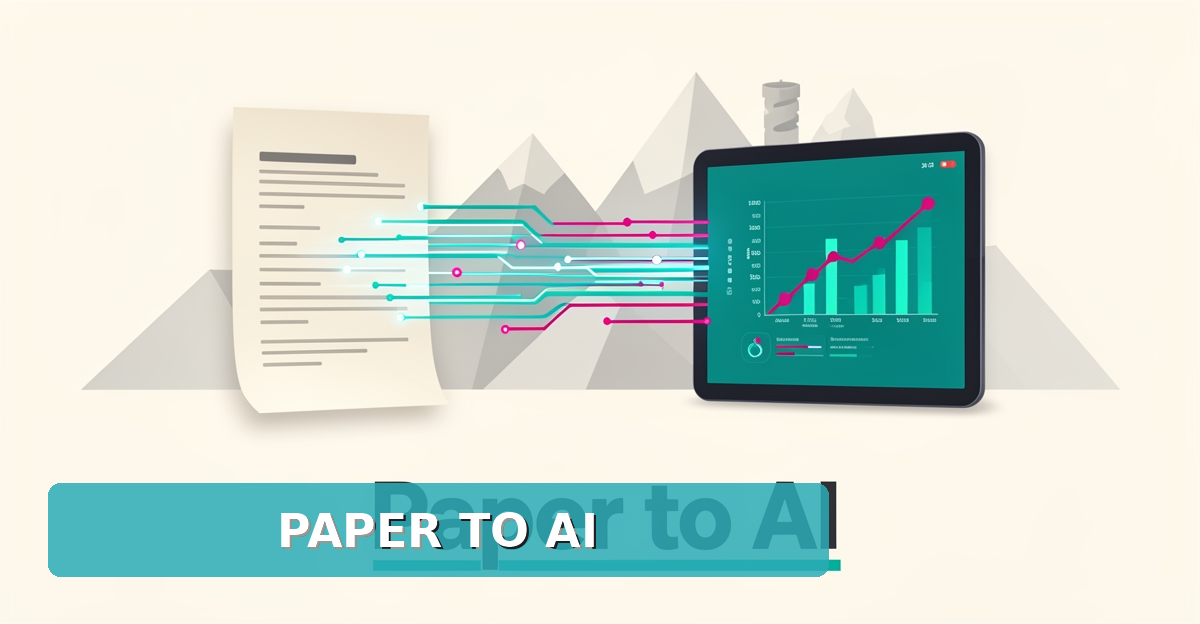
From Paper Logs to AI: How One Exploration Firm in Halifax Automated 150+ Field Reports Per Month
Key Facts
- Manual field report processing typically consumes hours per report in transcription, validation, and formatting
- Industry surveys consistently find that a majority of companies report multiple process inefficiencies that automation could solve
- Document-heavy workflows like field logging are among the most automatable activities in technical businesses
- AI-powered document processing can extract structured data from handwritten logs, validate entries, and auto-generate standardized reports
- Owned AI systems avoid vendor lock-in and adapt as survey methods and reporting standards evolve
Hire a team member that works 24/7 — for less than a part-time wage.
AI receptionists, SDRs, dispatchers and 99+ roles. Trained on your business, fully managed.
Not sure where to start? Ask our AI planner
The Paper Log Bottleneck in Field Exploration
Field teams return from the drill site with notebooks full of observations, sample IDs, and sketches that must become a formal report before geology moves on. In a Halifax-area mineral exploration firm handling 150+ field reports each month, that handoff was the bottleneck. Each paper log triggered a processing cycle of manual transcription, validation, and formatting, often ten hours or more per report, that delayed decision-making and scaled poorly.
Manual logging locks data in a physical format that resists speed and reuse. Handwritten entries are retyped into spreadsheets, checked for errors, and stitched into reports by specialists who could be interpreting results. The friction compounds with volume, turning a routine workflow into a capacity constraint that grows with every additional site.
Process inefficiencies like this are common and measurable. Industry surveys consistently find that a majority of companies report three or more major process inefficiencies that could be solved through automation, and that most firms already use automation to standardize daily workflows, a clear signal of demand for consistency where manual steps create variance.
The cost of status quo shows up in three places:
- Time per report remains high, with manual transcription and review consuming hours that could be spent on analysis
- Decision latency increases as geologists wait for cleaned data before assessing targets
- Scaling is linear with headcount, making 150+ monthly reports expensive to sustain
AI-powered workflow automation can help organizations streamline operations, improve productivity, and enhance decision-making. That principle applies directly to document-heavy field operations where paper logs are the source of truth until they are digitized.
Reducing processing from hours to minutes per report is not only a time saving; it changes how quickly the team can prioritize drilling, allocate crews, and respond to findings. AIQ Labs delivered this kind of transformation with AI-powered document recognition and reporting built for the geoscience industry, demonstrating how AI Document Processing & Management can replace repetitive transcription with owned, production-grade systems.
Without automation, teams tolerate error-prone rekeying, version confusion, and reporting delays that erode trust in the data. With automation, the same field logs become structured, searchable assets that feed dashboards and downstream models. The shift moves the organization from chasing paperwork to acting on insights, which is the core value of moving from paper logs to AI.
AI-Powered Document Recognition Replaces Manual Reporting
For the Halifax-area mineral exploration firm, field reporting once meant hours of manual work per report, transcribing handwritten logs, cross-referencing notes, and formatting data into usable summaries. This labor-intensive process created delays, inconsistencies, and bottlenecks across their exploration cycle. With an AI-powered document recognition system, that timeline typically collapses to minutes per report. The solution ingests raw field inputs, whether scanned paper logs, voice-to-text transcripts, or tablet sketches, and uses multi-agent AI to extract structured geological data, validate entries against project parameters, and auto-generate standardized reports ready for review.
Standardization is a critical need when managing over 150 field reports monthly across multiple sites. Before automation, variations in note-taking styles and incomplete entries led to data gaps requiring rework. After automation, the AI system enforces uniform data capture, flagging missing or anomalous inputs in real time. This materially reduces processing errors and improves data integrity, consistent with broader trends where AI-powered workflow automation eliminates repetitive manual tasks. Such standardization enhances decision-making by ensuring teams work with consistent, accurate datasets.
The transformation extends beyond speed. By replacing manual transcription with intelligent document processing, the firm redirected geologists' time from paperwork to core exploration activities, directly supporting faster site assessments and more agile drilling decisions. AIQ Labs engineered the system to integrate with the company's existing field tools and data repositories, ensuring no disruption to ongoing operations. The result is a scalable, owned AI workflow that processes high volumes of unstructured field input with minimal human oversight, turning what was once an administrative burden into a streamlined, insight-driven operation.
Why Document Automation Works for Geoscience Teams
The Halifax firm's results, processing time dropping from hours to minutes per report, aren't an outlier. They're a preview of what happens when geoscience teams stop treating document work as a human job.
The scale of the opportunity is well documented. Major research firms have long estimated that roughly half of all work activities can be automated, yet only a minority of businesses have automated even one function. Field-heavy industries like mineral exploration sit squarely in that gap, with logging, reporting, and data entry consuming technical staff time that could go toward interpretation and decision-making.
For the exploration firm, automating 150+ field reports per month meant reclaiming well over a thousand hours of monthly manual effort. But the benefits extend well beyond time savings. Most companies that adopt automation do so to standardize daily workflows, a sign that structured, repeatable processes have become the norm rather than the experiment.
What makes document automation particularly powerful for geoscience teams is the downstream effect on data quality and speed. When reports flow through a consistent AI-driven pipeline:
- Manual transcription errors are caught or eliminated before data reaches decision-makers
- Field results become available for analysis in minutes instead of days
- Geologists and project leads spend their hours on high-value interpretation work
- Reporting formats stay standardized across every site and every team
The commercial impact of this kind of workflow automation is measurable. Faster, more reliable processes compound: in an exploration context, faster reporting translates directly into faster go/no-go decisions on drill targets.
There's also a strategic argument for building these systems properly rather than cobbling together point tools. That's the approach AIQ Labs took with the Halifax firm: a custom AI document recognition and reporting system the company owns outright, with no vendor lock-in. Teams that own their automation infrastructure can adapt it as survey methods, reporting standards, and regulatory requirements evolve.
The lesson from this case is straightforward. Document automation works for geoscience teams because it attacks the least creative, most error-prone part of the workflow, transcription and formatting, while preserving human expertise where it matters most: reading the ground.
How to Move From Paper Logs to Owned AI Systems
Paper logs don't just slow field teams down, they create a backlog that compounds every month. The Halifax exploration firm was processing 150+ reports manually until it mapped the workflow and replaced it with owned AI systems.
Moving from paper to owned AI starts with clarity on where automation delivers the most value. The key to successful automation is identifying the areas where it brings the most value to your organization. For geoscience field reporting, that meant document recognition, data extraction, and automated report generation rather than generic form filling.
The first step is opportunity identification through process mapping. Teams log every manual touchpoint from site to final report, then score each for volume, error rate, and time cost. With most companies reporting multiple major process inefficiencies, prioritizing high-volume, repetitive steps creates quick wins and builds momentum.
Next, choose build versus no-code with ownership in mind. No-code connectors work for simple handoffs but limit customization, governance, and integration depth. Custom owned AI systems replace subscription sprawl with unified assets the business controls. AIQ Labs architects production-grade systems built for the geoscience industry with full ownership and no vendor lock-in.
Implementation follows a three-pillar approach that aligns with how AIQ Labs delivers transformations:
- Identify high-value automation opportunities through readiness assessment and ROI modeling
- Build custom owned AI systems using advanced frameworks instead of no-code limitations
- Deploy with integration, governance, and continuous optimization across core tools
Deployment means connecting the AI to existing field tools, CRMs, and data stores with two-way API integration. Governance is embedded from day one with validation layers, audit trails, and human-in-the-loop controls for critical decisions. AI-powered workflow automation helps organizations streamline operations, improve productivity, and enhance decision-making.
Optimization is continuous. Standardized workflows create the baseline for measuring improvement. Teams monitor processing time, error rates, and report throughput, then refine extraction models and prompts as new field formats appear.
Payment and delivery models shape risk. AIQ Labs offers three: Start Monthly lets a firm launch one AI employee with a flat monthly plan that typically costs far less than a human hire. Build in Milestones rebuilds the one workflow that costs the most, like field reporting, through approved phases via Workflow Builds, so work can stop anytime and everything built so far is kept. Own It Outright delivers a full connected layer through AI Operating Systems, with full ownership of code, agents, and data when complete.
The result is a system that is trained on the business, integrated with its tools, and owned outright. Field reports move from hours to minutes, and the firm gains a reusable AI asset that scales with exploration activity.
Still paying for 10+ subscriptions that don’t talk to each other?
We build custom AI systems you own outright. No vendor lock-in. Full control.
Not sure where to start? Ask our AI planner
Frequently Asked Questions
How much time can AI-powered document processing save for field reports in mineral exploration?
Why is standardization important in field reporting automation?
Can AI document processing improve data accuracy in field exploration workflows?
Why should geoscience teams build owned AI systems instead of using no-code tools for field reporting automation?
What portion of work activities can be automated?
How does workflow automation impact business performance beyond time savings?
Unlocking Efficiency: How AI-Powered Document Processing Can Transform Your Business
The Halifax exploration firm's journey from manual data logging to AI-powered document recognition and reporting shows how AI can transform operations. By reducing processing time from hours to minutes per report, the firm saved significant time and resources while improving data accuracy and decision-making speed. This transformation is not unique to the geoscience industry. Businesses across sectors can benefit from AI-powered document processing and management. Industry surveys consistently find that most companies report multiple major process inefficiencies that could be solved through automation. By identifying high-value automation opportunities and implementing custom AI systems, businesses can streamline operations, improve productivity, and enhance decision-making. If you're ready to explore how AI can transform your business, start with the free, two-minute Fit Check and book a free 30-minute strategy call with AIQ Labs. Our team will work with you to identify your biggest bottlenecks and map out a strategic implementation plan.
Make AI your competitive advantage — not just another tool.
Strategy, implementation and ongoing optimization. One partner, end to end.
Not sure where to start? Ask our AI planner