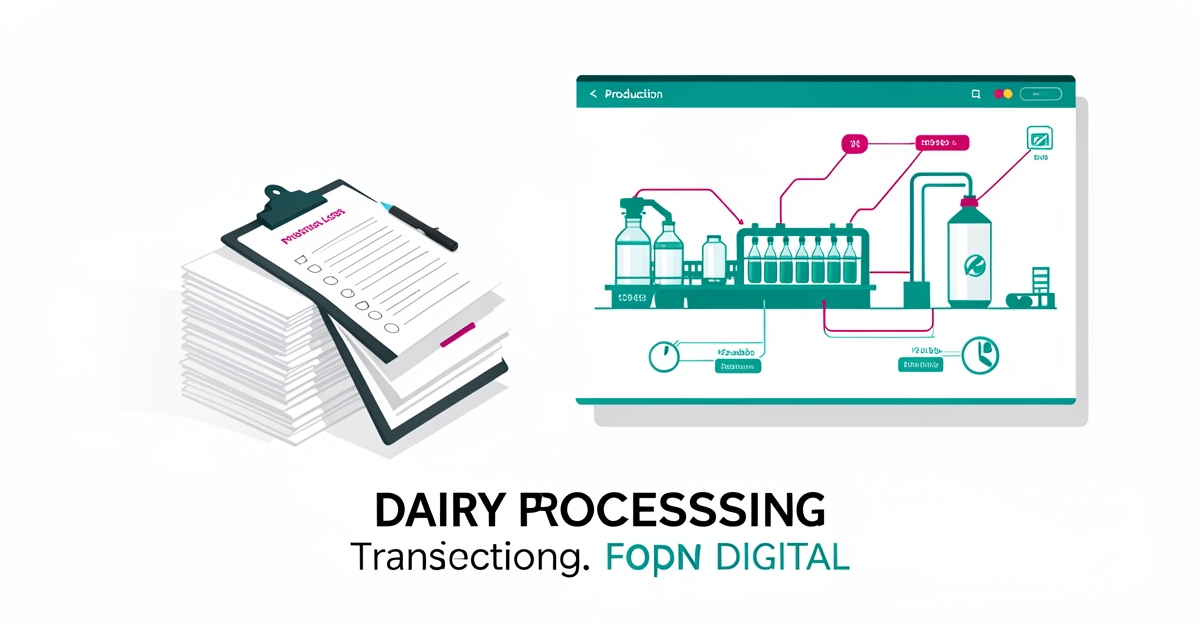
From Paper Logs to AI: How One Halifax Dairy Processor Automated Its Daily Production Tracking
Key Facts
- Industry estimates suggest a significant share of requests and records are lost or misplaced in paper-based systems, a pattern that holds across maintenance, finance, and production environments
- Document-heavy roles consistently report overload: many professionals say the volume of documents they must review exceeds what they can meaningfully process
- Trust in AI outputs rises sharply when answers are grounded in source documents rather than generated from memory
- Organizations that digitize manual record-keeping typically report fewer unexpected failures and more work completed with the same staff
- The Halifax dairy processor replaced handwritten logs with owned multi-agent AI capture for real-time production visibility
Hire a team member that works 24/7 — for less than a part-time wage.
AI receptionists, SDRs, dispatchers and 99+ roles. Trained on your business, fully managed.
Not sure where to start? Ask our AI planner
The Hidden Cost of Paper Production Logs in Food Manufacturing
Every morning, a production supervisor walks the floor with a clipboard, manually recording batch numbers, temperatures, and equipment readings. By afternoon, those sheets sit in a filing cabinet, disconnected, unsearchable, and already outdated.
This scene plays out daily in dairy processing facilities across North America, where paper logs remain the default despite their mounting costs. Manual record-keeping is inflexible, prone to human error, and inefficient, leading to wasted time and lost context. In food manufacturing, where traceability and compliance are non-negotiable, these limitations carry real operational risk.
The pattern repeats across industries. In facility maintenance, industry findings consistently show that a meaningful share of requests, often estimated in the 15-25% range, are lost or mishandled in paper-based systems. When a batch deviation occurs or a customer inquiry arrives weeks later, every lost record represents the difference between swift resolution and a costly investigation.
The problem compounds with volume. Document-heavy teams in finance and other fields report being overwhelmed by the volume of material they must review. Dairy processors face similar overload: production logs, quality checks, equipment readings, sanitation records, and compliance documentation accumulate faster than any team can meaningfully analyze them.
Paper systems create specific failure points that digital alternatives eliminate:
- Transcription errors when staff manually record temperatures, times, and quantities under production pressure
- Delayed visibility, managers discover problems hours or days after they occur, not in real time
- Lost context when handwritten notes lack the detail needed for root cause analysis
- Compliance exposure during audits when reconstructing events requires digging through filing cabinets
The inflexibility cuts deepest. Paper logs capture what someone thought to write down, not what the business needs to know. When a Halifax dairy processor approached AIQ Labs, their manual system couldn't answer basic questions: Which lines run most efficiently? Where do delays cluster? How do environmental factors affect output? The data existed, scattered across shift reports and equipment logs, but remained functionally invisible.
AI-powered document management offers an alternative: complete visibility, seamless searchability, and interoperability that lets teams work from shared, current information. Rather than replacing human judgment, these systems augment it, capturing data automatically so staff can focus on analysis and improvement rather than transcription.
The shift isn't merely technological. It's operational survival in an industry where margins tighten and traceability requirements intensify. Paper logs made sense when production was simpler and regulations lighter. That era has ended.
Why AI-Powered Data Capture Changes Production Visibility
Halifax's dairy processor faced a critical bottleneck: production logs were still handwritten, creating delays and blind spots in daily operations. Manual data capture limited visibility, making it difficult to trace issues or optimize workflows in real time. By shifting to AI-powered data capture, the processor transformed how production information was collected, stored, and used across teams. This change enabled complete visibility into every stage of the process, from raw material intake to final packaging, ensuring no data point was lost or delayed. Surveys of professionals consistently find that trust in AI outputs rises sharply when answers are grounded in source documents, a key factor in building confidence during the transition.
The AI system now automatically extracts and organizes data from production line sensors, equipment readouts, and staff inputs, creating a unified, searchable record. This eliminates the inefficiencies of paper logs, where records are routinely lost or misplaced. With AI, every data point is instantly accessible, reducing search time and enabling faster responses to production anomalies. Teams can now query historical trends, compare shifts, or isolate variables with just a few clicks, turning raw data into actionable insight without manual cross-referencing.
Beyond visibility, AI-powered capture ensures seamless interoperability between systems, connecting production data with inventory, quality control, and scheduling platforms. This integration supports smarter decision-making by linking operational inputs with business outcomes. For example, AI can correlate equipment performance with yield rates or staff input with downtime events, uncovering patterns that were previously hidden in siloed logs. AI tools excel at exactly this kind of routine automation, connecting expertise with proprietary data, which is what the dairy processor needed to scale its operations.
AIQ Labs supported this shift through its AI Workflow Builds approach: rebuild the one workflow that costs the most, at a fixed price, in phases. The solution doesn't just replace paper, it creates a living record of production that improves accuracy, reduces manual effort, and lays the foundation for predictive analytics. By grounding AI outputs in verified source documents and real-time inputs, the system maintains reliability while unlocking new levels of operational clarity. As the business grows, its data infrastructure grows with it, owned, transparent, and fully aligned with daily workflows.
How the Halifax Dairy Processor Built an Owned AI System
Paper logs on a dairy floor create the same fragility seen across industries that still rely on manual records. When tracking lives on clipboards and spreadsheets, visibility disappears and errors compound.
The Halifax processor was capturing production data from lines, equipment, and staff on paper. Manual systems are inflexible, prone to human error, and inefficient. Paper-based records lack accessibility and transparency, making documents hard to locate, and are often disorganized, leading to lost or misplaced information.
The shift started with multi-agent capture built for the shop floor. One agent ingests line data and equipment signals, another processes staff input from tablets and voice notes, and a third reconciles the streams into a single source of truth. AI-powered document management gives complete visibility, seamless searchability, and interoperability, enabling teams to work more effectively together.
Integration was designed around existing tools, not replacement. The owned system connects to the plant's ERP, quality management, and scheduling platforms with deep two-way API integrations. This kind of workflow rebuild eliminates manual data entry and reduces operational errors by creating seamless operational workflows across departments.
Ownership shaped every architectural decision. AIQ Labs built a custom, production-ready system the business owns and controls, with no vendor lock-in or platform dependencies. Under the Own It Outright model, the client receives full ownership of the custom-built system and complete control over customization and future development. That ownership lets the system evolve with the business as lines, SKUs, and compliance requirements change.
The owned approach also changes how confidence is built. Industry research on document analysis consistently finds that professionals trust AI outputs far more when answers are grounded in source documents. The Halifax system anchors every capture to source logs, equipment timestamps, and operator input, so decisions are traceable.
The impact mirrors patterns documented in manual-to-digital transitions across industries: organizations that digitize record-keeping typically report fewer unexpected failures and more work completed with the same staff. The build delivered for the Halifax processor included:
- Multi-agent capture from production lines, equipment sensors, and staff input
- Deep integration with existing ERP, quality, and scheduling tools
- Owned code and data with full IP transfer and no subscription lock-in
- Continuous improvement loop that retrains on new products and processes
With the logs digitized and owned, the team moves from chasing paper to faster, auditable decisions on yield, waste, and compliance.
From Pilot to Production: Implementation Steps SMBs Can Follow
Manual logs create blind spots that compound every shift. For the Halifax dairy processor, replacing paper with an owned AI system turned daily production tracking into a searchable, real-time asset.
Digitizing the foundation comes first. Paper-based systems are inflexible, prone to human error, and inefficient. Industry analysis of manual document management shows how disorganization drives lost documents and delayed decisions. Replacing paper with a digital system gives complete visibility, seamless searchability, and interoperability so teams work from one source of truth.
AI analysis then automates routine work at scale. Document-heavy professionals frequently report being overwhelmed by the volume of material they must review. AI can automate routine work, connect team expertise with proprietary documents and real-time data, and uncover hidden insights. For production tracking, that means auto-capture from lines, equipment, and staff input with consistent extraction.
Connecting expertise to data closes the loop. AI tools can analyze vast numbers of documents quickly and with precision, but they may miss contextual nuances that humans grasp. Human insight is essential, and AI should augment, not replace, human capabilities. Validation keeps outputs trustworthy, professionals consistently report far greater confidence in AI outputs when answers are grounded in source documents.
A low-risk adoption path SMBs can follow:
- Digitize document management to replace paper-based systems and enable seamless searchability.
- Deploy AI analysis for routine work such as capture, classification, and summarization of production logs.
- Connect team expertise with proprietary documents and real-time data for contextual decisions.
- Validate AI outputs with human review to ensure accuracy and reliability.
AIQ Labs supports this progression with payment models built for SMBs. Build in Milestones lets a business split a workflow rebuild into phases, approve and pay per phase, and keep everything built so far. Start Monthly provides a managed AI employee, including build, training, integrations, monitoring, and improvements, on a flat monthly plan that can be paused or adjusted anytime. And Own It Outright transfers the full system, code, and IP to the business with no subscription lock-in. See pricing details for how each model works.
The Halifax case shows why structure matters. Organizations still running on paper illustrate the cost of delay, while those that digitize typically report fewer unexpected failures and more work completed with the same staff. Every shift spent on clipboards is data the business can't use.
From pilot to production is about disciplined steps, owned systems, and human validation that scales with the business.
Still paying for 10+ subscriptions that don’t talk to each other?
We build custom AI systems you own outright. No vendor lock-in. Full control.
Not sure where to start? Ask our AI planner
Frequently Asked Questions
How much data actually gets lost with paper production logs?
Will our team trust AI outputs for critical production decisions?
What does 'owned AI system' actually mean, do we own the code and data?
How does AI capture work on a noisy production floor with multiple data sources?
Can we start small and scale without wasting what we've built?
What measurable results do companies see after moving from paper to AI-powered tracking?
Own Your Data, Own Your Next Move
The Halifax dairy processor's shift from clipboards to an owned AI system shows what's possible when production data becomes searchable, connected, and traceable. Manual logs created transcription errors, delayed visibility, and compliance risk; multi-agent capture from lines, sensors, and staff input replaced that fragility with a single source of truth that integrates with ERP, quality, and scheduling tools. The result is faster, auditable decisions on yield, waste, and compliance, and a foundation that scales with new lines, SKUs, and requirements without vendor lock-in. For SMBs still chasing paper, the path is digitize first, automate routine capture second, and validate with human insight to keep outputs grounded in source documents. Take the 2-minute Fit Check at https://aiqlabs.ai/apply, then book a free 30-minute strategy call to map your biggest bottleneck and identify high-ROI automation opportunities. You can also reach the team directly at [email protected].
Make AI your competitive advantage — not just another tool.
Strategy, implementation and ongoing optimization. One partner, end to end.
Not sure where to start? Ask our AI planner