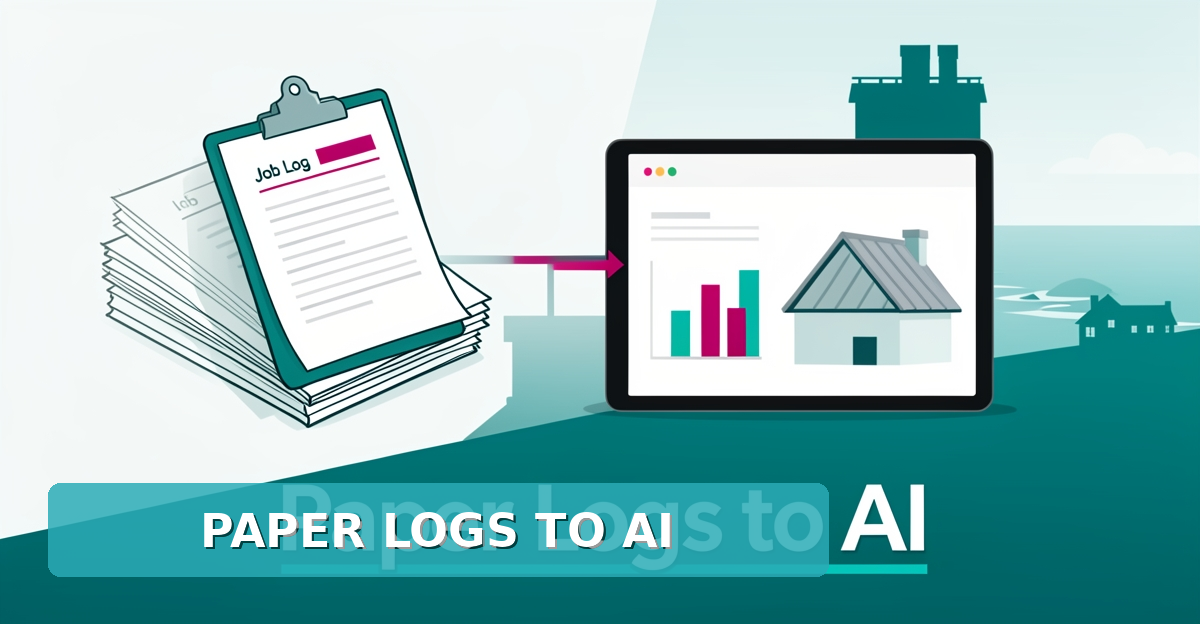
From Paper Logs to AI: How One Halifax Metal Roofing Firm Streamlined Its Job Logs and Reports
Key Facts
- A large share of insurance-approved estimates typically go unconverted because nobody follows up after adjuster approval
- Past roofing customers are typically several times more likely to buy again than cold leads, based on general industry experience
- AI can process thousands of job documents in seconds versus weeks for manual review
- AI answering systems typically capture a far higher share of after-hours calls than manual answering services
- AIQ Labs has deployed 200+ multi-agent systems and runs 4 live SaaS products daily
Hire a team member that works 24/7 — for less than a part-time wage.
AI receptionists, SDRs, dispatchers and 99+ roles. Trained on your business, fully managed.
Not sure where to start? Ask our AI planner
The Hidden Cost of Paper Logs in Roofing Operations
For Halifax roofing companies, paper logs create hidden costs that silently erode profitability every day. Manual job logging forces crews to spend valuable time on paperwork instead of billable work, while increasing the risk of costly errors in estimates and invoices. Without digital tracking, businesses lose visibility into job performance, labor costs, and customer trends, making it impossible to identify inefficiencies or optimize operations.
The consequences extend beyond wasted time. In the roofing industry, a significant share of insurance-approved estimates never convert simply because nobody follows up after adjuster approval, revenue left on the table that a systematic follow-up process would recover. Past roofing customers are also typically far more likely to buy again than cold leads, yet many contractors never contact them after the initial job, missing substantial upsell and referral opportunities. Paper systems make it nearly impossible to track these critical touchpoints consistently.
- Time wasted on manual data entry that could be spent on actual roofing work
- Human errors in estimates, invoices, and job details leading to disputes
- Lost revenue from unfollowed estimates and neglected past customers
- No visibility into labor costs, job profitability, or crew performance
- Inconsistent reporting that hinders strategic decision-making
These inefficiencies compound during peak seasons when storm damage spikes call volume. Manual systems simply can't scale, causing businesses to miss emergency opportunities while drowning in paperwork. AIQ Labs helps Halifax roofing firms replace these paper-based processes with intelligent data systems, whether that's an AI Workflow Build targeting the single most expensive workflow, or a full AI Operating System connecting the whole business. Either way, job information gets captured, analyzed, and acted on automatically, turning administrative burden into strategic advantage.
How AI Transforms Job Logs into Actionable Business Intelligence
AIQ Labs' AI-driven document management transforms how roofing businesses capture and use their operational data. By automating the extraction and analysis of job logs, the system converts static paper records into dynamic, real-time insights that reveal patterns in labor efficiency, material usage, and job profitability. This shift enables contractors to move beyond reactive tracking toward proactive decision-making grounded in actual performance data.
The technology excels at processing vast volumes of documentation with speed AI systems can analyze thousands of job reports in seconds compared to the weeks required for manual review. This dramatic acceleration allows businesses to identify trends as they emerge rather than discovering issues long after they impact profitability. For Halifax roofing firms dealing with seasonal workload fluctuations, this real-time visibility proves particularly valuable during peak storm seasons when rapid assessment of crew performance and material consumption directly affects scheduling and pricing strategies.
Beyond basic data extraction, the system performs intelligent analysis that connects seemingly unrelated data points. It correlates labor hours with specific job types, identifies which customer segments generate the most repeat business, and flags inconsistencies in material usage that might indicate training needs or supplier issues. These capabilities turn routine paperwork into a strategic asset, one that continuously feeds insights back into operations to improve estimating accuracy, optimize crew deployment, and strengthen customer retention efforts. The result is a self-improving cycle where better data leads to better decisions, which in turn generates even more valuable operational intelligence. For businesses ready to unlock this potential, AIQ Labs offers a free 30-minute strategy call to map specific automation opportunities, start with the two-minute fit check at https://aiqlabs.ai/apply.
Implementation: From Manual Logs to AI-Powered Reporting in 90 Days
Ninety days sounds aggressive until you see what the timeline actually looks like. The Halifax firm's transition from paper job logs to AI-powered reporting followed a phased structure, one designed to avoid the disruption that makes most technology projects fail before they finish.
The first two weeks were spent on discovery. AIQ Labs analysts mapped how job details were currently captured, where labor costs got lost in translation, and which reports the owner actually needed but never had time to build. This assessment matters because AI systems are only as reliable as the data they receive, inaccurate or incomplete input produces flawed output.
Next came the custom build. Rather than forcing the firm into generic software, the system was architected to extract, categorize, and analyze data from existing job records automatically. The difference is striking: manual document processing can take weeks to handle thousands of documents, while AI tools can process the same volume in seconds. The build was structured around integration with the firm's existing tools, CRM, scheduling, and accounting, so crews didn't have to change how they worked in the field.
Staff training happened in parallel, customized to each role. Office staff learned the new reporting dashboard while crew leads saw only what changed for them. This role-based approach addresses a well-documented challenge: transitioning from manual to AI-driven processes requires both cultural and operational change, and training requirements are consistently cited as a top implementation hurdle.
The phased rollout also mapped to how the engagement was paid. Three payment models fit this kind of project:
- Start Monthly, setup plus a flat monthly plan covering the build, training, tool integrations, monitoring, and improvements, with the ability to pause or adjust anytime.
- Build in Milestones, the build is split into phases, with each phase approved and paid for as it ships. Stop anytime and keep everything built so far.
- Own It Outright, a full AI operating system with one project price and complete ownership of the code, agents, and data.
The milestone structure directly reduces implementation risk. Rather than committing to a large upfront investment, the firm approved each phase only after seeing it work, discovery first, then data extraction, then reporting dashboards, then automated follow-up tracking. That last piece mattered: in the roofing industry, a large share of insurance-approved estimates never convert because nobody follows up after adjuster approval, so the system now flags those opportunities automatically.
The final phase is ongoing optimization. AIQ Labs monitors performance, refines the models as more job data flows through, and expands capabilities as the firm identifies new questions to answer. The payoff so far: real-time visibility into job performance, labor costs, and customer trends that paper logs could never provide, including the insight that past customers are typically far more likely to buy again than cold leads, which reshaped where the firm focuses its follow-up efforts.
The ninety days weren't about installing software. They were about rebuilding a workflow the business now owns outright.
Still paying for 10+ subscriptions that don’t talk to each other?
We build custom AI systems you own outright. No vendor lock-in. Full control.
Not sure where to start? Ask our AI planner
Frequently Asked Questions
How much revenue are we actually losing from unfollowed insurance estimates?
Can AI really process our job logs faster than our office staff?
Will switching to AI-driven reporting disrupt our current field operations?
Why should we focus on past customers instead of just generating new leads?
What happens to our data if we stop using the AI system?
How does AI handle emergency calls differently than our current answering service?
Your Job Logs Are Talking. It's Time to Listen.
The Halifax metal roofing firm in this story didn't buy software, it rebuilt a workflow it now owns outright. Ninety days took them from paper logs and guesswork to real-time visibility into job performance, labor costs, and customer trends, with automated follow-up tracking that catches the estimates nobody was chasing. The lesson isn't that AI is magic. It's that the data already sitting in your job records is a strategic asset, if you have a system that can actually read it. If paper logs are still running your roofing operation, start small: map where job details get lost between the field and the office, and identify one report you wish you had but never have time to build. That's exactly the conversation AIQ Labs starts with its free 30-minute strategy call, no pitch, just a working session to see if there's a clear win for your business. Take the two-minute fit check at https://aiqlabs.ai/apply, and find out what your job logs have been trying to tell you.
Make AI your competitive advantage — not just another tool.
Strategy, implementation and ongoing optimization. One partner, end to end.
Not sure where to start? Ask our AI planner