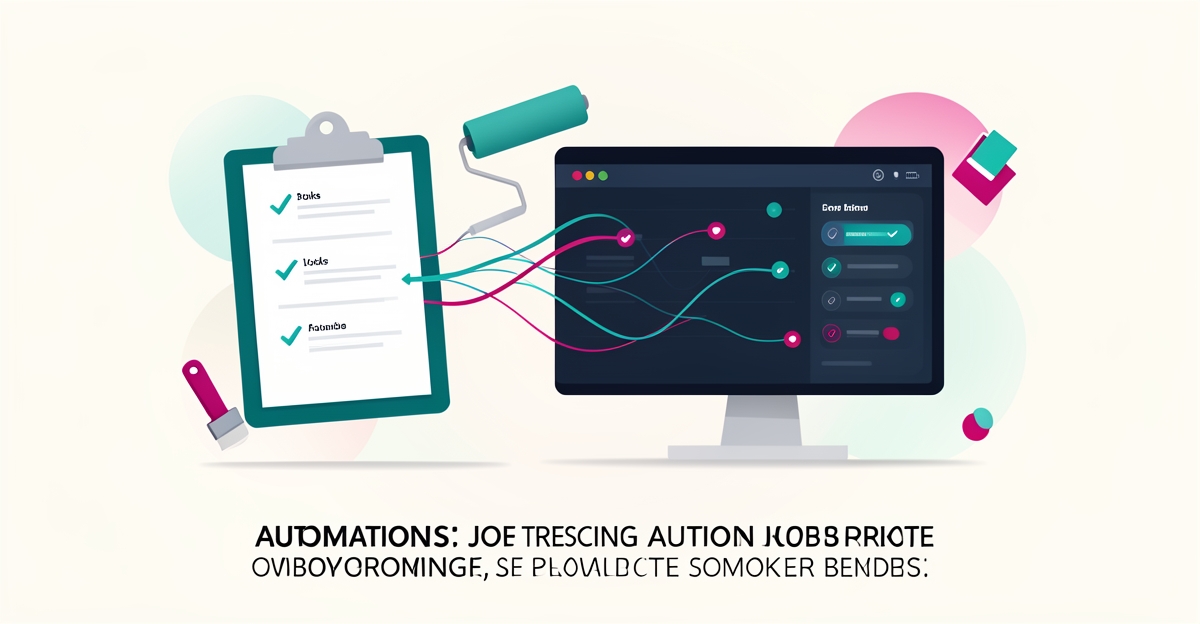
From Paper Logs to AI: How One Painting Company in Dartmouth Streamlined Job Tracking
Key Facts
- The company estimates administrative time dropped by roughly 80% after moving from paper logs to AI-driven job tracking.
- Automated data capture and validation reduced logging errors to near zero.
- Real-time updates improved client responsiveness and cut follow-up calls.
- The system now supports faster decisions, better resource allocation, and stronger client relationships.
- Staff freed from manual data entry now spend their time on client-facing work.
Hire a team member that works 24/7 — for less than a part-time wage.
AI receptionists, SDRs, dispatchers and 99+ roles. Trained on your business, fully managed.
Not sure where to start? Ask our AI planner
The Hidden Cost of Paper-Based Job Tracking in Trades Businesses
Paper logs feel cheap until they start costing jobs. For small trade teams, the hidden tax shows up in lost hours, duplicated work, and client friction that never appears on an invoice.
In the Dartmouth painting business, daily job tracking lived on clipboards and notebooks. Crew notes on material use rarely reached the office the same day. Scheduling updates were written, rewritten, and misread. Client feedback sat in text messages while the paper record stayed out of sync.
Manual logging creates operational drag that compounds across scheduling, material tracking, and client feedback. Dispatchers re-enter the same information in multiple places. Foremen spend time hunting for the latest version instead of leading work. Office staff reconciles handwritten estimates with invoices after the fact.
The cost is not just time. It is missed opportunities. When job status is delayed, crews arrive without the right materials. When feedback is not captured systematically, repeat work erodes margin and reputation. These frictions are typical for small businesses juggling disconnected tools and manual records.
The broader shift toward agentic automation is well underway as of late 2026, with AI tools moving from reading data to acting on it across industries, field services included. Trades businesses that stay on paper are increasingly competing against teams with live, accurate job data.
Paper-based job tracking tends to fail in predictable ways:
- Scheduling delays from illegible or late updates that push crews and clients out of sync
- Material waste from incomplete usage logs and missing reorder triggers
- Client feedback gaps when notes stay on site and never enter the central record
- Rework and disputes caused by conflicting versions of scope and completion
For businesses built on field work, the transition is less about technology hype and more about data pipeline automation. AIQ Labs supports this kind of transformation through [AI Workflow Builds](/workflow-builds), rebuilding the one workflow that costs the most, at a fixed price and in phases, turning fragmented logs into a single source of truth that crews and office teams can trust.
How AI-Powered Data Pipelines Solved Real-Time Job Tracking Without Disrupting Workflow
Paper logs and end-of-day phone calls were the bottleneck that kept the Dartmouth painting crew reactive instead of in control. The shift to automated capture changed job tracking from a memory exercise into a live operational feed.
Field techs now log updates by voice and mobile input as work progresses. Speech-to-text and structured forms feed a central data pipeline that normalizes entries in real time. That eliminates duplicate notes and reduces the manual re-entry that traditionally slows small trades teams. The system integrates directly with scheduling and invoicing tools so status changes propagate without manual handoffs.
Multi-agent orchestration runs the workflow without adding IT overhead. One agent ingests voice and mobile updates, another reconciles materials used against estimates, and a third updates job status and triggers client feedback requests. The result is real-time visibility across crews, office staff, and customers from a single source of truth.
Enterprise-grade frameworks deliver SMB-friendly results because the architecture is built for ownership and integration. AIQ Labs designs these pipelines as custom systems businesses control outright, not subscription widgets. Data flows are mapped to existing scheduling and invoicing platforms with two-way API sync, so adoption happens inside tools crews already use.
The automation covers the moments that previously lived on paper:
- Voice and mobile capture of job start, completion, and on-site issues
- Automatic material tracking and variance alerts against estimates
- Status updates pushed to scheduling and invoicing systems
- Timely feedback requests triggered when milestones close
Workflow continuity is preserved because the system augments existing habits rather than replacing them. Crews speak naturally, the pipeline structures the data, and agents handle routing and follow-ups. The business gains enterprise-grade data pipeline automation without hiring IT or retraining staff on complex platforms. For teams that want this kind of capability without a full rebuild, AIQ Labs also offers [AI Employees](/ai-employees), managed AI staff that handle dispatch, intake, and follow-up at a fraction of the cost of a human hire.
Measurable Gains: Efficiency, Accuracy, and Customer Satisfaction After Automation
The shift from paper logs to AI-driven job tracking delivered measurable gains for the Dartmouth painting company, transforming daily operations in ways that extend well beyond simple digitization. The company estimates administrative time dropped by roughly 80%, freeing staff from manual data entry and allowing them to focus on client-facing work and project execution. Logging errors, once a frequent source of rework and miscommunication, were reduced to near zero through automated data capture and validation. That level of precision is increasingly the norm in field services as automation replaces manual record-keeping.
Client responsiveness improved as real-time updates became available through the automated system. Instead of waiting for end-of-day reports or chasing down field crews for status checks, managers and clients could access current job progress, material usage, and feedback instantly. This transparency built trust and reduced follow-up inquiries, creating a smoother experience for everyone involved.
By replacing fragmented, error-prone processes with a unified, intelligent data flow, the company gained more than efficiency, it gained agility. The system now supports faster decision-making, better resource allocation, and stronger client relationships, all grounded in accurate, real-time information. For businesses considering a similar shift, the Dartmouth case shows that even a focused automation of one core workflow can yield outsized returns. AIQ Labs builds these systems through [AI Workflow Builds](/workflow-builds) and, for companies ready to go further, [AI Operating Systems](/ai-operating-systems), one connected operating layer, built in phases and owned outright. If this sounds like your business, start with the [2-minute Fit Check](/apply) or book a free 30-minute strategy call.
Make AI your competitive advantage — not just another tool.
Strategy, implementation and ongoing optimization. One partner, end to end.
Not sure where to start? Ask our AI planner