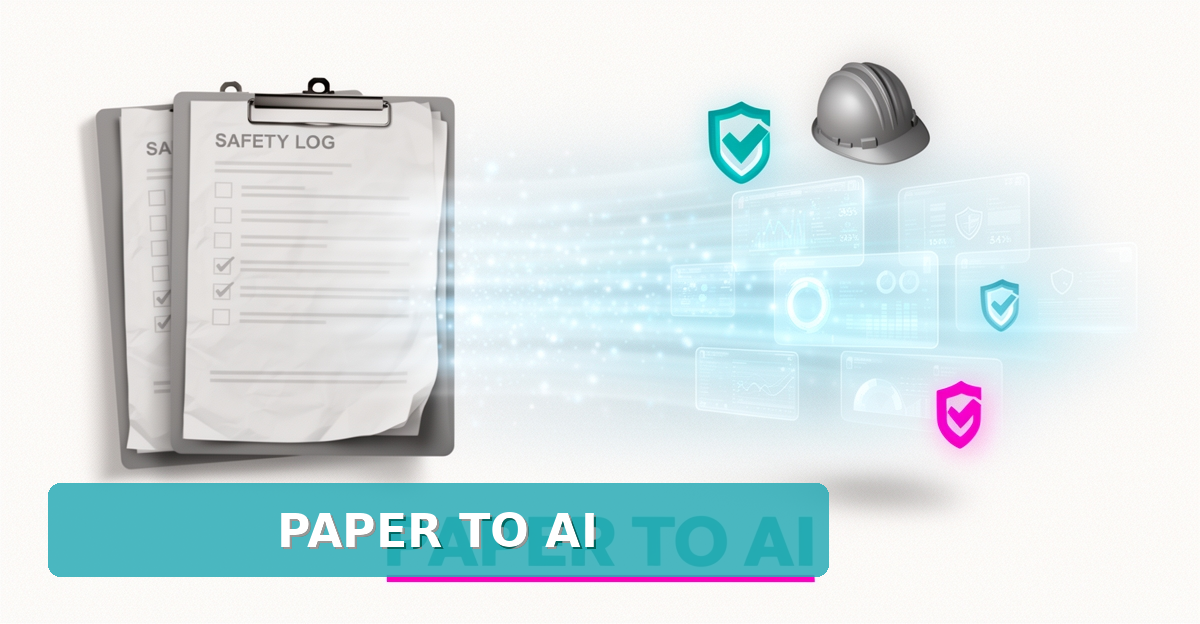
From Paper Logs to AI: How OSHA Compliance Teams Can Digitize Safety Records
Key Facts
- Construction has historically accounted for roughly one in five workplace fatalities while employing a much smaller share of the workforce, a disproportionate safety burden the industry continues to carry
- A significant share of paper-tracked corrective actions are never completed, creating hidden exposure that surfaces during audits
- A single willful or repeated OSHA violation can carry a six-figure penalty, and repeat offenders face harsher scrutiny under the Severe Violator Enforcement Program
- Global EHS software spending has been projected to grow steadily through the end of the decade as firms shift from paper to digital safety management
- OSHA has increased its use of unprogrammed inspections, indicating a shift towards more frequent and surprise audits
- AI-powered document ingestion and metadata tagging can dramatically reduce manual recordkeeping errors compared to handwritten logs
Hire a team member that works 24/7 — for less than a part-time wage.
AI receptionists, SDRs, dispatchers and 99+ roles. Trained on your business, fully managed.
Not sure where to start? Ask our AI planner
Why Paper Safety Logs Are Failing OSHA Compliance Teams
Despite their widespread use, paper safety logs are increasingly exposing construction companies to significant compliance and financial risks. Traditional recordkeeping methods are inefficient, error-prone, and lack the real-time visibility needed to meet modern OSHA standards, especially as unprogrammed inspections become more frequent. This gap between manual processes and regulatory expectations creates avoidable vulnerabilities that can result in costly violations, preventable injuries, and operational disruptions.
Construction has historically accounted for a disproportionate share of workplace fatalities relative to its share of the workforce, highlighting the safety risks inherent in the sector. Paper-based systems contribute to this problem by delaying hazard identification and corrective action tracking, and industry safety analyses have found that a substantial portion of paper-tracked corrective actions are never completed. When hazards go unaddressed due to lost or delayed documentation, the likelihood of incidents increases, putting workers at greater risk and companies at higher liability.
The financial consequences of inadequate recordkeeping are severe. A single willful or repeated OSHA violation can carry a six-figure penalty, and OSHA's Severe Violator Enforcement Program (SVEP) imposes even harsher consequences on repeat offenders. Beyond fines, a lost-time worker's compensation claim typically costs tens of thousands of dollars, not accounting for indirect costs like lost productivity, training replacements, or project delays. These expenses compound quickly when safety issues are not identified and resolved in a timely manner due to fragmented paper trails.
- Time-consuming manual data entry and retrieval slows incident response and reporting.
- Physical logs are vulnerable to loss, damage, or misplacement, especially across multiple job sites.
- Lack of real-time access prevents supervisors from identifying trends or addressing hazards proactively.
- Human error in handwritten entries leads to inaccuracies that undermine compliance during inspections.
- Delayed corrective actions increase the likelihood of repeat violations and OSHA scrutiny.
For construction companies striving to maintain OSHA compliance, relying on paper safety logs is no longer a viable strategy. The combination of rising inspection frequency, significant financial penalties, and human costs demands a more reliable, auditable, and responsive system—one that AI-driven document processing can provide by ensuring records are complete, accessible, and actionable when they matter most.
How AI Transforms OSHA Compliance From Reactive to Proactive
Paper logs can't keep up with OSHA's shift toward surprise audits, and the cost of falling behind is measured in injuries and violations. Construction's disproportionate fatality rate relative to its workforce share is well documented in industry safety data, and manual recordkeeping makes it harder—not easier—to close that gap.
AI moves compliance from reactive paperwork to proactive risk control. Instead of waiting for an incident to trigger a review, systems continuously monitor sites, document conditions, and flag deviations before they escalate.
Computer vision hazard detection replaces manual walkthroughs with continuous oversight. Video feeds are analyzed to identify missing PPE, unsafe behaviors, and equipment hazards in real time, enabling immediate correction rather than post-incident findings.
Automated documentation and metadata tagging eliminate the error-prone paper chain. Inspection forms, photos, and corrective actions are captured digitally, classified, and stored with searchable metadata so records are retrievable during unannounced inspections. Document ingestion and tagging can ensure records meet OSHA standards with far less manual oversight.
Real-time mobile reporting puts reporting power in the field. Workers use mobile-first applications to report hazards, complete inspections, and access safety information on smartphones or tablets, reducing delays and improving data accuracy.
Predictive risk analytics turn historical data into foresight. Patterns across incidents, near misses, and inspection findings are analyzed to predict potential hazards before they lead to incidents.
Compliance alerts keep programs current. Automated reminders for training renewals, equipment checks, and regulatory deadlines reduce the risk of violations, where a single willful or repeated violation can carry a six-figure penalty.
Paper systems also hide problems. Research on corrective action tracking has found that a large share of paper-tracked corrective actions are never completed, creating hidden exposure that only surfaces when an inspector asks for documentation.
Together these capabilities create a proactive safety posture rather than a reactive scramble. The market reflects the urgency, with EHS software spending projected to grow steadily through the end of the decade as more firms digitize safety management.
AIQ Labs builds custom AI systems that handle document ingestion, metadata tagging, and compliance alerts for safety teams. For teams that want to start with the single workflow that costs the most, our AI Workflow Builds rebuild it at a fixed price, in phases. Teams that need managed capacity—like an AI dispatcher or intake coordinator handling safety reports—can deploy AI Employees across 99+ roles.
Core AI capabilities for OSHA compliance teams include:
- Computer vision for real-time monitoring of PPE and unsafe behaviors
- Automated documentation creation and metadata tagging for inspection records
- Mobile-first incident reporting and digital inspection forms
- Predictive risk analytics to identify patterns and forecast hazards
- Automated compliance alerts and regulatory deadline tracking
This shift supports data-driven safety management where KPIs and leading indicators are tracked continuously, not reconstructed after an audit.
Building an AI-Driven Safety Record System That Meets OSHA Standards
The shift from paper logs to digital workflows isn't just a modernization play—it's a compliance imperative when OSHA inspectors can arrive unannounced and demand instant access to years of safety records. Research shows a substantial share of paper-tracked corrective actions are never completed, leaving dangerous gaps that surface during audits. A mobile-first platform closes that gap by putting inspection forms, incident reports, and training records in every foreman's pocket, ensuring data flows from the job site to the compliance dashboard in real time.
- Mobile-first field capture replaces clipboards with guided digital forms that enforce required fields and photo evidence
- Automated document ingestion classifies and tags every PDF, scan, and voice note against OSHA recordkeeping standards
- SMART KPI tracking monitors leading indicators like near-miss frequency and PPE compliance rates with time-bound targets
- Integration hooks push safety data into project management, HR, and accounting systems for a single source of truth
AIQ Labs builds custom ingestion pipelines that normalize messy field data—handwritten logs, photos, voice memos—into structured, metadata-rich records that satisfy OSHA's electronic submission requirements without manual re-entry. The same engine that powers our AI document processing for back-office automation applies here: classify, extract, validate, and route every safety artifact to the right retention bucket with audit-ready trails. For firms ready to connect safety data with scheduling, HR, and finance in one layer, an AI Operating System ties those systems together—and you own it outright.
Ready to see how custom AI document ingestion can turn your safety paperwork into a compliant, searchable asset? Start the Fit Check — a two-minute assessment — then book a free 30-minute strategy call with an AI engineer to map your highest-ROI automation opportunity.
Implementation Roadmap for Compliance Teams
Paper logs can't keep pace with surprise OSHA audits and the cost of a single missed corrective action. Construction's disproportionate share of workplace fatalities is well documented in industry safety data. A lean, milestone-based roadmap turns reactive recordkeeping into proactive compliance.
Start with a rapid assessment of current logs. Map where inspections, near-misses, training sign-offs and PPE checks live today, who enters them, and how long retrieval takes. Identify high-risk workflows where paper-tracked corrective actions commonly go unfinished. This baseline defines scope, data fields, and integration points with existing project management and HR systems.
Deploy mobile capture with auto-tagging next. Field teams use a mobile-first app to photograph, voice-note, and submit inspections in real time. AI ingests documents, extracts metadata, and classifies records by site, trade, regulation, and risk level. Digital recordkeeping replaces physical files and creates instant, searchable evidence for unannounced inspections, a trend OSHA has increased in recent years.
Automate incident workflows and alerts. Digital forms trigger routing, investigation tasks, and corrective-action assignments with due dates and escalation. Automated reminders and compliance dashboards ensure adherence to OSHA requirements and reduce manual follow-up. AIQ Labs builds custom systems that handle document ingestion, metadata tagging, and compliance alerts so records meet OSHA standards without heavy manual oversight.
Train teams for adoption and measure ROI with SMART indicators. Short role-based sessions cover capture, approval, and retrieval. Track incident rates, training completion, PPE compliance, and time-to-close corrective actions. The steady growth of the EHS software market reflects rising demand for digital safety management.
Implementation can align to Start Monthly, Build in Milestones, or Own It Outright models. Typical phases include:
- Assess and architect current logs and integration points
- Deploy mobile capture, auto-tagging, and digital storage
- Automate incident workflows, alerts, and reporting
- Train teams and launch KPI tracking for continuous improvement
Teams keep what ships each phase, pause or adjust scope, and scale from one workflow to a department-wide system as confidence and ROI grow.
Still paying for 10+ subscriptions that don’t talk to each other?
We build custom AI systems you own outright. No vendor lock-in. Full control.
Not sure where to start? Ask our AI planner
Frequently Asked Questions
How much more likely are construction workers to die on the job compared to other industries?
What percentage of corrective actions tracked on paper are never completed, and why does this matter for OSHA compliance?
What is the financial risk of a single OSHA willful or repeated violation for construction companies?
How does AI improve real-time hazard detection compared to traditional paper-based safety logs?
Can AI-powered safety systems help reduce the cost of worker's compensation claims, and if so, how?
Is investing in AI for OSHA compliance worth it for small to mid-sized construction companies?
Turning Safety Records Into Strategic Advantage
The shift from paper safety logs to AI-driven compliance isn't just about avoiding OSHA fines—it's about building a proactive safety culture that protects workers and strengthens operational resilience. As we've seen, paper systems create dangerous gaps: delayed corrective actions, lost documentation, and blind spots that increase both human and financial risk. AI transforms this reality by enabling real-time hazard detection, automated documentation, and predictive analytics that turn safety data into actionable intelligence. For construction teams ready to move beyond reactive paperwork, the path forward starts with assessing current workflows and identifying where automation delivers the highest ROI. Take the first step with a free two-minute Fit Check to see how custom AI document ingestion can turn your safety records into a compliant, searchable asset—then schedule a no-obligation strategy call to map your implementation roadmap. Questions first? Reach us at [email protected].
Make AI your competitive advantage — not just another tool.
Strategy, implementation and ongoing optimization. One partner, end to end.
Not sure where to start? Ask our AI planner