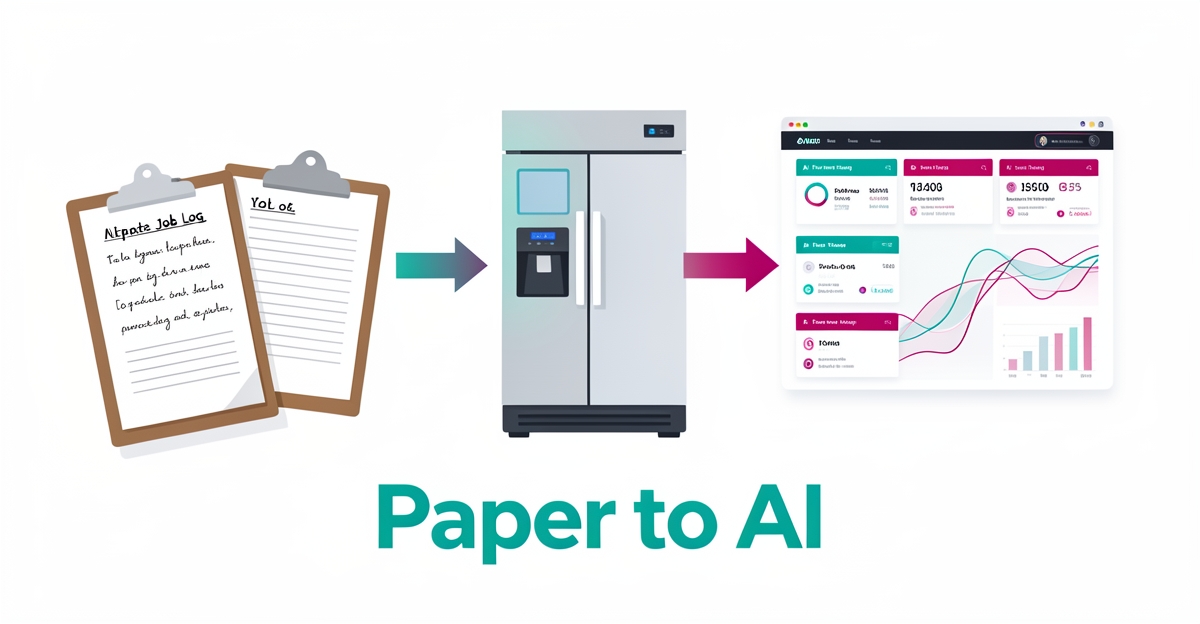
From Paper Logs to AI: How Refrigerator Repair Shops Can Automate Job Tracking
Key Facts
- Refrigeration is one of the largest electricity consumers in commercial buildings, so even small efficiency gains compound quickly for repair operations.
- AI-powered predictive maintenance typically reduces maintenance costs and unplanned downtime significantly compared with reactive, run-to-failure approaches.
- Unexpected equipment breakdowns typically cost several times more than planned maintenance, making paper-based tracking a hidden financial risk.
- AI-driven energy optimization has delivered major savings at enterprise scale, from data center cooling to retail refrigeration networks.
- Digital job tracking gives repair shops real-time dispatch visibility, automated compliance logs, and structured service history for every unit.
Hire a team member that works 24/7 — for less than a part-time wage.
AI receptionists, SDRs, dispatchers and 99+ roles. Trained on your business, fully managed.
Not sure where to start? Ask our AI planner
The Hidden Costs of Paper-Based Job Tracking in Refrigerator Repair
Paper-based job tracking creates hidden costs that ripple through refrigerator repair operations. Manual logs and whiteboard scheduling force technicians to spend valuable time on administrative tasks instead of actual repairs, creating bottlenecks that delay service and frustrate customers. This inefficiency compounds when paper records get lost, damaged, or misfiled, requiring rework that further erodes productivity.
Documentation errors from manual entry lead to missed appointments and incorrect parts ordering, directly impacting revenue and customer trust. Unplanned equipment downtime typically costs several times more than scheduled maintenance, meaning preventable delays from poor tracking can quickly escalate expenses. When technicians arrive without the right information or parts due to outdated paper logs, they must reschedule visits, wasting both time and fuel while leaving customers waiting.
Compliance risks also mount with paper systems, as manual logs lack the audit trails needed for regulatory verification. Without automated timestamping and secure data storage, repair shops struggle to prove adherence to industry standards during inspections or warranty claims. These vulnerabilities expose businesses to potential fines, rejected claims, and reputational damage that far outweigh the perceived savings of sticking with familiar paper methods. The true cost of manual tracking isn't just in the time spent filling out forms, it's in the opportunities lost when errors and delays prevent shops from operating at peak efficiency.
How AI-Powered Job Tracking Systems Transform Repair Operations
Manual paper logs create delays, errors, and blind spots in refrigerator repair operations, problems that AI-powered job tracking systems solve by automating data capture and workflow execution. These systems use AI to extract service details from calls, schedule maintenance based on equipment condition, and notify technicians in real time, eliminating the guesswork and manual entry that slow down traditional processes. Shops that adopt predictive maintenance typically see meaningful reductions in maintenance costs and unplanned downtime, directly improving profitability and service reliability.
- Automated data capture from service calls using voice AI and natural language processing
- Real-time technician notifications via SMS, email, or in-app alerts
- Predictive maintenance scheduling based on equipment sensor data and usage patterns
- Instant customer record updates across CRM and service history systems
- Automated compliance logging for refrigerant handling and safety regulations
AIQ Labs builds these capabilities into custom AI Workflow Builds that integrate with existing dispatch and invoicing tools, ensuring repair shops gain operational visibility without disrupting current workflows. By replacing reactive, paper-based tracking with proactive, AI-driven job management, shops reduce emergency calls, improve first-time fix rates, and free technicians to focus on repairs rather than admin. The result is a leaner, more responsive operation where every service interaction generates structured data that fuels continuous improvement, turning job tracking from a cost center into a strategic advantage.
Real-World Benefits: From Energy Savings to Compliance Automation
Paper logs hide problems until a compressor fails on a service call. AI-powered job tracking flips that dynamic by capturing service details automatically and turning them into real-time action.
Refrigeration is one of the largest electricity consumers in commercial operations, so even small efficiency gains compound quickly for repair shops. Digital systems replace manual data entry with automated sensors and real-time capture, freeing technicians to focus on repairs instead of paperwork.
Energy optimization is one of the clearest financial wins. AI-driven cooling controls have delivered major savings at enterprise scale, from data center cooling to load balancing across large retail refrigeration networks. The same principles now apply to smaller operations through sensor-based monitoring and smart compressor controls.
For repair businesses, those principles translate into smarter dispatch and service recommendations. AI analyzes equipment logs, environmental conditions, and service history to flag units trending toward inefficiency before failure occurs. The result is predictive maintenance that prevents costly emergency calls.
Predictive maintenance also changes cost exposure. Shops using condition-based scheduling typically spend less on maintenance and experience far less unplanned downtime than those running equipment to failure, because unexpected breakdowns typically cost several times more than planned service.
Compliance becomes automatic rather than an end-of-month scramble. Automated logging and reporting ensure adherence to regulatory requirements and simplify audit processes. Job details, photos, parts used, and technician notes are captured in real time and synced to customer records without re-keying.
AIQ Labs builds production-ready AI systems that integrate with existing tools and eliminate human errors in repair documentation, which is critical when service records support warranty claims and compliance audits. The workflow auto-captures service details, notifies technicians, and updates customer records in real time.
Shops that move from paper to AI typically see:
- Faster job completion with automated notifications and real-time dispatch visibility
- Lower energy-related callbacks through data-driven service recommendations
- Audit-ready reporting generated automatically from completed work orders
- Reduced administrative rework and fewer missed follow-ups
Better decision-making follows naturally. Real-time data and analytics provide valuable insights for informed decisions about staffing, parts inventory, and recurring service plans. Reliability improves as proactive identification and resolution of potential issues prevent disruptions for customers.
The shift from manual logs to AI workflow and task automation is less about replacing technicians and more about giving them foresight. A real-time dashboard allows you to see your entire operation at a glance and identify potential problems before they impact your business. For shops that want automation to handle routine coordination end to end, managed AI Employees can handle dispatch intake, follow-ups, and customer updates around the clock.
Making the Transition: A Practical Roadmap for Repair Shop Automation
Moving from paper logs to automated job tracking requires a structured approach that minimizes disruption while building confidence in the new system. Start by digitizing your assets, catalog every refrigerator, freezer, and HVAC unit with model numbers, service history, and location details into a centralized digital repository. This foundational step ensures technicians have instant access to equipment specifics, reducing diagnostic time and improving first-time fix rates.
Next, implement intelligent task scheduling that moves beyond fixed calendars to condition-based triggers. Automate recurring maintenance checks, warranty follow-ups, and seasonal inspections using AI-driven rules that prioritize urgent jobs and optimize technician routes. Pair this with mobile workflows that guide technicians through standardized checklists, capture service notes via voice-to-text, and automatically update customer records upon job completion. Shops adopting predictive maintenance typically see less unplanned downtime, which translates directly to more billable hours and fewer emergency callbacks.
Address adoption hurdles through targeted change management: provide role-specific training that focuses on practical outcomes like reduced paperwork and faster invoicing, not just system features. Migrate historical data incrementally, begin with active service contracts and high-value equipment, to maintain operational continuity during the transition. AIQ Labs supports this journey by building custom workflow solutions that integrate with existing tools like QuickBooks or Google Calendar, eliminating manual data silos while ensuring your team owns the system outright. For shops ready to connect scheduling, dispatch, invoicing, and compliance into one layer, an AI Operating System built in phases keeps the transition manageable. The result is a seamless shift where automation handles routine tracking, freeing technicians to focus on complex repairs and customer relationships.
Turn Job Tracking Into Your Competitive Edge
Moving from paper logs to AI-driven job tracking is less about replacing how your technicians work and more about removing the friction that costs you time, money, and trust. Automated capture, real-time dispatch visibility, and predictive maintenance scheduling cut administrative rework, reduce missed appointments and parts errors, and make compliance audit-ready without an end-of-month scramble. The shops that win are the ones that turn every service interaction into structured data that fuels faster first-time fixes, smarter energy use, and fewer costly emergency calls. Start with a focused digitization of your active assets and one high-impact workflow, then expand as your team feels the relief of less paperwork and more foresight. If you want a clear view of where the biggest ROI is for your operation, start the 2-minute Fit Check at https://aiqlabs.ai/apply for a free 30-minute strategy call with an AI engineer to map your bottleneck and build a practical automation plan. You can also reach the team directly at [email protected]. AIQ Labs has deployed 200+ multi-agent systems and runs four live SaaS products daily, production-ready AI workflow systems that integrate with your existing dispatch and invoicing tools, so you own the system outright.
Make AI your competitive advantage — not just another tool.
Strategy, implementation and ongoing optimization. One partner, end to end.
Not sure where to start? Ask our AI planner