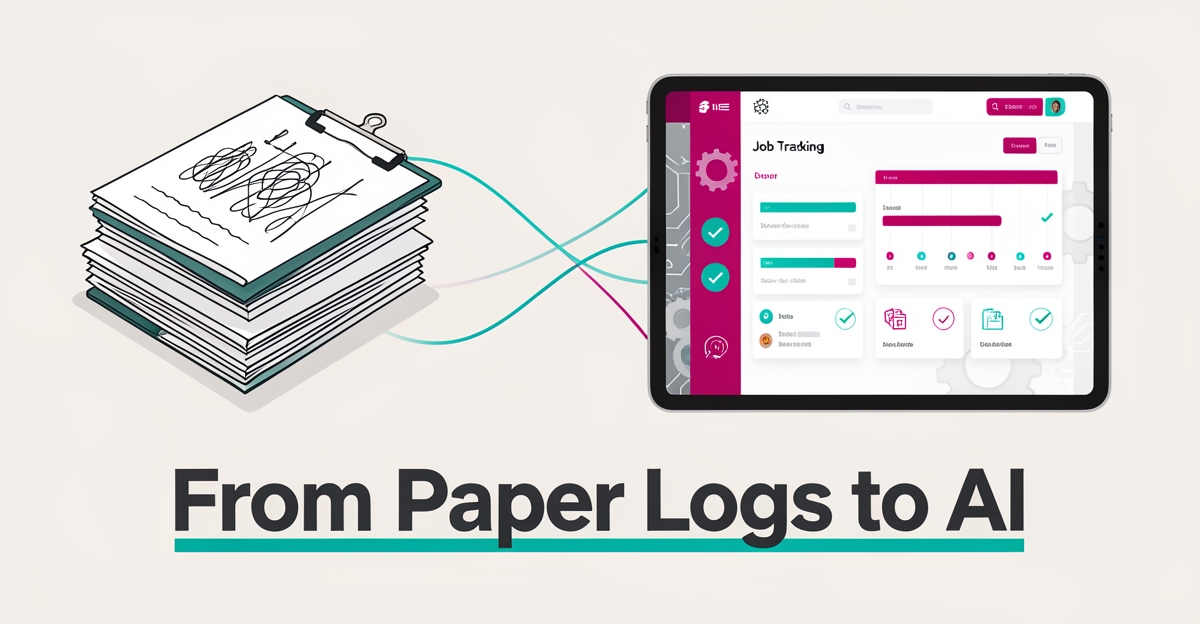
From Paper Logs to AI: How Repair Companies Can Automate Job Tracking and Repair History
Key Facts
- AI workflow automation enables auto-capture of job details from calls, texts, emails and on-site notes for repair businesses
- Intelligent technician assignment and dynamic rescheduling are typical gains from AI workflow automation in repair shops
- Automatic customer updates and repair history enrichment are key benefits of AI workflow automation for repair companies
- AIQ Labs has deployed 200+ multi-agent systems and runs 4 live SaaS products daily, so these workflows are production-tested, not theoretical
- With Build in Milestones, each phase is approved and paid for only as it ships, and everything built stays with you
Hire a team member that works 24/7 — for less than a part-time wage.
AI receptionists, SDRs, dispatchers and 99+ roles. Trained on your business, fully managed.
Not sure where to start? Ask our AI planner
The Hidden Cost of Paper-Based Job Tracking in Repair Businesses
Paper logs create invisible drag that compounds with every repair order. Technicians hunt for handwritten notes, managers reconcile duplicate entries, and customers wait for updates that never arrive.
Manual job tracking locks repair businesses into slow, error-prone cycles that are hard to scale. Paper tickets get lost, fields are skipped, and repair history lives in binders instead of searchable records. The result is delayed assignments, repeated diagnostics, and frustrated customers who receive inconsistent status updates.
The competitive gap widens as more service businesses automate. As of late 2026, AI adoption has moved well past the experimental stage for many service companies, and repair shops relying on paper remain on the wrong side of that divide. Without digital job tracking, teams cannot see real-time visibility into service performance, technician workload, or parts usage. Operational inefficiencies become normal: duplicate work orders, missed follow-ups, and manual re-entry between intake, workshop, and invoicing.
The hidden costs show up daily:
- Error rates climb when handwriting is misread or fields are left blank, forcing rework and warranty disputes.
- Scalability stalls because paper systems cannot support more technicians, locations, or devices without proportional admin overhead.
- Customer experience erodes as status updates require phone calls instead of automated notifications tied to job milestones.
AI workflow automation changes the equation by digitizing and automating job tracking end-to-end. Intelligent workflows replace outdated paper systems with accurate repair logs, technician assignments, and customer updates that flow automatically. AIQ Labs builds these capabilities into custom AI systems for service providers, giving teams real-time visibility without subscription lock-in.
When repair history is structured and searchable, businesses reduce rework, shorten turnaround times, and protect revenue. The gap between paper-based shops and digitally enabled competitors is no longer theoretical; it shows up in turnaround times, first-time fix rates, and admin hours lost every week.
How AI Workflow Automation Transforms Repair Job Tracking and History Management
Paper logs force repair teams to chase updates instead of fixing equipment. AI-powered workflow automation replaces that friction with intelligent, real-time systems that auto-capture job details, assign technicians, and notify customers without manual entry.
For repair businesses, that shift means job tracking moves from binders and spreadsheets to self-updating workflows that learn from each service event. Intake forms, photos, parts used and time on site are captured automatically and written to a single repair history record. Multi-agent orchestration routes the work to the right technician based on skills, location and workload, then pushes real-time status to customers.
AIQ Labs builds these capabilities into custom AI systems for service providers, using production-tested multi-agent orchestration proven across 200+ deployments and 4 live SaaS products the company runs daily. The result is visibility without overhead.
Typical automation gains include:
- Auto-capture of job details from calls, texts, emails and on-site notes
- Intelligent technician assignment and dynamic rescheduling
- Automatic customer updates and repair history enrichment
- Real-time dashboards for service performance and parts usage
Instead of recreating history for every repeat visit, teams access a complete, searchable timeline per asset and customer. That continuity reduces repeat diagnostics, improves first-time fix rates and creates audit-ready records. Workflow automation also eliminates duplicate entry across CRM, dispatch and accounting tools, freeing staff for billable work.
With AI Employees handling intake, dispatch and follow-up, repair companies gain 24/7 coverage without adding headcount, at a fraction of the cost of a human hire. The systems are owned outright, integrate with existing tools, and continuously improve as more jobs flow through.
Implementation Roadmap: From Pilot to Full AI Workflow Ownership for Repair Shops
The fastest way for a repair shop to fail at AI adoption is trying to digitize everything at once. The smarter path is to pick one broken workflow, dispatch, invoicing, or repair logging, fix it completely, prove the value, then expand.
The roadmap below breaks adoption into deliberate stages, each with a clear exit point before more investment is made.
Stage 1: The Single Workflow Fix
Start with the workflow that bleeds the most time. For most repair shops, that's either dispatching technicians or chasing invoices. An AIQ Labs Workflow Build targets one critical broken process and rebuilds it as a custom system, for example, an AI Dispatcher that assigns jobs, tracks status, and sends customer updates automatically. This maps to the "Build in Milestones" payment model: the build is split into phases, each approved and paid for only as it ships. If the project stops, everything built so far stays with the shop.
Stage 2: Pilot and Prove
Run the new system alongside the old process for a defined period. Measure the metrics that matter: time per job entry, missed customer updates, invoice turnaround. This stage prevents the most common failure mode in AI adoption, stalling at the pilot phase because success was never defined. Set the exit criteria before go-live, not after.
Stage 3: Department Automation
Once one workflow is proven, expand to the surrounding department. For a repair shop, that typically means connecting job tracking to technician scheduling, parts inventory, and customer communication into one integrated system. AIQ Labs structures this as a phased build with deep two-way API integrations so data flows between systems instead of being re-entered.
Stage 4: Full Ownership
The end state is a complete AI Operating System for the business, job tracking, repair history, scheduling, and billing unified under one connected operating layer, built in phases. Under the "Own It Outright" model, the shop receives full ownership of the code, agents, and data when the build is complete. No vendor lock-in, no per-seat subscription treadmill.
A few principles keep this roadmap on track:
- Fix one workflow completely before touching the next, partial digitization creates worse chaos than paper.
- Choose a payment model that matches risk tolerance: Start Monthly for low commitment, Build in Milestones for phased control, Own It Outright for long-term asset building.
- Define measurable success criteria at the pilot stage and hold the project to them.
- Insist on ownership of the system, not a rental, the repair history database becomes a compounding business asset.
The shops that win with AI won't be the ones that adopted the most tools. They'll be the ones that moved deliberately from one proven fix to full workflow ownership, with real numbers in writing at every stage, and the system they end up with belonging entirely to them.
Still paying for 10+ subscriptions that don’t talk to each other?
We build custom AI systems you own outright. No vendor lock-in. Full control.
Not sure where to start? Ask our AI planner
Frequently Asked Questions
How does AI workflow automation improve repair job tracking actually reduce errors in repair businesses?
Can I keep ownership of the AI system if I work with AIQ Labs, or am I locked into a subscription?
What is the recommended first step for a repair shop looking to adopt AI without overwhelming their team?
How does AI-powered job tracking improve customer experience in repair services?
Can AI handle customer calls and intake for a repair shop?
Own Your Repair History, Own Your Growth
Paper logs were never built to scale, and the cost shows up in lost tickets, repeated diagnostics, and customers waiting for updates that never come. Moving from binders to self-updating workflows means job details, parts used, and technician notes are captured automatically into a single, searchable repair history that reduces rework and shortens turnaround times. With AI-powered dispatch and real-time status, teams gain visibility without adding overhead, and the system improves as more jobs flow through. Repair shops that move deliberately from one proven fix to full workflow ownership close the gap with digitally enabled competitors. Pick the one broken workflow that bleeds the most time, prove value with clear metrics, then expand. If you want a no-obligation working session to map your biggest bottleneck and the highest-ROI automation path, start the 2-minute Fit Check at aiqlabs.ai/apply for a free 30-minute strategy call with an AI engineer.
Make AI your competitive advantage — not just another tool.
Strategy, implementation and ongoing optimization. One partner, end to end.
Not sure where to start? Ask our AI planner