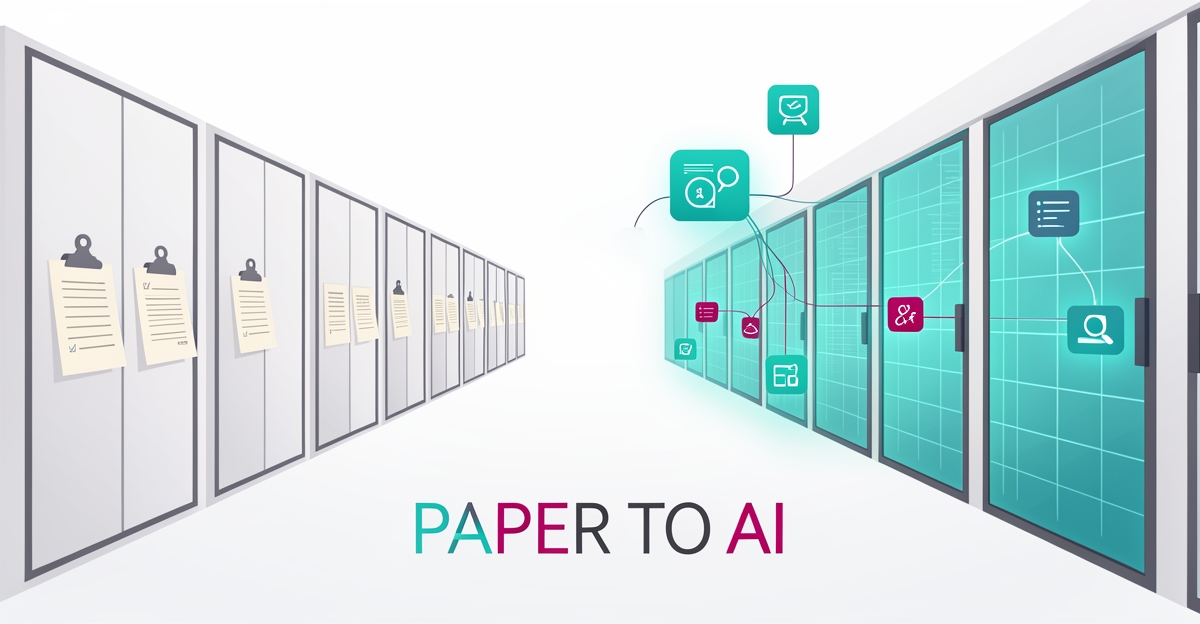
From Paper Logs to AI: How Self Storage Facilities Can Automate Unit Inventory Tracking
Key Facts
- Manual unit tracking is one of the most error-prone workflows in self storage: a single missed log entry can mean a vacant unit gets rented twice, or an occupied one goes unbilled.
- AI adoption among enterprises has grown steadily year over year, with larger organizations adopting fastest, and expertise gaps remaining the most commonly cited barrier.
- Most AI deployments still need human oversight: fully hands-off automation is rare, which is why phased builds with clear checkpoints work best.
- AIQ Labs has deployed 200+ multi-agent systems and runs 4 live SaaS products daily, automation built by operators, not theorists.
Hire a team member that works 24/7 — for less than a part-time wage.
AI receptionists, SDRs, dispatchers and 99+ roles. Trained on your business, fully managed.
Not sure where to start? Ask our AI planner
How AI Solves Inventory Tracking: Proven Applications from Industry Data
AI doesn't fix inventory tracking by being clever. It fixes it by being always on. Instead of a person updating a log, software agents watch every signal your facility already generates and reconcile unit status continuously:
- Gate activity reconciliation. Every gate code entry is a data point. An AI agent can compare gate access patterns against your occupancy records and flag units where activity doesn't match status, a "vacant" unit with daily entries, or an "occupied" unit nobody has visited in months.
- Payment-status sync. When a payment fails or a lien process starts, the unit's status updates everywhere at once: the lock list, the website availability, the manager's dashboard. No manual cross-referencing.
- Real-time availability feeds. Your website and aggregators only show units that are genuinely available, which means fewer double-bookings and fewer disappointed callers.
- Anomaly alerts. Instead of discovering a discrepancy at month-end, you get flagged the day it appears, while the context is still fresh enough to fix.
Industry data on AI adoption points to a consistent pattern: organizations that adopt AI report meaningful efficiency gains, but the biggest barrier is lack of in-house expertise. That's exactly the gap a managed build addresses. You don't need to hire a data team; you need a system that's built once and then runs.
For facilities that want more than tracking, AI can extend into the surrounding workflow, automated delinquency outreach, AI receptionists answering availability calls, and dispatch coordination for maintenance. AIQ Labs' AI Employees handle exactly these roles, at roughly 80% less cost than a human hire.
Implementation Roadmap: From Pilot to Full AI Inventory Automation
The mistake most operators make is trying to automate everything at once. The approach that works is the opposite: pick the one workflow that costs you the most, fix it, prove it, then expand.
Step 1: Identify the costliest workflow
For most facilities, that's unit status reconciliation, the gap between what your records say and what's actually true on the ground. For others it's delinquency follow-up or missed calls. Pick one.
Step 2: Start with a fixed-scope build
AIQ Labs' AI Workflow Builds rebuild that single workflow at a fixed price, in phases. You see it working before you commit further. No open-ended consulting engagements.
Step 3: Prove it, then connect the next piece
Once inventory tracking runs itself, the natural next steps are the workflows that depend on it: availability-driven pricing, automated tenant communication, collections sequencing. Over time these connect into a single operating layer, what AIQ Labs calls an AI Operating System, built in phases and owned outright by you. No per-seat rentals, no vendor lock-in.
Step 4: Keep humans in the loop where they matter
AI handles the reconciliation and the alerts. Your staff handles judgment calls, tenant disputes, exception handling, relationships. That division of labor is where the real efficiency comes from.
Step 5: Pay only for what you use
Whether you start monthly, build in milestones, or own it outright, the payment model should match your risk tolerance. Details are on the pricing page, no fake numbers, no invented case studies.
Next step: Take the 2-minute Fit Check to see if your facility is a good candidate, then book a free 30-minute strategy call. Reach the team at [email protected].
Make AI your competitive advantage — not just another tool.
Strategy, implementation and ongoing optimization. One partner, end to end.
Not sure where to start? Ask our AI planner