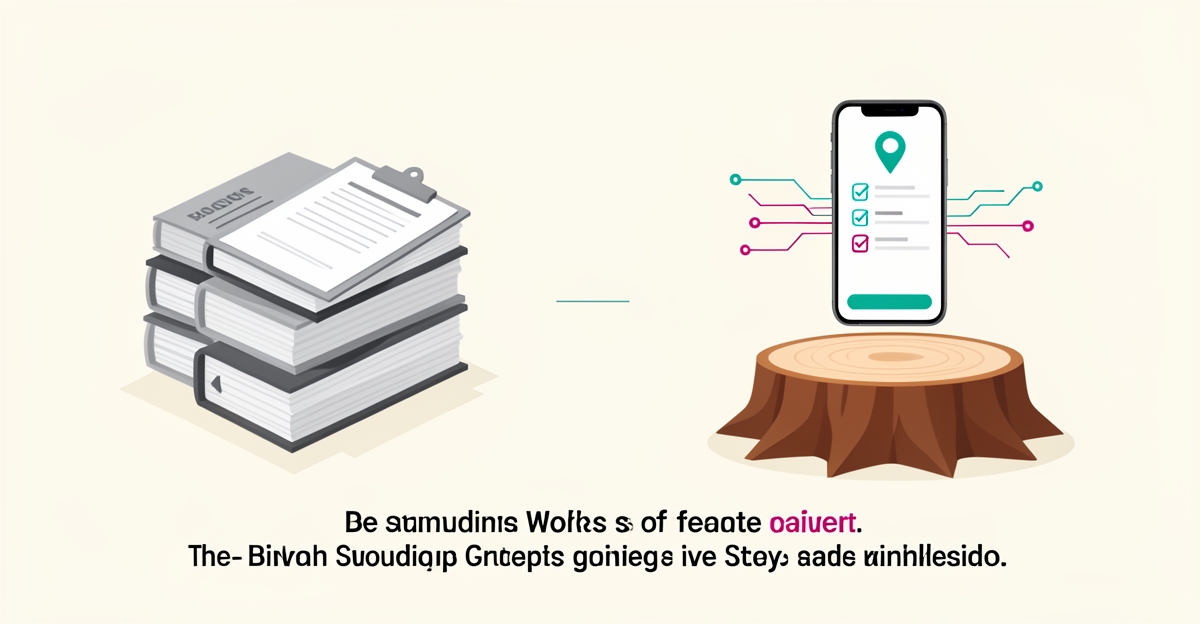
From Paper Logs to AI: How Stump Grinding Companies Can Automate Service Tracking
Key Facts
- A large majority of companies have deployed generative AI according to industry research
- Most of those deployments still report no material contribution to earnings per industry analysis, the gap is execution, not adoption
- Task mining combined with AI automation has delivered six-figure cost savings for large field-service operators like Leaf Home as reported in workflow automation analysis
- LLMs have context-window limits, so large log volumes are typically split into chunks for analysis per log analysis research
- LLMs can process unstructured text and infer semantic meaning instead of relying on regex patterns or brittle parsing logic according to Splunk's log file analysis
- AI workflow automation enables systems to understand work, make operational decisions, and execute tasks without constant human supervision per Kuse's comprehensive guide
- Custom AI workflow solutions are essential for end-to-end processes that differentiate the business, especially when proprietary rules and multi-system orchestration are involved based on industry research
Hire a team member that works 24/7 — for less than a part-time wage.
AI receptionists, SDRs, dispatchers and 99+ roles. Trained on your business, fully managed.
Not sure where to start? Ask our AI planner
The Paper Log Problem Costing Stump Grinding Companies Time and Accuracy
Stump grinding crews finish a job, climb off the truck, and handwrite a note on a damp clipboard. That paper log becomes the single source of truth for completion, location, and customer history, until it's lost, smudged, or filed in the wrong folder.
Manual service tracking creates a cascade of errors that compounds daily. Delayed job completion updates mean dispatchers schedule crews to sites already cleared. Lost customer location history forces operators to re-confirm addresses and access notes on every return visit. Scheduling errors grow when paper logs don't sync with calendars or invoicing, forcing office staff to chase field teams for basic data.
The problem is not unique to stump grinding. Industry research shows most companies have now deployed generative AI, yet the majority report no material contribution to earnings, a critical gap between AI adoption and actual business impact. That gap widens when unstructured field notes are treated as structured data.
Paper logs are fundamentally unstructured. Log analysis research notes LLMs can process unstructured text and infer semantic meaning instead of relying on regex patterns, custom scripts, or brittle parsing logic. In the field, that means a handwritten "stump out, root ball left, gate code 4821" can be understood, classified, and routed without manual re-entry.
Traditional tracking also fails at scale. LLMs have context-window limits, so large log volumes typically need to be split into chunks for analysis. When crews generate dozens of daily entries across multiple trucks, paper systems cannot chunk, correlate, or summarize them. The result is delayed visibility and repeated work.
The cost of inaccuracy shows up in operations:
- Job completion status lags hours or days, creating double-booking risk
- Customer location and site notes disappear, forcing re-surveys
- Service history is fragmented, hurting upsell and retention
- Scheduling errors increase drive time and fuel costs
AI workflow automation offers a pathway to eliminate manual data entry while improving accuracy. Workflow automation analysis documented six-figure cost savings at Leaf Home through task mining combined with AI automation across 13 business areas. For field services, the equivalent gain comes from automating intake, decisioning, and action across systems without constant human supervision.
At AIQ Labs, this maps to AI Workflow Builds: we rebuild the one workflow that costs you the most, for a stump grinding operation, that's usually service tracking, at a fixed price and in phases. The shift moves teams from low-level pattern matching to high-level reasoning, making service tracking faster, more flexible, and accessible across office and field teams.
How AI-Powered Log Analysis Replaces Manual Parsing With Natural Language Understanding
Field notes from stump grinding jobs often capture rich details in free-form text, job completion notes, customer locations, and equipment observations, but extracting structured data from these logs has traditionally required painstaking manual parsing or brittle regex patterns. This approach becomes unsustainable as log volumes grow, leading to missed insights and scheduling errors. AI-powered log analysis transforms this process by applying natural language understanding to interpret unstructured field notes with semantic awareness rather than relying on rigid syntax matching.
LLM-based analysis enables intent classification to determine whether a note indicates job completion, rescheduling, or equipment issues, while entity recognition extracts critical data points like customer addresses, stump dimensions, and service timestamps directly from conversational text. Unlike traditional grep or regex methods that fail with variations in phrasing or formatting, AI models understand semantic meaning, for example, recognizing that "stump cleared at 123 Oak St, job done" and "completed work on Maple Ave, customer satisfied" both convey the same completion status despite different wording. This capability allows stump grinding companies to automatically populate service histories and location databases from field technician notes without manual data entry.
The benefits extend beyond basic extraction: LLMs can correlate events across multiple log entries to identify patterns like repeat service needs at specific locations or seasonal workload fluctuations, enabling proactive scheduling and resource planning. According to research on log analysis, LLMs can process unstructured text and infer semantic meaning instead of relying on brittle parsing logic, making log analysis faster, more flexible, and accessible across teams. By chunking large log files to work within context-window limits and validating outputs through human-in-the-loop review, companies achieve accurate incident analysis at scale. This shift from pattern matching to high-level reasoning turns field logs from administrative burdens into strategic assets for optimizing stump grinding operations. AIQ Labs implements these capabilities through custom AI workflow builds that integrate directly with field tools, ensuring service tracking reflects real-world conditions while reducing the cognitive load on technicians.
The AI Pipeline for Field Service Tracking: Intake, Decision, Action, and Monitoring
Stump grinding operations generate messy field inputs, handwritten notes, voice memos, and partial job updates, that traditional systems struggle to process. AI Intake transforms these unstructured sources into structured data by classifying intent, recognizing entities like customer addresses or stump dimensions, and routing signals from field tools, SMS, or voice logs into the workflow. This layer ensures no detail is lost when technicians report completion via shorthand or audio, turning chaotic inputs into reliable triggers for downstream automation. LLMs enable semantic understanding of unstructured text, moving beyond brittle regex parsing to interpret the meaning behind field reports.
Once inputs are structured, the AI Decision layer applies intelligent orchestration to prioritize and route jobs. Using ML-based decisioning informed by historical completion times, crew locations, and equipment availability, the system dynamically adjusts schedules while enforcing SLAs for urgent requests like post-storm cleanups. Risk scoring flags potential conflicts, such as overlapping utility marks or permit requirements, before dispatch, reducing costly rework. Contextual awareness incorporates crew certifications, past performance on similar jobs, and real-time traffic data to optimize routing decisions that balance efficiency with service quality.
The AI Action layer executes decisions by updating CRM systems with job completion status, pushing location data to dispatch maps, and triggering follow-up actions like invoice generation or customer satisfaction surveys. It auto-fills work order forms, pushes updates to scheduling tools, and pulls equipment maintenance logs from APIs to prevent delays. This seamless execution eliminates manual data entry between field crews and office staff, ensuring service history accumulates accurately without transcription errors. Most companies have deployed generative AI, yet many fail to connect decision layers to action systems, creating insights without operational impact.
Finally, the Monitoring layer continuously refines the pipeline by tracking where human intervention occurs, identifying failure patterns in address recognition or job prioritization, and measuring latency between job completion and system updates. It highlights tasks ready for full automation, like routine stump grind confirmations, while retaining human oversight for complex cases involving protected trees or municipal permits. By analyzing exception volumes and accuracy trends, the system reduces scheduling errors over time, turning field service tracking into a self-improving workflow that learns from every job completed. AI workflow automation understands work, makes operational decisions, and executes tasks without constant supervision, exactly what stump grinding needs to replace paper logs with reliable, intelligent tracking.
From Prototype to Production: A Structured Implementation Path for Stump Grinding Teams
Manual paper logs create blind spots for stump grinding crews the moment a job leaves the yard. AI-powered service tracking closes that gap by turning field notes, photos, and voice updates into structured job completion data without adding admin work.
A structured implementation path prevents the adoption trap where technology is deployed but value stalls. According to industry research, most companies have deployed generative AI, yet the majority report no material contribution to earnings. The difference is a disciplined rollout that starts with process, not models.
Start by identifying high-impact pain points that are both painful and automatable. Map the entire service workflow from dispatch to invoicing and flag where crews spend time interpreting unstructured input, making routine decisions, or re-entering data. Customer-facing workflows that affect revenue and satisfaction are prime candidates.
Choose custom versus off-the-shelf based on competitive need. Off-the-shelf platforms fit standardized processes like document routing and basic approvals. Custom development is essential for end-to-end processes that differentiate the business, especially when proprietary rules and multi-system orchestration are involved. AIQ Labs builds custom systems on a fixed-price, milestone basis for stump grinding teams needing accuracy and reduced scheduling errors, you can see how the payment models work at aiqlabs.ai/pricing.
Prototype before committing engineering resources. A minimal prototype validates whether AI can solve the specific problem and builds buy-in with end users early. Set clear success criteria around time savings, accuracy, and scheduling error reduction before scaling.
Separate structured and unstructured inputs for reliable automation. Structured data from CRM fields and forms can flow directly into downstream systems. Unstructured inputs such as emails, photos, voice notes, and PDF invoices require interpretation through AI models with intent classification and entity recognition.
Build the decision layer with human-in-the-loop approvals for high-impact decisions. Compliance-heavy or revenue-critical steps benefit from AI preparation with human finalization. This guardrail prevents hallucinations and maintains trust while the system learns.
A practical rollout sequence for stump grinding teams:
- Identify and map the highest-pain workflow, then prototype it end to end
- Classify inputs as structured vs unstructured and design intake for each type
- Implement AI decisioning with human approval gates for scheduling and billing
- Deploy, monitor time savings, accuracy, and scheduling error reduction, then iterate
Measure what matters from day one. Track hours saved per week, task completion time reduction, accuracy rate improvements, and scheduling errors avoided. Organizations that measure structured automation see concrete results, with examples like task mining combined with AI automation delivering six-figure cost savings across 13 business areas at Leaf Home.
With clear metrics and a phased path, paper logs become a real-time service history that crews update naturally and dispatchers trust.
Paper Logs Can't Scale With You
The damp clipboard is a bottleneck, not a system. Paper logs create lag in completion updates, lost site notes, double-booked crews, and fragmented service history that hurts retention and drives up drive time. AI-powered service tracking replaces manual parsing with natural language understanding that interprets field notes, voice memos and photos, then automatically classifies intent, extracts customer locations and job details, and routes them through intake, decisioning, action and monitoring layers. That shift turns chaotic inputs into a real-time service history crews can update naturally and dispatchers can trust. The gap between AI adoption and business impact is real, most companies have deployed generative AI yet the majority report no material contribution to earnings according to industry research, which is why a disciplined path matters: map the highest-pain workflow, prototype it, separate structured from unstructured inputs, and measure time saved, accuracy and scheduling errors avoided. If you want to see where AI fits your specific operations, take the 2-minute Fit Check at aiqlabs.ai/apply, then book a free 30-minute strategy call to map your biggest bottleneck and identify high-ROI automation opportunities.
Make AI your competitive advantage — not just another tool.
Strategy, implementation and ongoing optimization. One partner, end to end.
Not sure where to start? Ask our AI planner