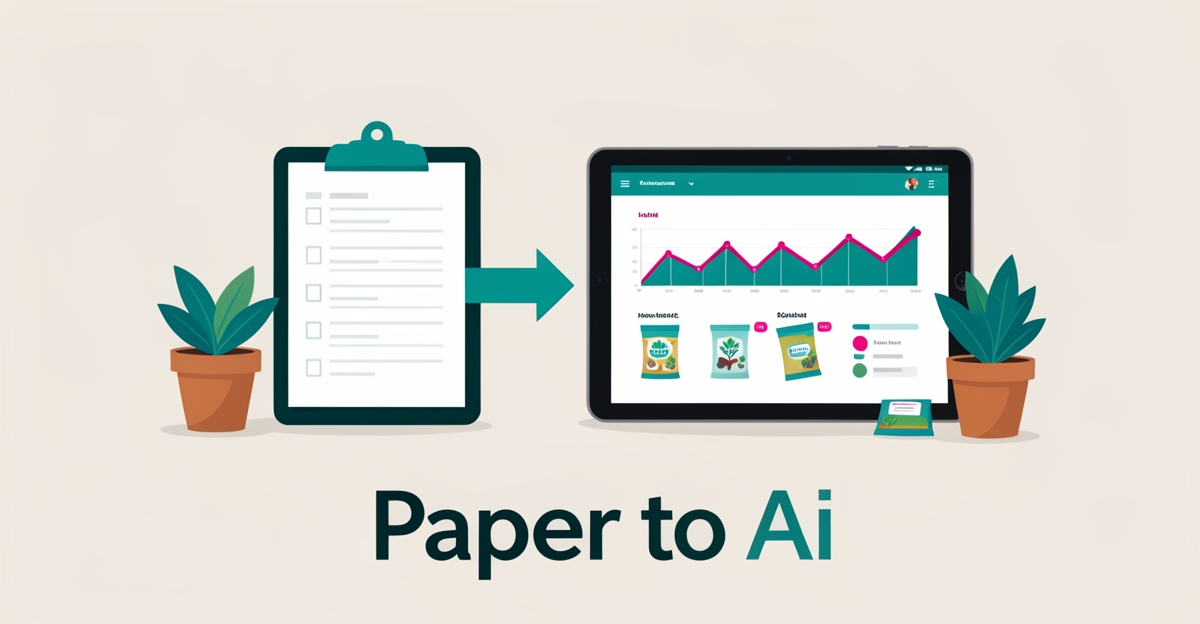
From Paper Logs to AI: How to Digitize and Automate Garden Inventory Tracking
Key Facts
- AI document processing can read receipts, seed packets, and delivery notes and turn them into structured inventory records, typically with far fewer errors than manual transcription.
- Automated tracking reduces phantom items and surprise shortages by keeping one live, auditable record instead of paper sheets and stale spreadsheets.
- A large share of repetitive inventory tasks, counting, re-entering data, reconciling logs, can be automated, freeing crews for actual garden work.
- The biggest savings usually come from avoided emergency purchases, reduced waste, and hours of manual data entry eliminated each week.
- AIQ Labs builds inventory systems you own outright, code, data, and agents, with no vendor lock-in.
Hire a team member that works 24/7 — for less than a part-time wage.
AI receptionists, SDRs, dispatchers and 99+ roles. Trained on your business, fully managed.
Not sure where to start? Ask our AI planner
The Hidden Cost of Manual Inventory in Garden Operations
Paper logs feel safe until the season ramps up and the cost of manual tracking becomes visible. In garden operations, every missed seed count or misplaced tool ripples into lost time, wasted budget, and frustrated crews.
Manual inventory creates a drag that compounds across the growing cycle. Staff spend hours walking beds, reading handwritten logs, and re-entering numbers into spreadsheets. When repetitive manual work is automated, crews typically reclaim several hours a day, time that is otherwise lost to transcription and searching.
Accuracy gaps are the hidden tax of paper-based systems. Human error during counts, delayed updates, and illegible notes lead to stockouts of critical seeds and overstocking of slow-moving tools. AI document processing can read receipts, seed packets, and delivery notes directly, cutting the transcription errors that compound over a season.
The operational bottlenecks show up daily:
- Delayed visibility into what is actually in the shed versus what the log says
- Duplicate data entry across paper sheets, spreadsheets, and ordering forms
- Reactive reordering after shortages are discovered in the field
- No real-time alerts for overstock, spoilage risk, or tool misplacement
These frictions limit scalability. Manual processes struggle to keep pace when beds expand, volunteers rotate, or harvest windows compress. A large share of repetitive inventory tasks, counting, logging, reconciling, can be automated, freeing staff for higher-value garden work.
Cost accumulates quietly. Beyond labor, gardens pay in missed planting windows, emergency purchases at premium prices, and equipment downtime. The savings from automation are real but operation-specific: they come from eliminated data entry, fewer emergency buys, and less waste, which is why AIQ Labs starts every engagement by measuring where the losses actually are.
The shift from paper to digital is about control, not just convenience. With AI document processing and management, gardens can move from static logs to live, auditable inventory records for seeds, tools, and produce. AIQ Labs designs systems that detect shortages, flag overstocking, and generate reports without manual reconciliation, typically as an AI Workflow Build that rebuilds the one inventory workflow costing you the most.
When inventory data is captured automatically and updated in real time, teams stop chasing numbers and start managing growth.
How AI-Powered Inventory Automation Delivers Measurable Gains
Paper logs hide shortages until they cost you. AI-powered inventory automation makes garden stock visible in real time and turns record-keeping into a decision engine.
AI shifts inventory control from reactive counting to predictive management. Counting, logging, and reconciling can be automated, freeing crews for cultivation work instead of manual logs. That automation is paired with accuracy gains across the operation.
Data extraction forms the foundation. AI document intelligence reads receipts, seed packets, and delivery notes and converts them into structured records, reducing the transcription errors that compound over a season. Higher-fidelity data feeds forecasting, reorder triggers, and reporting without manual re-entry.
Accuracy improvements translate directly to stock health. Automated tracking means fewer phantom items and fewer surprise shortages of tools or seedlings. Better counts reduce both overstock that ties up cash and stockouts that stall planting schedules.
The business impact extends beyond the garden shed. Savings come from cutting labor hours, waste, and emergency purchases, and real-time visibility speeds up decisions when planting windows are tight. The exact numbers vary by operation, which is why AIQ Labs quotes fixed prices per build rather than promising invented savings figures.
In practice, AI document processing and management systems for gardens deliver:
- Automatic capture of seed, tool, and produce movements from photos and forms
- Shortage detection and overstock flags before planting windows are missed
- Automated reorder suggestions and usage reports that replace weekly manual tallying
- Digital audit trails that make compliance and season-over-season planning straightforward
These outcomes align with how AIQ Labs approaches inventory automation: designing owned systems that detect shortages, flag overstocking, and generate reports so gardens run more efficiently. The result is fewer manual hours and clearer cash flow, with a system that keeps improving as it learns your garden's cycles.
Automation is not a one-time project. Continuous monitoring and team training ensure the system learns garden-specific patterns and adapts as planting cycles change.
Your Step-by-Step Path to AI-Owned Inventory Tracking with AIQ Labs
From paper logs to AI-powered tracking, the journey to true inventory ownership begins with a clear assessment of your current workflow. Many gardens still rely on manual spreadsheets or handwritten logs, which not only consume valuable time but also introduce avoidable errors in seed counts, tool availability, and produce yields. AIQ Labs starts by mapping your existing processes to pinpoint where automation will deliver the greatest impact, whether that's reducing stockouts, minimizing overstocking, or eliminating hours spent on manual data entry. This foundational step is critical for long-term success, and it starts with a two-minute Fit Check.
Once the assessment is complete, AIQ Labs builds a custom AI workflow tailored to your garden's unique rhythms, such as an inventory forecasting agent that analyzes historical planting cycles, seasonal demand, and supplier lead times to predict optimal reorder points. This agent doesn't just generate alerts; it learns from your data over time, continuously refining its predictions as seasons shift. The system integrates directly with your existing tools, whether that's a simple spreadsheet, a point-of-sale system, or garden management software, creating a single source of truth without requiring a full rip-and-replace of your current stack. Builds are delivered in phases at a fixed price, so you always know what you're paying for and what comes next.
Deployment includes hands-on training for your team, ensuring staff understand how to interpret AI-generated insights, override recommendations when needed, and trust the system as a reliable partner rather than a black box. AIQ Labs then establishes ongoing optimization cycles, monitoring performance metrics like forecast accuracy and time saved on inventory checks, and refining the AI models as your garden scales or seasons shift. Throughout this journey, you retain full ownership of the code, data, and AI agents, no vendor lock-in, no hidden dependencies, and the freedom to evolve your system as your needs change. For operations ready to connect inventory to the rest of the business, the same foundation can grow into a full AI Operating System, one connected layer, built in phases, owned outright.
Still paying for 10+ subscriptions that don’t talk to each other?
We build custom AI systems you own outright. No vendor lock-in. Full control.
Not sure where to start? Ask our AI planner
Frequently Asked Questions
How much time can AI-powered inventory automation save per day for a garden crew?
What improvement in inventory accuracy can AI document intelligence provide for garden operations?
Can AI really automate much of the repetitive work in garden inventory management?
What kind of financial return can gardens expect from automating their inventory tracking?
How accurate is AI at extracting data from seed packets, receipts, and delivery notes?
Will I lose control of my garden's data if I use AIQ Labs' inventory system?
From Paper to Precision: The Garden's Next Growth Phase
Moving from paper logs to AI-powered inventory tracking isn't just about replacing spreadsheets, it's about reclaiming time, reducing waste, and building resilience into every growing season. Manual processes drain hours each day, introduce avoidable errors, and limit how quickly gardens can respond to shortages or overstock. AI document processing changes that by capturing data automatically, keeping one live record of seeds, tools, and produce, and automating the repetitive work, freeing teams to focus on cultivation, not reconciliation. The result is clearer cash flow, fewer emergency purchases, and a system that learns your garden's rhythms over time. If you're ready to assess where automation can deliver the biggest impact in your operation, start with a free two-minute Fit Check, then schedule a no-obligation 30-minute strategy call with our team to map out a realistic path forward.
Make AI your competitive advantage — not just another tool.
Strategy, implementation and ongoing optimization. One partner, end to end.
Not sure where to start? Ask our AI planner