From Paper Orders to AI: How Packaging Distributors Can Modernize Their Supply Chain
Key Facts
- Packaging distributors face pricing errors and missed substitutions that erode margin on every shipment due to manual processing.
- The global packaging industry is a trillion-dollar-scale market, creating massive opportunity for supply chain modernization.
- A substantial share of industrial companies have already integrated AI into operations, proving adoption feasibility.
- AI-powered workflow automation eliminates manual data entry by converting paper orders into structured digital records.
- Automated systems validate contract pricing for multi-location customers, flagging discrepancies before they impact margins.
- AI matches substitute items to customer preferences and updates inventory in real time during high SKU substitution events.
- Eliminating data silos improves supplier coordination and reduces manual re-entry that drives errors in distribution.
Hire a team member that works 24/7 — for less than a part-time wage.
AI receptionists, SDRs, dispatchers and 99+ roles. Trained on your business, fully managed.
Not sure where to start? Ask our AI planner
The Hidden Cost of Paper-Based Ordering in Packaging Distribution
Paper orders still move a large share of packaging distribution, and every manual touch adds cost, delay, and risk. In a sector where pricing accuracy and fulfillment speed define margins, legacy forms and spreadsheets create bottlenecks that compound fast.
Foodservice and packaging distributors operate in a high-volume, fast-turn environment where pricing accuracy, product availability, and fulfillment speed directly impact customer relationships and margins. Industry analysis of foodservice and packaging ERP integrations shows these realities often push ERP systems beyond standard configurations, making custom integration, automation, and analytics essential.
Manual order processing amplifies the operational strain. Contract pricing for large, multi-location customers must be applied consistently across orders, while high SKU counts with frequent substitutions create constant exception handling. Research on distribution challenges identifies rapid order cycles with limited tolerance for errors or delays as a core pressure point, alongside tight margins driven by volume and competitive pricing.
The financial impact shows up in three interlocking ways:
- Data silos between order forms, POs, and delivery logs prevent real-time visibility into inventory and pricing.
- Pricing errors and missed substitutions erode margin on every shipment.
- Delayed fulfillment and manual re-keying slow throughput in a market where speed is a differentiator.
In a trillion-dollar-scale global industry, distributors cannot afford friction in core workflows. Every hour spent re-keying a purchase order is an hour not spent on customers, supplier negotiations, or margin protection—and the cost compounds across hundreds of documents each week.
Legacy ERP systems were not built for this complexity. National and regional customers require EDI and portal access, while pricing and contract management tools must stay synchronized with inventory. Integration guidance for packaging distributors highlights the need to stabilize pricing and substitution logic across systems and reduce EDI friction and exception handling.
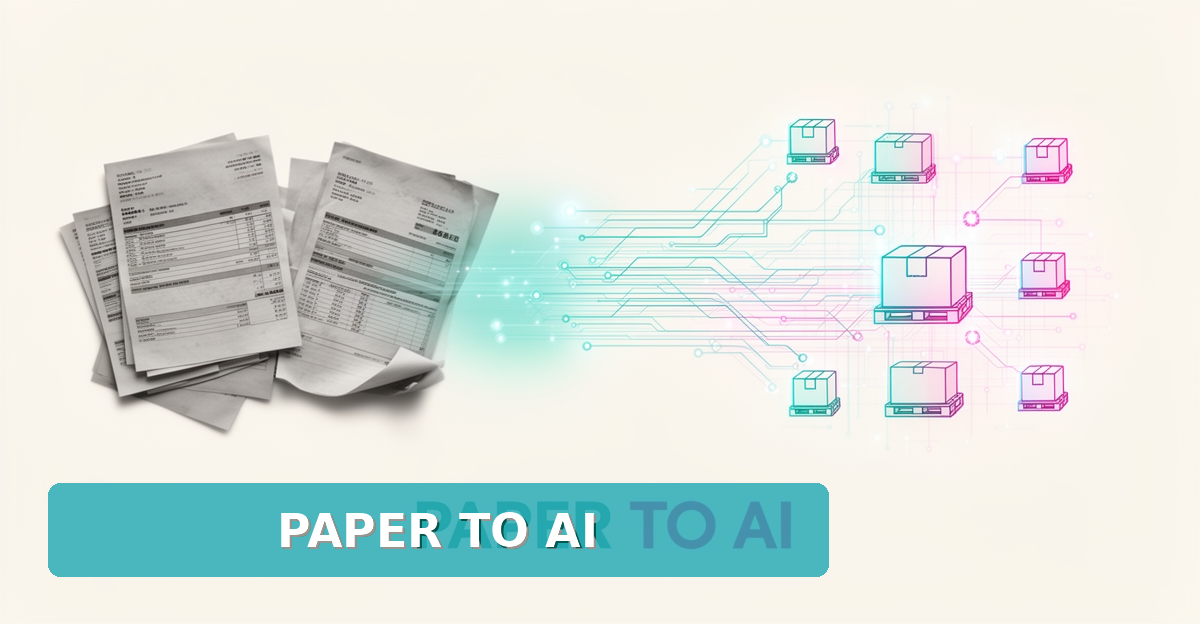
Paper-based ordering locks data in disconnected formats that resist automation. Digitizing legacy order forms, purchase orders, and delivery logs with AI-powered workflow automation creates a single source of truth and enables seamless integration with existing ERP and inventory systems. Eliminating data silos improves supplier coordination and reduces manual re-entry that drives errors.
This is exactly the category of work AIQ Labs handles through its [AI Workflow Builds](/workflow-builds): rebuild the one workflow that costs you the most—like purchase order processing—at a fixed price, in phases, without replacing the systems you already run. The result is faster order-to-cash cycles, cleaner pricing execution, and operational visibility that supports near real-time decisions on sales, order trends, and profitability.
AI-Powered Workflow Automation: Digitizing Orders and Eliminating Silos
Every week, packaging distributors process hundreds of paper purchase orders, delivery logs, and invoices that arrive by fax, email attachment, or physical mail. Each document represents a potential bottleneck—manual data entry, transcription errors, and information trapped in silos that prevent real-time decision-making. As of late 2026, a substantial share of industrial companies have already integrated AI into their operations, transforming these paper-based workflows into structured, actionable data that flows across systems.
AI-powered workflow automation eliminates the manual translation step between receiving a document and acting on it. Optical character recognition and natural language processing extract line items, quantities, pricing, and delivery details from PDFs, scanned forms, and even handwritten notes, converting them into standardized digital records. This structured data then feeds directly into ERP platforms, inventory management systems, and supplier portals without human intervention.
For packaging distributors managing complex operations, this integration solves several persistent challenges:
- Contract pricing accuracy: Automated systems validate incoming orders against negotiated rates for multi-location customers, flagging discrepancies before they impact margins
- Substitution management: When high SKU counts require frequent product replacements, AI matches substitute items to customer preferences and updates inventory in real time
- EDI coordination: Automated workflows reduce friction with national and regional customers who require electronic data interchange and portal access
- Exception handling: Systems flag unusual orders, pricing anomalies, or delivery conflicts for human review rather than processing them blindly
According to distribution specialists, these operational realities often push ERP systems beyond standard configurations, making custom integration and automation essential rather than optional. The connected ecosystem for modern packaging distributors includes ERP platforms, EDI networks, vendor portals, pricing tools, and analytics systems—all requiring seamless data flow to function effectively.
The business impact extends beyond efficiency gains. Intelligent automation enables real-time decision-making by connecting everything from sourcing to delivery. When order data flows automatically into inventory systems, distributors gain immediate visibility into stock levels, can predict demand more accurately, and coordinate with suppliers proactively rather than reactively.
AIQ Labs builds these integration layers as custom systems that sit between incoming documents and existing business software, ensuring data moves cleanly without requiring distributors to replace their current ERP investments. The approach focuses on eliminating data silos so that pricing, inventory, and fulfillment teams work from the same real-time information. For distributors who want a managed option rather than a project, [AI Employees](/ai-employees) can handle order intake, exception triage, and supplier follow-ups as trained digital staff.
The distributors who thrive will be those who treat every incoming document as structured data ready to drive decisions, not as paper requiring manual processing.
Implementation Roadmap: Integrating AI with Existing ERP and Logistics Systems
Packaging distributors looking to modernize their supply chain can follow a structured implementation roadmap to integrate AI with existing ERP and logistics systems. The process begins with identifying high-impact workflows such as order entry, inventory tracking, or delivery scheduling where manual processes create bottlenecks. Starting with a focused pilot project—like automating purchase order processing or implementing AI-driven demand forecasting—allows teams to validate results, measure ROI, and build internal confidence before broader rollout. Growing adoption across industrial operations underscores the feasibility of such initiatives.
Successful integration hinges on data preparation and system connectivity. Legacy order forms, POs, and delivery logs must be digitized and structured to feed AI models accurately, while ensuring seamless data flow between AI tools and core systems like ERP, inventory management, and EDI platforms. AIQ Labs supports this phase through phased builds, helping distributors connect AI workflows with existing infrastructure without disrupting daily operations. ERP integration experts note that stabilizing pricing logic and reducing EDI friction are critical for foodservice and packaging distributors operating in high-volume, fast-turn environments.
The final steps involve team training and continuous optimization. Employees need hands-on guidance to work alongside AI agents, interpret outputs, and manage exceptions—especially when handling contract pricing for multi-location customers or frequent SKU substitutions. As performance stabilizes, organizations can scale AI across additional workflows such as logistics coordination or predictive inventory replenishment. For distributors ready to connect everything into one operating layer they own outright, [AI Operating Systems](/ai-operating-systems) provide a connected foundation built in phases. Throughout the journey, AIQ Labs provides implementation advisory and ongoing optimization to ensure AI delivers sustained value, improves supplier coordination, and eliminates data silos—all while maintaining operational resilience in a margin-sensitive industry.
Still paying for 10+ subscriptions that don’t talk to each other?
We build custom AI systems you own outright. No vendor lock-in. Full control.
Not sure where to start? Ask our AI planner
Frequently Asked Questions
How much does AI adoption cost for packaging distributors who want to start small?
Are other industrial companies already using AI in their operations?
Can AI-powered automation really reduce pricing errors and missed substitutions in high-SKU packaging distribution?
Will implementing AI require us to replace our current ERP or inventory systems?
How fast can we expect to see results after starting an AI workflow automation project?
Is AI workflow automation only for large national distributors, or can regional and mid-sized packaging companies benefit too?
The Future of Packaging Distribution Is Already Running on AI
Packaging distributors no longer need to choose between operational speed and pricing accuracy—AI-powered workflow automation delivers both. By digitizing paper orders, eliminating data silos, and enabling real-time validation of contract pricing and substitutions, businesses can turn every incoming document into a source of actionable intelligence. This isn't just about reducing manual work; it's about building resilience in a high-volume, low-margin environment where speed and precision define customer trust. Every month spent on manual processing is margin left on the table. The path forward starts with a focused pilot—like automating purchase order processing—to prove ROI and build confidence. AIQ Labs helps packaging distributors take that first step with end-to-end integration that works alongside existing ERP systems, not against them. To explore where AI can unlock the highest value in your operations, [complete the 2-minute Fit Check](/apply) and book a free 30-minute strategy call to map your biggest bottlenecks and identify clear, high-ROI opportunities.
Make AI your competitive advantage — not just another tool.
Strategy, implementation and ongoing optimization. One partner, end to end.
Not sure where to start? Ask our AI planner