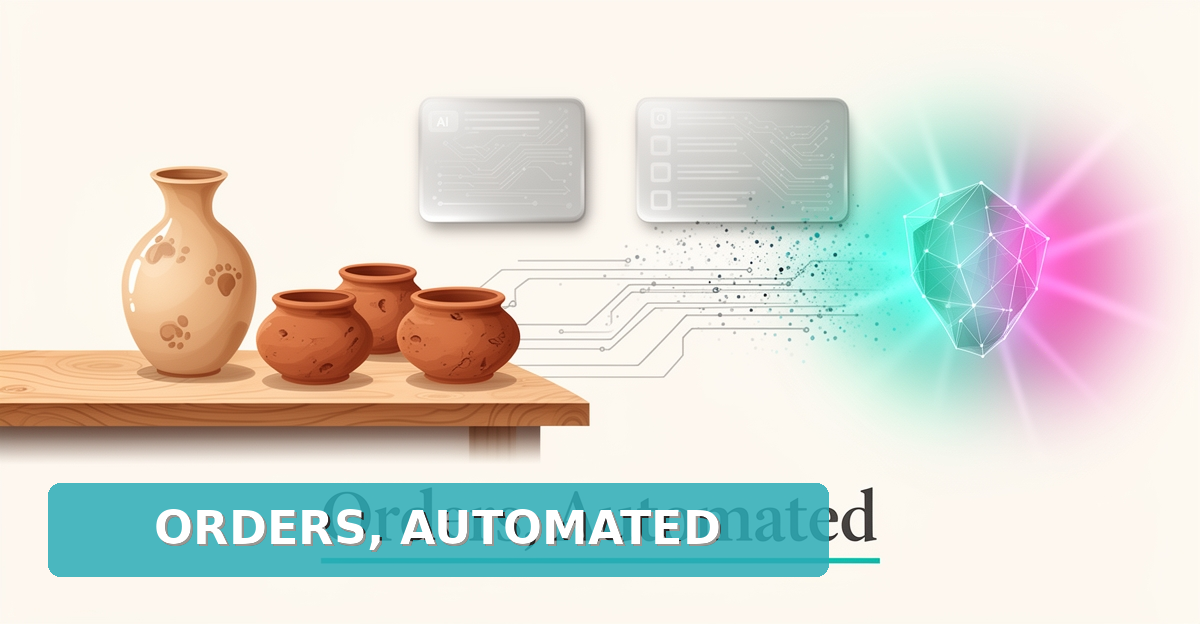
From Paper Orders to AI: How Pottery Studios Can Digitize Sales and Orders
Key Facts
- Industry commentary on AI in commerce reports meaningful gains in customer satisfaction, revenue, or cost reduction when AI is applied to order workflows, though exact figures vary by business.
- Creative AI tools like Clay Boss offer low-cost subscription tiers for AI-generated pottery production guides, making AI documentation accessible to small studios.
- AI-enhanced inventory forecasting can meaningfully reduce stockouts and excess inventory by analyzing seasonal sales patterns.
- Open-source projects like PyPottery show growing community interest in structured pottery documentation using computer vision.
- AIQ Labs has deployed 200+ multi-agent systems and runs 4 live SaaS products daily, demonstrating production-grade capability.
- AI Employees typically cost around 80% less than a human hire in equivalent roles while working around the clock.
Hire a team member that works 24/7 — for less than a part-time wage.
AI receptionists, SDRs, dispatchers and 99+ roles. Trained on your business, fully managed.
Not sure where to start? Ask our AI planner
Why Paper Orders Are Costing Pottery Studios Growth
Every pottery studio owner knows the scene: a customer describes their dream piece at a craft fair, you scribble the details on a notepad, and that paper disappears into a stack of similar orders. Weeks later, you're deciphering your own handwriting, trying to remember if "blue-green glaze" meant the turquoise or the celadon.
Many pottery studios still rely on paper orders and manual inventory tracking. These manual processes create bottlenecks that directly impact growth. When order details live on paper, follow-ups depend on memory rather than systems, and inventory counts require physical checks between throwing sessions.
The administrative burden compounds quickly. Studios lose hours to tasks that automation handles instantly:
- Deciphering handwritten order specifications and special requests
- Manually tracking clay inventory and glaze supplies
- Remembering to follow up with customers about pickups or custom orders
- Cross-referencing paper records to predict material needs
- Recreating lost order details from memory
These inefficiencies carry real costs. Industry commentary on AI in commerce suggests businesses applying AI to order and sales workflows often see meaningful improvements in customer satisfaction, revenue, or cost reduction, though the exact lift depends on the business. For pottery studios, that gap represents customers who don't return because their order was delayed, or revenue lost to inventory stockouts during peak seasons.
The scalability ceiling becomes apparent when studios try to grow. A potter handling ten orders monthly can manage with paper. At fifty orders, cracks appear. At one hundred, the system collapses under its own weight. Digital platforms like Clay Boss demonstrate the shift possible when order entry moves from paper to AI-powered systems, allowing users to describe or photograph pieces and receive comprehensive production guides instantly.
AIQ Labs works with creative businesses facing exactly this transition. The goal isn't replacing the artist's touch but eliminating the administrative friction that prevents studios from reaching more customers. As industry observers have noted, AI acts as a digital bridge, upgrading humble studios into global storefronts while preserving creative identity.
The question isn't whether paper systems fail—it's how much growth they prevent before studios make the switch.
How AI Is Transforming Studio Order Entry and Customer Engagement
Paper orders and handwritten notes are giving way to AI systems that capture intent the moment a customer speaks. For pottery studios, that shift means order entry becomes instant, personalized guidance, and follow-up without losing the handcrafted story.
AI-powered digitization starts with how orders are captured. Tools like Clay Boss let customers describe a desired piece or upload a photograph, and the AI generates a comprehensive guide including techniques, tools, clay types, kiln temperatures, and glaze tips. Low-cost subscription tiers show how affordable AI can replace manual documentation for even the smallest studio.
Once intent is captured, AI recommendation engines turn behavior into personalization. AI-powered systems analyze user behavior, preferences, and interactions to deliver highly relevant suggestions. For a studio, that translates to follow-up emails with complementary glazes, size variants, or seasonal pieces based on past purchases and browsing.
The business impact is measurable. Businesses that apply AI to e-commerce workflows commonly report improvements in customer experience, revenue, and operational costs, though results vary by implementation.
AI bridges craft and e-commerce by handling repetitive coordination while artists focus on making. In practice, studios can deploy:
- Automated order intake from description or photo that creates a structured production brief
- Dynamic inventory updates tied to sales and kiln schedules to prevent stockouts
- Personalized customer follow-ups with care guides and reorder prompts
- Saved guide libraries for repeat commissions and team training
This approach preserves creative identity. As noted in industry commentary, AI isn't here to replace human creativity. Instead, it acts as a digital bridge, upgrading humble studios into global storefronts to give traditional creators worldwide reach.
AIQ Labs helps build secure, customizable systems that retain the studio's creative identity while improving efficiency. An AI Employee—a managed agent in a defined role like studio receptionist or order coordinator—can handle intake, confirmations, and follow-ups end-to-end, while a targeted AI Workflow Build rebuilds the one order workflow that costs you the most. The result is a workflow where handwritten notes become searchable, actionable data, and personalization feels human because it is built on real interactions.
Studios that adopt this hybrid model keep the hand on the wheel and let AI handle the paperwork.
Inventory, Documentation, and Creative Support With AI Tools
Paper ledgers and handwritten glaze notes are giving way to systems that track clay, kiln time, and orders automatically. For pottery studios moving from manual tracking to digital operations, AI now handles both the creative support artists want and the documentation the business needs.
Inventory forecasting turns historical sales into actionable reorder signals. AI models can analyze sales patterns, seasonality, and trend detection to optimize clay stock and glaze inventory, preventing overstocking or shortages. This predictive approach supports resource optimization across the studio, freeing makers to focus on production instead of manual counts.
Documentation is where AI document processing creates immediate value. Studios can digitize order forms, receipts, and production logs with automated capture and extraction, reducing manual data entry and errors. AIQ Labs builds secure, customizable systems that retain a studio's creative identity while improving efficiency, with document processing baked into order entry, inventory updates, and customer follow-ups.
Technical documentation also benefits from open-source computer vision tools. PyPottery is an open-source collection of Python tools for digitizing archaeological pottery documentation. Its modules such as PyPotteryLens for extracting images from PDFs, PyPotteryInk for inking drawings, and PyPotteryLayout for creating publication-ready layouts demonstrate AI and computer vision in technical workflows. The GitHub repository reflects community interest in structured pottery documentation.
Creative guidance tools take a different approach. Clay Boss lets users describe a desired piece or upload a photograph and receive a comprehensive guide with techniques, tools, clay types, kiln temperatures, and glaze tips, with a free tier and a paid Pro subscription via Clay Boss. This is creative assistance, not archival documentation.
The contrast is clear:
- Clay Boss focuses on generating guides for creating pottery from description or photo input
- PyPottery focuses on digitizing and documenting archaeological pottery from existing PDFs and drawings
- Clay Boss output is step-by-step creation guidance; PyPottery output is extracted images, vectorized drawings and layouts
- Clay Boss is free to start with a paid Pro tier; PyPottery is open-source and free to use and modify
Creative tools support makers; computer vision documentation solutions support records, compliance and research. Together they show how AI can bridge traditional craftsmanship and modern e-commerce without replacing human artistry.
A Practical Path to Digitize Sales While Keeping Your Studio Identity
Moving from paper orders to a digital system does not require a complete overhaul overnight. The most successful studios treat digitization as a series of small, deliberate steps that protect the creative atmosphere while removing administrative friction.
Begin by standardizing how orders enter the business. Replace handwritten slips with a single digital intake form that captures customer details, piece specifications, glaze choices, and pickup dates. For pottery studios, the lift often starts with simply ensuring no order is lost or misread.
- Centralize order capture in one digital form or tablet at the front desk.
- Connect each order to a live inventory count for clay, glazes, and studio time.
- Set automated confirmations and pickup reminders via email or SMS.
- Log firing schedules and completion status so staff can answer questions instantly.
Next, link orders to inventory. When a customer books a wheel-throwing session or commissions a custom vase, the system should automatically deduct clay and materials from stock. AI-enhanced inventory forecasting can analyze seasonal patterns and help reduce stockouts, ensuring you never turn away a student because a bisque firing is full or a specific glaze is out.
Automated follow-ups close the loop. Send a confirmation when the order is placed, a reminder before a class, and a notification when a piece is ready for pickup. AI-powered recommendation engines can also analyze purchase history to suggest related workshops or complementary glazes, turning a one-time buyer into a returning student without adding staff hours.
The key is choosing tools that adapt to your studio, not the other way around. Off-the-shelf apps often force generic workflows that clash with a studio's rhythm. AIQ Labs builds custom AI systems that studios own outright—whether that's a single AI Workflow Build for your costliest workflow or a full AI Operating System connecting orders, inventory, and follow-ups in one layer. Because the code and data belong to the studio, the system reflects your brand voice and creative identity rather than imposing a template.
By digitizing the back office, potters reclaim time for the wheel and the kiln, confident that the business side runs quietly in the background.
Still paying for 10+ subscriptions that don’t talk to each other?
We build custom AI systems you own outright. No vendor lock-in. Full control.
Not sure where to start? Ask our AI planner
Frequently Asked Questions
How much does Clay Boss cost and what do I get for free?
Will using AI for order entry and inventory make my studio feel less personal or handmade?
What's the difference between Clay Boss and PyPottery for a working studio?
How can AI help with inventory forecasting so I don't run out of clay or glazes during busy seasons?
Do I need to replace all my current systems at once to start digitizing orders?
What does an AI Employee actually do for a pottery studio compared to a regular chatbot?
The Kiln Is Ready: Turning Orders Into Opportunity
Moving from paper orders to digital systems isn't about replacing the potter's hands—it's about reclaiming the hours lost to deciphering handwriting, chasing inventory, and remembering follow-ups. The shift starts small: a single digital intake form, automated confirmations, and inventory that updates itself as pieces sell. The result is more time at the wheel and fewer orders lost to the shuffle. AIQ Labs has deployed 200+ multi-agent systems and runs 4 live SaaS products daily, so the systems it builds are proven in production, not theory. Studios can start with one workflow rebuilt at a fixed price, or go further with a connected operating layer they own outright. If you're ready to stop letting paper dictate your growth, start with a two-minute Fit Check at aiqlabs.ai/apply, then book a free 30-minute strategy call to map your studio's path forward.
Make AI your competitive advantage — not just another tool.
Strategy, implementation and ongoing optimization. One partner, end to end.
Not sure where to start? Ask our AI planner