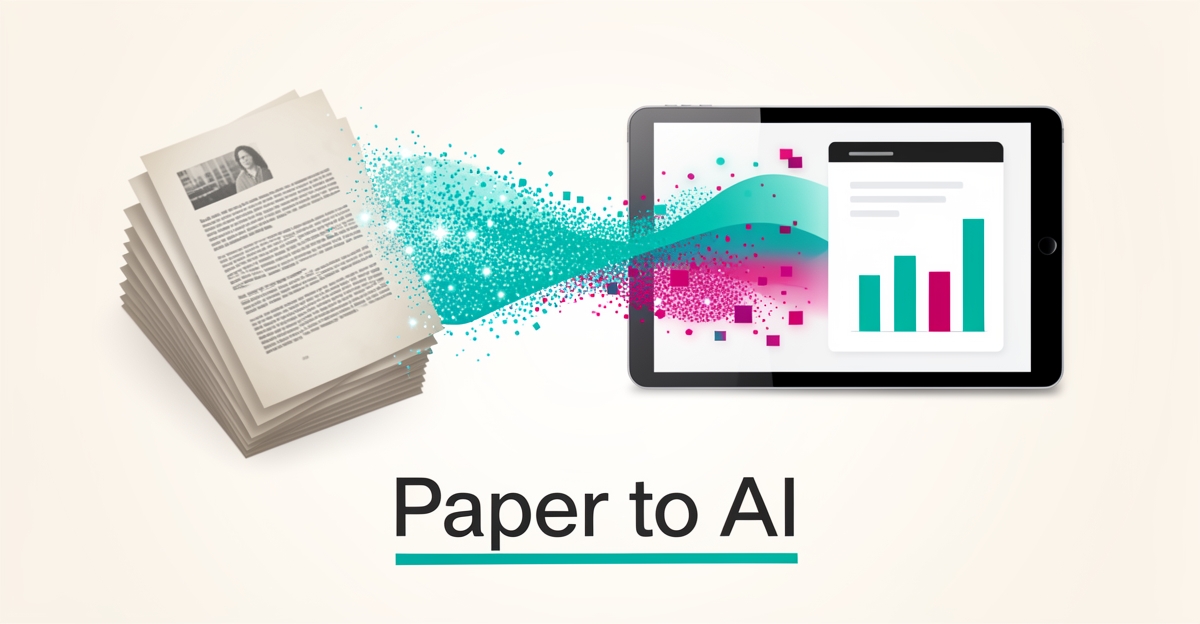
From Paper Quotes to AI-Generated Estimates: A Step-by-Step Guide
Key Facts
- Research cited by TechRadar suggests poor agreement management costs the global economy roughly $2 trillion in lost value according to Deloitte research
- Companies with advanced agreement management are reportedly 85% more likely to contribute to strategic goals TechRadar reports
- AI creates real value only when it fixes broken workflows, not when bolted onto existing inefficiencies industry analysis shows
- AIQ Labs' managed AI Employees typically cost around 80% less than a comparable human hire, working around the clock with no missed days
- AIQ Labs has deployed 200+ multi-agent systems and runs 4 live SaaS products daily
Hire a team member that works 24/7 — for less than a part-time wage.
AI receptionists, SDRs, dispatchers and 99+ roles. Trained on your business, fully managed.
Not sure where to start? Ask our AI planner
The Hidden Cost of Manual Quote Workflows
The cost of manual quote workflows extends far beyond paper and ink, it's measured in lost time, delayed revenue, and talent misallocated to tasks that machines could handle. When skilled professionals spend hours formatting estimates, chasing approvals, or re-entering data across systems, they're not engaging in the judgment-driven work that fuels growth. This inefficiency isn't just operational, it's economic. Research cited by TechRadar suggests that poor agreement management alone costs the global economy roughly $2 trillion in lost value, a figure driven by fragmented processes where quotes live in siloed documents, inboxes, and spreadsheets instead of flowing through structured workflows.
These hidden costs compound when you consider what experts could be doing instead. Sales teams waste hours on administrative follow-up that AI could automate, while estimators manually recheck terms against pricing rules instead of focusing on complex client negotiations or value-based pricing strategies. Even small delays in quote turnaround can erode trust, prospects interpret slow responses as disinterest, and internal teams lose visibility into where deals stand. The result? Slower sales cycles, higher error rates, and frustrated talent stuck in loops of repetitive work that doesn't leverage their expertise.
The solution isn't to bolt AI onto these broken processes but to redesign them around what humans do best: judgment, relationship-building, and strategic thinking. AI excels at handling repeatable, rule-based tasks, like validating quote terms against policy, flagging inconsistencies, or auto-populating line items from historical data, freeing professionals to focus on exceptions, negotiations, and high-touch client interactions. When workflows are structured with AI handling the routine and humans overseeing the nuanced, businesses reclaim not just time, but the capacity to grow.
- Automate data entry and validation from source documents
- Route quotes for approval based on predefined rules
- Flag deviations from standard pricing or terms for human review
- Generate consistent, error-free estimates in real time
- Sync quote data directly with CRM and invoicing systems
Why AI Succeeds When Embedded in Workflows (Not Bolted On)
Many organizations treat AI as an add-on feature rather than a workflow solution, missing its true potential. According to TechRadar, businesses lose significant value not from lacking AI tools, but from broken processes where agreement management alone is estimated to cost nearly $2 trillion in lost global economic value due to disconnected systems and manual handoffs. Industry research shows that AI creates real value only when embedded in workflows to fix these friction points, not when bolted onto existing inefficiencies.
The key insight from DocuSign's Stéphane Barberet is that AI succeeds when it targets repeatable tasks while preserving human judgment for exceptions and negotiations. When workflows are redesigned around AI, rather than forcing AI into broken processes, talent shifts from routine administration to high-value work like client negotiation and complex problem-solving. This approach transforms estimate generation from an error-prone manual task into a streamlined process where AI handles data extraction and standardization, while humans focus on judgment calls that require experience and contextual understanding.
- Identify repetitive, rule-based tasks in current quoting workflows
- Redesign processes around AI capabilities for intake, validation, and standardization
- Maintain human oversight for negotiations, exceptions, and complex judgment calls
- Integrate AI where work actually happens, within CRM, email, and document systems
- Establish feedback loops to continuously optimize both AI performance and workflow design
AIQ Labs implements this workflow-centric approach by embedding AI into the actual steps where estimates are created, ensuring automation serves the process rather than disrupting it. By focusing on where skilled professionals currently waste time on administrative tasks, such as manually transferring data between systems or chasing missing information, the transformation creates measurable efficiency gains while maintaining the human elements that drive client trust and deal quality. This embedded approach prevents the common pitfall of AI projects that underperform because they accelerate confusion in already broken processes rather than solving root causes.
AIQ Labs' Three Entry Points for Automating Estimates
The shift from paper quotes to AI-generated estimates starts with recognizing where skilled professionals waste time on routine tasks. Research cited by TechRadar points to massive value lost through poor agreement management, often due to manual processes that pull experts away from high-value work. AIQ Labs offers three ways in, depending on where your quoting process hurts most.
First, AI Employees act as managed AI staff, receptionists, SDRs, dispatchers, and 99+ other roles, including dedicated estimators. They work around the clock to process quote requests, validate inputs, and generate preliminary estimates, typically at around 80% less cost than a human hire. That reduces turnaround from days to minutes and lets human estimators focus on complex negotiations and client relationships. Second, AI Workflow Builds rebuild the one workflow that costs you the most, your quoting process, at a fixed price, delivered in phases. These builds replace fragmented spreadsheets and handwritten notes with a unified system that auto-populates data from site visits, material costs, and labor rates. Third, AI Operating Systems connect quoting to the rest of your business in one operating layer, built in phases and owned outright, no subscription lock-in, and the system scales as your business does.
Together, these entry points create a self-improving system: AI Employees execute daily tasks, Workflow Builds fix the highest-cost process, and an AI Operating System ties everything together. Payment is flexible, start monthly, build in milestones, or own it outright. As the TechRadar analysis notes, AI creates real value not by novelty but by fixing broken workflows, turning paper quotes into instant, accurate estimates that free skilled workers to do what they do best: judge, negotiate, and grow the business. For businesses ready to move beyond manual estimates, the first step is a free strategy call to identify where AI can eliminate routine admin and unlock judgment-driven work. Schedule your free 30-minute strategy call to see which entry point fits your estimation process.
Your Step-by-Step Path to AI-Generated Estimates
Starting the journey from paper quotes to AI-generated estimates begins with a clear-eyed look at how work actually gets done today. Many businesses lose significant time and value due to poorly designed workflows, with research suggesting roughly $2 trillion in lost global economic value from poor agreement management alone. This isn't about lacking AI tools, it's about skilled professionals spending hours on routine administrative tasks that could be automated.
The path forward requires assessing current workflows to identify where talent is bogged down in repetitive work. Focus on tasks like comparing terms against policy, flagging deviations, and chasing approvals, activities that are repeatable and where human judgment can still be maintained for exceptions and negotiations. As Stéphane Barberet emphasizes, AI creates value when it fixes broken workflows rather than being bolted onto them, transforming processes so people spend less time on admin and more on judgment-driven work that drives growth.
Embedding AI in actual work locations means deploying it where estimates are generated, not as a separate layer. This involves redesigning processes around structured intake and review, implementing shared playbooks for consistency, and ensuring visibility across the entire workflow so progress doesn't disappear into email chains. Human oversight remains critical for complex risk assessment and nuanced negotiations, while AI handles standard clause checking and data extraction. Continuous monitoring and optimization then refine the system based on feedback, ensuring it evolves with business needs and maintains accuracy over time. According to industry research, companies with advanced agreement management are reportedly 85% more likely to contribute to strategic goals, suggesting that structured workflow solutions directly impact performance. For businesses ready to take the first step, the 2-minute Fit Check leads to a free 30-minute strategy call to map bottlenecks and identify high-ROI automation opportunities.
Still paying for 10+ subscriptions that don’t talk to each other?
We build custom AI systems you own outright. No vendor lock-in. Full control.
Not sure where to start? Ask our AI planner
Frequently Asked Questions
How much money is lost globally due to poor agreement management, and why does it happen?
Deloitte research cited by TechRadar shows this inefficiency stems from manual handoffs and disconnected systems that waste skilled talent on repetitive tasks.
Can AI really improve estimate accuracy, or does it just speed up a broken process?
As noted in the TechRadar analysis, AI creates real value not by novelty but by fixing broken workflows, ensuring talent focuses on judgment-driven work that drives growth.
Industry research supports this approach as a way to reduce errors and reclaim capacity for high-value client interactions.
What does it mean to 'embed AI in workflows' instead of bolting it on?
This approach prevents AI from accelerating confusion in broken processes and instead shifts talent from routine admin to negotiations and complex problem-solving.
Stéphane Barberet of DocuSign emphasizes that AI succeeds when it targets repeatable tasks while preserving human judgment for exceptions.
Will using AI for estimates mean I lose control over pricing or client negotiations?
The goal is to elevate skilled work by freeing talent from paperwork so they can focus on conversations that close deals and build long-term value.
AIQ Labs' approach maintains human-in-the-loop controls where nuance matters most, ensuring trust and deal quality aren't compromised.
How quickly can I expect to see results from switching to AI-generated estimates?
AIQ Labs' managed AI Employees work around the clock to process quote requests and generate preliminary estimates, letting human estimators focus on high-value activities.
Because Workflow Builds are delivered in phases at a fixed price, you see value incrementally rather than waiting on a months-long project.
What's the first step if I want to explore AI-generated estimates for my business?
This session helps determine where AI can eliminate routine admin and unlock judgment-driven work, without pressure or generic pitches.
If there isn't a clear win, we'll tell you that too. It's a real working session with an AI engineer to assess your estimation process.
Make AI your competitive advantage — not just another tool.
Strategy, implementation and ongoing optimization. One partner, end to end.
Not sure where to start? Ask our AI planner