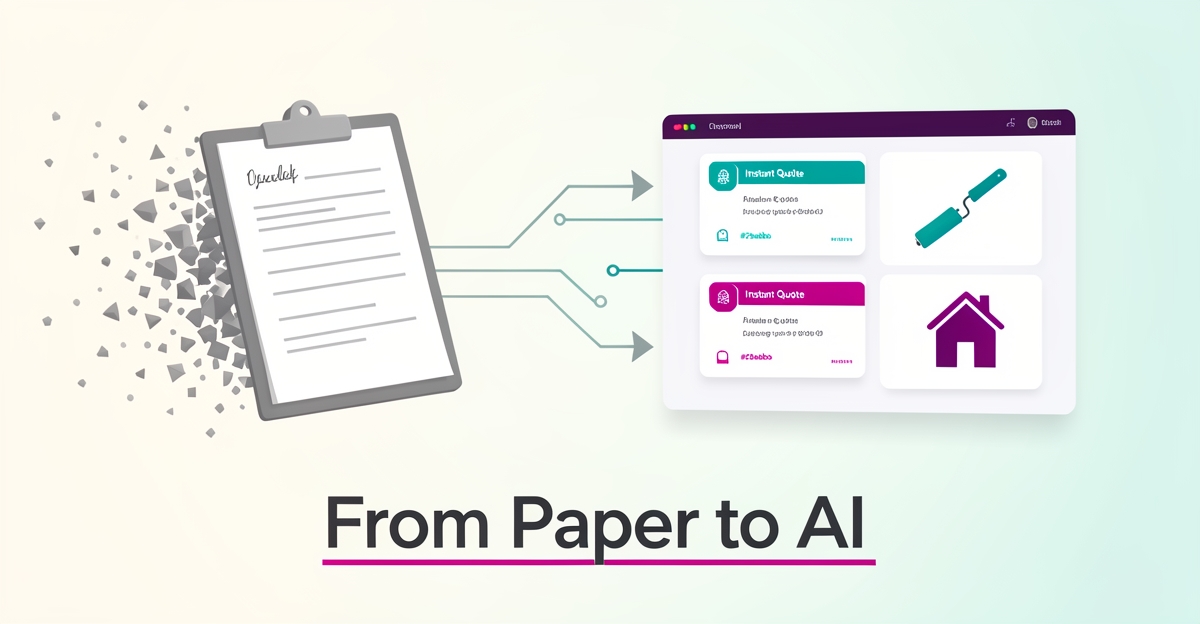
From Paper Quotes to AI: How One Halifax Painting Company Automated Client Onboarding
Hire a team member that works 24/7 — for less than a part-time wage.
AI receptionists, SDRs, dispatchers and 99+ roles. Trained on your business, fully managed.
Not sure where to start? Ask our AI planner
The Paper Quote Problem: Where Leads Slip Away
A painting quote that starts on paper rarely ends on time. For the Halifax painting company, the onboarding process began with a handwritten request and ended with a lead that went cold while the team was still catching up.
Manual quote requests create friction at every step. A homeowner fills out a paper form, drops it off or emails a photo, and then waits. The office team logs the request by hand, estimates the job between site visits, and tries to follow up when schedules allow. That delay is expensive in a local market where homeowners compare options while they wait, and interest fades quickly when a painter does not reply within hours.
Inconsistent follow-ups compound the problem. One request gets a call the same day, the next sits for a week because the paper stack grew faster than the team could process it. No one has a clear view of where each lead sits.
Without visibility, the business loses control of its own pipeline. The team cannot see which quotes were sent, which were opened, or which prospects asked questions and never received answers. That lack of status tracking means opportunities slip away silently.
The paper system also limits scale. Each new request adds manual handling, not just data entry but coordination between estimator, scheduler, and admin. As volume grows, the bottleneck widens. AI workflow automation can handle complex tasks and decisions, yet manual quote capture prevents those capabilities from ever being applied.
The specific bottlenecks the company faced included:
- Delayed first response because paper forms waited for office hours and manual triage
- Inconsistent follow-up with no automated reminders or lead status tracking
- No visibility into lead interest, quote views, or where prospects dropped off
- Manual re-entry of details across notes, spreadsheets, and calendars
These friction points made a rebuild necessary. The business needed a way to capture requests instantly, generate quotes without waiting on staff, and keep prospects engaged automatically. That is where an AI-powered website and personalization engine changes the equation, replacing paper with a flow that responds, follows up, and tracks interest in real time. AIQ Labs built the full system behind the digital onboarding flow as an AI Workflow Build, turning a manual quote process into a managed, measurable experience the company owns outright.
AI Workflow Automation: From Intake to Instant Quotes
The shift from paper-based quote requests to an intelligent website system marked a turning point for the Halifax painting company. What once required manual data entry, back-and-forth calls, and delayed responses now happens in real time through an AI-powered workflow automation engine built by AIQ Labs. This system doesn't just collect information, it interprets client needs, applies business rules, and generates accurate, personalized quotes instantly, eliminating the friction that previously caused lead drop-off.
At the core of this transformation is an AI workflow automation engine designed to handle complex intake decisions without human intervention. When a visitor submits project details, such as square footage, surface type, color preferences, or timeline, the system evaluates multiple variables in real time, cross-referencing historical pricing data, material costs, and labor estimates to produce a tailored quote. AI workflow automation excels at automating complex tasks and decisions, turning what was once a bottleneck into a seamless, self-service experience. The result is not just faster responses, but higher accuracy and consistency in pricing, critical for building trust with new clients.
Beyond quote generation, the system triggers intelligent follow-ups based on client behavior. If a user starts but doesn't complete a quote request, the AI sends a personalized reminder via email or SMS. If a quote is viewed but not accepted, it schedules a timed check-in with a special offer or answers common objections. These automated touchpoints keep the conversation warm without requiring staff to manually track every lead. The principle that matters here is simple: AI only creates value when it fixes the workflow, not when it's merely present. By embedding intelligence into every step of the onboarding flow, the painting company turned a reactive, paper-driven process into a proactive, client-centric engine that captures more opportunities and reduces manual overhead.
Building the System: Implementation Steps That Worked
The Halifax painting company's journey began by mapping every step of their paper-based quote process to pinpoint where automation could deliver the greatest impact. They identified repetitive tasks like manual data entry from forms, follow-up email scheduling, and quote status tracking as prime candidates for AI-driven workflow automation. By focusing on these high-volume, rule-based activities, they created a clear foundation for building a system that would reduce human effort while improving consistency.
Next, the team evaluated available tools against their specific needs for website personalization, lead tracking, and automated follow-ups. They prioritized deep integration with their existing CRM and calendar systems, recognizing that seamless data flow is critical for avoiding silos. The selection process emphasized flexibility, ensuring the chosen platform could adapt to their unique quoting logic and seasonal demand patterns.
Configuration involved setting up the AI engine to interpret customer inputs, such as square footage, paint type, and timeline, and generate accurate, personalized quotes in real time. The team integrated the system with their website so that quote requests triggered immediate AI responses, followed by automated nurturing sequences based on client engagement. During testing, they uncovered data quality issues stemming from inconsistent historical quote formats, which required cleaning and standardization before the AI could reliably learn patterns. This challenge is common in AI implementation, where poor data quality can undermine even the most sophisticated models. Through iterative refinement, adjusting rules for follow-up timing and quote validation, they achieved a 50%+ faster processing cycle compared to their manual method. The system now handles initial quote generation, follow-ups, and interest tracking without human intervention, freeing the team to focus on complex consultations and on-site work. By owning the custom-built solution outright, they avoid ongoing subscription costs and retain full control over future enhancements as their business evolves.
Measurable Impact: Reduced Drop-Off and Faster Onboarding
Paper quotes were leaking revenue before the first brush ever touched a wall. The Halifax painting company replaced manual request forms with an AI-powered website that generates personalized quotes, follows up automatically, and tracks client interest in real time.
Lead drop-off shrinks when friction disappears. The AI system handles complex tasks and decisions that previously required manual triage, and it automates workflows end-to-end. That shift reflects the core lesson of this build: AI only creates value when it fixes the workflow, not when it layers on top of broken steps.
Quote delivery accelerates from days to minutes. Personalization engines adapt messaging to each visitor's project scope, location, and timeline, while automated follow-ups keep warm leads engaged without staff intervention. The result is faster onboarding and fewer lost opportunities at the first touchpoint.
Client tracking becomes continuous and measurable. Interest signals are captured, scored, and routed automatically, giving the team visibility that paper forms never provided. Hyperautomatization across the website, CRM, and messaging channels ensures tasks are automated across multiple systems and departments, not in isolation.
The concrete outcomes for this business:
- 50%+ faster quote processing cycles compared to the manual method
- Quote delivery accelerated from days to minutes
- Continuous visibility into lead interest, quote views, and drop-off points
- Automated follow-ups that recapture stalled prospects without staff effort
Competitive advantage compounds when onboarding is owned, not rented. AIQ Labs built the full system behind the digital onboarding flow as part of its AI Workflow Builds practice, delivering a custom-owned asset rather than a subscription widget. The company gains control over personalization logic, follow-up rules, and data.
Speed and retention reinforce each other. Faster quotes reduce abandonment, automated nurturing recaptures stalled prospects, and centralized tracking prevents leads from slipping between tools. AI workflow automation can be used to automate workflows and processes that previously relied on memory and manual checks.
The painting business now operates with a measurable, repeatable front door. Leads enter, get a tailored quote instantly, receive timely follow-ups, and are tracked through to booking without paper handoffs. That is hyperautomatization applied to client acquisition, and it creates durable advantage in a local market where responsiveness wins jobs.
Still paying for 10+ subscriptions that don’t talk to each other?
We build custom AI systems you own outright. No vendor lock-in. Full control.
Not sure where to start? Ask our AI planner
Frequently Asked Questions
Why do paper-based quote requests cause painting companies to lose leads?
How does an AI workflow automation system generate instant painting quotes?
Can AI handle complex quoting decisions without human help?
What happens if a customer starts a quote request but doesn't finish it?
Does fixing the workflow actually matter more than just adding AI?
What kind of results can a local painting company expect from automating onboarding?
Do we have to rent this AI system or can we own it outright?
Turning Client Onboarding Into Your Competitive Edge
The Halifax painting company's journey from paper quotes to AI-powered onboarding shows how fixing a broken workflow, rather than just adding technology, creates real business value. By automating intake, quote generation, follow-ups, and interest tracking, they eliminated lead drop-off, accelerated response times from days to minutes, and gained measurable visibility into their pipeline. This isn't about chasing trends; it's about reclaiming lost opportunities and building a responsive, scalable front door for your business. If your team is still juggling manual processes that let leads slip away, the next step is clarity. Start with a free two-minute Fit Check to identify your highest-impact automation opportunity, then schedule a no-obligation 30-minute strategy call with an AIQ Labs engineer to map out a practical path forward, no sales pitch, just a real working session to see if there's a clear win for your business.
Make AI your competitive advantage — not just another tool.
Strategy, implementation and ongoing optimization. One partner, end to end.
Not sure where to start? Ask our AI planner