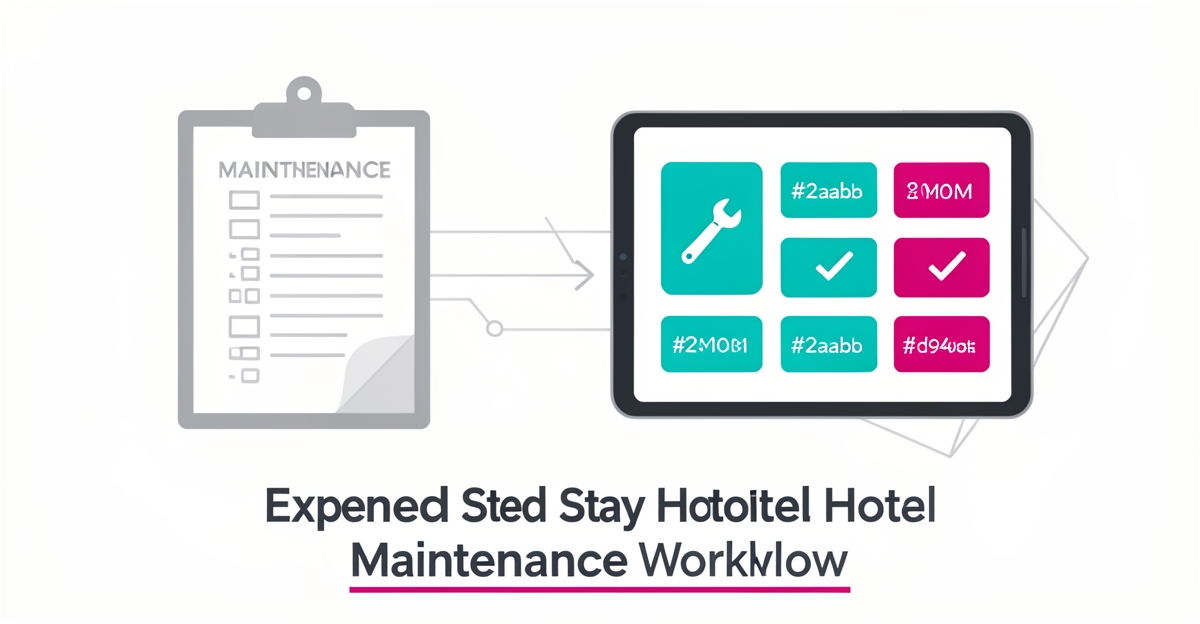
From Paper to AI: Automating Room Maintenance Logs in Extended Stay Hotels
Key Facts
- AI document processing can reduce manual data entry time substantially through automated extraction and classification, according to industry analysis
- Organizations using AI document processing commonly report large reductions in processing time for document-heavy workflows per recent studies
- Extended stay hotels face unique maintenance documentation challenges because longer guest stays require more frequent servicing per industry research
- AI document processing tools can automatically identify and classify document types, extract relevant data fields, validate data against predefined rules, and integrate with existing systems per implementation guidance
- Modern large-context models can process hundreds of PDF pages in a single pass, though very large documents are typically split or summarized per technical analysis
- Enterprise implementations of AI document processing can dramatically cut the time staff spend searching for operational and regulatory information per research findings
Hire a team member that works 24/7 — for less than a part-time wage.
AI receptionists, SDRs, dispatchers and 99+ roles. Trained on your business, fully managed.
Not sure where to start? Ask our AI planner
The Hidden Cost of Paper-Based Maintenance Logs in Extended Stay Hotels
Extended stay hotels face mounting operational strain from paper-based maintenance logs, where inconsistent formats and delayed responses create avoidable guest disruptions. Unlike short-stay properties, longer guest tenures amplify the impact of unresolved issues, turning minor maintenance gaps into significant satisfaction risks. Manual logging systems struggle to keep pace with the increased frequency of servicing needs inherent in extended stays, leading to reactive rather than proactive care.
A recent industry analysis confirms that extended stay properties experience unique maintenance documentation challenges directly tied to prolonged guest occupancy, requiring more frequent room attention than traditional hotels. This reality makes consistent tracking not just beneficial but essential for preserving service quality over weeks or months of occupancy. Staff relying on handwritten notes or scattered digital files often miss critical updates, especially when shifts change or documentation methods vary across teams.
- Inconsistent log formats hinder quick issue identification and routing
- Delayed data entry slows response times to guest-reported problems
- Manual processes increase the likelihood of overlooked maintenance needs
- Lack of standardization complicates trend analysis across room types
- Paper-based systems create audit gaps during regulatory inspections
The financial and reputational costs of these inefficiencies accumulate quickly. Industry analysis suggests AI-driven document processing can reduce manual data entry time substantially through automated extraction and classification, directly addressing the bottlenecks that plague current workflows. For extended stay operators, this efficiency gain translates to faster resolution of recurring issues, like HVAC inefficiencies in long-term rooms or plumbing wear from continuous use, before they escalate into guest complaints or costly emergency repairs.
Beyond time savings, intelligent document processing minimizes human error by validating extracted data against property management systems, ensuring room numbers, issue types, and priority levels align with operational records. This capability is particularly valuable when maintenance requests arrive via mixed channels, paper forms, emails, or mobile apps, where contextual understanding prevents duplicate entries or misclassified urgent issues. AIQ Labs helps hotels replace these hidden costs with automation they own outright, through services like AI Workflow Builds that rebuild the one workflow costing you the most.
Organizations implementing such solutions commonly report major reductions in processing time for document-heavy tasks, enabling staff to shift from reactive logging to predictive maintenance scheduling. For extended stay hotels, where guest loyalty hinges on uninterrupted comfort during lengthy stays, this shift from paper to AI isn't just about efficiency, it's about safeguarding the core promise of a home-like experience.
How AI Document Processing Transforms Maintenance Workflows
The maintenance team's morning huddle used to start with a stack of paper logs, handwritten notes, and a scramble to decipher which room needed what, before the first guest even checked out. That chaos is exactly what AI document processing eliminates, replacing reactive guesswork with a structured, automated pipeline that captures, understands, and routes every maintenance signal in real time.
At the core of this shift are three technologies working in concert: Optical Character Recognition (OCR) digitizes the page, Natural Language Processing (NLP) interprets the intent behind phrases like "AC blowing warm" or "leak under sink," and Intelligent Document Processing (IDP) validates the extracted data against your property system, confirming room numbers exist, priority tags are consistent, and required parts are in stock. Unlike traditional OCR, which follows rigid templates and breaks when a form layout changes, AI-backed IDP adapts to varied formats, scanned work orders, emailed requests, mobile submissions, without reconfiguration. According to industry analysis, these solutions handle both structured and unstructured data, automatically classifying document types and extracting relevant fields with minimal manual intervention.
The practical impact is measurable. Industry research indicates AI document processing can cut manual data entry time dramatically through automated extraction and classification, with organizations frequently reporting large reductions in processing time for document-heavy workflows. For extended stay hotels, where longer guest stays drive higher maintenance frequency, that speed translates directly into fewer overdue tasks and faster turnaround between guest issues and resolution.
- OCR captures text from paper logs, photos of whiteboards, and scanned forms
- NLP extracts room numbers, issue categories, urgency cues, and technician assignments
- IDP validates data against your PMS, flags anomalies, and routes tasks automatically
- RAG-powered knowledge bases centralize maintenance history across properties for consistent decision-making
This is the same class of workflow automation AIQ Labs builds for operations teams, custom pipelines that ingest messy inputs, apply business logic, and push clean, actionable tasks into the tools your staff already uses. The result isn't just less paperwork; it's a maintenance operation that never misses a signal, scales across properties, and gives every technician the context they need before they walk through the door.
Choosing the Right AI Approach for Your Hotel's Maintenance Needs
Choosing the right AI approach prevents wasted investment and ensures maintenance logs actually drive action instead of creating another dashboard no one checks.
Extended stay properties generate mixed documentation, handwritten notes, scanned work orders, mobile app submissions, and email requests. Industry research notes that extended stay hotels face unique challenges with maintenance documentation due to longer guest stays requiring more frequent servicing. The right fit depends on volume, format variability, and how deeply the system must integrate with property management.
Basic file ingestion suits low-volume, exploratory needs. Modern large-context models can process hundreds of PDF pages in a single pass, and a complete guide to AI document processing explains this works for one-off audits but lacks memory between sessions and requires re-uploading for repeated tasks.
Template-based processing adds structure for standardized workflows. Pre-loaded templates, instructions, and formatting requirements let the AI consistently extract room numbers, issue categories, priority levels, and technician assignments from work orders that follow a repeatable format. This approach balances speed and control for properties with stable forms.
Dynamic data integration connects AI to live sources that refresh automatically. For hotels, this means linking to property management systems, maintenance scheduling software, and inventory databases so extracted data validates against current room status and parts availability. Implementation guidance shows AI tools can automatically identify and classify document types, extract relevant data fields, validate data against predefined rules, and integrate it with existing systems.
Retrieval-Augmented Generation scales for multi-property or high-volume operations. Instead of loading entire libraries into memory, RAG creates searchable vector knowledge bases that retrieve relevant chunks for each query with source citations. This supports proactive scheduling and audit trails across locations.
Consider these selection signals:
- Document volume and variability: occasional logs vs daily multi-format intake
- Integration needs: standalone analysis or live sync with PMS and work order systems
- Workflow maturity: ad-hoc fixes versus standardized, repeatable maintenance processes
- Ownership and control: custom-built systems that the business owns avoid vendor lock-in
Organizations using AI document processing commonly report significant reductions in processing time for document-heavy workflows, and automated extraction can cut manual data entry time substantially. Research on processing efficiency confirms these gains when the approach matches operational reality.
AIQ Labs architects custom workflows that ensure no maintenance issue goes unnoticed, reducing downtime and improving guest experience, with full ownership and no vendor lock-in. If this workflow is one of your biggest cost centers, an AI Workflow Build rebuilds it at a fixed price, in phases.
Implementing AI-Driven Maintenance Automation: A Step-by-Step Guide
Transitioning from paper-based maintenance logs to AI-driven automation requires a clear, phased approach to ensure seamless integration and measurable results. For extended stay hotels, where maintenance demands are higher due to longer guest stays, this shift can significantly reduce response times and improve service consistency.
Begin by auditing current documentation processes to identify all methods used for recording maintenance issues, from handwritten notes to digital work orders. Map document types and formats encountered in workflows, including inspection reports and guest complaints, then determine integration points with property management systems and maintenance scheduling tools. Define success metrics such as reduction in processing time or improvement in issue resolution speed, drawing on industry analysis showing AI document processing can substantially reduce manual data entry time according to industry analysis.
Select the appropriate AI approach based on document volume and complexity, options include basic file ingestion for occasional audits, template-based processing for standardized workflows, or dynamic data integration for evolving documentation sets. Configure document preprocessing to ensure consistent quality through deskewing, denoising, and binarization, then train classification models to extract fields like room numbers, maintenance categories, and priority levels. Implement data validation rules to verify extracted information against existing systems, such as confirming room numbers exist in the property database.
Design automated workflows that capture documents, extract and validate data, and route tasks to appropriate personnel or systems. Set up alert and notification systems for overdue issues and validation failures, then integrate the AI pipeline with property management software and communication platforms. Establish human-in-the-loop protocols for handling exceptions and complex cases requiring judgment. Conduct pilot testing with a subset of workflows, monitor performance metrics, gather user feedback, and iterate based on results, practices associated with major processing-time reductions in document-heavy workflows per recent studies. AIQ Labs supports this transformation through phased, fixed-price workflow builds that align with existing hotel operations and end in a system you own outright.
Ensuring Long-Term Success: Ownership, Integration, and Continuous Optimization
Sustainable automation starts long after the first workflow goes live. Extended stay hotels that move maintenance logs from paper to AI need to protect ownership, ensure data stays secure, and build systems that improve over time rather than degrade.
Vendor lock-in is a real risk when maintenance data lives inside a proprietary platform. Custom-built, owned solutions give hotels full control over customization and future development, avoiding platform dependencies that limit flexibility as operations scale. This ownership model is how AIQ Labs works: every system is built in phases and owned outright by the business, with no recurring platform dependencies.
Data privacy and security must be designed in from the start. Maintenance documentation contains sensitive information about guest rooms, security systems, and operational procedures. Ensuring compliance with data protection regulations and implementing appropriate security measures is critical for hotel operations.
Continuous optimization prevents the system from becoming shelfware. Staff training and adoption determine whether automated alerts for overdue tasks and proactive scheduling are actually used by maintenance teams. Without clear protocols for human-in-the-loop exception handling, validation failures and complex cases can stall workflows.
Long-term success is supported by measurable efficiency gains. According to industry research, AI document processing can substantially reduce manual data entry time through automated extraction and classification. A recent study found that organizations using AI document processing commonly report significant reductions in processing time for document-heavy workflows.
A sustainable maintenance automation strategy should include:
- Full ownership of code, agents, and data with no vendor lock-in or platform dependencies
- Data validation rules that verify room numbers exist in property systems and dates are logical before routing tasks
- Human-in-the-loop controls for exceptions, validation failures, and complex maintenance decisions
- Ongoing monitoring and refinement of classification models as documentation formats evolve
Integration with existing property management systems, maintenance scheduling tools, and communication platforms ensures AI processing always uses current information. Dynamic data integration connects assistants to live sources that refresh automatically, which is essential for hotels managing multiple properties. For operators ready to go beyond a single workflow, an AI Operating System connects everything into one operating layer, built in phases and owned outright.
The goal is a system that reduces the need for manual effort, minimizes the chance of human error, and improves overall efficiency. With custom workflows that ensure no maintenance issue goes unnoticed, hotels can reduce downtime and improve guest experience while retaining full control of their AI assets.
Still paying for 10+ subscriptions that don’t talk to each other?
We build custom AI systems you own outright. No vendor lock-in. Full control.
Not sure where to start? Ask our AI planner
Frequently Asked Questions
How much time can AI document processing actually save for maintenance teams in extended stay hotels?
Will AI document processing work with our existing mix of handwritten notes, scanned forms, and email maintenance requests?
How does AI prevent duplicate or misclassified maintenance requests when data comes from multiple sources?
What's the difference between basic file ingestion and dynamic data integration for hotel maintenance automation?
Can we keep full ownership of our AI maintenance system without getting locked into a vendor platform?
What steps should we take to successfully implement AI-driven maintenance logging in our extended stay property?
From Paperwork to Peace of Mind: The Real Win for Extended Stay Hotels
Extended stay hotels don't just need better maintenance logs, they need systems that protect the guest experience at its core. This article has shown how paper-based tracking creates avoidable risks: delayed responses, overlooked issues, and inconsistent data that undermine service quality during long guest stays. By shifting to AI-driven document processing, hotels can automate data extraction, validate information against property systems, and route tasks in real time. The result isn't just efficiency; it's fewer guest disruptions, faster resolutions, and maintenance teams equipped with the context they need before they even reach the door. For extended stay operators, where loyalty is built on uninterrupted comfort, this shift turns maintenance from a reactive chore into a proactive advantage. If you're ready to see where AI can make the biggest impact in your operations, take the two-minute Fit Check at aiqlabs.ai/apply, then book a free 30-minute strategy call to map out the workflow worth automating first.
Make AI your competitive advantage — not just another tool.
Strategy, implementation and ongoing optimization. One partner, end to end.
Not sure where to start? Ask our AI planner