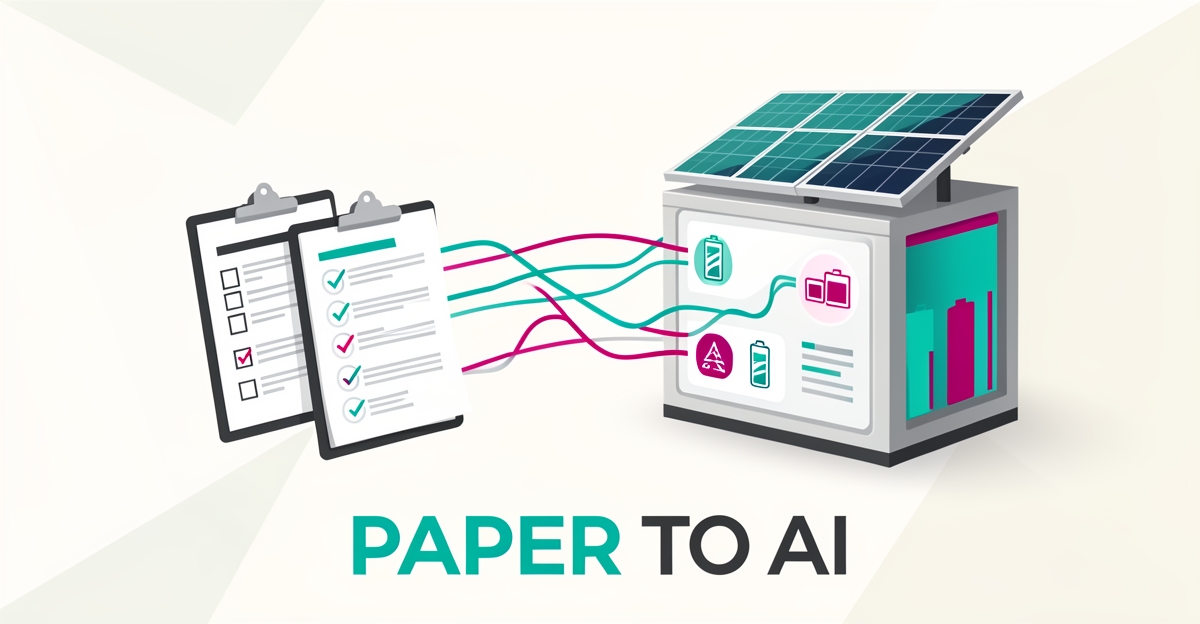
From Paper to AI: How a Battery Storage Installer in Nova Scotia Automated Its Permit Tracking
Key Facts
- Battery storage costs have fallen sharply over the past several years, with utility-scale system prices continuing to decline as of late 2026, driving installer demand across Nova Scotia.
- AI administrative staff typically cost around 80% less than an equivalent human hire, per AIQ Labs' current AI Employees pricing model.
- Integrated AI workflows typically eliminate the bulk of tracking-related errors that plague manual spreadsheet systems.
- AIQ Labs has deployed 200+ multi-agent systems and runs 4 live SaaS products daily, per company reporting.
- AI methods can improve profits from energy arbitrage by 58.5% according to Kleinman Center analysis.
Hire a team member that works 24/7 — for less than a part-time wage.
AI receptionists, SDRs, dispatchers and 99+ roles. Trained on your business, fully managed.
Not sure where to start? Ask our AI planner
The Spreadsheet Trap: Why Manual Permit Tracking Fails Battery Installers
Spreadsheets once served as the backbone of permit tracking for battery storage installers in Nova Scotia, but they quickly become a liability as project volumes grow. Manual entry creates data silos where critical permit details live in isolated files, making it nearly impossible for teams to share real-time updates on status or deadlines. This fragmentation leads to missed follow-ups, duplicated efforts, and communication gaps that stall deployments even as battery costs keep falling and demand surges across the province.
The inefficiencies compound when installers juggle multiple projects with varying municipal requirements. A single delayed permit can halt an entire installation timeline, triggering ripple effects that increase labor costs and frustrate customers awaiting energy storage solutions. Teams waste hours each week chasing down approvals, reconciling conflicting versions of tracking sheets, and manually logging communications, time that could be spent on site assessments or system design. Without a centralized view, project managers lack the visibility needed to anticipate bottlenecks or reallocate resources proactively.
These manual processes also introduce significant error risks that jeopardize compliance and project timelines. Typos in permit numbers, incorrect deadline interpretations, or overlooked renewal dates can result in failed inspections or costly rework. As one industry analysis notes, automation through AI-enabled tools streamlines workflows and de-risks projects by ensuring consistent data handling and timely alerts, capabilities absent in spreadsheet-based systems. For installers aiming to scale amid falling costs and rising demand, relying on manual tracking isn't just inefficient; it actively undermines their ability to deploy battery storage solutions at the speed the market requires. AI-powered permit tracking eliminates these traps by centralizing data, automating reminders, and ensuring every step, from application to approval, is traceable and actionable in real time.
The AI-Powered Permit Command Center: Integration Over Replacement
For a growing battery storage installer, the permit spreadsheet was never broken, until it was. One missed municipal deadline or unlogged inspector email could stall a project for weeks, and no amount of color-coding could prevent it.
The problem isn't diligence; it's architecture. Manual spreadsheets are inherently time-consuming and error-prone, a trade-off that works at low volume but collapses as installations scale. The alternative isn't another piece of software bolted onto the workflow, it's a system that works inside the tools the team already uses.
That's the philosophy behind the AI-powered permit command center: integration over replacement. Rather than asking installers to abandon their CRM or field service software, the system connects directly to them, creating a single source of truth across departments. AIQ Labs builds these connections as deep, two-way API integrations, typically as a fixed-price AI Workflow Build, so permit data flows automatically between systems instead of living in a file only one person maintains.
Once connected, the system handles the tracking work that used to consume office hours:
- Automatically logging permit status changes as jurisdictions update applications
- Monitoring jurisdictional deadlines and flagging approaching dates before they slip
- Capturing inspector communications and attaching them to the right project record
- Syncing updates across the CRM and field tools so office and install crews see the same picture
The result is measurable. Integrated AI workflow systems typically eliminate the large majority of tracking-related errors and free up the many hours a week that manual data entry consumes. For a permit process specifically, that means no step gets missed, not a status change, not a deadline, not an inspector note.
The broader industry is moving the same direction. AI-enabled automation tools are increasingly used to streamline workflows and de-risk projects, accelerating the deployment of battery energy storage solutions, as the Kleinman Center for Energy Policy has noted. What was once a back-office chore becomes a competitive advantage in a market where speed to installation matters.
Crucially, this doesn't disrupt established workflows, it removes the friction inside them. Project managers keep their CRM; field crews keep their dispatch tools. The AI layer simply ensures the permit information those teams need is accurate, current, and impossible to lose.
For installers still running on spreadsheets, the question isn't whether the manual approach will eventually fail a project. It's whether the fix arrives before or after it does.
Quantifying the Shift: From Administrative Drag to Major Cost Reduction
The shift from manual permit tracking to automation delivered real financial and operational gains for the Nova Scotia battery storage installer. By replacing error-prone spreadsheets with an AI-powered system, the company replaced a manual administrative function with an AI workflow that typically costs around 80% less than an equivalent human hire. That reduction frees up budget previously consumed by repetitive data entry and status updates.
Beyond cost savings, the automation eliminated the bulk of administrative errors that previously caused project delays or compliance risks. Staff previously dedicated to tracking permit deadlines and communication logs were reallocated to high-value activities like on-site assessments and client consultations, directly improving project throughput. The system's integration with existing CRM and field tools ensured seamless data flow without disrupting established workflows, turning a bureaucratic bottleneck into a streamlined, reliable process.
- Administrative cost typically cut by roughly 80% versus a manual hire
- Tracking-related errors largely eliminated
- Staff redirected from data entry to site assessments and client engagement
This transformation exemplifies how targeted AI automation in permit tracking not only cuts expenses but also enhances workforce productivity by aligning human effort with higher-impact tasks. The installer now operates with greater accuracy, faster response times, and a scalable foundation for managing increasing project volumes without proportional administrative overhead. For businesses facing similar administrative drag in regulated workflows, AIQ Labs offers a clear path to capture these efficiency gains through custom AI system integration. To explore how automation could transform your permit tracking or other manual processes, take the 2-minute Fit Check and then book a free 30-minute strategy call to identify your highest-ROI opportunities.
Implementation Roadmap: Deploying AI Permit Tracking Without Disruption
Manual spreadsheets stall battery storage projects in Nova Scotia. The installer moves from paper tracking to an AI-powered system that monitors permit status, deadlines, and communication logs without disrupting field crews.
The roadmap starts with a workflow audit. The team maps every permit touchpoint from application to sign-off, identifies data sources in the CRM and field tools, and defines human-in-the-loop decision points for compliance. This audit sets data quality standards before any automation is built.
Data quality is the foundation. Clean permit records, standardized status fields, and verified contact logs are required for reliable automation. AIQ Labs integrates with existing CRM and field tools to ensure no step is missed and the system inherits current processes rather than replacing them.
Integration is milestone-based. Phase one connects permit intake and status sync. Phase two adds deadline monitoring and automated reminders. Phase three layers communication logging and exception routing. Each milestone ships, is validated, and is approved before the next begins, consistent with the Build in Milestones payment model, where you pay for outcomes at each phase, not hours.
Human oversight is built in for critical compliance decisions. The system flags high-risk permits, missing documents, and deadline breaches for review by project managers. Human-in-the-loop safeguards keep authority with the team while automation handles repetitive tracking.
The engagement model supports low-risk piloting. The installer can start with the Start Monthly model, which includes the build, training on your business, tool integrations, monitoring, and improvements, for a monthly cost well below a part-time hire, pausable anytime. Teams that want to own the system outright long-term can graduate to an AI Operating System, built in phases and owned outright.
Operational benefits scale quickly once the system is live. AIQ Labs has deployed 200+ multi-agent systems and runs 4 live SaaS products daily, proof that multi-agent orchestration works in production, not just in demos. The portfolio spans 99+ AI Employee roles across 11 categories, with AI Employees typically costing around 80% less than a human hire.
Deployment follows a practical sequence:
- Discovery and architecture: process analysis, data assessment, and integration design
- Development and integration: custom build with CRM and field tool connections
- Deployment and training: production go-live with role-specific training
- Optimization and scale: continuous monitoring and capability expansion
The approach mirrors how AI-enabled automation tools streamline workflows and de-risk projects, accelerating deployment of BESS solutions. According to industry commentary on automating battery storage deployment, AI methods can improve profits from energy arbitrage by 58.5%.
By piloting monthly, validating data, and keeping compliance decisions human-led, the installer automates permit tracking without disruption.
Still paying for 10+ subscriptions that don’t talk to each other?
We build custom AI systems you own outright. No vendor lock-in. Full control.
Not sure where to start? Ask our AI planner
Frequently Asked Questions
Why do spreadsheets stop working for permit tracking as a battery storage installer grows?
Do I have to replace my CRM or field service software to automate permit tracking?
How much time and money can AI permit tracking actually save?
What happens to compliance decisions, does the AI just run everything on its own?
How do you roll out an AI permit tracking system without disrupting operations?
Is there a low-risk way to pilot this before committing?
Where Manual Tracking Ends and Smart Automation Begins
The journey from spreadsheet chaos to AI-powered permit tracking isn't just about saving time, it's about removing the hidden friction that slows every battery storage project in Nova Scotia. By automating status updates, deadline alerts, and communication logging while keeping human oversight for critical decisions, installers reclaim hours lost to manual entry and redirect that energy toward site assessments, client consultations, and scaling deployments. The result is a major reduction in administrative cost, typically around 80% versus a manual hire, and the near-elimination of tracking errors, turning a compliance bottleneck into a competitive advantage. For teams still wrestling with version-controlled sheets and missed municipal deadlines, the path forward starts with clarity: take the 2-minute Fit Check, then book a free 30-minute strategy call to pinpoint where AI integration delivers the highest ROI without disrupting existing workflows. Seamless integration, not replacement, can future-proof your permit process and keep pace with surging demand.
Make AI your competitive advantage — not just another tool.
Strategy, implementation and ongoing optimization. One partner, end to end.
Not sure where to start? Ask our AI planner