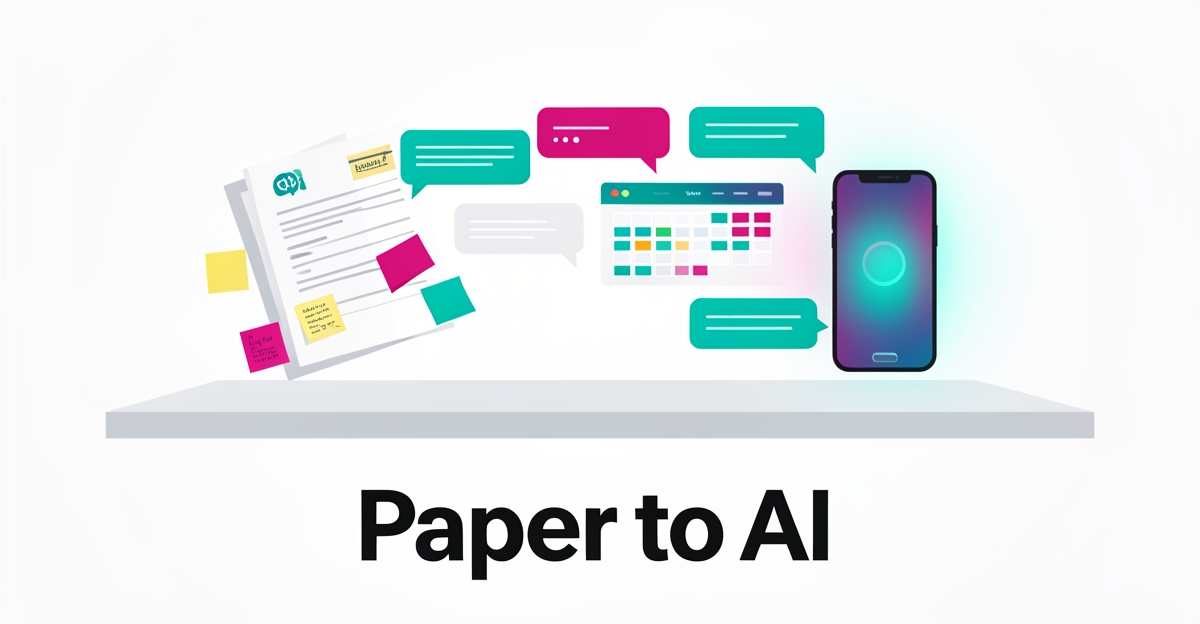
From Paper to AI: How a Chiropractic Clinic in Halifax Automated Patient Communication
Key Facts
- Front-desk staff were losing significant time each week to manual coordination instead of clinical support
- Automated reminders and real-time rescheduling reduced patient no-shows
- Calls are now answered 24/7 by an AI Employee, no more missed calls during peak hours
- Cleaner records mean faster care and fewer errors when clinicians need patient history
- The clinic owns its system outright, no vendor lock-in or per-seat licensing
Hire a team member that works 24/7 — for less than a part-time wage.
AI receptionists, SDRs, dispatchers and 99+ roles. Trained on your business, fully managed.
Not sure where to start? Ask our AI planner
The Hidden Cost of Manual Patient Communication in Healthcare
For a Halifax chiropractic clinic, the day used to begin with a stack of handwritten notes, a ringing phone that never stopped, and a front-desk team stretched thin trying to juggle intake forms, appointment changes, and follow-up calls all at once. Patients waited on hold. Messages slipped through the cracks. Double-bookings happened more often than anyone wanted to admit.
Administrative burden is a well-documented driver of staff burnout in clinical settings, with manual communication workflows consuming hours that could be spent on patient care. AI adoption in healthcare is accelerating precisely because organizations need to offload repetitive, error-prone tasks without adding headcount. The clinic's experience mirrors a broader pattern: when communication relies on paper and phone tags, response times lag, records stay fragmented, and patient trust erodes.
- Missed calls during peak hours meant lost appointments and frustrated patients
- Handwritten intake forms created illegible records and data-entry bottlenecks
- Follow-up reminders were inconsistent, leading to higher no-show rates
- Staff lost the equivalent of multiple full workdays each week to manual coordination instead of clinical support
These inefficiencies are not unique to one clinic. Businesses relying on manual workflows consistently struggle to scale service quality, and healthcare leaders increasingly cite communication gaps as a top operational risk. The Halifax clinic recognized that patching the old system wouldn't solve the root problem, they needed a fundamentally different approach to the patient journey.
AIQ Labs partnered with the clinic through its Workflow Builds process to map every touchpoint, from first inquiry to post-visit follow-up, and replace the manual chain with an AI-powered communication layer that handles scheduling, reminders, intake, and two-way messaging without human operators tethered to the phone. The shift didn't just digitize paperwork, it restructured how the clinic operates, freeing the team to focus on care while the system manages the conversation.
How AIQ Labs Built a Custom Patient Communication System from the Ground Up
The transition began with a simple question: what would it take to replace every sticky note, missed call, and manual follow-up with a system that never sleeps? AIQ Labs started by mapping the clinic's entire patient lifecycle, from first inquiry through ongoing care, identifying every handoff where information fell through the cracks. This discovery phase revealed how much front-desk time was going to repetitive data entry and phone tag, time that could be redirected to in-person patient care. The team then architected a custom communication layer built on multi-agent workflows that could reason through scheduling conflicts, insurance verification, and clinical intake without human intervention.
- Appointment scheduling and real-time calendar synchronization across providers
- Automated reminder sequences via SMS, email, and voice with confirmation tracking
- Post-visit follow-up workflows that capture outcomes and trigger next-step actions
- Insurance verification and intake form completion before the patient arrives
- Unified audit trail for compliance and continuous improvement
Each AI Employee was trained on the clinic's specific protocols, tone, and clinical workflows, not generic templates, then deployed with dedicated phone numbers and email addresses so patients experienced seamless continuity. The system integrates directly with the practice management software through deep two-way API connections, eliminating duplicate entry and ensuring every interaction updates the single source of truth. This is why leveraging proven architectures matters more than building from scratch: frontier model development costs run into the tens of millions of dollars, so the smart move for a clinic is to build on established foundations and own the layer that differentiates you. The clinic now operates with a communication system they own outright, no vendor lock-in, no per-seat licensing, and full control over future evolution.
Measurable Outcomes: Faster Responses, Happier Patients, and Cleaner Records
The shift from paper files to intelligent automation shows up first in the things patients feel every day. Response times compress, missed appointments fall, and staff spend less time chasing paperwork and more time on care.
The Halifax clinic moved from handwritten notes and phone tag to a 24/7 AI-powered communication system built around voice AI, multi-agent orchestration, and regulated-industry compliance. That architecture mirrors a broader pattern: AI simplifies complexity, streamlines processes, and enables real-time decision-making while automating repetitive tasks.
Patient access became continuous. The AI Employee answers calls, routes inquiries, schedules appointments and handles intake without pause. Staff reported a noticeable drop in no-shows as automated reminders and real-time rescheduling reduced last-minute gaps. Administrative workload fell as the system captured, validated and synced patient data directly into records, cutting manual entry and follow-up.
Data accuracy improved alongside speed. Automated validation checks and clear data policies created a dependable data foundation, while dedicated stewardship kept records clean. Cleaner records mean faster care and fewer errors when clinicians need history at a glance.
AIQ Labs delivered the system as a custom-owned asset, not a subscription widget. The clinic retained full ownership of code, agents and data, with a build that integrates voice, SMS and email into a single patient lifecycle workflow. For clinics that want to go further, that same foundation can grow into a full AI Operating System, one connected layer across the whole practice, built in phases and owned outright. That approach reflects a practical view of AI as an amplifier of existing teams.
Key measurable shifts included:
- Faster first responses with 24/7 voice and chat coverage
- Reduced no-shows through automated reminders and easy rescheduling
- Lower administrative hours spent on intake and data entry
- Improved record accuracy from automated validation and sync
Patients experienced shorter wait times and more consistent communication. Staff gained capacity for higher-value clinical work. The clinic now operates with real-time patient access and a compliant, auditable record trail built for healthcare.
The results demonstrate how AI can automate repetitive tasks and improve customer service and satisfaction in a regulated setting.
Still paying for 10+ subscriptions that don’t talk to each other?
We build custom AI systems you own outright. No vendor lock-in. Full control.
Not sure where to start? Ask our AI planner
Frequently Asked Questions
How much time was the front desk actually saving after automating patient communication?
Will an AI system actually handle scheduling, reminders, and intake without a human on the phone?
Do we have to rent a SaaS chatbot or can we own the system outright?
What kind of patient experience improvements did the clinic see?
Is AI in healthcare growing fast enough to justify investing now?
Does building custom AI mean we need to spend millions like the big labs?
Your Patient Journey, Rebuilt for Care Not Chaos
From handwritten notes and endless phone tag to 24/7 voice, SMS and email coverage, the Halifax chiropractic clinic shows what changes when patient communication is rebuilt as an owned system rather than patched. Mapping the full lifecycle and replacing manual handoffs with a custom multi-agent layer cut administrative hours, reduced no-shows, and delivered faster first responses with cleaner, validated records clinicians can trust. The shift freed staff to focus on care while the system handled scheduling, reminders, intake and follow-up without vendor lock-in. This is the practical side of AI Customer Journey Optimization: automate repetitive coordination, protect compliance, and give patients continuous access. If your front desk is still the bottleneck, start by mapping one broken touchpoint and test what an AI Employee can own end-to-end. Take the 2-minute Fit Check at https://aiqlabs.ai/apply to see if there's a clear, high-ROI automation win for your practice, and book a free 30-minute strategy call to map your biggest bottleneck. The tools are proven; the advantage goes to clinics that deploy them with ownership and purpose.
Make AI your competitive advantage — not just another tool.
Strategy, implementation and ongoing optimization. One partner, end to end.
Not sure where to start? Ask our AI planner