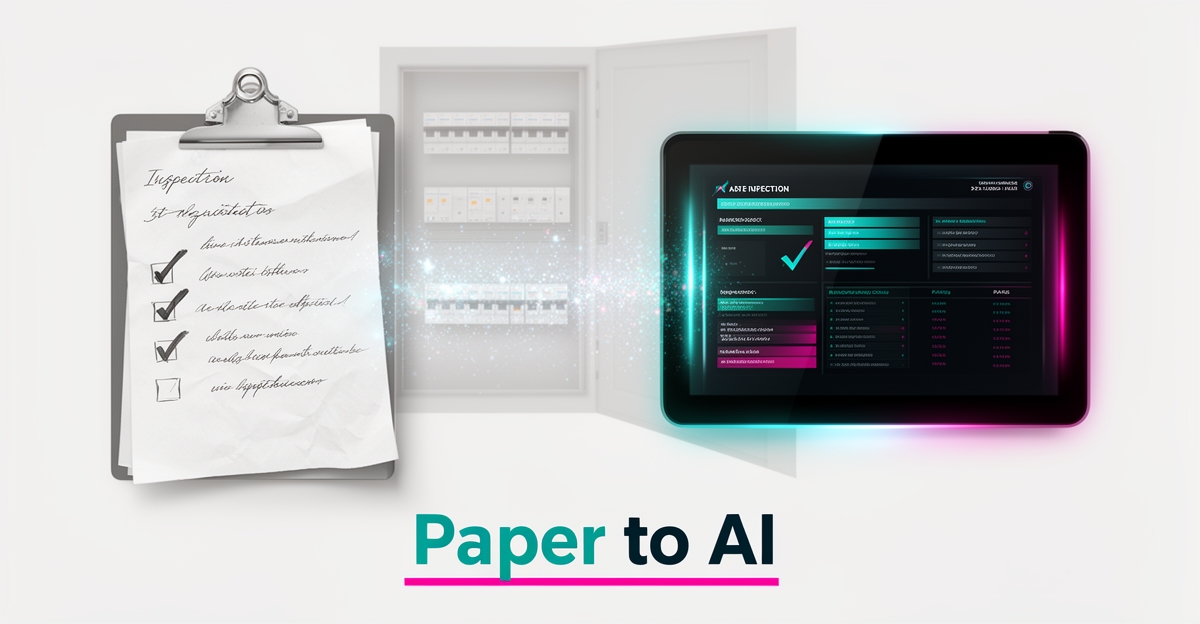
From Paper to AI: How Electrical Contractors Can Automate Panel Inspection Reports
Key Facts
- Unbilled change orders are a leading source of lost revenue for electrical contractors, often caused by field observations that never reach the formal report in time
- Labor is typically the largest cost line on electrical jobs, and much of it goes to non-technical admin like transcription and report formatting
- Incomplete or inaccurate panel inspection records increase OSHA exposure during audits and incident investigations
- AI extracts structured data from unstructured field notes and voice memos to automate compliance documentation
- Most workers receive little to no training on AI tools, making hands-on onboarding a critical part of any rollout
Hire a team member that works 24/7 — for less than a part-time wage.
AI receptionists, SDRs, dispatchers and 99+ roles. Trained on your business, fully managed.
Not sure where to start? Ask our AI planner
The Cost of Manual Panel Inspections: Errors, Delays, and Lost Revenue
Manual panel inspection reporting creates a hidden tax on electrical contractors every week. Technicians spend hours transcribing field notes, chasing signatures, and reformatting logs into client-ready reports. That friction shows up as lost revenue, inflated labor spend, and compliance exposure.
Unbilled change orders alone drain profitability. When field observations never make it into the formal report in time, the work gets done but the invoice never goes out. Delays in documentation mean delays in payment, and cash flow suffers.
Labor is typically the biggest cost line in electrical work, and a meaningful share of it goes to non-technical admin. When technicians are retyping notes or correcting transcription errors, billable hours shrink.
Paper-based and fragmented digital logs also increase error risk. Missed checklist items, illegible handwriting, and inconsistent formatting create reports that require rework. Rework erodes margins and damages client trust on safety-critical inspections.
Compliance risk compounds the cost. Incomplete or inaccurate panel inspection records increase exposure during OSHA audits and incident investigations, and willful safety violations can carry penalties that reach into six figures. Sloppy documentation is the kind of liability you only discover when it's too late to fix.
The operational pain points show up daily as:
- Technicians spending time on paperwork instead of hands-on work
- Change orders discovered late and never invoiced
- Inconsistent reports that slow approvals and renewals
- Audit trails that are incomplete or hard to retrieve
AI document processing changes the equation by extracting, organizing, and summarizing inspection data from scanned forms, digital logs, or field notes to generate consistent, compliant reports. AIQ Labs rebuilds the one workflow that costs you the most through [AI Workflow Builds](/workflow-builds), fixed price, phased, and proven on real inspection documents before it scales.
When reporting is automated, the business impact is immediate. Errors drop as structured data replaces manual transcription. Turnaround accelerates because reports assemble themselves from source documents. Revenue recapture improves as change orders are captured and billed while the job is still fresh.
Contractors who keep manual processes in place accept the cost of delays and risk as normal. Automation makes those costs visible and removable.
How AI Transforms Panel Inspection Reporting: Accuracy, Speed, and Compliance
AI-powered document processing changes how electrical contractors handle panel inspection reports by extracting data from scanned forms, digital logs, and field notes to generate consistent, error-reduced documentation. This directly attacks the unbilled change order problem, since inaccuracies and delays in inspection reporting often lead to missed billing opportunities and compliance gaps. By automating data capture, contractors can ensure that critical details, such as circuit loads, grounding integrity, and code violations, are accurately recorded without relying on manual transcription.
AI reduces errors and improves accuracy in panel inspection reports by minimizing human involvement in repetitive transcription tasks. When technicians no longer need to decipher handwritten notes or re-enter data from multiple sources, the likelihood of transcription mistakes drops significantly. That matters on safety-critical documentation, where even minor reporting inconsistencies can trigger costly regulatory scrutiny.
- Extracts structured data from unstructured inputs like field sketches and voice memos
- Standardizes report formats across teams and job sites
- Flags missing or inconsistent data points for human review
- Integrates with existing project management and compliance systems
- Cuts hours of report assembly down to minutes of review
Beyond accuracy, AI accelerates workflows by eliminating bottlenecks in report creation. Contractors using automated document processing see faster turnaround on inspection documentation, enabling quicker client approvals and payment cycles. That efficiency matters in an industry where labor is the dominant cost, freeing skilled technicians to focus on hands-on work rather than admin. AIQ Labs supports this shift by building custom document automation systems that organize and summarize inspection data while ensuring regulatory alignment.
Ultimately, AI-driven reporting enhances compliance by creating auditable, timestamped records that meet NEC and local code requirements. Unlike manual processes prone to version control issues, AI-generated reports maintain a single source of truth that can be instantly retrieved during audits or insurance claims. As AI adoption in electrical contracting grows, contractors who adopt these tools gain an edge through improved reliability, reduced rework, and stronger documentation practices, all without increasing headcount. To see how this would work in your operation, book a free 30-minute strategy call at https://aiqlabs.ai/book.
Implementation Roadmap: From Pilot to Production with AIQ Labs
Most AI projects fail not because the technology doesn't work, but because contractors try to automate everything at once. A phased implementation approach, starting small, proving value, then scaling, turns AI adoption from a risky leap into a series of manageable steps that protect cash flow while building internal confidence.
The first phase is identifying which specific tasks actually benefit from automation. Start by mapping workflows like bid takeoff, report assembly, and change-order capture, processes where manual data entry consumes hours without adding value. When documentation delays are costing you unbilled change orders and technician hours, the financial case for targeting the reporting bottleneck becomes clear quickly.
Once you've identified your highest-impact workflow, the next decision involves selecting the right AI approach. This isn't about buying generic software, it's about choosing systems that handle your specific document types, integrate with existing tools, and maintain compliance standards. AIQ Labs addresses this through Build in Milestones, splitting implementation into phases where you approve and pay for each stage as it ships, with the option to stop anytime while keeping everything built so far. This structure eliminates the risk of investing heavily in a system that doesn't fit your operation.
The pilot phase focuses on a single workflow, typically panel inspection report automation, where AI extracts data from scanned forms and field notes to generate consistent, compliant documentation. During this stage, staff training becomes critical, since most workers get little or no formal training on AI tools. Successful implementation requires hands-on education that shows technicians how AI handles administrative work while they focus on skilled electrical work.
Moving from pilot to production involves three key steps:
- Validate accuracy rates on real inspection documents before expanding scope
- Integrate the AI system with existing project management and accounting tools
- Establish feedback loops where technicians flag errors and the system learns from corrections
- Scale gradually to additional workflows like service scheduling and compliance tracking
The transition from pilot to full deployment typically reveals integration challenges that weren't visible during testing. This is where the Start Monthly model proves valuable, instead of a large upfront investment, contractors pay a flat monthly rate that includes the build, training on your business, tool integrations, monitoring, and continuous improvements. The principle is simple: AI doesn't replace your electricians. It gives them leverage, automating documentation while skilled trades stay focused on installations and repairs.
The final phase involves expanding beyond the initial workflow into a connected system where inspection data flows automatically into invoicing, compliance records, and customer communications. For contractors ready to go further, an [AI Operating System](/ai-operating-systems) connects these pieces into one operating layer you own outright, turning what was once administrative overhead into a durable competitive advantage.
Still paying for 10+ subscriptions that don’t talk to each other?
We build custom AI systems you own outright. No vendor lock-in. Full control.
Not sure where to start? Ask our AI planner
Frequently Asked Questions
How does AI actually generate panel inspection reports from field notes?
Can AI really help recover revenue lost to unbilled change orders?
What specific cost savings can electrical contractors expect from automating inspection reports?
How does automated reporting help with OSHA compliance and audit trails?
What's the best way to implement AI for inspection reports without disrupting current operations?
Do technicians need special training to use AI document processing tools?
Turn Inspection Paperwork Into Billable Momentum
Manual panel inspection reporting is quietly eroding margins through unbilled change orders, rework, and technician time lost to transcription. AI document processing changes that equation by extracting structured data from scanned forms, field notes and voice memos, standardizing reports across crews, and flagging gaps before they become compliance exposure. The result is fewer errors, faster client approvals, and revenue that gets captured while the job is still fresh. Contractors who pilot this workflow first, validating accuracy on real inspections, integrating with project management and accounting, and building feedback loops with technicians, see the fastest payback and the least disruption. AIQ Labs has deployed 200+ multi-agent systems and runs four live SaaS products daily, with phased options like Build in Milestones and Start Monthly so you can prove value before scaling. Ready to see where the biggest bottleneck is in your reporting? Start the 2-minute Fit Check at https://aiqlabs.ai/apply for a free 30-minute strategy call to map high-ROI automation opportunities, no pitch, just a working session with an AI engineer.
Make AI your competitive advantage — not just another tool.
Strategy, implementation and ongoing optimization. One partner, end to end.
Not sure where to start? Ask our AI planner