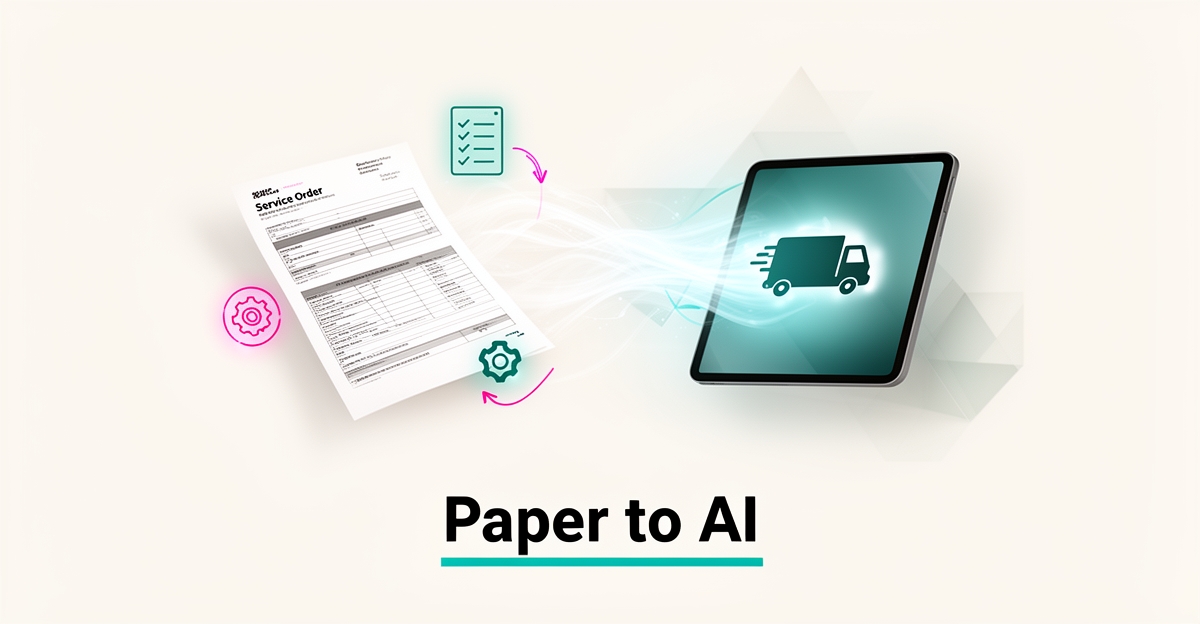
From Paper to AI: How Equipment Dealers Can Automate Service Order Processing
Key Facts
- Manual service order entry consumes 15–30 minutes per transaction for skilled staff according to industry analysis
- AI reduces manual data entry by automating request logging from multiple channels per industry research
- Dealers using AI tools see faster lead response times immediately—often on day one as shown in industry research
- Smart technician assignment improves first-time fix rates and reduces travel time based on AI workflow benefits
- Automated follow-ups increase customer retention and encourage repeat service per AI-powered system capabilities
- AIQ Labs’ AI Employees cost 75–85% less than human employees in equivalent roles per company cost comparison data
- AI reduces operational errors by 95% when transforming disconnected tools into unified systems per AI Development Services claims
Hire a team member that works 24/7 — for less than a part-time wage.
AI receptionists, SDRs, dispatchers and 99+ roles. Trained on your business, fully managed.
Not sure where to start? Ask our AI planner
The Hidden Cost of Manual Service Order Entry
Every minute a technician spends deciphering a handwritten work order is a minute they aren't turning wrenches. For equipment dealers, the gap between receiving a service request and assigning a technician often represents the difference between a profitable quarter and a bottlenecked operation.
Manual service order processing creates a cascade of inefficiencies that extend far beyond simple paperwork. When service advisors transcribe phone requests into spreadsheets or logbooks, they introduce human error at the very first touchpoint. A misread equipment serial number or an incorrectly transcribed hydraulic specification can send the wrong technician with the wrong parts, resulting in costly return trips and extended equipment downtime.
The labor burden compounds quickly. According to industry analysis of dealership workflows, manual administrative tasks typically consume 15–30 minutes per transaction when handled by skilled staff. For a dealership processing dozens of service orders weekly, this translates to hundreds of hours monthly spent on data entry rather than customer service or strategic planning. These repetitive tasks also contribute to employee burnout, as talented staff spend their days copying information between systems instead of solving complex mechanical problems.
The operational costs manifest in several critical areas:
- Delayed response times: Manual routing means service requests sit in inboxes or on desks awaiting review, while competitors using automation respond immediately
- Inventory mismatches: Without real-time integration between service orders and parts inventory, technicians arrive on-site without necessary components
- Inconsistent data entry: Handwritten notes and verbal requests create incomplete records that complicate warranty claims and service history tracking
- Technician scheduling conflicts: Manual assignment often fails to account for technician specialization, location, or current workload
Research from equipment dealership automation studies indicates that dealers implementing automated systems see faster lead response times immediately—often from day one—suggesting that manual processes create significant latency in customer communication. When service requests require human intervention at every stage, from initial logging to technician dispatch, the cumulative delay stretches from hours into days.
AIQ Labs has observed these bottlenecks across trades and field services, where dispatch automation and work order management represent some of the highest-ROI opportunities for AI transformation. The hidden cost isn't just the hourly wage of the person typing data—it's the opportunity cost of idle equipment, frustrated customers, and technicians waiting for clear instructions rather than completing billable work.
How AI Transforms Service Workflows: From Request to Resolution
AI is reshaping how equipment dealers manage service orders, turning fragmented manual steps into a seamless, intelligent workflow. From the moment a request arrives to the final follow-up, AI systems handle intake, inventory checks, technician assignment, and communication with minimal human intervention. This automation reduces delays, minimizes errors, and keeps service cycles moving efficiently. According to industry research, dealers using AI tools see faster lead response times immediately—often on day one of implementation. By eliminating manual data entry and repetitive tasks, staff can focus on higher-value activities like customer engagement and preventive maintenance planning.
AI-powered systems begin by intelligently capturing service requests through voice, email, or web forms, extracting key details like equipment model, issue description, and urgency without manual typing. These inputs trigger real-time inventory checks, ensuring required parts are available before dispatch—avoiding costly delays from stockouts. AI algorithms then match the job to the most qualified technician based on skills, location, and availability, optimizing routes and reducing response times. Automated updates keep customers informed at every stage, improving transparency and satisfaction. For dealers managing high volumes, this end-to-end automation scales without adding overhead, turning service operations into a predictable, revenue-generating function.
- AI reduces manual data entry by automating request logging from multiple channels
- Real-time inventory integration prevents service delays due to missing parts
- Smart technician assignment improves first-time fix rates and reduces travel time
- Automated follow-ups increase customer retention and encourage repeat service
- Continuous learning from past jobs refines future scheduling and parts forecasting
AIQ Labs builds custom AI systems that unify these capabilities into a single workflow—processing service requests, checking inventory, assigning technicians, and triggering follow-ups—all without relying on spreadsheets or manual entry. By connecting directly to CRM, scheduling, and parts management tools, these systems create a single source of truth that eliminates silos and reduces operational friction. The result is faster service completion, fewer errors, and a clearer path to scaling operations profitably. As AI handles the routine, dealers gain the bandwidth to focus on strategic growth, customer relationships, and expanding their service offerings with confidence.
Implementation Roadmap: Starting Small, Scaling with Confidence
Starting small with AI automation builds confidence and delivers quick wins without overwhelming your team. Equipment dealers can begin by targeting a single, high-friction workflow—like manual service order entry—where errors and delays are most costly. AIQ Labs’ implementation process starts with a focused discovery phase to map current pain points and design a custom solution that integrates directly with existing tools. Industry research shows dealers see faster lead response times immediately when adopting automation tools, proving early value is achievable.
The Build in Milestones payment model allows dealers to approve and pay for each phase as it ships, keeping financial risk low while maintaining momentum. After deploying the initial workflow fix—such as AI-powered service request logging and inventory checks—teams typically save hours per week previously lost to manual data entry. This phase includes integration with CRM and scheduling systems, testing for accuracy, and staff training to ensure smooth adoption. With clear milestones and the ability to pause or adjust anytime, dealers retain full control over scope and investment.
Once the foundation is proven, scaling to additional workflows—like technician assignment or customer follow-ups—becomes a natural extension of the same system. AIQ Labs supports this expansion through ongoing optimization and performance monitoring, ensuring each new phase builds on prior success. By starting with one critical fix and scaling with confidence, dealers transform fragmented processes into a unified, AI-driven operation that reduces errors, speeds up service cycles, and frees staff to focus on customer relationships and growth.
Still paying for 10+ subscriptions that don’t talk to each other?
We build custom AI systems you own outright. No vendor lock-in. Full control.
Not sure where to start? Ask our AI planner
Frequently Asked Questions
How much time do equipment dealers typically lose to manual service order entry?
What are the main hidden costs of manual service order processing for equipment dealers?
How quickly can equipment dealers see improvements after implementing AI for service order processing?
Can AI really reduce errors in service order processing, and if so, how?
Is it necessary to overhaul all systems at once when adopting AI for service workflows?
What kind of ongoing support does AIQ Labs provide after implementing an AI service automation system?
Turn Service Delays into Competitive Advantage
Manual service order entry isn’t just slow—it’s a silent drain on profitability, tying up skilled staff in repetitive tasks while equipment sits idle and customers wait. By automating request logging, inventory checks, and technician assignment with AI, equipment dealers reclaim hours each week, reduce costly errors, and accelerate response times from day one. The result isn’t just faster service—it’s a scalable operation where teams focus on what truly matters: solving mechanical problems, building customer relationships, and growing the business. If you’re ready to see where AI can eliminate friction in your service workflow, start with a free strategy call to map your biggest bottleneck and uncover high-ROI automation opportunities—no obligation, just clarity on your path forward.
Make AI your competitive advantage — not just another tool.
Strategy, implementation and ongoing optimization. One partner, end to end.
Not sure where to start? Ask our AI planner