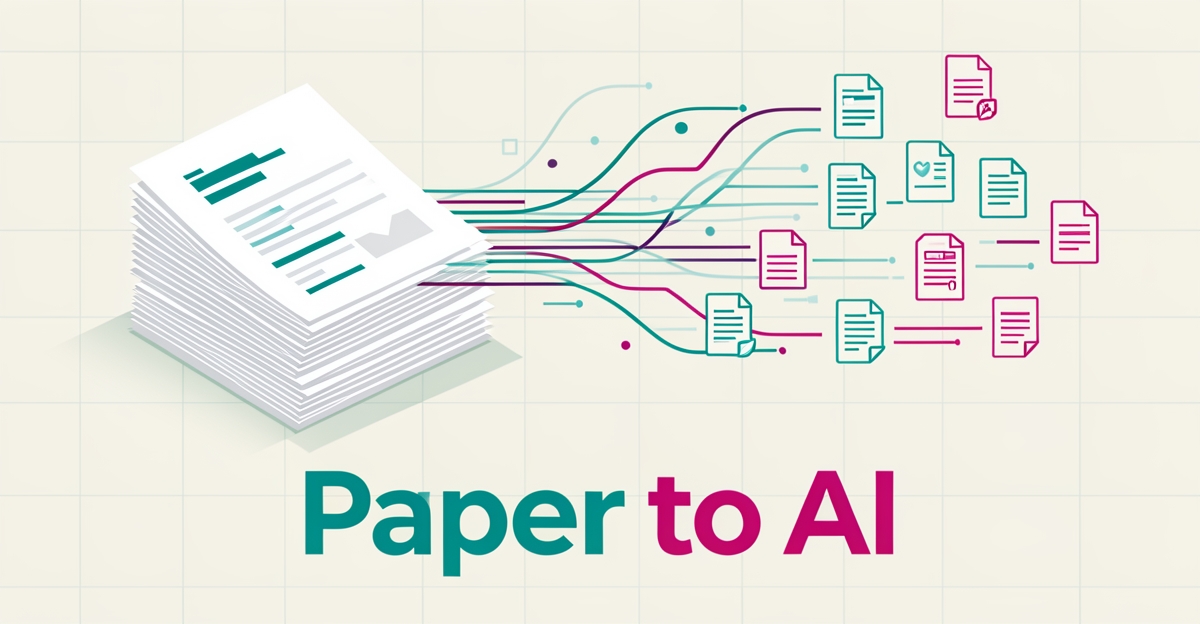
From Paper to AI: How One Halifax-Based Body Contouring Clinic Automated Patient Records
Key Facts
- Administrative work, especially documentation, is consistently cited as one of the largest drains on healthcare professionals' time
- Paper records carry real risks: illegible handwriting, misfiled documents, and weak audit trails make compliance harder
- AIQ Labs' multi-agent document processing classifies, extracts, and validates patient data in one connected flow
- AIQ Labs has deployed 200+ multi-agent systems and runs four live SaaS products daily
- AI Employees typically cost around 80% less than an equivalent human hire while working around the clock
Hire a team member that works 24/7 — for less than a part-time wage.
AI receptionists, SDRs, dispatchers and 99+ roles. Trained on your business, fully managed.
Not sure where to start? Ask our AI planner
The Hidden Cost of Paper-Based Patient Records in Healthcare Clinics
The shift from paper-based patient records to digital systems isn't just about convenience, it's an operational necessity. Manual record-keeping creates bottlenecks that ripple through every part of a clinic: front-desk efficiency, scheduling, and clinical decision-making. Staff spend excessive time searching for files, transcribing handwritten notes, and correcting data entry errors, diverting focus from patient care. These inefficiencies compound daily, leading to longer wait times, frustrated patients, and strained resources.
Administrative tasks are widely reported to consume a large share of healthcare professionals' time, with documentation a major contributor. In paper-based systems, that burden is often heavier because there's no searchability and no automated workflows. The result is a system where valuable clinical expertise is underutilized because of outdated administrative processes.
Beyond inefficiency, paper records introduce tangible risks to patient safety and regulatory compliance. Illegible handwriting, misfiled documents, and inconsistent formatting increase the likelihood of errors, such as incorrect dosage calculations or missed allergy alerts. And maintaining compliance with privacy regulations like PIPEDA becomes much harder when records live in physical cabinets with limited access controls and audit trails.
- Increased risk of data loss from physical damage, theft, or misplacement
- Delayed access to patient history during emergencies or follow-up visits
- Higher labor costs due to redundant data entry and file management
- Limited ability to generate real-time reports for quality improvement or insurance claims
- Greater vulnerability to non-compliance penalties during audits
The hidden cost extends beyond immediate operational friction, it stifles scalability. Clinics relying on paper struggle to integrate with modern tools like telehealth platforms or AI-driven diagnostics, creating a growing gap between their capabilities and patient expectations. Addressing this bottleneck isn't merely about upgrading technology; it's about reclaiming clinical capacity, reducing preventable risks, and building a foundation for sustainable growth, precisely the transformation AIQ Labs enables through workflow builds and secure, compliant document automation designed for healthcare environments.
How AI-Powered Document Processing Eliminates Manual Data Entry Errors
The shift from paper-based records to AI-powered document processing represents a fundamental leap in operational accuracy for healthcare clinics. Manual data entry has long been a source of costly errors, from misrecorded patient details to incorrect treatment codes, leading to billing delays and compliance risks. By deploying intelligent data extraction systems, clinics can automate the ingestion of intake forms, insurance documents, and treatment notes with high precision. This transition doesn't just save time, it removes the human fatigue and oversight that undermine data integrity in high-volume administrative workflows.
AIQ Labs' multi-agent approach to document processing uses specialized AI agents working in concert: one agent scans and classifies incoming documents, another extracts structured data using contextual understanding, and a third validates the output against clinical rules and historical patterns. This orchestrated system ensures that information like patient demographics, procedure codes, and consent forms is captured accurately the first time, reducing the need for rework. In practice, this transforms a previously error-prone process into a reliable foundation for patient care and reporting.
The impact extends beyond accuracy to workflow acceleration. What once required staff to spend hours manually keying information from paper forms into electronic records now happens in seconds, with AI handling routine extraction while human staff focus on exception handling and patient interaction. This is AI augmentation rather than replacement: clinics can scale operations without proportional increases in administrative headcount.
- Automated classification of document types (intake, insurance, consent)
- Context-aware data extraction with validation rules
- Real-time error flagging and correction suggestions
- Seamless integration with existing EHR and practice management systems
By removing the bottleneck of manual entry, the clinic improved data reliability, accelerated patient onboarding and treatment tracking, and created a more responsive, compliant, and scalable operation grounded in trustworthy information.
Implementation: From Paper Forms to Secure, Compliant AI Patient Records
Paper intake forms were creating bottlenecks for a Halifax-based body contouring clinic, with manual data entry slowing patient access and increasing error risk. The shift to a secure, compliant AI-powered records system required a structured, phased approach that protected sensitive health information while accelerating operations.
Discovery and architecture began with a detailed business process analysis to map intake and treatment tracking workflows. AIQ Labs assessed existing technology and data infrastructure to design a solution architecture aligned with privacy compliance and responsible AI principles, including audit trails, access controls, and human-in-the-loop guardrails for critical decisions.
Development and integration focused on custom AI document processing that extracts, validates, and routes patient information across connected systems. Production-ready builds with deep two-way API integrations created a single source of truth across departments. The clinic retained true ownership of the custom system, avoiding vendor lock-in and maintaining full control over customization and future development.
Deployment and training were delivered with role-specific user training and documentation. Staff learned to work alongside the AI system for patient coordination, reducing repetitive manual tasks and freeing clinicians for care. This kind of build is delivered through AIQ Labs' AI Workflow Builds, a fixed-price, phased engagement that rebuilds the one workflow costing you the most.
The implementation followed a clear phased roadmap:
- Discovery & Architecture: process analysis, data infrastructure assessment, and compliant solution design
- Development & Integration: custom AI document processing built with production-grade frameworks and secure integrations
- Deployment & Training: production go-live, staff enablement, and performance monitoring setup
- Optimization & Scale: continuous monitoring, feature enhancement, and ROI tracking
Operational impact was immediate. Data entry errors fell as AI extraction replaced manual transcription, while patient access improved through faster intake and scheduling. Because the clinic owns the system outright, enhancements can be added on its own timeline rather than a vendor's roadmap.
The result is a fully digitized, AI-powered patient records system that reduces manual effort, strengthens compliance, and supports scalable growth for the clinic.
Still paying for 10+ subscriptions that don’t talk to each other?
We build custom AI systems you own outright. No vendor lock-in. Full control.
Not sure where to start? Ask our AI planner
Frequently Asked Questions
How much time do clinicians actually lose to administrative tasks like documentation?
Can AI really reduce data entry errors in patient records, or is that just marketing hype?
What does implementation look like for a clinic moving from paper to AI-powered records, how long and how disruptive is it?
How does the system stay compliant with privacy regulations like PIPEDA when handling sensitive patient data?
Will our clinic own the system and data, or are we locked into a vendor's platform long-term?
Is AI document processing only for large hospitals, or can smaller clinics like ours actually afford and manage it?
From Bottleneck to Competitive Edge
Moving from paper intake forms to a secure, compliant AI-powered records system transforms the hidden costs of manual clinic operations into measurable gains in accuracy, speed, and scalability. The Halifax body contouring clinic case shows how structured discovery, custom AI document processing, and phased deployment cut data entry errors, accelerated patient onboarding, and freed clinicians to focus on care instead of transcription. That shift is not just about convenience; it's about reclaiming clinical capacity, reducing preventable risks, and building a foundation that can grow with demand. For SMB clinics looking to make a similar leap, start by mapping your highest-friction workflows, validating data quality, and choosing an approach that preserves ownership and compliance. If you want a clear picture of where AI can deliver the fastest ROI for your practice, start the two-minute Fit Check at aiqlabs.ai/apply, then book a free 30-minute strategy call. Lean, purpose-built AI is increasingly the sustainable path forward as operational constraints grow.
Make AI your competitive advantage — not just another tool.
Strategy, implementation and ongoing optimization. One partner, end to end.
Not sure where to start? Ask our AI planner