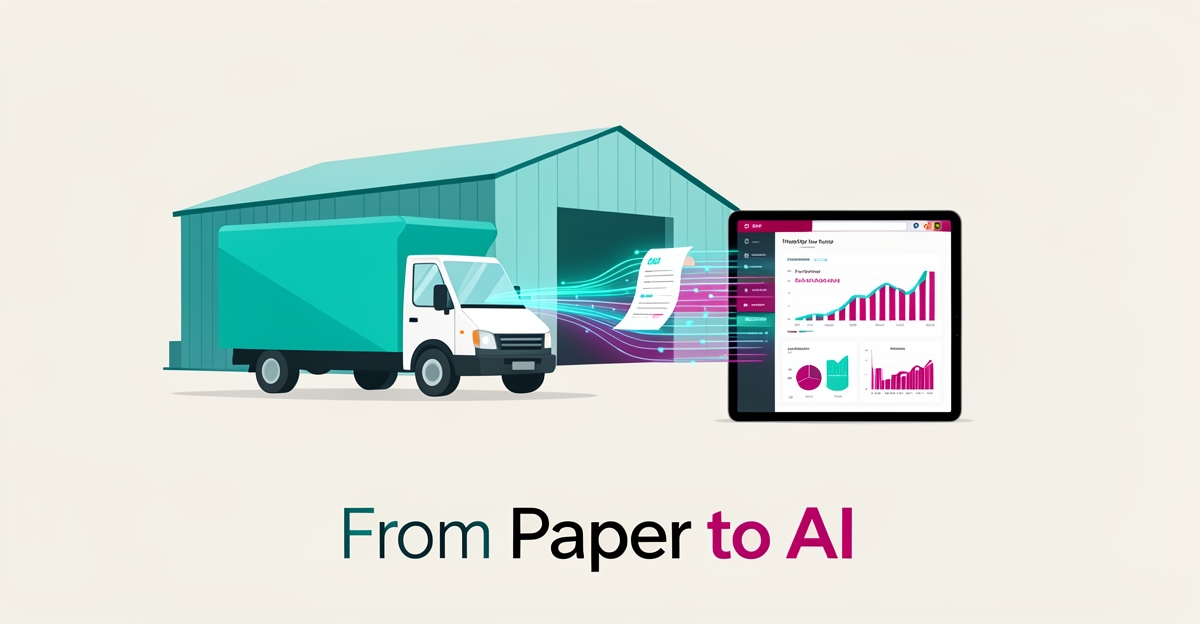
From Paper to AI: How One Halifax-Based Food Distributor Automated Its Delivery Logs
Key Facts
- Manual delivery logs delay invoicing, create inventory mismatches, and add days to month-end close.
- Voice-to-text delivery confirmation captures driver sign-offs and syncs inventory instantly via a bidirectional pipeline.
- AIQ Labs has deployed 200+ multi-agent systems and runs 4 live SaaS products daily on its own AI infrastructure.
- Flexible payment models, Start Monthly, Build in Milestones, Own It Outright, remove the risk of large upfront investment.
Hire a team member that works 24/7 — for less than a part-time wage.
AI receptionists, SDRs, dispatchers and 99+ roles. Trained on your business, fully managed.
Not sure where to start? Ask our AI planner
The Hidden Cost of Manual Delivery Logs in Food Distribution
Manual delivery logs create a cascade of operational challenges that silently erode profitability in food distribution. Paper-based systems force drivers and dispatchers to spend valuable time on repetitive data entry, pulling them away from core logistics tasks and increasing the risk of human error. These delays ripple through the supply chain, causing invoicing to lag behind actual deliveries and creating mismatches between recorded and physical inventory levels. As a result, businesses often face stock discrepancies that lead to either costly overstocking or frustrating stockouts, both of which damage customer trust and cash flow.
The inefficiencies extend beyond time wasted on paperwork. Manual logs create data silos where delivery information remains trapped in physical notebooks or scattered spreadsheets, preventing real-time synchronization with inventory and sales systems. This lack of integration means warehouse teams operate on outdated information, leading to picking errors and inefficient replenishment cycles. Without automated data flow, accounts payable and receivable teams must manually reconcile delivery records with invoices, a process that can add days to month-end close and increase the likelihood of billing disputes. These friction points compound over time, turning routine operations into sources of avoidable waste and frustration.
AI-driven automation directly addresses these pain points by transforming disconnected workflows into unified systems. By eliminating manual entry, companies reduce the likelihood of transcription errors and ensure that every delivery update instantly reflects across inventory levels, sales forecasts, and financial records. This synchronization not only accelerates invoicing but also provides the accurate, real-time data needed to optimize stock levels and prevent both excess inventory and shortages. For food distributors operating on tight margins, this level of operational clarity is not just an improvement, it's a necessity for sustainable growth. To see where AI can resolve these specific bottlenecks in your logistics workflow, start with the 2-minute Fit Check, which leads to a free 30-minute strategy call.
How AIQ Labs Built an Automated Data Pipeline for Real-Time Sync
Manual delivery logs were costing the Halifax distributor hours each day and creating lag between the road and the warehouse. The team needed a way to confirm drops instantly and keep inventory and sales systems aligned without adding headcount.
AIQ Labs designed a custom data pipeline that replaces paper with real-time automation. Voice-to-text delivery confirmation captures driver sign-offs at the point of drop, AI-driven extraction parses the audio and structured fields, and bidirectional sync pushes updates to inventory and sales systems immediately.
The architecture mirrors production patterns AIQ Labs runs daily. Multi-agent workflows orchestrate the multi-step process, with specialized agents handling transcription, validation, and system writes. Tool integration connects the pipeline to legacy ERP and sales tools via API, enabling two-way data flow without replacing core systems.
This kind of build is a natural fit for an AI Workflow Build: rebuild the one workflow that costs the most, at a fixed price, delivered in phases. The Halifax pipeline demonstrates the principle in a live SMB environment.
The pipeline is built for reliability and ownership. Key components include:
- Voice capture and transcription with real-time confirmation prompts for drivers
- AI extraction and validation agents that normalize delivery data before sync
- Bidirectional sync to inventory and sales systems via API tool integration
- Audit trails and human-in-the-loop escalation for exceptions
By automating the log-to-system loop, the distributor reduces manual entry, shortens stock visibility delays, and creates a single source of truth across operations. The solution is custom-built and owned by the client, consistent with AIQ Labs' model of delivering production-ready systems SMBs control outright.
The work also aligns with how AIQ Labs operates its own platforms. The company runs 4 live, revenue-generating SaaS products built on its own AI infrastructure, and has deployed 200+ multi-agent systems to date. That hands-on experience informs the engineering choices in client builds.
The result is a practical, production-grade automation layer that turns delivery confirmation into immediate operational intelligence.
Results and Scalability: From Pilot to Enterprise-Grade Ownership
The Halifax distributor's pilot quickly proved its value, dramatically cutting log processing time and nearly eliminating data entry errors. This shift allowed staff to redirect effort from manual entry to higher-value tasks like route optimization and customer service, directly improving operational throughput. Real-time synchronization between delivery logs, inventory levels, and sales systems meant stock counts updated with each drop-off, reducing discrepancies and enabling faster replenishment decisions. These outcomes represented a fundamental shift in how the business tracked and trusted its core data.
What made this transformation sustainable was the ownership model AIQ Labs applied from the start. Rather than locking the distributor into a proprietary platform, the system was built as a custom asset the client fully owns, code, data, and all. This aligns with AIQ Labs' Own It Outright principle: no vendor lock-in and complete control over future enhancements. The distributor can modify, extend, or integrate the system as needed, without dependency on external vendors or recurring platform fees.
Scalability was further enabled through flexible payment structures designed for SMBs. The team opted for a Build in Milestones approach, approving and paying for each phase as it shipped, starting with the delivery log automation, then expanding to inventory alerts and sales sync. This allowed them to validate ROI at every step, pause if needed, and retain everything built so far. AIQ Labs also offers Start Monthly for teams that prefer a managed, subscription-style entry point, such as AI Employees for roles like dispatchers and SDRs. For other food distributors or SMBs in logistics, these models remove the risk of large upfront investments while still delivering enterprise-grade automation that grows with the business. By owning the outcome, not just renting the tool, the Halifax distributor turned a manual bottleneck into a scalable, self-owned advantage.
Still paying for 10+ subscriptions that don’t talk to each other?
We build custom AI systems you own outright. No vendor lock-in. Full control.
Not sure where to start? Ask our AI planner
Frequently Asked Questions
How much time can AI automation actually save on delivery log processing?
Do I need to replace my existing ERP or inventory system to use AI automation?
What happens to my data if I stop working with the vendor?
Is AI automation for delivery logs affordable for a small business?
How does AI actually reduce errors in delivery logging?
Can AI really sync delivery data with inventory in real time?
Turning Delivery Logs Into Your Competitive Edge
The Halifax food distributor's journey from paper-based delivery logs to an AI-powered data pipeline illustrates a clear path forward for any business still wrestling with manual processes. By automating voice-to-text confirmation, validating data through AI agents, and syncing instantly with inventory and sales systems, they cut log processing time dramatically, nearly eliminated entry errors, and gained real-time visibility across operations, all while retaining full ownership of the solution. This wasn't just about saving time; it was about building a self-sustaining advantage where accurate data fuels better decisions, from replenishment to customer service. If you're ready to replace your most expensive manual workflow, the first step is seeing where AI can deliver the highest impact. Start the 2-minute Fit Check to begin with a free, no-obligation strategy call that maps your biggest opportunity and shows exactly what's possible, no pressure, just clarity. Questions first? Reach the team at [email protected].
Make AI your competitive advantage — not just another tool.
Strategy, implementation and ongoing optimization. One partner, end to end.
Not sure where to start? Ask our AI planner