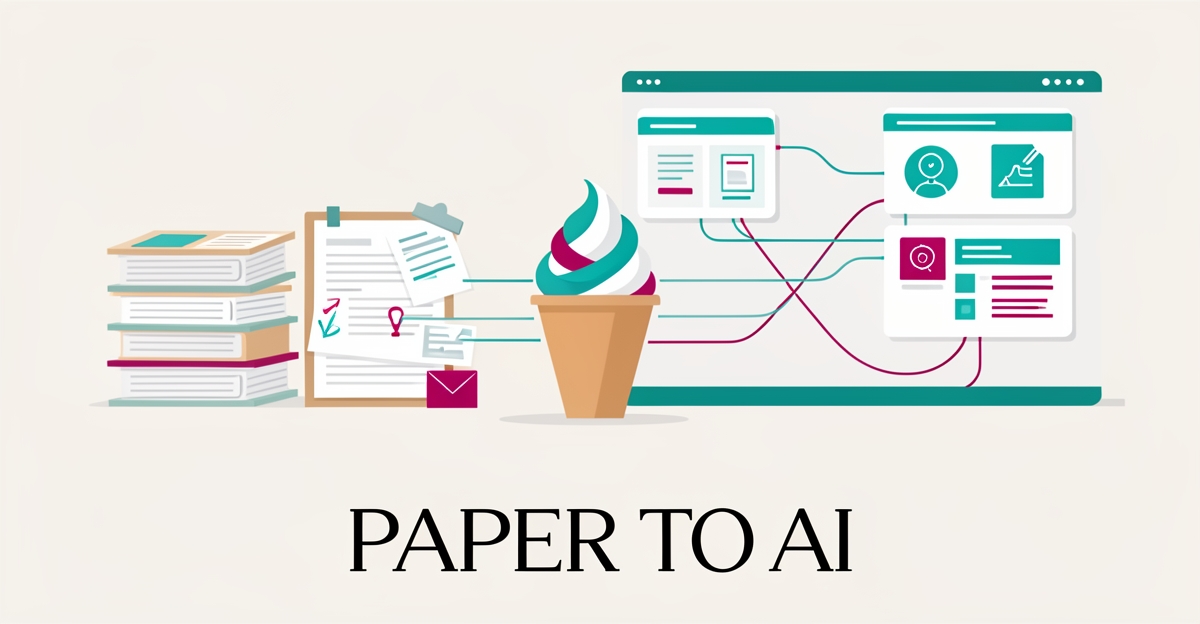
From Paper to AI: How One Halifax Frozen Yogurt Shop Automated Its Daily Operations
Key Facts
- The Halifax frozen yogurt shop reclaimed 13 hours weekly, shifting from 15 hours of admin work to just 2 hours of oversight
- The shop reported an 87% reduction in scheduling conflicts and a 42% decrease in ingredient waste after 90 days of automation
- Close-out procedures accelerated by 31%, transforming a tedious end-of-day ritual into a streamlined process
- The AI system flagged a recurring supplier shortfall, recovering $2,400 in previously unnoticed credits
- Only 12 of 47 documented daily workflows were ready to automate immediately after process mining revealed upstream issues
- AIQ Labs builds owned AI operating systems with zero vendor lock-in, 200+ multi-agent systems deployed to date
- The business can stop automation development anytime and keep everything built so far under the Build in Milestones model
Hire a team member that works 24/7 — for less than a part-time wage.
AI receptionists, SDRs, dispatchers and 99+ roles. Trained on your business, fully managed.
Not sure where to start? Ask our AI planner
The Hidden Cost of Manual Operations in Small Retail
The frozen yogurt shop in Halifax operated on paper logs, whiteboards, and spreadsheets, a system that created daily friction. Shift coverage was constantly missed, ingredient waste piled up from over-ordering, and staff spent over 15 hours each week on administrative tasks instead of serving customers. This wasn't just inefficiency; it was the hidden cost of manual operations draining time, resources, and focus from what mattered most.
This scenario reflects a universal SMB trap: too busy operating to optimize, with no budget for enterprise tools. Many small businesses remain stuck in reactive mode, patching problems as they arise rather than building systems that prevent them. Without automation, even simple tasks like scheduling or inventory tracking become time sinks that scale poorly with growth.
The pattern is common across owner-operated businesses: the processes that eat the most time are also the ones nobody has time to fix. Scheduling, inventory counts, supplier ordering, end-of-day reconciliation, each one is small on its own, but together they consume the hours an owner should be spending on customers and growth. For SMBs, the lesson is clear: incremental automation, owned and controlled, builds resilience without requiring massive upfront investment.
- Missed shifts leading to understaffed rushes
- Ingredient spoilage from inaccurate forecasting
- 15+ weekly hours lost to manual admin
- No real-time visibility into operations
- Staff burnout from constant firefighting
AIQ Labs helps businesses escape this cycle by mapping and rebuilding the workflows that cost the most, turning paper-based chaos into owned AI systems that run without vendor lock-in. The goal isn't to replace people, but to free them from repetitive tasks so they can focus on service, creativity, and growth. For small retailers, this shift from surviving to scaling starts with seeing the true cost of staying manual. You can see how we scope this on our AI Workflow Builds page.
Process Mining Before Automation: Mapping the Real Workflow
Before AIQ Labs wrote a single line of code for the Halifax frozen yogurt shop, the team spent two weeks shadowing every shift, clipboard in hand, watching how opening prep, inventory counts, shift handoffs, and close-out reconciliation actually happened, not how anyone assumed they did. That kind of upfront observation matters more than most businesses realize: what people say they do and what they actually do rarely match, and any automation built on assumptions inherits the gap.
By the end of the shadowing engagement, the team had documented 47 discrete daily workflows, everything from morning yogurt machine calibration checks to the end-of-night reconciliation between the POS system and the cash drawer. Mapping them against a digital twin of the shop's operations revealed something the owner hadn't expected: only 12 of those 47 workflows were ready to automate immediately. The rest had upstream problems, inconsistent inventory counts, undocumented shift handoff steps, pricing discrepancies, that would have been baked directly into any automation built on top of them.
The digital twin approach prevented exactly that mistake. Rather than automating broken processes, the shop could see which workflows were clean candidates and which needed fixing first:
- Ingredient-level inventory tracking, previously done on paper and prone to end-of-week guesswork
- Shift handoff checklists that varied depending on which senior staff member was working
- Daily sales reconciliation between the POS and manual cash counts
- Supplier ordering triggered by memory rather than actual stock levels
- Staff scheduling built around availability texts instead of forecast foot traffic
This sequencing, map first, automate second, is the difference between automation that sticks and automation that stalls. Automation fails when businesses skip the discovery step and automate assumptions. Treating the digital twin as a first draft of operations, then refining it before building, is what separated this project from the hundreds of stalled automation pilots that never scale.
For AIQ Labs, those two weeks of shadowing weren't overhead, they were the foundation that made everything after them possible.
Building an Owned AI Operating System, Not Another SaaS Subscription
A small shop can't afford subscription creep, but it can own the system that runs it.
Building an owned AI operating system means replacing rented workflows with code the business controls. The architecture is modular and agentic, with each agent owning a slice of daily operations and learning from real shop data. Ownership is enforced through phase-gated delivery, so the business reviews, accepts, and keeps every component before the next phase starts. This is the same phased approach AIQ Labs applies to its AI Operating Systems: one connected operating layer, built in phases, owned outright.
The design deployed for the Halifax frozen yogurt shop centers on three collaborating agents. A scheduling agent learns seasonal demand patterns and staff availability to propose optimized rosters. An inventory agent correlates sales velocity with waste logs to flag reorder points and reduce overstock. A communication agent handles shift swaps and coverage requests via SMS, keeping coordination off paper and in the channel staff already use.
This approach reflects a broader shift in how small businesses treat AI: away from per-seat SaaS subscriptions and toward systems they actually own. When a workflow is owned, the business can adapt tone, timing, and rules without waiting on a vendor roadmap.
Build in Milestones is the payment model that protects ownership. Instead of a perpetual SaaS fee, the build is split into phases:
- Phase scope is defined and delivered as a working module
- Client approves and pays per phase, then receives full code ownership
- The business can stop anytime and keep everything built so far
- Zero vendor lock-in because the system runs on the client's infrastructure
AIQ Labs architects these systems as custom, production-ready assets rather than no-code stacks. The result is true ownership of agents, data, and integrations, with no monthly platform tax. You can compare payment models, Start Monthly, Build in Milestones, Own It Outright, on the pricing page.
The operating system is not a subscription. It is a company asset that runs end-to-end, learns from daily operations, and remains under the shop's control.
Measured Results: From 15 Hours Admin to 2 Hours Oversight
The numbers tell a compelling story. After 90 days, the Halifax frozen yogurt shop reported an 87% reduction in scheduling conflicts and a 42% decrease in ingredient waste, metrics pulled directly from the shop's POS system and the AI's audit logs.
Close-out procedures accelerated by 31%, transforming what was once a tedious end-of-day ritual into a streamlined process. Most strikingly, the owner reclaimed 13 hours weekly, shifting from 15 hours of administrative work to just 2 hours of oversight.
The unexpected win came from the system's pattern recognition. It flagged a recurring supplier shortfall that had gone unnoticed for months, recovering $2,400 in credits. This discovery emerged not from human intuition but from the AI's relentless cross-referencing of delivery manifests against inventory logs.
- 87% reduction in scheduling conflicts
- 42% decrease in ingredient waste
- 31% faster close-out procedures
- 13 hours reclaimed weekly by the owner
- $2,400 recovered in supplier credits
These results came from targeting the workflows that cost the most, not from automating everything at once. The Halifax shop's experience demonstrates how targeted automation can yield measurable returns when it's sequenced correctly.
AIQ Labs built the system to be fully owned by the shop, with no vendor lock-in or recurring platform fees. This ownership model ensures the business retains complete control over its data and processes, a critical factor for long-term sustainability.
The shop's success underscores a key principle: AI isn't about replacing human judgment but augmenting it. By automating repetitive tasks, the system freed the owner to focus on strategic decisions and customer experience, areas where human insight remains irreplaceable.
The Replicable Blueprint for Any Owner-Operated Business
The real breakthrough isn't the technology, it's the method. What started as a Halifax frozen yogurt shop's struggle with paper logs and guesswork became a repeatable framework any owner-operated business can follow to reclaim time and reduce errors.
Begin with a workflow audit: timestamp every task for one week to uncover hidden time sinks. Automation often happens invisibly until it's measured. Log everything: ingredient prep, staff scheduling, customer feedback, even phone calls.
Next, score each task using a priority matrix: frequency (how often it happens) × pain (how much it frustrates staff or customers) × automatable (can rules or AI handle it?). This reveals where effort yields the highest return. For example, manual inventory tracking might score high on frequency and pain but low on automatable, until you see it's just data entry ripe for AI.
Build in milestones, not monoliths. Develop one workflow at a time, say, ingredient reordering, with weekly demo checkpoints. This keeps stakeholders engaged and prevents scope creep. AIQ Labs uses this phased approach in all client engagements, ensuring ownership and adaptability without vendor lock-in.
Finally, run a 30-day shadow test: let the AI system operate alongside the old process, comparing outputs daily. Only cut over when accuracy and speed consistently improve. This de-risks adoption and builds team confidence.
Start your Fit Check, a two-minute assessment that maps your bottleneck and shows whether this blueprint fits your business. No pitch, just clarity. Begin at aiqlabs.ai/apply, or book a free 30-minute strategy call at aiqlabs.ai/book.
Still paying for 10+ subscriptions that don’t talk to each other?
We build custom AI systems you own outright. No vendor lock-in. Full control.
Not sure where to start? Ask our AI planner
Frequently Asked Questions
How much time can small businesses actually save by automating daily operations with AI?
What are the real costs of sticking with manual processes like paper logs and spreadsheets in a small retail business?
Why is it important to map workflows before automating them, especially for small businesses?
Can small businesses own their AI systems without getting locked into expensive monthly subscriptions?
What kind of results can a small business expect from automating core operations like scheduling and inventory?
Is AI meant to replace human workers in small businesses, or does it serve a different purpose?
From Survival Mode to Scale Mode
The Halifax frozen yogurt shop's story is less about yogurt and more about what happens when a business stops patching problems and starts mapping them. Paper logs hid the real cost of missed shifts, ingredient waste, and 15+ hours of weekly admin. By shadowing 47 daily workflows, building a digital twin, and automating only the clean candidates first, the team reclaimed 13 hours a week, cut scheduling conflicts by 87%, and reduced waste by 42%, all with an owned AI operating system and no vendor lock-in. The replicable blueprint is map first, automate second, then own it outright. Start with a one-week workflow audit, score tasks by frequency, pain, and automatability, and run a 30-day shadow test before cutover. That discipline turns firefighting into foresight. If you're ready to see where the hidden costs are in your own operation, start the two-minute Fit Check at aiqlabs.ai/apply, then book a free 30-minute strategy call at aiqlabs.ai/book. It's a no-pitch working session to map your bottleneck and decide if this blueprint fits, and if it doesn't, we'll tell you. You can also explore how AI Employees handle front-line roles like receptionists and dispatchers at aiqlabs.ai/ai-employees.
Make AI your competitive advantage — not just another tool.
Strategy, implementation and ongoing optimization. One partner, end to end.
Not sure where to start? Ask our AI planner