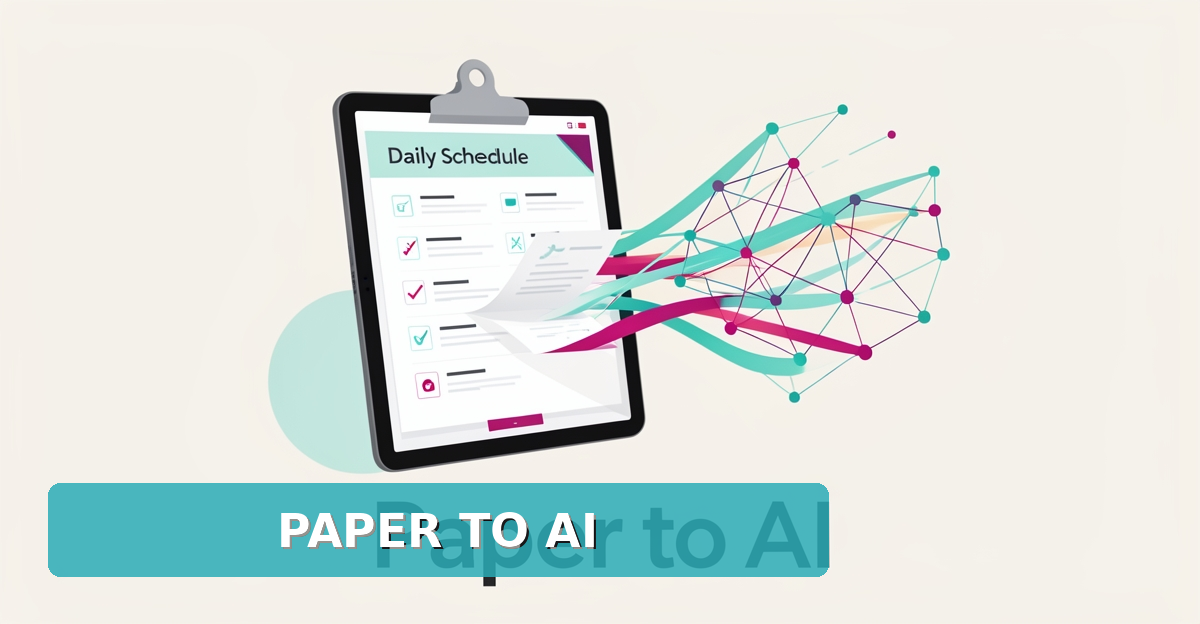
From Paper to AI: How a Halifax Preschool Could Automate Its Daily Schedule Management
Key Facts
- Manual daily schedule tracking pushes repetitive, low-value work into every teaching shift, rewrites, verbal hand-offs, and duplicated portal entry.
- A multi-agent AI system can auto-adjust schedules for staff absences, weather changes, and individual child needs without constant human oversight.
- AIQ Labs has deployed 200+ multi-agent systems and runs four live SaaS products daily, the same orchestration principles apply to early childhood workflows.
- Under the Own It Outright payment model, a preschool keeps full control of its custom system with no ongoing subscription costs.
- AIQ Labs' AI Workflow Builds service targets the single workflow that costs the most, at a fixed price and built in phases.
Hire a team member that works 24/7 — for less than a part-time wage.
AI receptionists, SDRs, dispatchers and 99+ roles. Trained on your business, fully managed.
Not sure where to start? Ask our AI planner
The Hidden Cost of Manual Scheduling in Early Childhood Education
Paper schedules in early childhood classrooms create invisible drag on the entire day. Teachers spend the morning rewriting, rechecking, and re-communicating routines instead of engaging with children.
Manual daily schedule tracking forces repetitive, low-value work into every shift. Handwritten boards must be updated for absences, allergies, transitions, and parent notes, then copied to portals later. That duplication creates errors, delays, and constant context switching that erodes focused teaching time.
For preschools operating with paper-based workflows, the cost shows up as teacher burnout and lost capacity. Staff absorb scheduling friction that could be automated, which limits the time available for observation, planning, and family communication.
Operational inefficiencies compound quickly in manual systems:
- Daily schedule changes require physical rewrites and verbal hand-offs, increasing the risk of missed transitions
- Parent updates are delayed until end-of-day entry, reducing trust and increasing inbound inquiries
- Staff time is diverted from child interaction to administrative rework and error correction
- Inconsistent documentation makes compliance reporting and continuity planning harder
This is the opportunity cost of staying manual. When routines are tracked on paper, a preschool forgoes the productivity gains that automated workflows deliver in other operational settings. Teachers remain valuable, but their impact is capped by workflow constraints.
AIQ Labs has seen this pattern repeatedly across the 200+ multi-agent systems it has deployed: replacing paper tracking with an AI-driven workflow that auto-schedules activities, sends alerts, and updates parent portals frees staff to focus on care and learning. A Halifax preschool is a natural fit for this kind of build, daily schedule management is exactly the kind of high-friction, rules-based workflow that AI Workflow Builds are designed to replace.
The gap is not about replacing educators. It is about removing the manual overhead that prevents them from working at the top of their license.
How AI Workflow Automation Transforms Routine Operations
A preschool's manual schedule tracking typically becomes a daily bottleneck, teachers spend valuable time coordinating activities, sending reminders, and updating parent portals instead of focusing on child engagement. A custom multi-agent system can automate these routine operations, creating a workflow that handles activity scheduling, alert generation, and real-time parent portal updates without manual intervention.
By implementing specialized agents for activity coordination, notification delivery, and data synchronization, the system keeps early childhood routines consistent while cutting administrative workload. This automation allows educators to redirect their attention toward meaningful interactions with children, directly supporting the developmental goals central to preschool education.
A multi-agent architecture enables dynamic adaptation to daily variables such as staff absences, weather changes, or individual child needs, maintaining schedule integrity without constant human oversight. Each agent operates within defined parameters, communicating through a shared state model to ensure alignment across scheduling, alerting, and portal update functions. This approach mirrors the multi-agent orchestration AIQ Labs uses in its own production systems, four live SaaS products the company runs daily, where reliability matters as much as capability.
Key operational improvements include:
- Automatic adjustment of activity timing based on real-time attendance and staff availability
- Proactive alert generation for transitions, meal times, and outdoor play windows
- Instant parent portal updates reflecting daily activities and developmental notes
- Reduction in scheduling errors and miscommunications between staff and families
- Consistent adherence to provincial early learning framework guidelines
The system's ability to maintain routine consistency while adapting to unpredictability addresses a core challenge in early childhood education, balancing structure with flexibility. Teachers get fewer disruptions from last-minute changes and greater confidence that all families receive timely, accurate information about their child's day.
By owning the custom-built system outright, a preschool avoids ongoing subscription costs and retains full control over future enhancements as its needs evolve. This is the difference between renting capability and owning it, targeted AI workflow automation can deliver durable efficiency gains without compromising the human-centered nature of early education, setting a precedent for similar institutions seeking to modernize administrative operations while preserving educational quality.
From Pilot to Partnership: Scaling AI in Small Organizations
A preschool's journey would begin with a focused discovery phase, where AIQ Labs analyzes manual scheduling pain points and maps how an AI workflow could fit the organization's operations. This approach ensures the solution addresses early childhood routines without creating vendor dependency, setting the foundation for measurable impact from day one.
During development, the team builds a custom AI workflow engine using a multi-agent architecture, integrating it with the preschool's existing tools for activity logging and parent communication, delivered under the Build in Milestones payment model, where each phase is a fixed-price checkpoint the client approves before the next begins. This phase emphasizes deep two-way API integrations and infrastructure scalability, avoiding the pitfalls of brittle no-code alternatives.
Deployment follows with user training and performance monitoring setup, transitioning the system into live use where it begins auto-scheduling activities, sending real-time alerts, and updating parent portals. An optimization phase then kicks in, with continuous monitoring, feature enhancements, and ROI tracking to validate gains and identify expansion opportunities. This lifecycle approach reflects how AIQ Labs guides clients from pilot to partnership, ensuring AI becomes a sustainable capability rather than a one-time project.
For a preschool that starts with one workflow, the natural next step is broader connection, an AI Operating System that links scheduling, communication, and reporting into one owned operating layer, built in phases. Small organizations don't need to boil the ocean; they need one workflow fixed well, then a path to scale.
Still paying for 10+ subscriptions that don’t talk to each other?
We build custom AI systems you own outright. No vendor lock-in. Full control.
Not sure where to start? Ask our AI planner
Frequently Asked Questions
How much time can AI workflow automation save preschool teachers on daily scheduling tasks?
What specific improvements can a preschool expect from AI schedule management?
Will using AI in preschool scheduling replace teachers or reduce their importance?
How does a preschool pay for a custom AI system?
Does the preschool own the system, or is it a subscription?
What skills should preschool staff develop to work effectively with AI scheduling systems?
From Manual Drag to Measurable Relief
The paper-to-AI path for a Halifax preschool is straightforward: paper boards, verbal hand-offs, and end-of-day portal updates consume teacher time that should be spent on observation, planning, and family connection. Replacing that manual loop with a custom multi-agent workflow that auto-schedules activities, sends proactive alerts, and updates parent portals in real time removes the transactional overhead that creates burnout, while protecting the human-centered work of teaching. For small organizations ready to move from pilot to partnership, the next step is identifying one high-impact workflow and mapping it to an owned system built for your operations. Start with the two-minute Fit Check, then book a free 30-minute strategy call to map your biggest bottleneck. You can reach the team at [email protected].
Make AI your competitive advantage — not just another tool.
Strategy, implementation and ongoing optimization. One partner, end to end.
Not sure where to start? Ask our AI planner