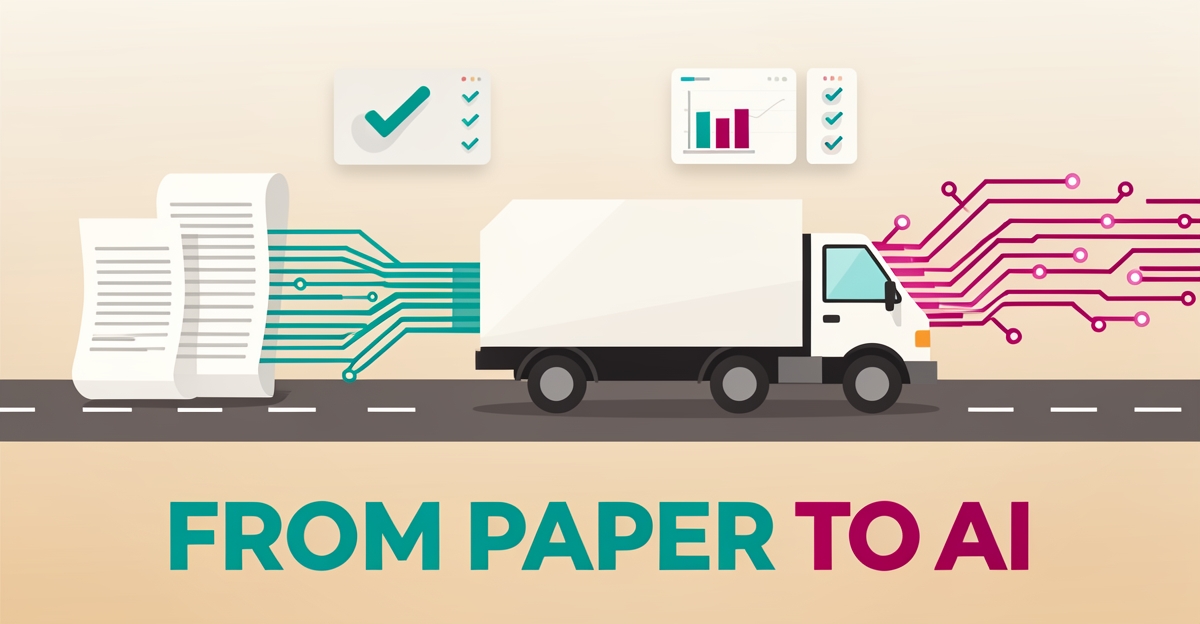
From Paper to AI: How One Heating Oil Company in Halifax Automated Its Delivery Logs
Key Facts
- A Halifax heating oil business transitioned from handwritten logs to AI auto-capture for deliveries.
- The system was built as a custom AI Workflow Build, engineered around the company's actual log formats and dispatch tools.
- The business owns the delivered system outright, no vendor lock-in or subscription dependency on the AI layer.
- AIQ Labs has deployed 200+ multi-agent systems and runs 4 live SaaS products daily.
Hire a team member that works 24/7 — for less than a part-time wage.
AI receptionists, SDRs, dispatchers and 99+ roles. Trained on your business, fully managed.
Not sure where to start? Ask our AI planner
The Hidden Cost of Handwritten Delivery Logs
Handwritten delivery logs feel simple until the winter rush hits. For a Halifax heating oil business, paper meant drivers scribbling volumes, addresses and timestamps in the cab, then office staff retyping everything before invoicing could start.
That manual handoff creates friction every day. Drivers lose time at the curb deciphering previous entries, dispatchers chase missing signatures, and the office reconciles mismatched totals. Errors compound quietly, and operational visibility only exists after the fact.
Paper logs make real-time visibility impossible. A delivery completed at 8 a.m. may not appear in the system until the next afternoon, if at all. Managers cannot confirm fuel levels, route efficiency, or customer exceptions while they are happening. Decisions are reactive instead of proactive.
The risk profile grows with volume. Common failure points in manual tracking include:
- Illegible handwriting leading to misread gallons or addresses
- Lost or damaged logbooks during weather and field work
- Delayed data entry creating billing lags and cash flow gaps
- No audit trail for disputes about delivery time or quantity
Accuracy also erodes over time. Staff fatigue, inconsistent formats, and duplicate entries are normal in paper systems. When data quality is poor, even basic reporting becomes unreliable, and data quality is exactly what any AI-powered solution depends on. Manual processes make that guarantee difficult.
Operational cost is hidden but real. Hours spent re-keying, chasing drivers for clarifications, and correcting invoices add up across a season. Loose paper processes offer no guardrails at all: no validation, no audit trail, no single source of truth.
The Halifax heating oil business case shows why SMBs in logistics and field services feel this pain acutely. The company transitioned from handwritten logs to an AI-powered system that auto-captures and tracks delivery details. The shift highlights how manual tracking limits both accuracy and responsiveness.
For field services, the cost of waiting is measured in missed deliveries and unhappy customers during peak demand. This Halifax operator's system, built with AIQ Labs as a fully owned custom solution, demonstrates how automating the capture step removes the error-prone middle layer and gives operations a live view of the fleet.
When logs are paper, the business is always catching up.
Why Custom AI Outperforms Off-the-Shelf Tools for Log Automation
Off-the-shelf AI tools promise quick fixes, but they often fall short when it comes to complex, real-world workflows like heating oil delivery logging. Generic solutions typically lack the flexibility to handle industry-specific document formats, leading to inconsistent data capture and integration headaches. For businesses requiring precise, end-to-end automation, these limitations translate into ongoing manual workarounds and diminished ROI.
In contrast, AIQ Labs' custom-built system for the Halifax heating oil company was engineered from the ground up to process handwritten delivery logs with high fidelity, using multi-agent frameworks that adapt to variations in handwriting, terminology, and layout. This tailored approach enabled the system to auto-capture critical details, such as delivery addresses, volumes, and timestamps, with minimal human intervention. By training document processing on the company's actual log samples, the solution achieved accuracy levels unattainable with pre-trained, one-size-fits-all models.
The custom architecture also ensured seamless integration with the company's existing operational tools, eliminating data silos and enabling real-time visibility into delivery schedules and inventory levels. Unlike SaaS platforms that impose rigid data structures or require costly middleware, AIQ Labs' system connected directly to the business's workflow through deep two-way API integrations, creating a unified source of truth. This level of interoperability is only possible when the AI is built around the client's specific tech stack, not the other way around.
Perhaps most importantly, the custom model delivered true ownership, meaning the heating oil company now controls its AI asset outright, with no vendor lock-in, subscription dependencies, or restrictions on future modifications. That ownership model is central to how AIQ Labs works: you can [build in milestones and own it outright](/pricing) rather than rent a system forever. The result is a system that doesn't just automate a task, it evolves with the business.
From Pilot to Production: Implementing AI Without Disrupting Daily Operations
A paper logbook can't scale with a growing delivery fleet, and the Halifax heating oil team needed a change that didn't stop trucks. The move from handwritten logs to AI auto-capture was staged so daily routes continued without interruption.
The pilot starts with discovery and architecture. AIQ Labs maps the existing paper workflow, delivery touchpoints, and data requirements before any code is written. This keeps scope focused on real operations instead of speculative features, a discipline that matters whether the engagement is a single [workflow rebuild](/workflow-builds) or a broader [AI operating system](/ai-operating-systems).
Development is built around the business, not around a vendor platform. The custom system is engineered for production from day one, with integrations to dispatch and customer records. The emphasis is on robust, owned solutions rather than subscription add-ons.
Deployment is phased to protect daily operations. Staff continue using familiar processes while the AI system runs in parallel for validation. Change management is built into the rollout, with role-specific training for drivers, dispatchers, and office staff. Training emphasizes how auto-capture reduces manual entry and provides real-time visibility without adding steps.
System integration happens incrementally. The AI layer connects to existing tools via two-way APIs, creating a single source of truth for deliveries. By owning the integration, the business controls its data and future enhancements.
Optimization begins immediately after go-live. Performance is monitored, edge cases are refined, and the system adapts to route patterns and handwritten variations. Ongoing support comes from a team that operates its own production systems daily, bringing production-tested engineering to a small business context.
Key implementation steps used in the heating oil transition:
- Discovery and workflow mapping to define capture points and data quality rules
- Parallel pilot with paper logs and AI auto-capture for validation
- Role-based training and change support for drivers and dispatch staff
- Incremental integration with dispatch and customer systems
- Ongoing optimization and ownership transfer to the business
The result is a fully owned, custom-built solution that improves accuracy and gives operations real-time visibility, with minimal disruption to the daily delivery schedule.
Still paying for 10+ subscriptions that don’t talk to each other?
We build custom AI systems you own outright. No vendor lock-in. Full control.
Not sure where to start? Ask our AI planner
Frequently Asked Questions
Will switching from paper delivery logs actually give us real-time visibility?
What's the biggest risk of keeping handwritten logs for heating oil deliveries?
Is custom AI really better than off-the-shelf tools for log automation?
How do you implement AI without stopping daily deliveries?
How proven is AIQ Labs at building production AI systems?
What does the engagement cost and how does payment work?
Turning Paper Trails into Real-Time Advantage
The Halifax heating oil company's journey from handwritten logs to AI-powered auto-capture shows how replacing manual processes with a custom-built system eliminates daily friction, improves data accuracy, and unlocks real-time visibility into delivery operations, without disrupting workflows. By owning their AI solution end-to-end, they've removed billing delays, reduced errors from illegible entries or lost logbooks, and gained the ability to make proactive decisions during peak season. For field service businesses facing similar bottlenecks, the path forward starts with identifying your own manual handoffs and exploring how a tailored AI system can turn those pain points into operational clarity. To see where AI could deliver the fastest impact in your workflow, [start with the free Fit Check](/apply) to map your biggest bottleneck and discuss high-ROI opportunities, no obligation, just a real working session with an AI engineer.
Make AI your competitive advantage — not just another tool.
Strategy, implementation and ongoing optimization. One partner, end to end.
Not sure where to start? Ask our AI planner