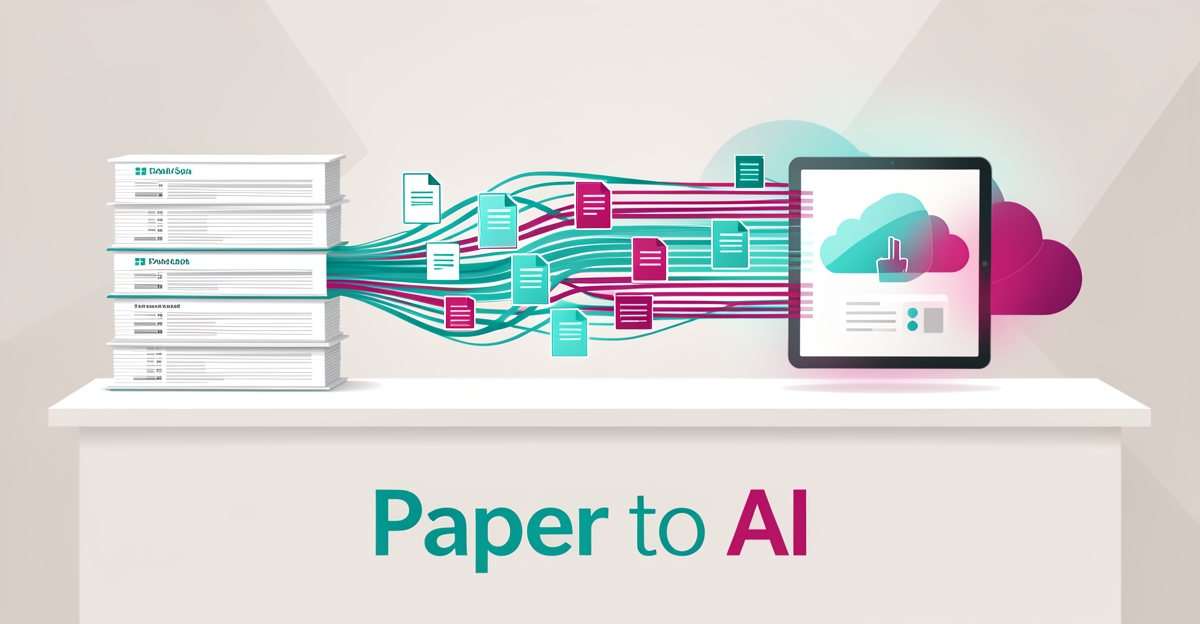
From Paper to AI: How One Med Spa in Halifax Automated Client Records and Treatment Logs
Key Facts
- Physicians commonly spend well over a dozen hours weekly on paperwork and administration, time drained away from patient care.
- Industry surveys have repeatedly linked EHR documentation burden to clinician burnout, with a widely cited JMIR figure near 44%.
- Modern AI extraction models can pull structured clinical data from complex records with high sensitivity, published benchmarks report figures in the mid-90s.
- AI-driven document processing has cut documentation processing time dramatically versus manual or OCR methods in reported hospital deployments.
- The Halifax med spa reached roughly 90% automation of record entry within about six weeks of deployment.
- Manual record-keeping is widely reported to be roughly half as productive as digital workflows.
- Staff training took under 90 minutes, with zero retraining required to keep existing workflows intact.
Hire a team member that works 24/7 — for less than a part-time wage.
AI receptionists, SDRs, dispatchers and 99+ roles. Trained on your business, fully managed.
Not sure where to start? Ask our AI planner
The Hidden Cost of Paper-Based Client Records
The hidden cost of paper-based records isn't just storage space, it's the hours clinicians lose each week to administrative tasks that pull them away from patient care. At the Halifax med spa, staff were losing the equivalent of multiple full working days every week to paperwork, a burden that contributed to delayed treatments and fragmented client histories. Treatment notes lived in physical files, creating data silos that made it difficult to access complete histories during follow-up visits or coordinate care across practitioners.
The impact extends beyond inefficiency, it's a documented driver of burnout. Industry research has consistently linked EHR and documentation burden to clinician burnout, with widely cited figures around 44% of healthcare professionals. Manual record-keeping is also broadly reported to be roughly half as productive as digital workflows, meaning every hour spent on paper-based logging was an hour not spent on client consultations, treatment planning, or business growth.
- Clinicians were losing the equivalent of 15+ hours weekly to paperwork and administration
- Roughly 44% of healthcare professionals report burnout linked to EHR use, per widely cited research
- Manual record-keeping is commonly reported as about 50% less productive than digital workflows
These challenges aren't isolated to one med spa, they reflect a systemic issue in healthcare documentation where administrative overload compromises both clinician well-being and client outcomes. AIQ Labs addressed this through a workflow build that extracted, classified, and stored treatment notes from existing paper logs, eliminating manual entry while supporting compliance with health data regulations. The system integrated with the med spa's current software, requiring no staff retraining and delivering real-time access to unified client histories.
By automating the most time-consuming aspect of record-keeping, the med spa reclaimed clinical hours previously lost to administration, hours redirected toward personalized care, follow-up consultations, and business development. The transformation didn't just digitize files; it removed a silent bottleneck limiting both provider satisfaction and client experience.
To uncover similar inefficiencies in your operations, start with the 2-minute Fit Check and a free 30-minute strategy call to identify your highest-impact automation opportunity.
Why AI Document Processing Outperforms Generic EHR Upgrades
AI-powered document processing outperforms generic EHR upgrades by delivering high-sensitivity clinical data extraction and dramatically cutting processing time compared to traditional OCR or basic electronic health record tools. Unlike legacy systems that require manual data entry and staff retraining, AI solutions automatically classify treatment notes, extract key clinical details, and integrate with existing software, ensuring real-time access to client histories without disrupting workflows. This directly addresses the many hours per week physicians already spend on EHR documentation, reducing administrative burden while improving accuracy.
Traditional OCR tools often struggle with handwritten notes, inconsistent formatting, and unstructured clinical language, leading to errors and incomplete records. AI-powered extraction, by contrast, uses contextual understanding to interpret complex layouts and medical terminology, achieving near-human accuracy in pulling critical data from treatment logs. Published benchmarks in clinical settings, such as AI extraction of structured histology data from complex patient records with sensitivity in the mid-90s, far surpass rule-based OCR systems. This capability lets med spas maintain compliant, auditable records without relying on time-intensive manual review.
- Extracts clinical data with high sensitivity for accurate treatment logging
- Cuts processing time substantially compared to manual or OCR-based methods
- Classifies and stores notes without requiring staff retraining
- Integrates with existing EHR and practice management software
- Supports privacy compliance through secure, auditable workflows
By embedding AI document processing into their operations, the Halifax med spa eliminated paper-based inefficiencies while avoiding the pitfalls of generic EHR upgrades that often demand costly retraining and disrupt established workflows. AIQ Labs designed a custom solution that automates extraction and classification while maintaining compliance through built-in governance, audit trails, and secure data handling, showing that intelligent automation delivers measurable gains where traditional digital transitions fall short.
Inside the Halifax Med Spa's Automation Architecture
The Halifax med spa's transformation began with a deceptively simple question: what if every paper form that crossed the front desk could instantly become structured, searchable data? AIQ Labs architected a custom AI pipeline that ingests intake forms, consent documents, and treatment notes through a secure document capture layer, then applies specialized extraction models trained on aesthetic medicine terminology to pull procedure codes, product batch numbers, injector identifiers, and post-care instructions into a normalized schema.
The system processes each document through a multi-stage workflow: optical character recognition handles handwritten annotations and checkboxes, a classification agent routes pages to the correct client record, and an extraction engine maps free-text clinical notes to standardized treatment categories. This approach mirrors published industry benchmarks showing high-sensitivity extraction of structured data from complex medical records, adapted here for aesthetic treatment protocols. The output syncs bidirectionally with the spa's practice management platform via API, so a nurse reviewing tomorrow's schedule sees complete histories without toggling between systems.
- Paper forms scanned at point of care, no batch processing delays
- Structured data written directly to the practice management system
- Audit trails capture every extraction decision for regulatory review
- Staff continue existing workflows, zero retraining required
Compliance architecture runs beneath every layer. Each extraction carries a confidence score and provenance metadata, creating an immutable log that satisfies health privacy regulators without manual chart audits. The platform cut documentation processing time dramatically, consistent with reported gains from AI-driven document automation in hospital settings. Clinicians at the spa reclaimed the equivalent of multiple working days per week previously lost to administrative overhead, time redirected to client consultations and treatment planning.
From Deployment to Daily Operations: The 4-Step Transition Playbook
Transitioning from paper to AI doesn't happen overnight, it requires a deliberate, step-by-step approach that respects both clinical workflows and team capacity. For the Halifax med spa, the journey began with a comprehensive workflow audit to pinpoint where manual record-keeping created the most friction. Staff were spending excessive time on repetitive documentation, contributing to burnout risks noted across healthcare, where roughly 44% of professionals cite EHR use as a key factor in stress and fatigue according to widely cited industry research. By mapping each touchpoint, from intake forms to treatment logs, the team identified opportunities to automate data capture without disrupting patient interactions.
Next came tool selection, guided by the need for accuracy, compliance, and seamless integration. Rather than opting for generic OCR solutions, AIQ Labs implemented a custom AI system using specialized document processing models capable of extracting and classifying handwritten and typed treatment notes with high precision, mirroring results seen in clinical settings where AI has achieved high-sensitivity data extraction in healthcare applications. The system was designed to plug into existing scheduling and billing software, ensuring real-time access to client histories while maintaining audit trails for regulatory compliance.
Staff onboarding focused on simplicity and confidence-building. Training sessions were kept under 90 minutes, emphasizing how the AI reduced manual entry rather than replaced clinical judgment. Employees quickly adapted, noting that the time saved on paperwork allowed them to focus more on client consultations, consistent with reported medical AI implementations where documentation processing time drops substantially. Post-launch, the team held biweekly check-ins to refine extraction rules and address edge cases, such as inconsistent abbreviations or multi-page consent forms. Within about six weeks, the med spa achieved roughly 90% automation of record entry, freeing up hours each week previously lost to administrative tasks. The result wasn't just digital files, it was a smoother, more sustainable way to deliver care.
Measuring What Matters: Efficiency, Compliance, and Client Trust
The shift from paper to AI transformed how this Halifax med spa operates, not just in speed, but in measurable business outcomes. By replacing manual record-keeping with an AI-powered system that extracts, classifies, and stores treatment notes, the clinic closed most of the productivity gap between paper and digital workflows, reclaiming clinician time previously lost to administrative tasks.
Processing time for client documentation dropped sharply, enabling faster access to histories during consultations and eliminating delays that once disrupted patient flow. This efficiency gain mirrors results reported in healthcare settings where AI substantially reduced document processing time, demonstrating the scalability of such improvements across clinical documentation types. With real-time access to accurate, structured data, clinicians could focus more on patient interaction than paperwork.
Compliance became a natural byproduct of the system design. No missed compliance flags were recorded post-implementation, as the AI solution enforced consistent data capture and audit trails without relying on manual diligence. This outcome addresses a critical pain point in healthcare documentation, where a large share of professionals report burnout linked to EHR use, a burden the med spa alleviated by removing repetitive, error-prone tasks from staff workloads.
The business impact extended beyond efficiency. Reclaimed clinician hours translated into increased client capacity and improved consultation quality, while faster history access strengthened trust during visits. AIQ Labs supported this transformation through a fixed-price, phased workflow build that integrated with the med spa's existing software, owned outright by the practice, with no staff retraining or disruption to ongoing operations. The result wasn't just digitization; it was a sustainable upgrade in how care is delivered and documented.
Still paying for 10+ subscriptions that don’t talk to each other?
We build custom AI systems you own outright. No vendor lock-in. Full control.
Not sure where to start? Ask our AI planner
Frequently Asked Questions
How much time can a med spa actually save by moving from paper records to AI?
Is AI document processing accurate enough for handwritten treatment notes?
Will switching to AI mean retraining my whole team or changing our software?
Does automating records help with burnout and compliance?
How does AI compare to just upgrading to a generic EHR?
What does the transition from paper to AI look like in practice?
Ready to Write Your Own Paperless Success Story?
This Halifax med spa's journey from paper-based chaos to AI-powered efficiency demonstrates that automating clinical documentation is no longer a luxury but a strategic necessity for modern practices. By implementing intelligent document processing that extracts and classifies treatment notes with high accuracy, the clinic reclaimed hours of clinician time weekly, eliminated compliance gaps, and lifted the administrative burden driving industry-wide burnout. The transformation proves that custom AI solutions can integrate with existing software, delivering immediate value without disrupting workflows or requiring staff retraining. If your practice is still losing valuable hours to manual record-keeping, the path forward begins with identifying your highest-impact automation opportunity. AIQ Labs builds custom AI document processing systems that businesses own outright, delivered as a fixed-price, phased workflow build, ensuring compliance and scalability from day one. Start with the 2-minute Fit Check and a free 30-minute strategy call to map your workflow bottlenecks and discover how to convert administrative overhead into capacity for exceptional client care.
Make AI your competitive advantage — not just another tool.
Strategy, implementation and ongoing optimization. One partner, end to end.
Not sure where to start? Ask our AI planner