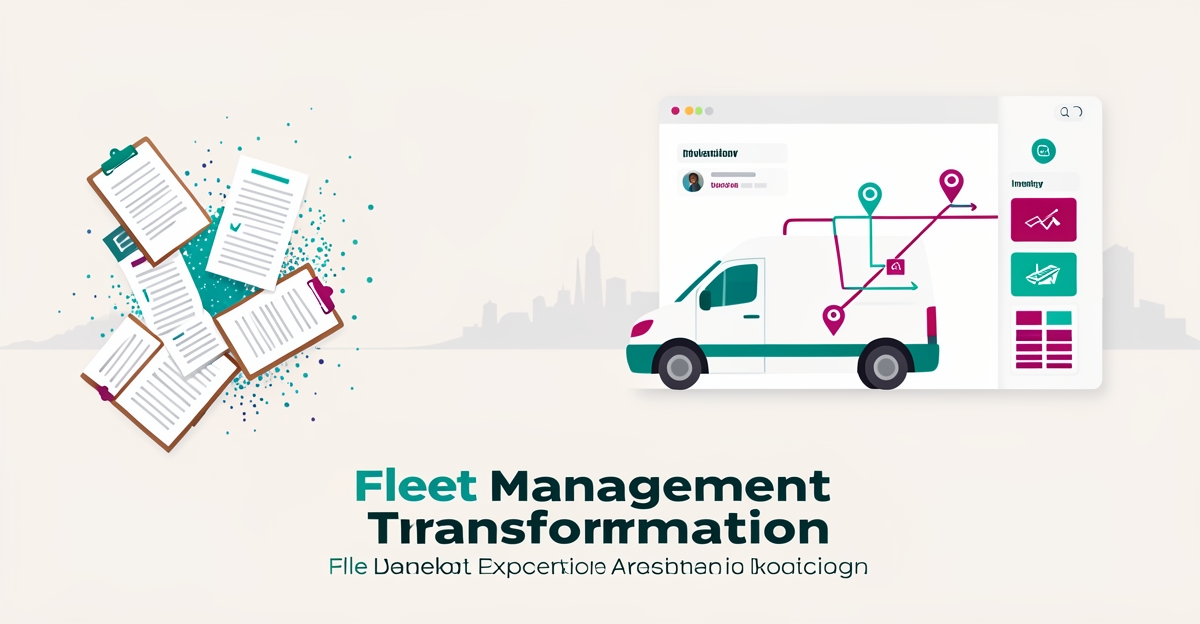
From Paper to AI: How a Vending Company in Halifax Could Automate Its Fleet Management System
Key Facts
- Manual data entry routinely introduces double-digit error rates, leading to phantom stockouts and revenue leakage in vending operations
- Owners of small fleet businesses commonly lose the equivalent of several full workdays each week to manual data entry between disconnected systems
- Most small and mid-sized businesses run on multiple disconnected tools that create data silos and operational blind spots
- AI-driven inventory sync prevents stockouts by forecasting demand and triggering automated reorders
- GPS integration in AI fleet management optimizes route planning and reduces fuel and labor time on service runs
- Predictive maintenance alerts linked to performance data reduce machine downtime by anticipating failures before they happen
- The moment a vending operation adds a few machines or a second vehicle, the spreadsheet system tends to collapse under its own weight
Hire a team member that works 24/7 — for less than a part-time wage.
AI receptionists, SDRs, dispatchers and 99+ roles. Trained on your business, fully managed.
Not sure where to start? Ask our AI planner
The Paper Log Trap Killing Vending Margins
For a vending operator managing dozens of machines across Halifax, the day often starts with a stack of handwritten route sheets and ends with a spreadsheet that refuses to reconcile. What looks like a simple record-keeping habit is actually a silent margin killer, draining hours and introducing costly errors into every decision.
Manual data entry routinely carries error rates in the double digits, meaning roughly one in every ten entries in a paper log or spreadsheet is likely wrong. For a vending business tracking inventory levels, cash collection, and machine performance across multiple locations, these mistakes cascade into phantom stockouts, missed maintenance windows, and revenue leakage that goes unnoticed until it hits the bottom line.
The time cost compounds the problem. Owners of small fleet businesses commonly lose the equivalent of several full workdays each week to manual data entry between disconnected systems, time that could be spent securing new locations or optimizing product mix. In a vending operation, this translates to evenings spent deciphering driver notes, cross-referencing GPS data with paper logs, and manually updating inventory spreadsheets instead of analyzing which machines are actually profitable.
The root cause is tool fragmentation. Most small and mid-sized businesses run on five or more disconnected tools that don't communicate with each other, creating data silos where critical information gets trapped. A typical vending operation might juggle:
- Paper route sheets for driver logs and cash collection
- Excel spreadsheets for inventory tracking and expiration dates
- Standalone GPS apps for vehicle location
- Separate maintenance logs for machine repairs
- Accounting software for financial reconciliation
Each tool holds a piece of the puzzle, but none talk to each other. When a machine breaks down, the operator doesn't know if it's due to a mechanical failure noted in a maintenance log or simply because the location ran dry three days ago, information buried in a different spreadsheet. This disconnection creates operational blind spots where downtime stretches longer and stockouts become routine.
Picture the Halifax vending operator living this reality daily. With machines scattered across the city, drivers manually record inventory levels and machine status during rounds. By the time that data reaches the office, it's already outdated. Emergency restocking trips become the norm, fuel costs climb, and popular machines sit empty during peak hours because the paper trail can't keep pace with actual demand.
The breaking point arrives when growth makes the chaos unsustainable. Add a few new machines or a second vehicle, and the manual system collapses under its own weight. The spreadsheet that worked for ten machines simply cannot track thirty.
AIQ Labs encounters this pattern repeatedly: capable operators trapped by their own record-keeping, unable to scale because manual fleet management consumes the time needed for strategic growth. The transition from paper to AI isn't about adopting new technology for its own sake, it's about reclaiming those lost hours and eliminating the error rate that quietly erodes profitability. If this sounds like your operation, a Workflow Build targets exactly this kind of bottleneck.
Why AI-Driven Fleet Management Changes the Game
Manual logs, paper receipts, and scattered spreadsheets quietly drain a growing vending operation. The fleet grows, but visibility shrinks.
AI-driven fleet management replaces reactive guesswork with real-time control. Automation, data centralization, and performance analytics turn every machine into a connected revenue node. The result is increased sales and profits, reduced machine downtime, and higher customer satisfaction.
Manual fleet management keeps upfront costs low but creates hidden drag. Teams lose time to manual data entry between CRM, accounting, and project management tools, often the equivalent of several full workdays a week. Error rates on manual entry compound stockouts and missed service windows.
Disconnected tools amplify the problem. When a business runs on five or more tools that don't talk to each other, owners stitch together reports instead of acting on them. That fragmentation shows up as downtime, empty shelves, and frustrated customers.
An AI-driven system centralizes the fleet view and automates the decisions that used to live in someone's head. Integration is the key enabler.
- Inventory sync prevents stockouts by forecasting demand and triggering automated reorders
- GPS integration optimizes route planning and reduces fuel and labor time on service runs
- Maintenance records linked to performance data predict failures before they cause downtime
With these connections, the system moves from logging to learning. Performance analytics highlight underperforming locations, slow-moving SKUs, and service bottlenecks. That visibility supports increased sales and profits through better stocking and placement decisions.
The Halifax scenario illustrates how seamless integration with existing tools works in practice, and how AIQ Labs builds scalable systems without vendor lock-in. Rather than replacing operations, the AI layer sits on top and unifies them.
Manual vs AI-driven management shows a clear trade-off. Manual processes offer low upfront costs but carry high labor costs, increased downtime, and reduced customer satisfaction. AI-driven fleet management requires upfront investment but delivers increased sales and profits, reduced machine downtime, and higher customer satisfaction.
For small businesses navigating a changing retail landscape, the shift is less about technology for its own sake and more about reclaiming owner time. When so much of an owner's day goes to manually shuttling data between tools, operational automation becomes a competitive necessity.
How AIQ Labs Builds an Owned, Integrated System Without Vendor Lock-In
AIQ Labs would approach a Halifax vending company by prioritizing seamless API integration with existing tools rather than replacing them. Instead of forcing the business into rigid no-code platforms that limit customization, the team builds custom AI agents that orchestrate data flow between inventory systems, GPS trackers, and maintenance logs. This approach ensures the solution adapts to the company's unique operational rhythm while maintaining real-time synchronization across all critical touchpoints.
The system is constructed using a multi-agent architecture, where specialized agents handle distinct functions, one monitors machine stock levels via API calls to the inventory platform, another optimizes routing using live GPS data, and a third predicts maintenance needs by analyzing historical service records. AIQ Labs has deployed 200+ multi-agent systems of this kind. By avoiding proprietary platforms, vendor lock-in is eliminated from the outset, giving the client complete ownership of the code, data, and future development rights. This aligns with a core principle: businesses should control their AI assets, not rent them.
Delivery follows the Build in Milestones payment model: the vending company approves and pays for each phase as it ships, starting with inventory synchronization, then adding GPS routing, and finally implementing predictive maintenance alerts. This reduces risk and lets the business see value early while retaining full control over scope and budget. For operators who want to go further, the same foundation can grow into a full AI Operating System, one connected layer across the whole business, built in phases and owned outright. The result is a self-owned system that eliminates manual logs, reduces downtime, and connects disparate tools into a unified workflow, all without ongoing platform fees or dependency on third-party vendors.
From Manual to Automated: The Implementation Playbook
When a vending company decides to replace paper logs with an AI-driven fleet management system, the transformation begins with a clear-eyed assessment of pain points. Manual tracking of inventory, maintenance schedules, and vehicle locations consumes excessive time and introduces avoidable errors. This realization triggers the first critical step: identifying where automation would deliver the highest operational impact.
Implementation follows AIQ Labs' phased approach, starting with discovery and architecture to map existing workflows and technology gaps. During this phase, the team analyzes how legacy systems could connect with new AI capabilities, ensuring the solution syncs inventory levels, GPS tracking, and maintenance records without requiring a complete overhaul. This integration focus is essential, when a business runs on many disconnected tools, that friction undermines efficiency gains from isolated automation.
In development and integration, custom agents are built to handle real-time data synchronization across platforms, using multi-agent frameworks to manage complex stateful workflows. The system is designed to trigger proactive maintenance alerts when GPS data indicates route inefficiencies or when inventory thresholds suggest imminent stockouts, turning reactive fixes into predictive interventions. Deployment and training then focus on user adoption, with role-specific sessions ensuring staff can interpret AI-generated insights and act on automated recommendations.
In the optimization and scale phase, the vending company continuously refines the system based on performance metrics, reducing machine downtime and improving route efficiency. By owning the custom-built infrastructure outright, they avoid vendor lock-in while scaling capabilities as their fleet grows. The playbook, in short:
- Conduct a thorough process audit to pinpoint manual bottlenecks
- Design integrations that leverage existing tool APIs
- Deploy AI agents with clear ownership and monitoring protocols
- Establish feedback loops for continuous refinement based on uptime data
This structured, ownership-driven approach transforms fleet management from a cost center into a strategic advantage, proving that AI automation succeeds not through technology alone, but through disciplined implementation rooted in business reality.
Still paying for 10+ subscriptions that don’t talk to each other?
We build custom AI systems you own outright. No vendor lock-in. Full control.
Not sure where to start? Ask our AI planner
Frequently Asked Questions
How much time do vending operators typically lose each week to manual data entry?
How do manual data entry errors impact vending profitability?
Why do disconnected tools create operational blind spots in vending fleet management?
Can AI-driven fleet management integrate with existing vending tools instead of replacing them?
What are the key benefits of switching from manual to AI-driven fleet management for vending businesses?
Is implementing an AI-driven system too complex or expensive for small vending operations?
Turning Paper Trails into Profit Paths
The journey from handwritten logs to an AI-powered fleet system reveals a clear truth: manual processes aren't just inconvenient, they're silently draining time, accuracy, and growth potential. By replacing fragmented tools with a unified, owned AI solution, a vending business can reclaim lost hours, cut error rates, and turn every machine into a data-driven revenue node. The result isn't just fewer stockouts or optimized routes, it's the freedom to focus on strategy instead of spreadsheets. For any small business feeling the weight of disconnected systems, the path forward starts with clarity. Take the 2-minute Fit Check, then book a free 30-minute strategy call to map your biggest bottleneck and see where AI can deliver real, measurable impact, without vendor lock-in or overpromises.
Make AI your competitive advantage — not just another tool.
Strategy, implementation and ongoing optimization. One partner, end to end.
Not sure where to start? Ask our AI planner