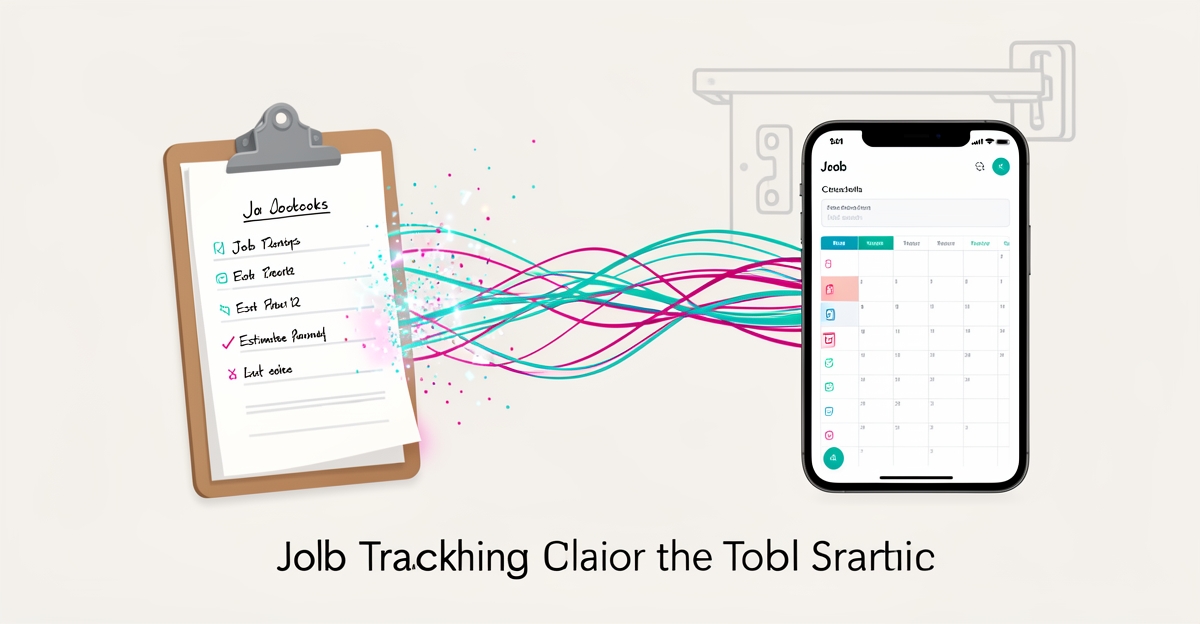
From Paper to AI: How TV Mounting Businesses Can Digitize Job Tracking & Estimates
Key Facts
- Technicians lose up to 20+ hours weekly on manual data entry and reconciliation
- Field service error rates reach 15–20% due to illegible notes and miscommunication
- Scaling is blocked by administrative overhead that grows linearly with job volume
- AI agents aren't here to answer questions, they're here to run work
- Reusable AI agents flip the script: design once, plug into many products, channels, and processes
- AI uses data from cameras, LiDAR, and telematics to make quick, real-time decisions for routing, safety, and overall traffic management
Hire a team member that works 24/7 — for less than a part-time wage.
AI receptionists, SDRs, dispatchers and 99+ roles. Trained on your business, fully managed.
Not sure where to start? Ask our AI planner
The Hidden Cost of Paper-Based Job Tracking in TV Mounting
The hidden cost of paper-based job tracking in TV mounting businesses runs deeper than cluttered desks and lost receipts. Manual systems force technicians to spend valuable on-site time filling out forms, calling the office for clarifications, or rewriting estimates when details get smudged or misplaced. This constant context-switching fragments focus and slows down job completion, directly impacting how many installations a team can handle in a day. Industry research shows that disorganized tracking contributes to significant time lost across field service operations, with technicians reporting up to 20+ hours weekly spent on manual data entry and reconciliation tasks that could be automated. These inefficiencies aren’t just inconvenient, they erode profit margins by increasing labor costs per job and reducing capacity for new work.
Beyond time loss, paper-based tracking introduces avoidable errors that trigger rework, customer dissatisfaction, and revenue leakage. Illegible handwriting, misplaced decimal points in estimates, or forgotten permit requirements can lead to incorrect billing, missed upsell opportunities, or compliance issues that require costly corrections after the fact. Studies indicate that manual data handling in field services results in error rates as high as 15–20%, with miscommunication between field teams and office staff being a leading cause. When job details aren’t instantly accessible or verifiable, technicians may arrive unprepared, missing the right mount type, tools, or customer notes, leading to delays or repeat visits. These avoidable mistakes not only waste resources but also damage trust, especially in a service industry where precision and reliability are key differentiators.
Scaling a TV mounting business becomes nearly impossible when growth depends on physical job logs stored in filing cabinets or technicians’ trucks. As volume increases, so does the risk of lost documents, duplicated efforts, and inconsistent processes across team members. Without a centralized, searchable system, managers spend hours chasing down information instead of optimizing schedules or training staff. Research confirms that organizations relying on manual tracking hit operational ceilings quickly, unable to scale beyond a certain job volume without proportional increases in administrative overhead. This creates a frustrating paradox: success breeds inefficiency, and growth becomes self-limiting. For businesses aiming to expand service areas or hire additional technicians, paper-based systems act as a hidden brake, consuming time, inviting errors, and blocking the very scalability they need to thrive.
- Technicians lose up to 20+ hours weekly on manual data entry and reconciliation
- Field service error rates reach 15–20% due to illegible notes and miscommunication
- Scaling is blocked by administrative overhead that grows linearly with job volume
AI Agents as Reusable Digital Workers for Job Workflow Automation
The shift from paper job logs to intelligent digital systems isn't just about replacing clipboards, it's about deploying reusable AI agents that function as autonomous digital workers across your entire operation. These agents don't simply answer questions; they run work, capturing voice notes from the truck, photos from the job site, and form data from the field, then structuring it all into searchable databases with zero manual entry. As one industry analysis notes, AI agents aren't here to answer questions, they're here to run work, transforming how operations, teams, and decision-making happen across the enterprise.
- Voice capture that transcribes technician notes directly into structured job records
- Photo ingestion that tags wall type, stud spacing, and mount specs automatically
- Form processing that extracts measurements and materials into estimate templates
- Real-time sync across dispatch, office, and field teams without duplicate entry
The power of this approach lies in reusability. Reusable AI agents flip the script: design once, plug into many products, channels, and processes, making automation faster, more consistent, and easier to scale. Instead of building one-off scripts for each workflow, you deploy agents with defined capability contracts, clear inputs, outputs, error codes, and SLAs, that can be chained together like APIs. This composable pattern means the same agent that captures job-site photos for a TV mount today can feed inventory forecasting tomorrow, or route dispatch decisions next week, all while maintaining centralized governance over compliance, security, and policy.
AIQ Labs builds these multi-agent systems on enterprise frameworks, where specialized agents collaborate through reasoning-and-acting loops to handle complex field-service workflows end-to-end. The result is a digital workforce that works 24/7/365, integrates with your existing CRM and scheduling tools, and learns continuously from every job completed, turning tribal knowledge into institutional intelligence that compounds over time. AIQ Labs offers [AI Employees](/ai-employees) that can handle a wide range of roles, from receptionists to dispatchers, at approximately 80% less cost than a human hire.
Implementation Roadmap: Digitizing Your TV Mounting Business in 4 Phases
Paper logs and handwritten estimates create delays that TV mounting teams feel on every job. Digitizing job tracking with AI moves crews from chasing notes to completing installs, with accuracy and accessibility built in from day one.
Phase 1 is Discovery & Architecture. AIQ Labs starts with business process analysis and requirements gathering, then maps how job intake, estimates, and scheduling currently flow. This aligns with the implementation process of assessment, design, and ROI projection before any build begins. The goal is clear capability contracts with defined inputs, outputs, and error handling so agents behave like reliable APIs.
Phase 2 is Development & Integration. Custom AI agents are built to auto-capture job details from calls, texts, and forms, store them in a single source of truth, and retrieve them across teams. Reusable AI agents flip the script: design once, plug into many products, making automation faster and easier to scale. Design for reuse and enable agent collaboration so intake, estimating, and dispatch can coordinate without manual handoffs.
Field services teams replacing paper systems benefit from agents that work alongside human crews:
- Auto-capture from customer messages and on-site notes with natural language processing
- Centralized job logs that update estimates, materials, and scheduling in real time
- Composable skills chained into end-to-end workflows from lead to completion
Phase 3 is Deployment & Training. Production deployment includes role-specific training, documentation, and monitoring. Teams learn to trust the system because governance is centralized and policies are managed from one place. This mirrors how integrating AI agents in enterprise workflows enables organizations to move from simple chatbot helpers to fully autonomous digital workers.
Phase 4 is Optimization & Scale. Continuous performance monitoring drives improvements, new use cases, and cross-department expansion. According to industry research on AI systems, AI uses data from cameras, LiDAR, and telematics to make quick, real-time decisions for routing, safety, and overall traffic management, a principle applied to crew routing and job prioritization.
The approach keeps domain logic configurable, not baked into prompts, and uses multi-tenant configs so one agent serves many crews. As noted in enterprise AI guidance, AI agents aren't here to answer questions, they're here to run work. That shift is what turns paper estimates into owned AI workflows that teams actually use every day. AIQ Labs offers [AI Workflow Builds](/workflow-builds) to rebuild the one workflow that costs the most, fixed price, phased.
Still paying for 10+ subscriptions that don’t talk to each other?
We build custom AI systems you own outright. No vendor lock-in. Full control.
Not sure where to start? Ask our AI planner
Frequently Asked Questions
How much time do TV mounting technicians typically lose each week to manual data entry and reconciliation?
What error rates are associated with paper-based job tracking in field services like TV mounting?
How do reusable AI agents improve scalability for TV mounting businesses?
Can AI agents integrate with existing tools like CRM or scheduling software used by TV mounting businesses?
What is the first step in digitizing a TV mounting business’s job tracking with AIQ Labs?
Is there a risk of vendor lock-in when using AIQ Labs’ custom AI systems for TV mounting operations?
Turn Paper Trails Into Profit-Driving Workflows
The shift from paper logs to AI-powered digital tracking isn't just about tidying up, it's about reclaiming the 20+ hours your technicians lose weekly to manual entry while eliminating the 15–20% error rates that erode margins. By deploying reusable AI agents that auto-capture job details, photos, and voice notes into centralized systems, TV mounting businesses transform fragmented workflows into scalable operations that grow without drowning in administrative overhead. As industry research confirms, these agents aren't just answering questions, they're running work, turning tribal knowledge into institutional intelligence that compounds over time. AIQ Labs specializes in building these custom, owned systems for field service businesses ready to move beyond paper without vendor lock-in. If you're ready to see exactly how much time and money your current process is costing you, start with the two-minute [Fit Check](/apply), then book a free 30-minute strategy call to map your highest-ROI automation opportunity.
Make AI your competitive advantage — not just another tool.
Strategy, implementation and ongoing optimization. One partner, end to end.
Not sure where to start? Ask our AI planner