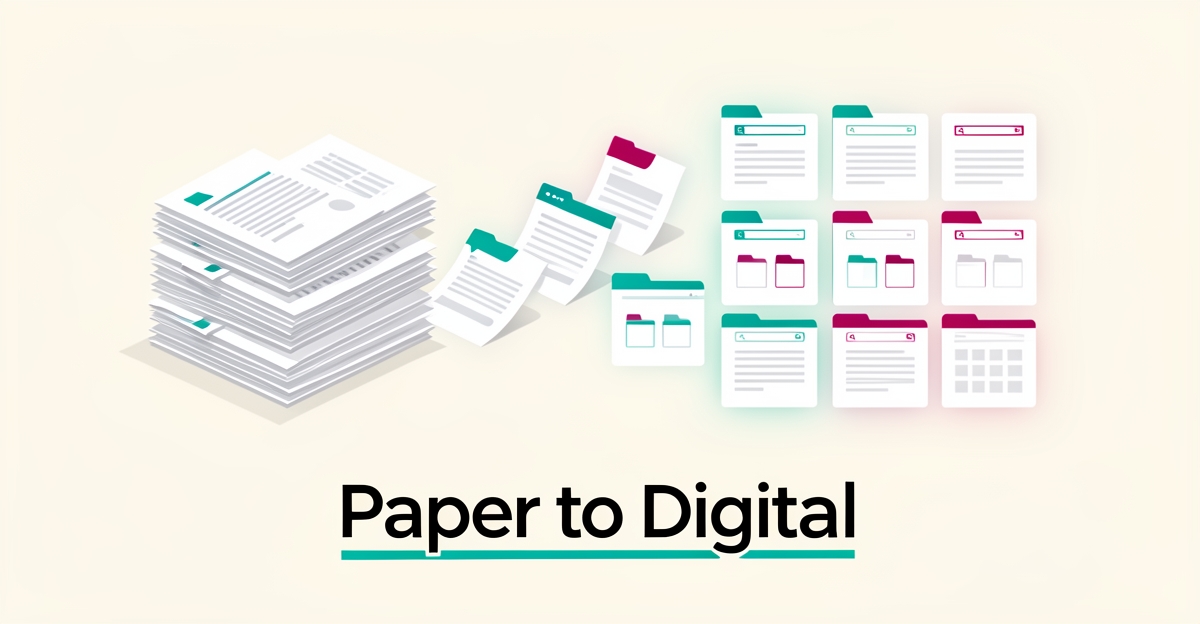
From Paper to Digital: How AI Can Transform Client File Management in Organizing
Key Facts
- Paper-based filing is error-prone: documents get lost, duplicated and misfiled, and the search time compounds across every active client.
- AI document processing can scan handwritten notes, printed checklists and photos of client spaces, then convert them into structured, searchable records.
- Natural language search means organizers retrieve any document by describing it, no folder names or dates to remember.
- Digital systems with real-time access reduce errors by ensuring everyone works from the latest version of a plan or note.
- Well-designed digital systems embed compliance from the start: role-based access, encryption, audit trails and human-in-the-loop review.
- A phased digitization approach, active files first, archives second, minimizes disruption while building retrieval speed.
Hire a team member that works 24/7 — for less than a part-time wage.
AI receptionists, SDRs, dispatchers and 99+ roles. Trained on your business, fully managed.
Not sure where to start? Ask our AI planner
The Hidden Cost of Paper-Based Client Files
Paper-based client files create a silent drain on organizing professionals' time and resources. Manual filing is prone to human error, documents get lost, duplicated or filed in the wrong folder, and each incident costs minutes or hours of searching. That drag compounds quickly across a full client roster.
The operational burden extends beyond lost time. When client files are misplaced, organizing professionals face increased risks to client confidentiality and potential compliance issues with privacy regulations. Each misplaced document represents a potential exposure of sensitive information, whether it's a decluttering checklist containing personal habits or progress notes detailing client goals. Businesses handling personal data can't afford even minor lapses.
- Wasted search time accumulates as staff manually sift through physical folders
- Misplaced documents delay project timelines and frustrate clients awaiting updates
- Physical storage costs rise with expanding paper archives requiring more space
- Version control becomes nearly impossible without digital tracking systems
- Paper archives are vulnerable to fire, water damage and theft, with no practical backup
AIQ Labs addresses these challenges through AI Workflow Builds that rebuild the one workflow costing you the most, often document management, into a secure, searchable digital repository at a fixed price, delivered in phases. By eliminating manual filing errors and enabling instant retrieval, organizing professionals reclaim valuable time while strengthening data protection. The shift from paper to digital isn't just about convenience, it's a fundamental upgrade in operational reliability and client trust.
How AI Transforms Document Chaos into Searchable Intelligence
For professional organizers, a client's paper trail, decluttering checklists, storage plans, progress notes, often becomes its own source of clutter. The problem isn't just storage space; it's that valuable client information becomes functionally invisible the moment it goes into a box or filing cabinet.
AI-powered document processing changes that equation. Modern systems can scan physical files, automatically categorize each document, and make everything searchable through natural language queries. Instead of flipping through folders for a client's storage plan from eight months ago, an organizer can simply ask the system and retrieve the document in seconds.
The cost of staying manual is measurable in your own day: every misplaced checklist, every duplicated intake form, every follow-up visit spent reconstructing lost notes. Multiply that across dozens of client files, and the administrative drag becomes a genuine constraint on how many clients a solo organizer can serve.
Here's what AI-driven document processing actually does with a client file:
- Intelligent scanning and extraction converts handwritten notes, printed checklists, and photos of client spaces into structured, readable digital records.
- Automatic categorization sorts documents by client, project phase, and document type, so a progress note never lands in the wrong file again.
- Natural language search lets organizers retrieve any document by describing it, without remembering folder names or dates.
- Real-time access ensures the latest version of a storage plan is always available, reducing errors from outdated information.
That last point matters more than it seems. Digital systems that surface the latest version of every document consistently reduce errors compared to paper workflows, where an outdated copy can easily circulate, a benefit that translates directly to client-facing service work.
Compliance is a natural concern when digitizing client records. Well-designed systems address this with audit trails, access controls, and human-in-the-loop review for sensitive decisions, so nothing about a client's file is handled without oversight. This is the approach AIQ Labs takes when building document management solutions for service professionals: systems that maintain compliance while dramatically improving retrieval speed, and that the business owns outright rather than rents.
For organizers, this shift turns a filing cabinet full of client history into searchable intelligence that grows more valuable with every client served.
Ensuring Compliance and Security in Digital Client Records
When professional organizers handle sensitive client information, ranging from detailed home inventories to personal financial documents, the stakes for security extend far beyond simple convenience. A single data breach or lost file can irreparably damage client trust and expose both parties to liability.
The transition from paper to digital systems addresses a critical vulnerability in traditional organizing workflows: physical documents have no access controls, no audit trail and no backup. Digital systems eliminate this physical risk while introducing new requirements for access control and audit capabilities, requirements that, handled well, make client data far safer than any filing cabinet ever could.
Modern AI-driven document management systems establish automated audit trails that track every interaction with client files. These systems record who accessed which document, when modifications occurred, and how information flows through your organization. For organizing professionals handling decluttering checklists, storage plans, and progress notes, this creates a durable record of accountability that protects both the business and the client.
Effective compliance requires implementing multiple layers of protection:
- Role-based access controls that restrict sensitive client data to authorized team members only
- Encryption protocols for data both at rest and in transit between devices
- Automated backup systems with version history to prevent accidental data loss
- Comprehensive logging that satisfies professional liability and insurance requirements
AI systems in professional organizing must balance accessibility with stringent privacy controls, ensuring that client photos, home layouts, and personal inventories remain confidential even as retrieval gets faster.
AIQ Labs builds custom AI document management solutions that embed these compliance frameworks directly into the architecture. Rather than retrofitting security onto generic platforms, these systems incorporate governance protocols from the ground up, ensuring that automated categorization and retrieval capabilities never compromise client confidentiality.
The result is a digital environment where organizing professionals can instantly retrieve client histories, before-and-after photos, and project specifications while maintaining the rigorous security standards that sensitive home and personal data demands. By replacing vulnerable paper trails with encrypted, auditable digital workflows, organizers protect their clients' privacy and their own professional reputations simultaneously.
Implementing AI Document Management in Your Organizing Practice
Paper piles slow down organizing professionals more than most clients realize. When checklists, storage plans and progress notes live in binders and scattered folders, retrieval becomes a search task instead of a service.
A practical transition starts with an honest assessment of current workflows. Map where paper enters the practice, how client files move between sessions, and where information gets duplicated or lost. The friction shows up concretely when a decluttering checklist can't be found before a follow-up visit, or when two versions of a storage plan are circulating and nobody knows which is current.
Phased digitization reduces disruption while building retrieval speed. Begin with active client files and the most frequently referenced documents, then archive completed projects in searchable storage. Use AI to scan, categorize and organize client files such as decluttering checklists, storage plans and progress notes into searchable digital systems. AIQ Labs builds these systems in milestones, scan handwritten notes and typed forms into structured records first, prove retrieval speed, then expand.
Integration works best when it mirrors how organizers already work. Connect the digital file system to scheduling and invoicing tools so notes update automatically after each session. Keep a human review step early on to validate categorization, then let automation handle routine filing and tagging.
A minimal-disruption roadmap looks like this:
- Audit current paper touchpoints and define a single source of truth for each client record
- Digitize high-value active files first with AI-powered scan, categorize and tag
- Link digital files to session notes and progress tracking for instant retrieval
- Train team on search-first retrieval and establish naming conventions and access controls
For practices that want ongoing capacity without adding headcount, AI Employees can handle the routine side of this work, intake processing, filing, tagging and retrieval requests, so the organizer's time stays focused on clients. And for practices ready to connect files, scheduling, invoicing and reporting into one layer, an AI Operating System built in phases and owned outright is the longer-term path.
The goal is not to eliminate paper overnight. It is to replace reactive searching with searchable, compliant systems that scale with the practice while protecting client privacy.
Still paying for 10+ subscriptions that don’t talk to each other?
We build custom AI systems you own outright. No vendor lock-in. Full control.
Not sure where to start? Ask our AI planner
Frequently Asked Questions
How much time do professional organizers actually lose searching for misplaced paper files?
Can AI really read my handwritten client notes and organize them automatically?
What happens to client confidentiality when I move sensitive files to a digital system?
Do I have to digitize everything at once, or can I start with just my active clients?
What kind of efficiency gains can I realistically expect from going digital?
How does AI document management differ from just scanning files to a cloud folder?
Turn Filing Cabinets into Searchable Intelligence
The shift from paper to digital client files isn't merely about convenience, it's about transforming how organizing professionals serve their clients and scale their practices. Manual document management carries tangible risks: lost documents, duplicated work, compliance exposure and hours of unproductive searching. By implementing AI-driven document processing, organizers can convert scattered checklists, storage plans, and progress notes into searchable, secure digital assets that improve retrieval speed while maintaining rigorous confidentiality standards. AIQ Labs builds these systems through fixed-price, milestone-based workflow builds that the business owns outright, no subscriptions to a system you don't control. For organizing professionals ready to eliminate the friction of paper-based workflows, the next step is clear: assess current document touchpoints, prioritize digitization of active client files, and establish automated categorization protocols. To explore how custom AI document management can transform your practice, start with the two-minute Fit Check or book a free 30-minute strategy call to map your specific automation opportunities.
Make AI your competitive advantage — not just another tool.
Strategy, implementation and ongoing optimization. One partner, end to end.
Not sure where to start? Ask our AI planner