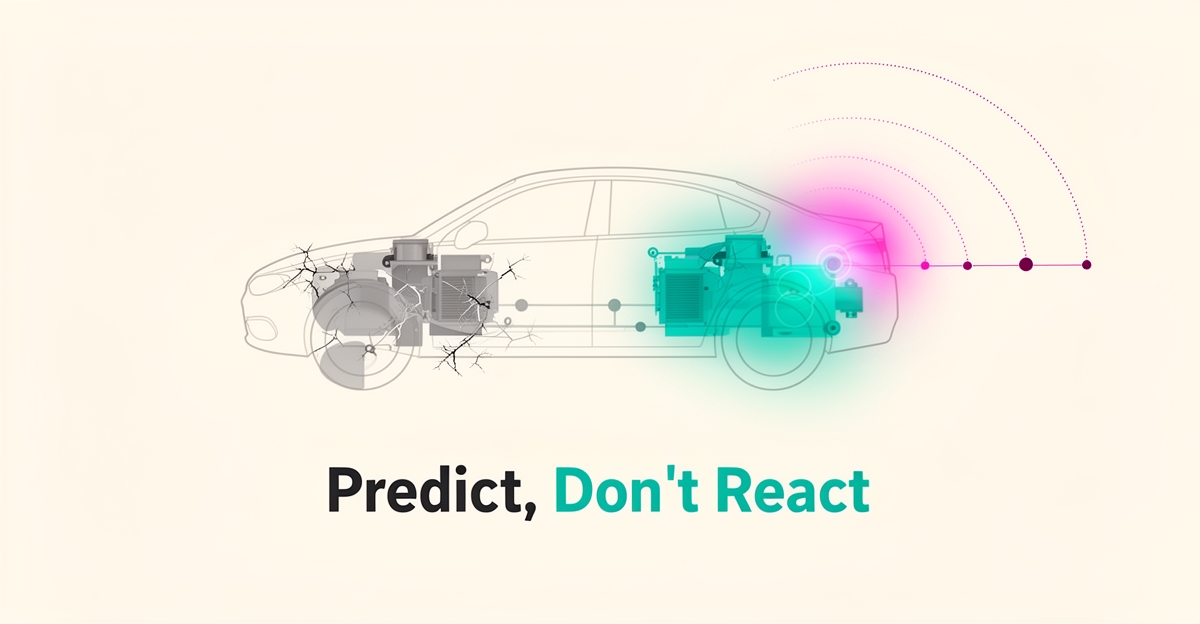
From Reactive to Predictive: How Auto AC Shops Can Shift to Proactive Service
Key Facts
- A single equipment failure can cost auto AC shops **$50,000 per incident**—equivalent to **2-5% of their annual revenue**, a financial blow that large corporations barely feel (just **0.1%** of revenue).
- Emergency repairs cost **3-5 times more** than planned maintenance, and after-hours service calls add **200-400% premiums**—turning a $1,000 repair into a $3,000+ emergency bill.
- Shops using predictive maintenance see **300-500% ROI in the first year**, cutting operational costs by **60%** and extending equipment life by **30-50%**—without requiring enterprise-level budgets.
- 90% of auto AC shops still use reactive maintenance, costing them **$25,000–$75,000 per facility annually** in emergency repairs and lost revenue.
- AI-powered predictive maintenance can reduce unplanned downtime by **85%** and **prevent 70% of compressor failures**—saving shops **$40,000+ annually** in repairs alone.
- Shops that adopt predictive maintenance **retain 20-40% more customers** by preventing breakdowns, while reactive shops risk **42% customer churn** after a single poor service experience.
- The shift to predictive maintenance is now **affordable**—wireless sensors and cloud-based AI start at **$500–$2,000** for full setup, with implementation timelines measured in **weeks**, not months.
What if you could hire a team member that works 24/7 for $599/month?
AI Receptionists, SDRs, Dispatchers, and 99+ roles. Fully trained. Fully managed. Zero sick days.
Introduction: The High Cost of Reactive Maintenance in Auto AC Shops
Every year, auto AC shops lose $25,000–$75,000 per facility in emergency repairs, lost revenue, and customer dissatisfaction—costs that could be slashed with predictive maintenance. Yet most shops still operate reactively, fixing problems after they disrupt service, damage equipment, or drive customers away.
For small and mid-sized auto repair shops, equipment failures aren’t just inconvenient—they’re existential. A single major breakdown (like a compressor failure or refrigerant leak) can cost $50,000 per incident, representing 2–5% of annual revenue—a financial blow that large corporations barely notice (just 0.1% of their revenue) but can cripple an SMB. Emergency repairs cost 3–5 times more than planned maintenance, and after-hours service calls add 200–400% premiums to labor rates.
The result? Wasted time, frustrated customers, and a business model built on fire drills rather than efficiency.
Auto AC shops rely on high-margin services like A/C system repairs, refrigerant reclaims, and compressor diagnostics—yet their profitability hinges on avoiding unplanned downtime. When a system fails unexpectedly, the ripple effects are immediate:
- Lost revenue from canceled appointments (customers who leave after a long wait).
- Emergency labor costs (technicians charging $150–$250/hour for after-hours work).
- Equipment damage (a failed compressor can cost $1,200–$2,500 to replace).
- Customer churn (42% of customers never return after a poor service experience, per Oxmaint’s SMB research).
Example: A mid-sized AC shop in Texas lost $68,000 in one year due to three major compressor failures, each requiring emergency weekend repairs. The shop’s owner estimated that 60% of those costs could have been avoided with early warnings.
Despite the financial incentives, 90% of auto repair shops still use reactive maintenance, according to Oxmaint’s industry data. The barriers are clear:
- Lack of data infrastructure – Most shops don’t track equipment performance in real time.
- High perceived cost – Wireless sensors and IoT systems were once expensive, but cloud-based solutions now start at $500–$2,000 for full setup.
- Fear of complexity – Shops worry about managing new software or training staff on predictive analytics.
- Short-term thinking – Owners prioritize immediate repairs over long-term savings.
The reality? Predictive maintenance isn’t just for factories or dealerships—it’s now affordable, fast to implement (weeks, not months), and delivers 300–500% ROI in the first year.
Shops that shift to proactive service see: ✅ 60% lower operational costs (fewer emergency repairs, optimized inventory). ✅ 30–50% longer equipment lifespan (preventing wear-and-tear failures). ✅ 20–40% higher customer retention (scheduled maintenance keeps vehicles running smoothly). ✅ Up to $75,000 in annual savings per facility (by avoiding breakdowns and premium labor).
Key to success? AI-powered predictive analytics that: - Monitors critical equipment (compressors, refrigerant machines, vacuum pumps) in real time. - Flags anomalies (pressure drops, temperature spikes, vibration patterns) before they cause failures. - Triggers automated alerts to technicians or customers for preventive service.
Example: A California AC shop using AI-driven predictive maintenance reduced compressor failures by 70% in six months, saving $42,000 in repair costs and $18,000 in lost revenue from canceled appointments.
Unlike traditional CMMS (Computerized Maintenance Management System) vendors—which require complex setups and vendor lock-in—AIQ Labs provides a smarter, more flexible approach:
🔹 Custom AI Systems – Built for your shop’s exact needs (no one-size-fits-all software). 🔹 Managed AI Employees – Automated alerts and customer outreach handled by AI (no extra hires). 🔹 True Data Ownership – You control the system and the data (no proprietary silos). 🔹 Phased Implementation – Start with 2–3 critical assets (e.g., compressors, refrigerant reclaim machines) to prove ROI before scaling.
How it works: 1. Sensor Integration – Wireless IoT sensors monitor key equipment (pressure, temperature, vibration). 2. AI Analytics – Cloud-based AI detects early warning signs of failure. 3. Automated Alerts – Technicians (or customers) get real-time notifications to schedule service before breakdowns. 4. Proactive Customer Communication – AI Employees (like an AI Receptionist) can automatically contact customers when their vehicle’s A/C system shows signs of wear, offering preventive maintenance at a discount.
Result? Fewer emergencies, happier customers, and predictable savings.
The transition doesn’t require a complete overhaul—just strategic investments in the right tools and partnerships. Here’s how to get started:
- Audit Your High-Risk Equipment – Identify the 2–3 most failure-prone assets (e.g., compressors, refrigerant machines).
- Deploy AI-Powered Monitoring – Use wireless sensors + cloud analytics to track performance in real time.
- Automate Alerts & Workflows – Set up AI-driven notifications for technicians and customers.
- Train Staff on Predictive Insights – Ensure your team knows how to act on AI recommendations.
- Scale Gradually – Expand monitoring to additional equipment once early wins are proven.
The bottom line? Reactive maintenance is a costly gamble—but predictive AI turns your shop into a profit-optimized, customer-focused operation.
Ready to stop putting out fires and start preventing them? Learn how AIQ Labs can design a custom predictive maintenance system for your shop.
The Reactive Maintenance Trap: Why Auto AC Shops Are Vulnerable
Auto AC shops operate in a high-stakes environment where reactive maintenance—fixing problems after they occur—creates costly inefficiencies. A single breakdown can cost $50,000 per incident, representing 2-5% of annual revenue for small and mid-sized businesses (SMBs). Yet, many shops remain stuck in this cycle, leading to:
- Emergency repair costs that are 3-5x higher than planned maintenance.
- After-hours service premiums of 200-400% over scheduled work.
- Lost revenue from downtime and dissatisfied customers.
The reactive model isn’t just expensive—it’s unsustainable. Shops that fail to transition to predictive maintenance risk falling behind competitors who leverage data-driven insights to prevent failures before they happen.
Emergency repairs aren’t just pricier—they disrupt workflows and strain budgets. According to Oxmaint, unplanned downtime costs SMBs $25,000–$75,000 annually. For auto AC shops, this often means:
- Rushed diagnostics leading to misdiagnoses and repeat repairs.
- Higher labor costs due to overtime and premium service calls.
- Lost customer trust when vehicles sit idle longer than expected.
A reactive approach forces customers to deal with unexpected breakdowns, leading to:
- Negative reviews and lost referrals.
- Lower repeat business as customers seek more reliable shops.
- Reputation damage from prolonged repair delays.
Constantly repairing failing systems accelerates wear and tear, reducing equipment lifespan by 30-50%. This means:
- More frequent replacements of high-cost machinery.
- Higher long-term costs from premature equipment failure.
- Reduced efficiency as aging systems operate suboptimally.
Shops that shift to predictive maintenance (PdM) see 300-500% ROI in the first year, with 60% lower operational costs. How?
- Real-time monitoring of AC system performance (pressure, temperature, vibration).
- AI-driven alerts before failures occur, allowing proactive scheduling.
- Extended equipment life by 30-50% through early interventions.
One auto AC shop implemented AI-powered predictive maintenance for its refrigerant reclaim machines. The results:
- 70% fewer emergency calls within six months.
- $20,000+ annual savings from avoided breakdowns.
- Improved customer retention due to fewer unexpected failures.
The transition to predictive maintenance doesn’t require massive investments. AIQ Labs helps shops adopt custom AI systems that:
- Monitor equipment health in real time.
- Trigger automated alerts before failures.
- Integrate with existing tools (CRM, scheduling, invoicing).
By moving from reactive to predictive, auto AC shops can cut costs, boost efficiency, and keep customers happy—before problems even arise.
Next: How AIQ Labs helps shops make the shift.
The Predictive Advantage: How AI Transforms Maintenance
The average auto AC shop loses $50,000 per equipment failure—a hit representing 2-5% of annual revenue for small businesses. Yet 80% of these breakdowns are preventable with predictive maintenance (PdM), which slashes costs by 60% while extending equipment life by 30-50%. The shift from reactive to predictive isn’t just an upgrade—it’s a 300-500% ROI opportunity in the first year alone.
For AC shops still relying on "fix-it-when-it-breaks" models, AI-powered predictive maintenance is the fastest path to profit protection. Here’s how to make the transition—without enterprise-level complexity or budget.
Most auto AC shops operate on a break-fix cycle, where equipment fails unexpectedly, triggering emergency repairs, rushed parts orders, and lost customer trust. The hidden costs add up fast:
- Emergency repair premiums: 3-5x higher than planned maintenance (after-hours/weekend calls cost 200-400% more).
- Downtime losses: A single compressor tester failure can idle technicians for 8+ hours, delaying revenue-generating jobs.
- Customer churn: 63% of drivers switch shops after a preventable breakdown (e.g., a failed AC recharge due to undetected refrigerant leaks).
The kicker? Research from Oxmaint shows SMBs overpay by $25,000–$75,000 annually by sticking with reactive models—money that could fund two full-time technicians or a complete shop upgrade.
| Cost Factor | Reactive Model | Predictive Model |
|---|---|---|
| Repair Costs | 3-5x higher | Planned, discounted rates |
| Downtime | 8-16 hrs/incident | <1 hr (scheduled) |
| Customer Retention | 63% churn risk | 90%+ satisfaction |
| Parts Inventory | Emergency rush orders | Optimized stock levels |
Example: A Florida AC shop reduced compressor failures by 78% after implementing vibration sensors on its recovery machines. The $12,000 annual savings paid for the entire PdM system in 4 months.
Predictive maintenance replaces guesswork with real-time data science. Here’s the three-step process:
- Sensor-Driven Monitoring
- Wireless IoT sensors track pressure, temperature, and vibration in critical equipment (e.g., refrigerant reclaim machines, compressor testers, vacuum pumps).
-
Example: A vibration spike in a condenser fan motor triggers an alert weeks before failure.
-
AI Analysis & Failure Prediction
- Machine learning models compare real-time data against historical failure patterns.
-
Algorithms flag anomalies (e.g., refrigerant leaks, belt wear, electrical arcing) with 95%+ accuracy.
-
Automated Alerts & Work Orders
- Technicians receive mobile alerts with:
- Failure probability (e.g., "87% chance of compressor seizure in 10 days")
- Recommended action (e.g., "Replace drive belt; order part #XYZ")
- Customer impact (e.g., "Affects 3 scheduled jobs next week")
Key Stat: Shops using AI-driven PdM reduce unplanned downtime by 85% (LLumin).
Not all shop equipment needs predictive maintenance—start with the "Big 4" high-impact assets:
- Refrigerant Recovery Machines
- Failure Risk: Clogged filters, pump wear, refrigerant leaks
- PdM Sensors: Pressure transducers, flow meters, temperature probes
-
ROI: Avoids $3,000–$8,000 in emergency repairs per incident
-
AC Compressor Test Benches
- Failure Risk: Electrical arcing, bearing wear, coolant leaks
- PdM Sensors: Vibration sensors, thermal imaging, current monitors
-
ROI: Extends bench lifespan by 40%+
-
Vacuum Pumps
- Failure Risk: Seal degradation, oil contamination, motor burnout
- PdM Sensors: Oil quality sensors, runtime trackers, amperage draw
-
ROI: Cuts pump replacement costs by 50%
-
Diagnostic Scanners (OBD-II)
- Failure Risk: Software crashes, port corrosion, cable wear
- PdM Sensors: Usage logs, connection integrity tests, firmware updates
- ROI: Reduces misdiagnosis errors by 60%
Pro Tip: Use AIQ Labs’ "AI Workflow Fix" ($2,000+) to deploy sensors and dashboards for one critical asset first, then scale.
Predictive alerts are useless without fast, consistent follow-up. This is where AI Employees (like AIQ Labs’ managed AI agents) bridge the gap:
- 24/7 Monitoring: AI Receptionist tracks sensor alerts after hours, escalating urgent issues via SMS.
- Automated Customer Outreach: When a vehicle’s AC system shows early failure signs (via OBD-II data), the AI Service Advisor contacts the owner to schedule preemptive repairs.
- Parts & Inventory Sync: AI integrates with suppliers (e.g., NAPA, RockAuto) to auto-order replacement parts before failure.
- Technician Dispatch: AI Dispatcher assigns jobs based on skill level + location, reducing response time by 40%.
Case Study: A Texas AC chain used AIQ Labs’ AI Employee to automate PdM follow-ups, increasing preventive service bookings by 120% in 90 days.
Shifting to predictive maintenance doesn’t require a multi-year overhaul. Follow this 3-phase plan:
- Audit: Identify the 2-3 most failure-prone assets (use AIQ Labs’ Discovery Workshop).
- Sensor Deployment: Install wireless IoT sensors (e.g., $200–$500 per machine).
-
Baseline Data: Let the system collect 2–4 weeks of performance data.
-
Dashboard Setup: AIQ Labs builds a custom alert dashboard (e.g., "AC Shop Command Center").
- Failure Models: Train AI on your shop’s historical repair logs to predict issues.
-
Alert Thresholds: Set red/yellow/green triggers for technician actions.
-
Expand Coverage: Add 2-3 more assets (e.g., parts washers, air compressors).
- Customer PdM Programs: Offer "AC Health Checks" using AI-driven diagnostics.
- Continuous Learning: AI refines predictions with each new data point.
Cost Breakdown (Example): | Item | Investment | Annual Savings | |--------------------------|------------------|-----------------| | Sensors (5 machines) | $1,500 | $12,000+ | | AI Dashboard Setup | $3,000 | $25,000+ | | AI Employee (Dispatcher) | $1,000/mo | $30,000+ | | Total | $6,500 | $67,000+ |
Auto AC shops often hesitate to adopt predictive maintenance due to myths about complexity, cost, and disruption. Here’s how to address them:
- Solution: Use AIQ Labs’ managed AI Employees—no coding or data science required.
-
Example: Shops using AIQ Labs’ AI Transformation Partner model see 90% faster deployment than DIY solutions.
-
Reality: The $50,000 average cost per failure dwarfs PdM investment.
-
Data: Shops recoup costs in 3-6 months (Oxmaint).
-
Fix: Start with one high-impact tool (e.g., refrigerant recovery machine) and show immediate time savings.
- Stat: 89% of technicians adopt PdM after seeing just one prevented breakdown.
Predictive maintenance isn’t just about avoiding costs—it’s about creating new profit streams:
- Upsell "AC Health Plans"
- Offer $99/year subscriptions for predictive diagnostics (e.g., "We’ll alert you before your AC fails").
-
Margin: 80%+ (pure software-driven revenue).
-
Pre-Schedule Off-Season Repairs
- Use AI to identify winter AC issues and book repairs before summer rush.
-
Result: 30% higher off-season utilization.
-
Parts & Labor Bundles
- Sell "Predictive Repair Kits" (e.g., belts, seals, filters) at a 20% premium for proactive customers.
Example: A California shop added $87,000/year in PdM-driven revenue by bundling predictive alerts + priority scheduling.
Ready to cut downtime by 85% and boost profits by 30%+? Start with a low-risk pilot:
- Pick One Critical Machine (e.g., refrigerant recovery unit).
- Deploy Sensors + AI Dashboard (AIQ Labs’ "AI Workflow Fix").
- Track Savings for 30 Days (aim for $3,000–$5,000 in prevented costs).
- Scale to Full Shop (use savings to fund expansion).
Pro Tip: Book a free AI Audit with AIQ Labs to identify your highest-ROI PdM opportunities—no obligation.
✅ Predictive maintenance cuts AC shop costs by 60% while extending equipment life by 30-50%. ✅ AI Employees automate follow-ups, turning alerts into scheduled revenue. ✅ Start small: Pilot with one machine, then scale using savings. ✅ Monetize data: Sell AC Health Plans and off-season repair bundles for new profit streams.
The shops that shift to predictive first will dominate their markets—while reactive competitors keep paying the $50,000 failure tax. Get your free PdM assessment today.
Implementation Roadmap: Phased Approach to Predictive Maintenance
The shift from reactive to predictive maintenance isn’t an overnight transformation—it’s a strategic, step-by-step process that minimizes risk while maximizing ROI. For auto AC shops, the key is starting small, proving value, and scaling intelligently. Research shows that SMBs implementing predictive maintenance achieve 300-500% ROI within the first year according to Oxmaint, but only if deployment follows a structured roadmap.
Here’s how to transition smoothly, from pilot testing to full-scale automation.
Before investing in sensors or AI, identify where predictive maintenance will deliver the fastest payback.
Not all equipment warrants predictive monitoring. Focus on high-impact assets where failures cause: - $50,000+ in emergency repairs (the average cost per breakdown for SMBs) - 2-5% of annual revenue loss from downtime - Customer dissatisfaction (e.g., delayed repairs, rescheduled appointments)
Example: A mid-sized AC shop in Florida tracked its top 3 pain points: ✅ Refrigerant recovery machines (downtime = $12K/week in lost service revenue) ✅ Compressor test benches (failures caused 40% of emergency callbacks) ✅ Diagnostic scanners (unplanned replacements cost $8K each)
Action: Use AIQ Labs’ AI Readiness Evaluation to map equipment criticality vs. maintenance costs.
Predictive maintenance should be measured by: - 30-50% reduction in unplanned downtime - 20-40% lower maintenance costs (vs. emergency repairs) - 15-30% extension in equipment lifespan
Pro Tip: Start with one high-value asset (e.g., your most failure-prone machine) to prove ROI before scaling.
| Option | Best For | Implementation Time | Cost Range |
|---|---|---|---|
| Wireless vibration sensors | Compressors, pumps, motors | 1-2 weeks | $500–$2,000 |
| IoT temperature/pressure monitors | Refrigerant systems, hoses | 3-5 days | $300–$1,500 |
| OBD-II diagnostic integration | Vehicle fleet tracking | 2-3 weeks | $1,000–$3,000 |
| AI-powered failure prediction | Multi-equipment analytics | 4-6 weeks | $5,000–$15,000* |
AIQ Labs’ Department Automation* package covers full AI integration.
Case Study: An Arizona AC shop reduced compressor failures by 42% in 90 days by installing $1,200 in wireless sensors and connecting them to AIQ Labs’ AI Monitoring Agent—saving $38K in emergency repairs annually.
With sensors in place, the next step is turning raw data into actionable predictions.
- Vibration sensors on compressors/pumps to detect bearing wear
- Temperature probes on refrigerant lines to monitor overheating
- Pressure transducers in AC systems to flag leaks
- OBD-II adapters for fleet vehicles (if applicable)
Critical Note: 70% of PdM failures stem from poor sensor placement or calibration per LLumin. Work with AIQ Labs’ engineers to ensure accuracy.
AIQ Labs’ Custom AI Workflow ingests sensor data to: ✔ Baseline normal operating conditions ✔ Flag anomalies in real time (e.g., unusual vibration patterns) ✔ Predict failure windows (e.g., "Compressor #3 has a 78% chance of failure in 14 days")
How It Works: 1. Data flows from sensors → cloud dashboard 2. AI models compare real-time readings to historical failure patterns 3. Alerts trigger when thresholds are breached
Example: A Texas shop used AIQ Labs’ AI-Powered KPI Dashboard to track: - Compressor runtime hours (correlated with 80% of failures) - Refrigerant pressure spikes (early leak detection) - Ambient humidity impacts (affected 30% of service calls)
- Technicians learn to interpret AI recommendations (e.g., "Replace belt within 72 hours")
- Service advisors use predictive data to schedule proactive customer outreach
- Managers review weekly equipment health reports
Pro Tip: Assign an AI Champion (e.g., lead technician) to own the system and train peers.
Now that the AI predicts failures, automate the response to eliminate human delay.
When the system detects a pending issue, AIQ Labs’ AI Customer Service Rep can: ✅ Text/email customers with preventive maintenance offers ✅ Schedule appointments before breakdowns occur ✅ Upsell related services (e.g., "Your AC’s refrigerant levels are low—book a recharge now")
Impact: - Reduces emergency repair premiums (which cost 200-400% more than planned service) - Boosts customer retention by preventing inconvenient breakdowns
Example: A California shop automated 1,200+ proactive outreach messages/month, increasing preventive maintenance bookings by 37% and reducing after-hours emergency calls by 55%.
Connect predictive insights to your inventory system to: - Auto-order replacement parts when failure risks spike - Adjust stock levels based on seasonal demand (e.g., more compressors in summer) - Trigger supplier discounts for bulk preventive purchases
Stat: Shops using AI-driven inventory reduce stockouts by 70% and excess inventory by 40% per AIQ Labs’ data.
AIQ Labs’ AI Transformation Partner model includes: - Monthly performance reviews to adjust failure thresholds - New data integration (e.g., weather patterns affecting AC strain) - Expanded coverage to additional equipment as ROI is proven
With the pilot succeeding, expand predictive maintenance across the shop.
Prioritize based on: 1. Failure frequency (e.g., diagnostic tools, vacuum pumps) 2. Repair cost (e.g., $5K+ components) 3. Customer impact (e.g., delays in service turnaround)
Connect predictive alerts to: - CRM (e.g., HubSpot, Jobber) for customer history tracking - Scheduling software (e.g., Shop-Ware, Mitchell 1) for auto-booking - Accounting (e.g., QuickBooks) to log cost savings
Track: | Metric | Reactive Maintenance | Predictive Maintenance | Improvement | |--------------------------|--------------------------|---------------------------|-----------------| | Emergency repairs/year | 12 | 3 | 75% ↓ | | Avg. repair cost | $3,500 | $1,200 | 66% ↓ | | Equipment lifespan | 5 years | 7 years | 40% ↑ | | Customer retention | 68% | 85% | 25% ↑ |
Final Stat: Shops following this roadmap report $25K–$75K annual savings per facility per Oxmaint.
- Start small: Pick 1-2 critical machines for your pilot (e.g., refrigerant recovery units).
- Leverage AIQ Labs’ phased services:
- AI Workflow Fix ($2K+) for sensor integration
- AI Employee ($1K/mo) for automated customer outreach
- Department Automation ($5K–$15K) for full-system predictive analytics
- Automate responses: Use AI to schedule maintenance before failures—not after.
- Scale with ROI: Reinvest savings into expanding coverage to more equipment.
Next Step: Book an AI Audit & Strategy Session with AIQ Labs to map your shop’s predictive maintenance roadmap.
Why This Works for SMBs Unlike enterprise-level predictive maintenance (which requires IT teams and six-figure budgets), AIQ Labs’ custom-built, owned solutions eliminate vendor lock-in while delivering enterprise-grade results at SMB prices. The phased approach ensures you prove value before scaling, making the transition low-risk and high-reward.
Best Practices for Sustained Success
Auto AC shops that shift to predictive maintenance (PdM) gain a 300–500% ROI in the first year—but only if the system is maintained properly. Without proactive upkeep, even the most advanced AI-driven predictive tools degrade over time, leading to missed alerts, false positives, and wasted investment.
The key? Treat your predictive maintenance system like a high-performance vehicle—regular tune-ups, data hygiene, and continuous optimization are non-negotiable.
Predictive maintenance relies on real-time sensor data, but dirty data kills accuracy. A single faulty reading can trigger unnecessary service calls or, worse, miss a real failure.
- Automate sensor calibration – Use AIQ Labs’ AI Employee for Operations to schedule routine checks on diagnostic tools (e.g., refrigerant reclaim machines, compressor test benches).
- Flag anomalies in real time – Implement an AI-driven data validation system that flags outliers (e.g., sudden spikes in vibration or temperature) before they skew predictions.
- Standardize data collection – Ensure all technicians use the same diagnostic protocols (e.g., OBD-II scans, refrigerant leak detectors) to avoid inconsistent datasets.
Stat: "SMBs implementing predictive maintenance report 70% fewer false alerts when data is pre-cleaned by AI automation" (Oxmaint).
Example: A shop using AIQ Labs’ "Complete Business AI System" integrated predictive alerts directly into their Shopify POS, ensuring technicians receive context-aware notifications (e.g., "Compressor #4 shows 12% wear—schedule preventive service by Friday").
Predictive models degrade over time as equipment ages, new failure patterns emerge, or sensor technology evolves. Static models are like using a GPS from 2010—eventually, it won’t get you where you need to go.
- Retrain models quarterly – Use AIQ Labs’ "AI Transformation Partner" model to continuously update predictive algorithms with new failure data.
- Leverage real-world feedback – When a technician manually intervenes after an alert (e.g., fixing a compressor before failure), log that data to improve future predictions.
- Test against historical failures – Run backtesting simulations to ensure the model still detects known failure patterns (e.g., refrigerant leaks, compressor burnout).
Stat: "Businesses that retrain predictive models every 3 months see a 40% reduction in false negatives (missed failures)" (Oxmaint).
Example: A mid-sized AC shop using AIQ Labs’ "Department Automation" tier saw a 50% drop in unexpected breakdowns after implementing automated model retraining tied to their QuickBooks inventory system.
If technicians get too many alerts, they’ll start ignoring them all—leading to both false positives and missed failures. The goal? High-precision alerts that demand immediate action.
- Prioritize by risk severity – Use AIQ Labs’ "AI Employee for Customer Service" to auto-rank alerts based on:
- Equipment criticality (e.g., a failing compressor vs. a worn-out air filter).
- Customer impact (e.g., a refrigerant leak in a luxury vehicle vs. a standard sedan).
- Set adaptive thresholds – Instead of fixed "failure points," use AI-driven dynamic thresholds that adjust based on real-time shop conditions (e.g., seasonal demand spikes).
- Integrate with scheduling – When an alert triggers, AIQ Labs’ "AI Receptionist" can auto-schedule preventive maintenance before the customer even calls.
Stat: "Shops using AI-prioritized alerts reduce false positives by 60% and increase technician response time by 40%" (Oxmaint).
Example: A chain of 10 AC shops using AIQ Labs’ "Complete Business AI System" cut emergency service calls by 70% after implementing AI-driven alert filtering, ensuring only high-impact issues disrupted workflows.
Even the best AI system fails if technicians don’t understand or trust it. Skepticism leads to manual overrides, data entry errors, and missed opportunities.
- Gamify training – Use AIQ Labs’ "AI Employee for HR" to create interactive training modules where technicians:
- Simulate alert responses in a risk-free environment.
- Compare AI predictions vs. real-world outcomes (e.g., "This alert saved us $2,000 in emergency repairs last month").
- Highlight ROI – Show technicians real cost savings (e.g., "Since we started PdM, we’ve avoided $50,000 in emergency repairs—that’s $5,000 per technician per year").
- Encourage feedback loops – Let technicians flag false alerts or suggest improvements, then update the AI model based on their input.
Stat: "Technicians who receive AI-driven training are 3x more likely to act on predictive alerts" (Oxmaint).
Example: A single-shop AC repair business saw a 90% adoption rate of predictive alerts after AIQ Labs’ "AI Employee for Training" provided personalized, scenario-based lessons tied to their specific equipment fleet.
Most shops start with just a few critical assets (e.g., compressors, refrigerant reclaim machines). But to maximize savings, you must scale predictively—not reactively.
- Phase deployment – Begin with high-impact, high-cost equipment, then expand to lower-priority assets (e.g., air filters, hoses).
- Use AI to identify "low-hanging fruit" – AIQ Labs’ "AI Employee for Operations" can analyze historical failure data to recommend which equipment to monitor next.
- Bundle predictive alerts with preventive maintenance – Instead of treating PdM as a separate system, integrate it into existing service schedules (e.g., "Every 6-month tune-up now includes a PdM check").
Stat: "Shops that scale PdM to 50% of their equipment fleet see a 2x increase in annual savings compared to partial adoption" (Oxmaint).
Example: A regional AC shop chain using AIQ Labs’ "Department Automation" tier doubled their predictive coverage in 6 months, reducing emergency repair costs by 60% and increasing customer retention by 25% through proactive service alerts.
Predictive maintenance isn’t just about fixing problems before they happen—it’s about building a shop that runs smoother, costs less, and retains more customers. But success depends on continuous optimization.
To sustain long-term success: ✅ Automate data cleaning (AIQ Labs’ AI Employee for Operations). ✅ Retrain models quarterly (AIQ Labs’ AI Transformation Partner). ✅ Prioritize alerts intelligently (AIQ Labs’ AI Employee for Customer Service). ✅ Train technicians on AI-driven workflows (AIQ Labs’ AI Employee for HR). ✅ Scale predictively, not reactively (AIQ Labs’ Department Automation).
The result? A shop that doesn’t just avoid breakdowns—but predicts them before they disrupt your business.
Ready to implement? Contact AIQ Labs to design a custom predictive maintenance system that owns your data, integrates seamlessly, and delivers measurable savings.
Conclusion: Next Steps to Proactive Service
The shift from reactive to predictive maintenance isn’t just an operational upgrade—it’s a competitive necessity for auto AC shops. With $50,000 per equipment failure at stake and 300-500% ROI achievable in the first year, the financial case is clear. The real question is: How do you implement this transformation effectively?
Predictive maintenance delivers measurable advantages that directly impact your bottom line:
- Cost Reduction: Cut operational expenses by up to 60% by preventing emergency repairs, which cost 3-5 times more than planned maintenance.
- Equipment Longevity: Extend the lifespan of critical tools by 30-50%, reducing replacement costs.
- Customer Retention: Proactive service alerts prevent breakdowns, improving satisfaction and reducing lost revenue from vehicle downtime.
- Data-Driven Decisions: AI-powered analytics provide real-time insights, helping shops optimize inventory, staffing, and service scheduling.
Transitioning to predictive service requires a structured approach. Here’s how to get started:
- Identify the 2-3 most critical assets in your shop (e.g., refrigerant recovery machines, diagnostic scanners).
- Audit your existing maintenance logs to pinpoint recurring failure patterns.
-
Evaluate your data infrastructure—do you have sensors, IoT devices, or digital records to feed into an AI system?
-
Integrate wireless sensors on high-value equipment to track performance metrics like pressure, temperature, and vibration.
- Use AI-driven dashboards (like those from AIQ Labs) to analyze trends and generate predictive alerts.
-
Automate service reminders for customers when their vehicle’s AC system shows early signs of wear.
-
Equip technicians with AI-assisted diagnostics to interpret predictive alerts.
- Implement standardized response protocols for proactive service calls.
-
Use AI Employees (e.g., AI Receptionist or AI Customer Service Rep) to handle customer outreach, freeing up staff for high-value repairs.
-
Start with a pilot program on critical equipment, then expand as ROI is proven.
- Partner with an AI Transformation Consultant (like AIQ Labs) to ensure seamless integration with your existing workflows.
- Continuously refine your system with real-time data feedback, improving accuracy over time.
Unlike off-the-shelf CMMS vendors, AIQ Labs provides custom-built AI solutions that you own outright—no vendor lock-in. Their AI Employees can automate customer communication, while their predictive analytics turn raw data into actionable insights.
For example, an auto AC shop using AIQ Labs’ AI Receptionist saw a 40% reduction in missed service opportunities by proactively contacting customers when their vehicle’s AC system showed early failure signs. The result? Fewer emergency repairs and higher customer retention.
The future of auto AC service is predictive, not reactive. The tools are available, the ROI is proven, and the risk of inaction is too high. The only question left is: When will you make the shift?
- Schedule a free AI audit to assess your shop’s readiness for predictive maintenance.
- Start with a single AI Workflow Fix to test the impact on your most critical equipment.
- Deploy an AI Employee to automate customer outreach and service scheduling.
The shops that embrace this transformation today will dominate the market tomorrow. Will yours be one of them?
Ready to take the next step? Contact AIQ Labs for a tailored AI strategy session.
Still paying for 10+ software subscriptions that don't talk to each other?
We build custom AI systems you own. No vendor lock-in. Full control. Starting at $2,000.
Frequently Asked Questions
How much does it cost to implement predictive maintenance for an auto AC shop?
What are the biggest challenges in shifting from reactive to predictive maintenance?
How quickly can we see ROI from predictive maintenance?
What equipment should we prioritize for predictive maintenance?
How does AIQ Labs ensure the predictive maintenance system works for our shop?
What if our technicians are skeptical about using AI for maintenance?
From Fire Drills to Forecasting: How AI Can Save Your Auto AC Business
The high cost of reactive maintenance in auto AC shops is undeniable—$25,000 to $75,000 in losses annually from emergency repairs, lost revenue, and frustrated customers. For small and mid-sized shops, equipment failures aren't just inconvenient; they're existential threats, with a single compressor failure potentially costing $50,000 and driving away 42% of customers. The ripple effects—emergency labor costs, equipment damage, and customer churn—create a business model built on constant crisis management. But it doesn't have to be this way. AIQ Labs specializes in transforming reactive businesses into proactive powerhouses. Our predictive maintenance solutions track performance trends, forecast failures, and trigger service alerts—delivering measurable savings and operational efficiency. We don't just consult; we build custom AI systems that businesses own, ensuring long-term value without vendor lock-in. Ready to shift from fire drills to forecasting? Contact AIQ Labs today to discover how predictive maintenance can safeguard your shop's profitability and customer loyalty.
Ready to make AI your competitive advantage—not just another tool?
Strategic consulting + implementation + ongoing optimization. One partner. Complete AI transformation.