Back to Blog

From Sketch to Sale: How AI Can Automate Client Communication in Interior Design

AI Customer Relationship Management > AI Customer Support & Chatbots18 min read

From Sketch to Sale: How AI Can Automate Client Communication in Interior Design

Key Facts

  • [
  • "\"62% of consumers prefer chatbots over waiting for human agent responses.\"",
  • \"The chatbot market is projected to reach $1.25 billion by 2025.\",
  • \"RoomGPT has attracted 3 million site visitors to date.\",
  • \"AI tools cost around $200 versus traditional services exceeding $2,000.\",
  • \"An AI agent reduced claim assessment time by 83% at ARC Europe.\",
  • \"A chatbot processed 80% of queries and automated 100 different questions.\",
  • \"CollovGPT was temporarily shut down due to high user popularity.\""
  • ]
AI Employees

What if you could hire a team member that works 24/7 for $599/month?

AI Receptionists, SDRs, Dispatchers, and 99+ roles. Fully trained. Fully managed. Zero sick days.

The Communication Chasm: From Static Sketches to Dynamic Conversations

Interior design has long suffered from a disconnect between static visualization and dynamic client interaction. Traditional workflows rely on email threads, static sketches, and rushed phone calls that often lose critical context. This friction creates a "communication chasm" where clients feel unheard and designers feel overwhelmed by repetitive administrative tasks.

Modern clients expect the same immediacy they get from everyday services. They want to discuss design choices in real-time, not wait days for a revised PDF. The gap between these expectations and current manual processes is where firms lose revenue and talent.

When a designer sends a mood board, the follow-up process is often chaotic. Clients reply with scattered questions about fabric choices, lighting, or vendor availability. Answering these manually drains creative energy and slows project momentum.

This reactive model fails to scale. As firms grow, the volume of minor inquiries grows exponentially, yet the team size remains constant. The result is burnout and delayed project timelines.

Key statistics highlight the scale of this engagement problem:

  • 62% of consumers prefer using a chatbot for customer service over waiting for a human agent response according to Netguru
  • The chatbot industry market size is projected to reach approximately 1.25 billion U.S. dollars by 2025, up from 190.8 million U.S. dollars in 2016 as reported by Netguru
  • An AI agent for claims analysis at ARC Europe reduced claim assessment time by 83%, dropping from 30 minutes to just 5 minutes research from Netguru

These figures prove that automation is not just a convenience; it is a market standard. Clients are actively seeking faster, more responsive interactions. Firms that cling to manual follow-ups appear outdated and unresponsive by comparison.

Beyond administrative fatigue, the bigger issue is resource allocation. Designers often spend hours creating detailed mockups for prospects who are not serious buyers. This is a significant waste of billable hours and creative capital.

The AI interior design gold rush has introduced tools like RoomGPT that allow firms to qualify leads instantly. Instead of a full custom render, designers use AI to generate quick concepts to gauge interest. This ensures that human expertise is reserved for high-intent clients.

Mini Case Study: Hassan El Mghari, Founder of RoomGPT, notes that designers can now use AI to make quick mockups, ask if the client is interested, and understand how serious they are. This allows firms to decide which potential clients to spend time on effectively.

This shift transforms lead qualification from a time sink into a strategic filter. By automating the initial "yes or no" conversation, firms protect their most valuable asset: designer time.

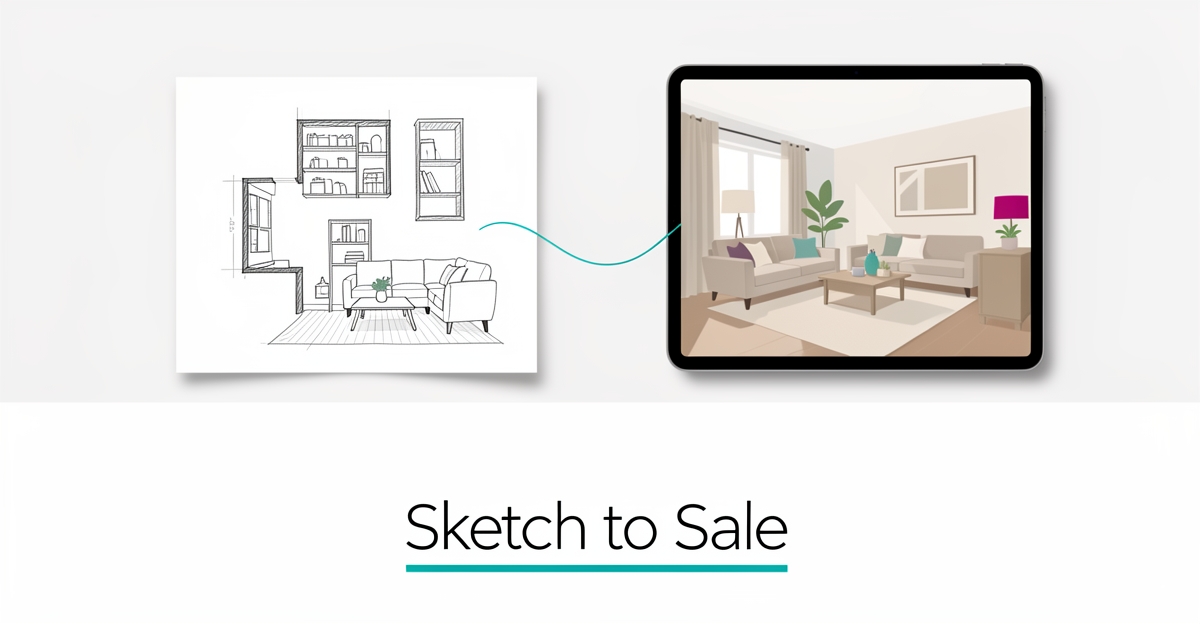
The solution lies in moving from static sketches to dynamic conversations. Tools like CollovGPT integrate ChatGPT with design rendering, allowing users to workshop design challenges in real-time using natural language.

Clients can type "remove the sofa" or "make the walls red" and see immediate results. This interactive experience keeps clients engaged and reduces the back-and-forth of email revisions. It turns a passive viewing experience into an active design workshop.

However, current limitations exist. Markkilesh Majumdar of Collov admits AI is prone to misidentifying products, being "prone to thinking sofas are chairs." Therefore, a hybrid model is essential. AI should handle routine qualification and FAQs, while human designers manage complex creative decisions.

Embracing this dynamic communication style closes the chasm. It aligns client expectations with operational reality, setting the stage for scalable, profitable growth.

Pre-Design Automation: Qualifying Leads with Visual AI

The initial inquiry phase is often the most resource-intensive part of an interior design business. Designers frequently spend hours creating custom concepts for prospects who never convert, burning valuable creative energy on low-intent leads.

This inefficiency can stifle growth and lead to designer burnout before a single contract is signed.

Visual AI tools are transforming this bottleneck into a strategic advantage. By automating the creation of initial mockups, firms can gauge client seriousness without committing significant human resources.

This approach effectively creates a "ticket to entry" that filters out casual browsers and identifies serious buyers.

Traditional lead qualification relies on vague conversations about style and budget. Visual AI changes the game by providing immediate, tangible value to the prospect.

Tools like RoomGPT allow designers to generate quick, personalized room mockups from simple client uploads. This instant gratification serves as a powerful filter for intent.

Hassan El Mghari, Founder of RoomGPT, notes that designers can now use AI to ask if a client is interested and understand how serious they are.

This insight allows firms to decide which potential clients to spend time on, ensuring effort is directed toward high-probability conversions.

The adoption metrics for these tools demonstrate their effectiveness in engaging users. RoomGPT has attracted 3 million site visitors, while Reimagine Home gained hundreds of thousands of active users in less than three months.

These numbers highlight a massive shift in how clients expect to interact with design concepts early in the journey.

Implementing visual AI changes the dynamic from "selling" to "testing fit." When a potential client receives a custom design mockup within minutes of inquiry, the barrier to entry drops significantly.

However, the goal is not just engagement, but qualification. You can use the AI-generated concept as a gatekeeper for deeper conversations.

If a client responds enthusiastically to the visual concept and asks detailed questions about materials or timeline, they are a qualified lead.

If they ignore the mockup or ask only about the lowest price point, they are likely not ready to invest in professional services.

This method protects your team from "tire-kickers" who are curious but not committed.

Consider the cost contrast highlighted by Akhilesh Majumdar, Founder of Reimagine Home, who notes that AI tools cost around $200 compared to traditional professional design services exceeding $2,000.

This disparity helps you identify clients who value immediate visual feedback versus those seeking high-touch, bespoke consultation.

To maximize efficiency, integrate these tools directly into your inquiry process. Use an AI visualization platform to generate a base concept for every new lead.

Send this concept along with a brief message asking for feedback on specific elements. This creates a natural follow-up conversation that feels personalized, not automated.

This strategy aligns with the finding that 62% of consumers prefer using a chatbot for customer service over waiting for a human agent response.

By meeting clients where they are—digitally and instantly—you increase the likelihood of a positive first impression.

However, remember that current AI design tools are described as "beta software" with limitations in product identification.

Use AI for the "spark" of interest, but maintain human oversight for final approvals and complex spatial planning.

The most successful firms will use AI to handle the "heavy lifting" of initial engagement, freeing designers to focus on execution.

This hybrid model ensures that human designers manage complex creative decisions while AI handles volume and initial filtering.

By automating the "ticket to entry," you create a scalable pipeline of qualified leads.

This shift allows your firm to move from sketch to sale with greater speed and precision.

Ready to automate your client acquisition? AIQ Labs can help you build custom AI systems that integrate seamlessly with your design workflow.

Real-Time Iteration: Conversational Design Workflows

Static image generation is becoming obsolete in high-touch industries like interior design. Clients no longer want to wait days for a single revised mockup; they demand immediate visual feedback to refine their vision. This shift transforms the client experience from passive reception to active collaboration, where design challenges are worked out in real-time through natural language.

By integrating conversational interfaces, firms can empower clients to workshop concepts independently. This approach significantly reduces the friction of back-and-forth emails and allows human designers to focus on complex creative strategy rather than minor aesthetic adjustments.

The most significant leap in client communication is the move toward tools that understand context and intent. Platforms like CollovGPT are pioneering this shift by combining generative AI with conversational command structures. This allows users to interact with design renders using simple, natural language instructions.

Imagine a client looking at a living room visualization and simply typing, "remove the sofa" or "make the walls red." The AI processes this request and updates the image instantly. This capability bridges the gap between abstract ideas and tangible visuals, making the design process intuitive for non-experts.

Adopting conversational design workflows directly addresses the industry’s most common pain point: resource allocation. Designers often spend excessive hours tweaking colors or layouts for clients who may not ultimately commit to the project. By allowing clients to self-serve these minor iterations, firms can protect their valuable human capital.

This automation serves a dual purpose: it enhances client satisfaction through instant gratification and acts as a powerful qualification tool. When a client engages deeply with a conversational AI tool, it signals high interest and seriousness.

Key benefits of this workflow include:

  • Instant Feedback Loops: Clients see changes immediately, accelerating decision-making.
  • Scalable Engagement: One designer can oversee multiple clients simultaneously as the AI handles routine tweaks.
  • Higher-Quality Leads: As noted by RoomGPT founder Hassan El Mghari, firms can gauge client interest before investing significant time (Source 2).
  • Reduced Miscommunication: Natural language commands eliminate ambiguity in design requests.

While the potential is immense, interior design firms must navigate the current limitations of "beta" software. Current AI tools struggle with nuanced requests and precise product identification, sometimes misidentifying items like sofas as chairs. Therefore, a hybrid model is essential for professional service providers.

The AI handles the volume—answering FAQs, generating initial concepts, and processing basic adjustments. Meanwhile, human designers retain control over final approvals, complex spatial planning, and high-stakes creative decisions. This ensures that the "human touch" remains central to the brand experience while leveraging AI for efficiency.

To implement this successfully, firms should:

  • Set Clear Boundaries: Define which adjustments AI can make autonomously versus those requiring human review.
  • Train on Brand Voice: Ensure any AI customer support follows the firm’s specific tone and style guidelines.
  • Monitor Performance: Regularly review AI interactions to identify common errors or client confusion.

As you integrate these tools, you will likely see a surge in client engagement metrics, but maintaining quality control remains paramount. The goal is not to replace the designer, but to amplify their impact through smarter, conversational workflows.

AI Development

Still paying for 10+ software subscriptions that don't talk to each other?

We build custom AI systems you own. No vendor lock-in. Full control. Starting at $2,000.

Post-Design Support: Proactive AI Agents for FAQ and Tracking

The post-design phase is often the most chaotic part of an interior design project, yet it’s where client anxiety peaks. While the creative vision is set, clients are left waiting for material deliveries, vendor updates, and installation schedules. This creates a bottleneck for designers who must constantly switch between creative work and administrative triage.

AI agents solve this by handling routine inquiries proactively. Unlike passive chatbots, these agents monitor project timelines and answer questions about material availability or vendor status without human intervention. This ensures clients feel supported 24/7 while freeing up your team to focus on high-value creative tasks.

Proactive AI agents transform the client experience by automating the "invisible" work of project management.

Key Benefits of Post-Design AI Support:

  • 24/7 Vendor Tracking: Agents monitor shipment statuses and alert clients to delays automatically.
  • Instant Material Answers: Clients get immediate specifications on fabrics, finishes, and lead times.
  • Reduced Admin Overhead: Designers save hours weekly on repetitive status updates and FAQ responses.
  • Enhanced Client Confidence: Real-time visibility reduces client anxiety and builds trust in the process.

62% of consumers prefer using a chatbot for customer service over waiting for a human agent response according to Netguru.

This statistic highlights a critical shift in user behavior: clients expect immediate, automated assistance rather than waiting for business hours. In the interior design sector, where decisions regarding materials and timelines are urgent, this preference for speed is paramount. By implementing AI agents, firms can meet these expectations instantly, improving satisfaction scores and reducing the pressure on human staff.

Imagine a client asking, "When will my custom sofa arrive?" at 9 PM on a Friday.

A traditional system requires the designer to wait until Monday to check with the vendor, leaving the client anxious for 48 hours. An AI agent, however, checks the vendor portal in real-time and responds immediately with the tracking number and estimated delivery window. This seamless interaction demonstrates competence and reliability, turning a potential pain point into a moment of trust-building.

The chatbot industry market size is projected to reach approximately 1.25 billion U.S. dollars by 2025, up from 190.8 million U.S. dollars in 2016 according to Netguru.

This explosive growth reflects the widespread recognition of AI’s value in customer communication. For interior design firms, this trend signals that automation is no longer optional; it is becoming the industry standard for client management. Early adopters who integrate AI for post-design support will gain a significant competitive advantage by offering a smoother, more responsive client journey.

Unlike traditional chatbots that only react to requests, AI agents can take initiative and coordinate tasks as reported by Netguru.

This distinction is crucial for the post-design phase. An AI agent doesn’t just wait for a question; it proactively pushes updates about installation schedules, material substitutions, or vendor delays. This proactive approach ensures that clients are never left in the dark, reducing the need for them to reach out for basic status updates.

By automating these routine interactions, design firms can scale their operations without increasing headcount.

This efficiency allows businesses to take on more projects while maintaining high-touch service standards. The result is a streamlined operation where human designers focus on creativity and strategy, while AI handles the logistical heavy lifting.

Implementing these agents creates a seamless bridge between the creative design phase and the final installation.

With the post-design communication automated, your team can now focus on the next critical stage: closing the sale and securing repeat business.

Strategic Implementation: The Hybrid Model for Success

The future of interior design communication isn’t about replacing your creative team—it’s about empowering them. By adopting a hybrid AI implementation model, firms can automate routine post-design interactions while preserving the high-touch human element that defines luxury service. This approach allows designers to scale their influence without sacrificing the personal connection that drives client loyalty.

Current technology sits in a "beta" phase where AI excels at speed but lacks nuanced judgment. As noted in industry analysis, tools like CollovGPT can handle basic requests like "remove the sofa," yet they still struggle with complex product identification or architectural integrity. This gap necessitates a strategy where AI handles the volume, while humans handle the vision.

The most successful firms are leveraging AI as a pre-screening and qualification engine rather than a final decision-maker. By using AI visualization platforms to generate quick mockups, designers can gauge client interest and seriousness before committing significant creative resources. This ensures that human designers focus exclusively on high-intent leads, maximizing the value of every billable hour.

To implement this effectively, consider these strategic priorities:

  • Automate Initial Qualification: Use AI to create instant conceptual mockups from client photos, filtering for serious buyers before human intervention.
  • Standardize Post-Design FAQs: Deploy chatbots trained on your specific vendor lists and material guides to answer common logistical questions 24/7.
  • Maintain Human Oversight for Complex Decisions: Reserve human designers for final approvals, nuanced aesthetic adjustments, and conflict resolution.
  • Integrate Visual Input Workflows: Allow clients to upload sketches or photos, which AI processes into actionable concepts for faster feedback loops.

Visual communication is the language of interior design. AI’s ability to process visual data—such as turning a client’s photo of an empty wall into a mural visualization—bridges the gap between abstract ideas and tangible results. This capability transforms the client experience from a static review process into an interactive design workshop.

When clients can see their ideas materialize instantly, decision-making accelerates dramatically. However, because current AI tools can misidentify items (e.g., confusing a sofa for a chair), human verification remains critical. By combining AI-driven visual iteration with human expert review, firms can offer rapid prototyping without the risk of errors in final specifications.

The goal is to create a seamless workflow where AI removes friction from the administrative burden. With 62% of consumers preferring chatbots for immediate service, automating routine inquiries about vendor timelines or material availability meets modern expectations for speed. This frees your team to focus on what they do best: curating unique, high-quality designs that reflect the client’s personal style.

Ultimately, the hybrid model protects your firm’s reputation while unlocking scalability. By letting AI manage the repetitive tasks of qualification and logistics, you create more time for the creative conversations that truly win business. This balanced approach ensures that technology serves as a powerful tool in your arsenal, not a substitute for your artistic expertise.

Frequently Asked Questions

Will using AI for client communication make my interior design firm feel impersonal or robotic?
AI handles routine qualification and FAQs, allowing your human designers to focus on complex creative decisions and high-touch interactions. This hybrid model ensures clients get immediate answers to logistical questions while maintaining the personal connection that defines luxury service.
Is AI visualization accurate enough to use with high-end clients who demand precision?
Current design AI tools are described as 'beta software' and can struggle with nuanced requests or precise product identification, such as misidentifying sofas as chairs. Therefore, AI should be used for initial concept exploration and engagement, while human designers retain final oversight for accurate specifications and approvals.
How can AI help me stop wasting time on leads who aren't serious buyers?
You can use AI tools like RoomGPT to generate quick mockups that gauge client interest before committing significant resources. As noted by RoomGPT founder Hassan El Mghari, this allows firms to identify serious buyers and filter out low-intent prospects, protecting your team's creative energy.
Can AI agents actually track vendor deliveries and answer client questions 24/7?
Yes, proactive AI agents can monitor project timelines and answer questions about material availability or vendor status without human intervention. Research shows that 62% of consumers prefer using a chatbot for customer service over waiting for a human agent response, making 24/7 support a key expectation.
What is the cost difference between using AI tools and hiring traditional design services?
Founder Akhilesh Majumdar contrasts the cost of AI tools at approximately $200 with traditional professional design services that exceed $2,000. This significant cost disparity helps identify clients who value immediate visual feedback versus those seeking high-touch, bespoke consultation.
How do I implement AI without needing a technical team or complex setup?
You can start by integrating existing visualization platforms like RoomGPT or CollovGPT into your inquiry workflow to automate initial engagement. For more complex needs, you can deploy managed AI employees or custom-built systems that handle specific workflows like lead qualification or FAQ responses.

Closing the Gap: From Static Sketches to Scalable Growth

The disconnect between static design visualizations and dynamic client needs creates a costly 'communication chasm' that drains creative energy and stifles firm growth. As demonstrated by the 62% of consumers who prefer chatbot support, modern clients expect real-time immediacy that manual email threads simply cannot provide. To bridge this gap and reclaim valuable hours, interior designers must move beyond reactive administrative tasks. AIQ Labs empowers SMBs to cross this divide through production-ready AI systems, managed AI employees, and strategic transformation consulting. By deploying custom-built, owned AI solutions—such as intelligent chatbots that handle post-design client inquiries 24/7—firms can eliminate burnout and scale operations without adding headcount. Don’t let manual workflows limit your potential. Book a free AI Audit & Strategy Session with AIQ Labs today to discover how we can architect your competitive advantage and transform your client engagement.

AI Transformation Partner

Ready to make AI your competitive advantage—not just another tool?

Strategic consulting + implementation + ongoing optimization. One partner. Complete AI transformation.

Join The Newsletter

Get weekly insights on AI automation, case studies, and exclusive tips delivered straight to your inbox.

Ready to Increase Your ROI & Save Time?

Book a free 15-minute AI strategy call. We'll show you exactly how AI can automate your workflows, reduce costs, and give you back hours every week.

P.S. Still skeptical? Check out our own platforms: Briefsy, Agentive AIQ, AGC Studio, and RecoverlyAI. We build what we preach.