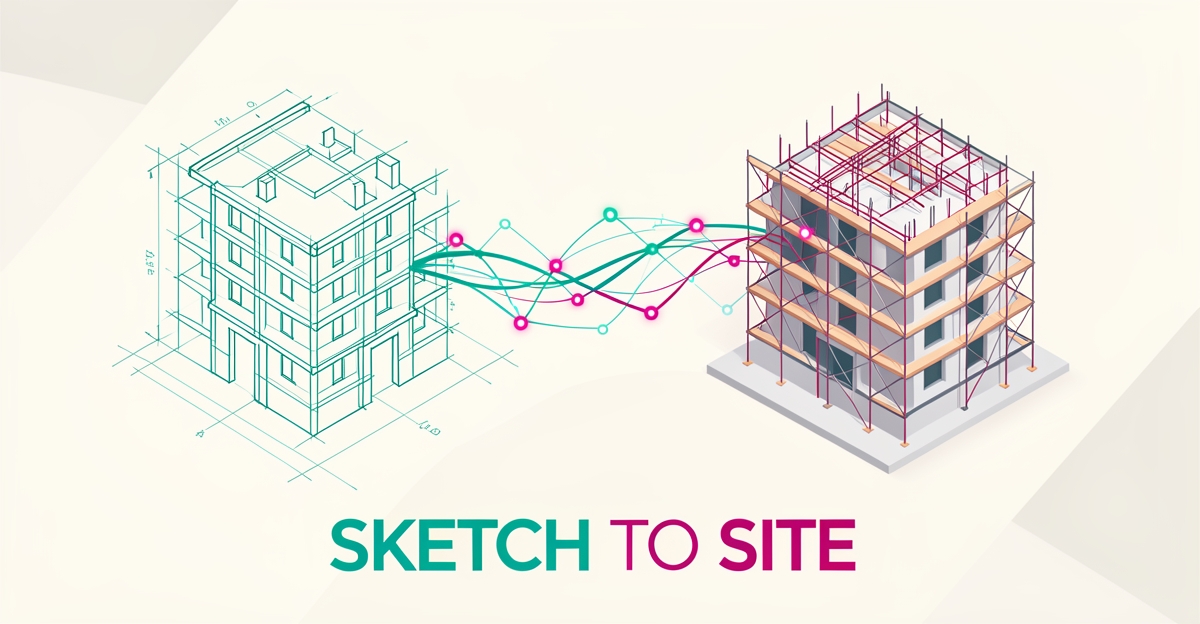
From Sketch to Site: How AI Can Optimize the Design-to-Construction Pipeline
Key Facts
- A large share of construction rework—commonly cited at nearly half—stems from miscommunication and poor information flow between design and field teams.
- Miscommunication and poor project data have historically cost the construction industry tens of billions of dollars annually.
- Schedule delays remain widespread across construction projects, driven largely by late information rather than lack of effort.
- AI-powered schedule monitoring and automated RFI routing typically reduce delays by surfacing problems before they compound.
- Early AI coordination implementations report meaningful reductions in project delays and idle-crew costs.
- AIQ Labs has deployed 200+ multi-agent systems and runs 4 live SaaS products daily.
Hire a team member that works 24/7 — for less than a part-time wage.
AI receptionists, SDRs, dispatchers and 99+ roles. Trained on your business, fully managed.
Not sure where to start? Ask our AI planner
The Hidden Cost of Disconnected Design and Construction Workflows
The design-to-construction pipeline is often hampered by disconnected workflows that create costly inefficiencies before ground is even broken. When architects, engineers, contractors, and clients operate in silos, critical information gets delayed, distorted, or lost entirely. This fragmentation doesn’t just slow progress—it directly translates into avoidable expenses and operational strain.
Industry research has consistently found that a large share of construction rework—figures as high as 48% appear in widely cited studies—stems from miscommunication. When design intent isn’t clearly communicated or updated in real time, field teams may install components based on outdated drawings, leading to tear-outs, reinstallation, and cascading delays. These errors compound quickly, turning small oversights into major budget overruns.
The financial toll is immense: analyses of miscommunication and poor project data in construction have put industry-wide losses in the tens of billions of dollars in a single year. This isn’t just about wasted materials—it includes idle labor, equipment downtime, extended site supervision, and contractual disputes. For firms juggling tight margins, these losses erode profitability and strain client relationships.
Beyond the balance sheet, disconnected workflows create operational friction that affects every stakeholder. Schedule changes fail to reach subcontractors in time, RFIs languish in inboxes, and version control becomes a guessing game. Teams spend hours chasing down information instead of advancing work, and trust erodes when stakeholders feel out of the loop. In an industry where timing and precision are everything, these inefficiencies aren’t just annoying—they’re existential.
This is where AI integration becomes not just beneficial, but essential. By acting as a real-time coordination layer across CAD models, project management platforms, and client portals, AI ensures that every stakeholder works from the same, up-to-date information. AIQ Labs builds integrated AI systems that eliminate these blind spots, turning fragmented workflows into a synchronized pipeline where design intent translates accurately into built reality—without the costly detours.
AI Agents as the Intelligent Coordination Layer in Construction
The design-to-construction pipeline often stalls when critical information fails to flow between architects, engineers, contractors, and subcontractors. This disconnect transforms schedule changes, RFIs, and document updates into sources of delay and rework, costing the industry billions annually. AI agents now serve as an intelligent coordination layer that ingests data from CAD, project management, and IoT tools, reasons contextually, and acts in real time to prevent these bottlenecks before they escalate.
By continuously monitoring data streams from platforms like Primavera P6 and Procore, AI agents detect schedule deviations the moment they occur and trigger immediate notifications to stakeholders. This proactive approach allows teams to reallocate resources before delays compound—a capability early implementations have shown can meaningfully reduce project delays. Similarly, AI agents streamline the RFI lifecycle by automatically routing questions to the correct reviewer, tracking response deadlines, and escalating overdue items—eliminating the manual follow-up that typically stalls field work.
Perhaps most critically, these agents perform continuous cross-referencing across drawings, specifications, and schedules to catch discrepancies long before they reach the construction site. When a structural revision conflicts with mechanical routing or electrical pathways, the system flags the issue instantly, preventing errors from becoming "built-in" defects that require costly remediation. This function directly targets the miscommunication-driven rework that industry studies consistently identify as a leading source of waste.
- Ingest data from BIM models, IoT sensors, and project management tools
- Reason contextually using machine learning to interpret schedule and sensor data
- Execute autonomous actions like updating dashboards or reassigning tasks
- Learn continuously through closed-loop feedback to improve future decisions
AIQ Labs designs these intelligent coordination systems to integrate seamlessly with existing construction software stacks, ensuring that AI agents operate within the tools teams already use rather than adding another layer of complexity. By connecting data from design models to field execution through autonomous reasoning and action, these systems transform the design-to-construction pipeline from a sequence of handoffs into a continuously optimized workflow. The result is fewer delays, reduced rework, and clearer communication across every stakeholder—turning information fragmentation into a competitive advantage.
From Alerts to Action: Practical AI Use Cases Closing the Pipeline Gap
Construction projects often stall not from lack of effort, but from delayed information—a schedule change missed, an RFI buried, a drawing conflict overlooked. These gaps compound quickly, turning minor oversights into major delays and budget overruns. AI agents close this gap by acting as a continuous, intelligent coordination layer that monitors, reasons, and acts in real time across disconnected systems.
Real-time schedule change notifications exemplify this shift. AI agents continuously monitor critical path activities in tools like Primavera P6 and instantly alert stakeholders when deviations occur, enabling proactive resource adjustments before delays compound. This transforms schedule management from a reactive weekly review into a dynamic, anticipatory process—one that early adopters report cuts both delays and the idle-crew and demobilization costs that follow them.
Automated RFI routing further eliminates bottlenecks. When a specification conflict arises in the field, AI agents instantly route the question to the correct reviewer, track response deadlines, and escalate approaching due dates—preventing work stoppages caused by manual follow-up delays. They also detect when an RFI response contradicts existing specs, flagging conflicts before they propagate across platforms like Procore and Autodesk Construction Cloud so information flows without manual intervention.
Discrepancy detection across BIM models prevents costly rework by catching errors early. AI agents continuously cross-reference structural, architectural, mechanical, and electrical drawings the moment a revision is issued, flagging inconsistencies before they reach the field. This matters because miscommunication remains a leading driver of rework, and resolving errors post-installation multiplies remediation costs significantly. By identifying conflicts during design, teams avoid the exponential cost of fixing built-in errors later.
For firms using AIQ Labs’ integrated approach, these capabilities are not standalone tools but part of a unified system that connects design, scheduling, and field operations. AI agents ingest data from CAD, project management, and client portals, then reason and act—updating dashboards, assigning tasks, or sending alerts—ensuring stakeholders stay aligned throughout the pipeline. This continuous feedback loop transforms fragmentation into flow, turning schedule risks into manageable adjustments and document conflicts into resolved issues before they impact the ground. The result is a pipeline where intent translates directly to execution, with fewer surprises and more predictable outcomes.
Building Your AI-Powered Design-to-Construction System with AIQ Labs
For construction firms looking to bridge the design-to-construction gap, AIQ Labs offers three entry points that turn AI potential into operational reality without overwhelming existing teams or budgets. The first is [AI Workflow Builds](/workflow-builds): we rebuild the one workflow that costs you the most—such as RFI routing or document discrepancy detection across CAD and project management tools—at a fixed price, delivered in phases so you approve and pay for each milestone as it ships, keeping everything built so far even if you pause. This ensures deep integration with platforms like Procore or Primavera P6, creating a unified data flow that attacks the miscommunication driving most rework.
The second entry point is [AI Employees](/ai-employees): managed AI staff that work alongside human teams, handling repetitive but critical tasks like monitoring schedule changes in real time or extracting action items from email threads to prevent delays. These agents operate around the clock, continuously learn from performance data, and integrate with the calendars, payment systems, and communication platforms your teams already use—eliminating the manual follow-ups that often stall progress, typically at a fraction of the cost of an equivalent human hire.
For firms ready to connect the entire operation, [AI Operating Systems](/ai-operating-systems) provide one connected operating layer built in phases and owned outright. Across all three paths, you choose how to pay—Start Monthly, Build in Milestones, or Own It Outright—so the engagement matches your cash flow and risk tolerance. Every system we build is one you own, with clear milestones and ongoing optimization, avoiding the common pitfall of stalled pilots. To explore how this approach fits your specific workflow, start with our free two-minute [Fit Check](/apply), followed by a no-obligation 30-minute strategy call to identify your highest-impact automation opportunity.
Still paying for 10+ subscriptions that don’t talk to each other?
We build custom AI systems you own outright. No vendor lock-in. Full control.
Not sure where to start? Ask our AI planner
Frequently Asked Questions
How much does miscommunication cost the construction industry annually?
What percentage of construction rework is caused by miscommunication?
Can AI really reduce project delays in construction?
How does AI help prevent costly rework on construction sites?
Do I need to replace my current construction software to use AI?
What’s the first step to explore AI for my construction business?
Turning Design Intent into Built Reality
Across the design-to-construction pipeline, AI agents act as an intelligent coordination layer—ingesting data from CAD, project management, and IoT tools to detect schedule deviations, automate RFI routing, and flag document discrepancies before they reach the field. By targeting the miscommunication behind most rework, these systems transform fragmented workflows into a synchronized process where intent translates directly to execution. For construction firms seeking to reduce delays, cut costs, and improve stakeholder alignment, the path forward starts with understanding where AI can drive the highest impact in your specific workflow. Take the first step with our free two-minute Fit Check, followed by a no-obligation 30-minute strategy call—no pressure, just clarity on how AI can strengthen your bottom line. Questions first? Reach us at [email protected].
Make AI your competitive advantage — not just another tool.
Strategy, implementation and ongoing optimization. One partner, end to end.
Not sure where to start? Ask our AI planner