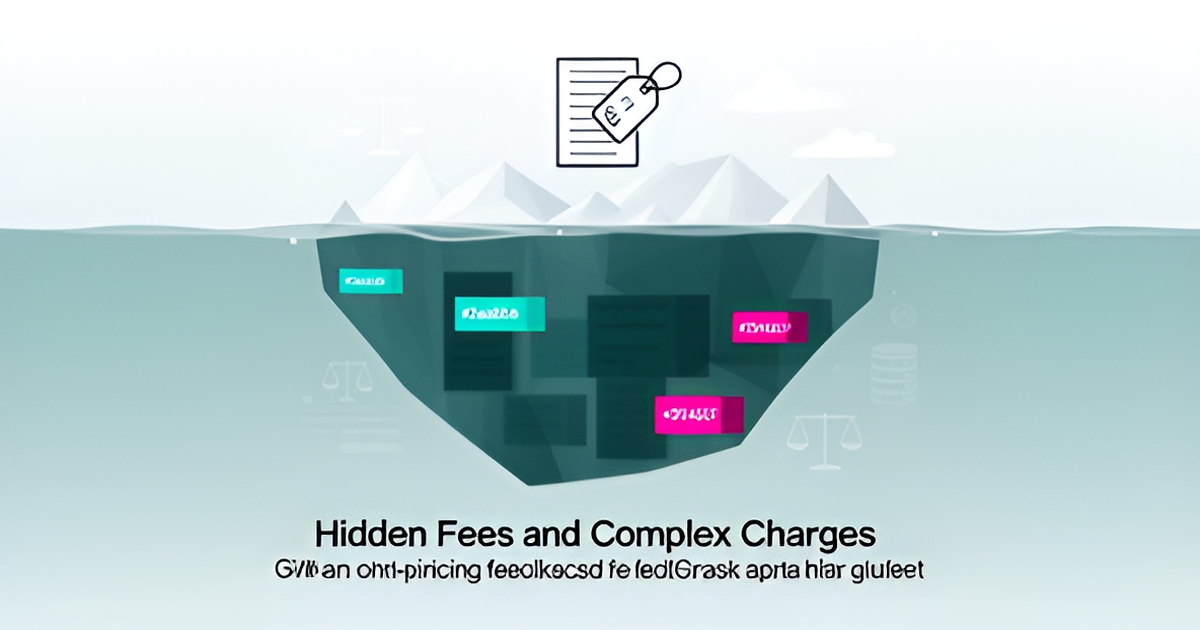
Hidden Expense Sources in AI Legal Document Management
Key Facts
- A HIPAA compliance add-on can turn a $50/user/month legal AI platform into a $100+ effective cost according to pricing analysis.
- A five-attorney firm paid ~$255 per attorney monthly on a low-sticker platform vs ~$105 all-inclusive per a TCO case study.
- 31% of law firms cite implementation expenses as a top AI adoption barrier research on AI adoption found.
- Fewer than 35% of legal tech projects finish on time and within budget industry analysis shows.
- Ancillary document review fees for processing, privilege logs, and egress can exceed hosting and review costs combined per pricing research.
- 79% of law firms use AI, yet only 6% charge less for AI-assisted work a 600+ leader survey found.
- Legal data annotation requires lawyers, not crowdworkers, because identifying judicial reasoning demands domain expertise Cornell researchers note.
Hire a team member that works 24/7 — for less than a part-time wage.
AI receptionists, SDRs, dispatchers and 99+ roles. Trained on your business, fully managed.
Not sure where to start? Ask our AI planner
The Sticker Price Is Never the Real Price
A legal AI platform advertising $50 per user per month can quietly cost double that figure once the real invoice arrives. Across the industry, the advertised per-seat price is rarely what firms actually pay—and the gap between the two numbers is where budgets go to die.
The most common culprits are the add-ons firms don't discover until onboarding. Compliance is the biggest one: HIPAA compliance is often sold as a premium tier rather than a included feature, and a $50/user/month platform can effectively cost $100+ per user once it's added, according to cost analysis of legal document automation. For personal injury firms handling medical records, that premium is unavoidable.
Implementation and training costs compound the problem. Research on AI adoption barriers found that 31% of law firms cite implementation expenses as a top obstacle to AI adoption—and fewer than 35% of legal tech projects finish on time and within budget. The opportunity cost alone is steep: a firm billing $300/hour that sends three attorneys to a full day of training loses $7,200 before generating a single document.
The math plays out clearly in a real-world scenario. A five-attorney personal injury firm using a low-sticker, high-add-on platform paid roughly $15,280 in year one—about $255 per attorney per month effective. A comparable transparent, all-inclusive model came to roughly $6,288, or about $105 per attorney per month. Same category of tool, nearly 2.5x difference in true cost.
Why do firms consistently underestimate? The hidden charges tend to follow a predictable pattern:
- Compliance and security modules billed as premium add-ons rather than base features
- Implementation, setup, and integration fees excluded from advertised pricing
- Training costs, both direct fees and lost billable hours
- Per-document and per-transaction usage fees that scale unpredictably
Enterprise platforms make this worse by requiring annual commitments from the start—pricing data on legal AI tools shows platforms like Harvey and CoCounsel starting at $500 per seat with mandatory yearly contracts, locking firms in before they understand their true usage.
The lesson is simple: demand an all-in total cost of ownership quote in writing before signing anything. Vendors should itemize implementation, training, integration, compliance, and usage fees upfront. At AIQ Labs, that transparency is built into how we price custom builds—real numbers provided in writing after a strategy call, with no fake price anchors—because a budget built on sticker price alone is a budget already broken.
Five Cost Categories Vendors Don't Put on the Quote
The sticker price on a legal AI quote is the beginning of the negotiation, not the end. Vendors quote per-seat and per-gigabyte rates that, as document review pricing analysis bluntly puts it, "bear no relationship to the marginal cost of processing the data" — and the line items are intentionally opaque. Here are the five cost clusters that consistently escape the quote.
1. Legal-domain data labeling. Cornell researchers note that legal data annotation requires significant expertise to identify judicial reasoning and controlling precedents — meaning lawyers, not crowdworkers, must do the labeling. Legal documents carry a domain-expertise premium comparable to medical imaging, which annotation pricing research shows costs 3–5x more than general work. Per-label contracts add "label inflation" risk and tool licensing fees.
2. Compliance add-ons. HIPAA compliance can turn a $50/user/month platform into a $100+ effective cost — or double it entirely. Mid-range HIPAA programs run $80,000–$120,000 to implement, and compliance sits alongside SSO, security modules, and API access among the most common hidden charges.
3. Opaque document review ancillaries. These fees — not hosting — are where budgets die:
- Processing surcharges: $75–$150/GB
- Privilege logs: $5–$15 per entry, on top of $4–$8/document privilege review
- Project management: $200–$300/hour
- Egress fees: $25–$100/GB just to take your data home
These ancillaries can exceed the cost of underlying hosting and review combined, and egress fees function as vendor lock-in.
4. Implementation and training drag. 31% of law firms cite implementation expenses as a top AI adoption barrier, and fewer than 35% of legal tech projects finish on time and within budget. Training carries brutal opportunity cost: a firm billing $300/hour loses $7,200 sending three attorneys to a single training day.
5. Continuous output verification. As the Cornell analysis argues, AI-supported legal work is valuable only if results are verifiable — and with civil and criminal liability at stake, verification is a permanent recurring cost, not a one-time QA pass. This is why AIQ Labs treats human-in-the-loop controls and audit trails as core architecture in legal builds, not premium extras.
The cumulative effect is stark: a five-attorney firm on a low-sticker, high-add-on platform paid ~$255/attorney/month effective versus ~$105 for a transparent all-inclusive model. Demand an itemized, all-in TCO quote in writing before signing anything.
How to Get an All-In Number Before You Sign
The gap between a vendor's quote and your actual invoice is where legal AI budgets go to die. A platform advertising $50 per user per month can effectively cost more than double once compliance add-ons surface during onboarding, according to pricing analysis — and fewer than 35% of legal tech projects finish on time and within budget.
The fix starts with procurement discipline: demand an itemized, all-in total cost of ownership quote in writing before you sign anything. That quote must cover implementation, training, integration, compliance, and usage fees — not just the sticker subscription. In one TCO case study, a five-attorney firm paid roughly $255 per attorney per month effective on a low-sticker, high-add-on platform versus about $105 on a transparent all-inclusive model. The sticker price told them almost nothing.
Don't stop at the headline lines. Interrogate the ancillary fee schedule, because processing surcharges, production fees, privilege logs, and project management hours can exceed the cost of underlying hosting and review combined, as document review cost analysis shows. Egress fees deserve special scrutiny: at $25–$100 per GB to release your own data, they function as lock-in, not logistics.
Your written quote should force answers to these questions:
- What is the fully loaded year-one cost per attorney, including implementation, training, and compliance tiers?
- What ancillary fees apply — processing, production, privilege log entries, project management hours — and at what rates?
- What does it cost to export or migrate your data out, per GB, at the end of the engagement?
- What ongoing verification and quality-control costs are assumed, and who bears them?
When review quotes balloon relative to the dispute, you have legal leverage, not just negotiating leverage. Under FRCP 26(b)(1) proportionality, a $460,000 review estimate on a $1.2 million dispute is potentially disproportionate as a matter of law — an argument courts have entertained since Henry v. Morgan's Hotel Group. Vendors who cannot defend their rates on the record are, as one analysis put it, pricing on the assumption no one will ask.
Finally, budget verification as a recurring line item, never a one-time project. Cornell researchers note that AI-supported legal work is valuable only if results are verifiable and trustworthy, and legal stakes raise the verification bar to healthcare levels (academic analysis). Firms that treat this honestly — AIQ Labs builds human-in-the-loop controls and audit trails into every engagement, and any competent partner should — bake it into the number before signature, not after.
Build vs. Buy: Owning the System Ends the Fee Game
Per-GB rates that bear no relationship to actual storage costs, compliance tiers that double your bill, egress fees that hold your own documents hostage — these pricing structures share one root cause: you're renting a system built on your data, and the vendor controls the meter. As document review pricing analysis bluntly puts it, vendors quote per-GB and per-document rates that "bear no relationship to the marginal cost of processing the data," and clients have no way to challenge them because the line items are intentionally opaque.
The economics are stark. Underlying cloud storage costs well under a cent per GB per month, yet hosted review platforms charge $10–$25/GB/month — and ancillary fees for processing, privilege logs, and project management can exceed hosting and review costs combined. On the subscription side, a TCO case study of a five-attorney firm found a "cheap" platform effectively cost ~$255 per attorney per month once add-ons surfaced, versus ~$105 for a transparent all-inclusive model. Egress fees of $25–$100/GB then lock the door behind you.
Owning the system ends the fee game because it removes the incentive to invent new line items. When a firm owns its AI document infrastructure outright, several hidden cost categories simply stop existing:
- Compliance-tier upsells — audit trails and security controls are built into the system you own, not a premium module you rent
- Egress and data-hostage fees — your documents live in infrastructure you control
- Per-GB and per-seat meters that scale with your caseload rather than your value received
- Vendor lock-in that converts switching costs into permanent pricing leverage against you
Ownership also changes the verification calculus. Legal AI output demands continuous human verification — the stakes are simply too high for one-time validation, as Cornell researchers note, because legal errors carry liability that can't be shifted to end users. A system you own lets you build that verification infrastructure, logging, and audit documentation directly into the workflow rather than purchasing it as a recurring add-on.
This is the logic behind models like AIQ Labs' Build in Milestones and Own It Outright approaches for legal intake and document workflows: infrastructure costs stay transparent, phases ship for approval, and the firm — not the vendor — holds the code, the agents, and the data. The market is already moving this direction, with 94% of in-house legal leaders interested in alternative service models that combine flexible AI talent with vetted tools.
The question to ask any vendor is simple: can they justify their rates against marginal costs, on the record? Vendors whose pricing assumes no one will ask are exactly the vendors worth replacing.
The AI Efficiency Paradox: Why Savings Aren't Reaching Clients
Here's the uncomfortable math of AI in legal work: the technology is saving firms enormous time, but clients are paying more, not less. A study of 600+ senior legal leaders across eight countries found that 79% of law firms now actively use AI tools — yet only 6% charge less for AI-assisted work.
The same study found that 34% of firms charge more for work that AI accelerates, and 58% haven't reduced rates at all. Meanwhile, law firm revenue jumped 13% in 2024, with net income up 17%. The efficiency gains aren't trickling down — they're being retained as margin.
This is the AI efficiency paradox: the same technology that cuts review time and drafting hours is being treated as a profit multiplier rather than a cost saving. Corporate legal departments, as the research puts it, are being asked to fund their outside counsel's AI transformation while seeing none of the financial benefits.
For firms and legal teams on the buyer side, the strategic response is clear. You have two paths to capturing those gains yourself:
- Build internal AI capability — 94% of in-house leaders express interest in alternative models combining flexible AI talent with vetted legal AI tools, precisely to escape the margin squeeze.
- Demand AI-usage transparency from outside counsel and use efficiency data as leverage in rate negotiations.
- Work with transparent partners who quote all-in pricing in writing — implementation, compliance, and verification included — rather than vendors whose line items are "intentionally opaque."
That last point matters because opacity is where hidden costs breed. As earlier sections showed, ancillary fees in document review can exceed hosting and review costs combined, and a low-sticker platform can effectively cost $255 per attorney per month versus $105 for a transparent model. Whether the savings reach you depends entirely on whether anyone is accountable for the full picture.
This is where we'd point to how we approach it at AIQ Labs: real numbers provided in writing after a free strategy call, systems the client owns outright, and no fake price anchors. If there isn't a clear win in your legal workflows, we'll tell you that too.
If you suspect hidden costs are bleeding your legal document workflows — in data labeling, compliance add-ons, or opaque review fees — the fastest way to find out is a structured look at your actual numbers. Start the two-minute Fit Check at aiqlabs.ai/apply, and book a free 30-minute strategy call at aiqlabs.ai/book to map exactly where your efficiency gains are going — and how to keep them.
Still paying for 10+ subscriptions that don’t talk to each other?
We build custom AI systems you own outright. No vendor lock-in. Full control.
Not sure where to start? Ask our AI planner
Frequently Asked Questions
Why does a legal AI platform advertised at $50 per user per month end up costing so much more?
What hidden fees should I look for in a document review or eDiscovery quote?
How much does implementation and training really cost when adopting legal AI?
Is a cheap legal AI subscription actually cheaper than an all-inclusive one?
How can I get an accurate total cost before signing a legal AI contract?
Is AI actually saving clients money on legal work?
The Real Price Tag Is the One You Never See Coming
The pattern across every section of this article is consistent: the number on the quote tells you almost nothing about the number on the invoice. Whether it's compliance tiers that double a $50 seat, ancillary review fees that can exceed hosting and review costs combined, or the $255-versus-$105 per-attorney gap between opaque and transparent pricing models, hidden costs don't announce themselves — they surface after the contract is signed. The fix isn't complicated: demand an itemized, all-in TCO quote in writing, interrogate egress and ancillary fees before you commit, and budget verification as a permanent line item rather than a one-time QA pass. Where vendors profit from opacity, ownership removes the incentive entirely — which is why AIQ Labs builds systems firms own outright, with real numbers provided in writing after a strategy call and no fake price anchors. If you suspect hidden costs are draining your legal document workflows, take the two-minute Fit Check at aiqlabs.ai/apply and book a free 30-minute strategy call at aiqlabs.ai/book. If there isn't a clear win, we'll tell you that too.
Make AI your competitive advantage — not just another tool.
Strategy, implementation and ongoing optimization. One partner, end to end.
Not sure where to start? Ask our AI planner