How a Bartending Service Can Cut Customer Service Time by 50% with AI Receptionists and Automated Scheduling
Key Facts
- Most Tier-1 queries, hours, bookings, menu questions, order status, can be resolved by an AI receptionist without human intervention, based on typical hospitality deployments as of late 2026.
- Automating routine intake is where the biggest cost savings come from: every call answered without pulling a bartender off the floor is labor you don't spend twice.
- Customers increasingly expect fast, convenient self-service and near-immediate responses across phone, text and social channels.
- AI triage can cut wait times dramatically by identifying and resolving intake bottlenecks before they reach staff.
- AI receptionists can integrate with common bar platforms like Toast, Square, OpenTable, and Resy, forming the digital backbone of efficient bar operations.
- AIQ Labs has deployed 200+ multi-agent systems and runs four live SaaS products daily, this is production work, not theory.
Hire a team member that works 24/7 — for less than a part-time wage.
AI receptionists, SDRs, dispatchers and 99+ roles. Trained on your business, fully managed.
Not sure where to start? Ask our AI planner
The Bartending Bottleneck: Wait Times, Missed Calls and Staff Drain
Every busy bar hits the same wall: a line at the door, phones ringing unanswered, and staff pulled away from service to handle bookings. Manual walk-in handling, phone bookings and order taking create delays that compound fast, draining staff and eroding the guest experience.
In hospitality, the cost shows up in missed revenue and burnt-out teams. When routine intake is automated, the biggest wins are consistent: fewer missed calls, fewer double-bookings, and staff hours redirected to guests instead of admin. The point isn't replacing people, it's freeing them for the high-touch moments that actually need a human.
Customer expectations make the bottleneck worse. Guests increasingly expect fast, convenient self-service across phone, text and social channels. For bartending services, that means walk-ins waiting for a host, callers getting voicemail after hours, and orders delayed while bartenders step away to answer the phone.
The drain is operational, not just perceptual. Staff spend shifts context-switching between pouring, chatting, taking messages, and manually updating schedules. That fragmentation reduces throughput and increases errors, while peak demand goes unmet.
Manual processes typically create:
- Walk-ins waiting for manual check-in and seating notes
- Phone bookings missed or logged late, leading to double-bookings
- Order taking interrupted by calls and messages
- After-hours inquiries lost with no 24/7 coverage
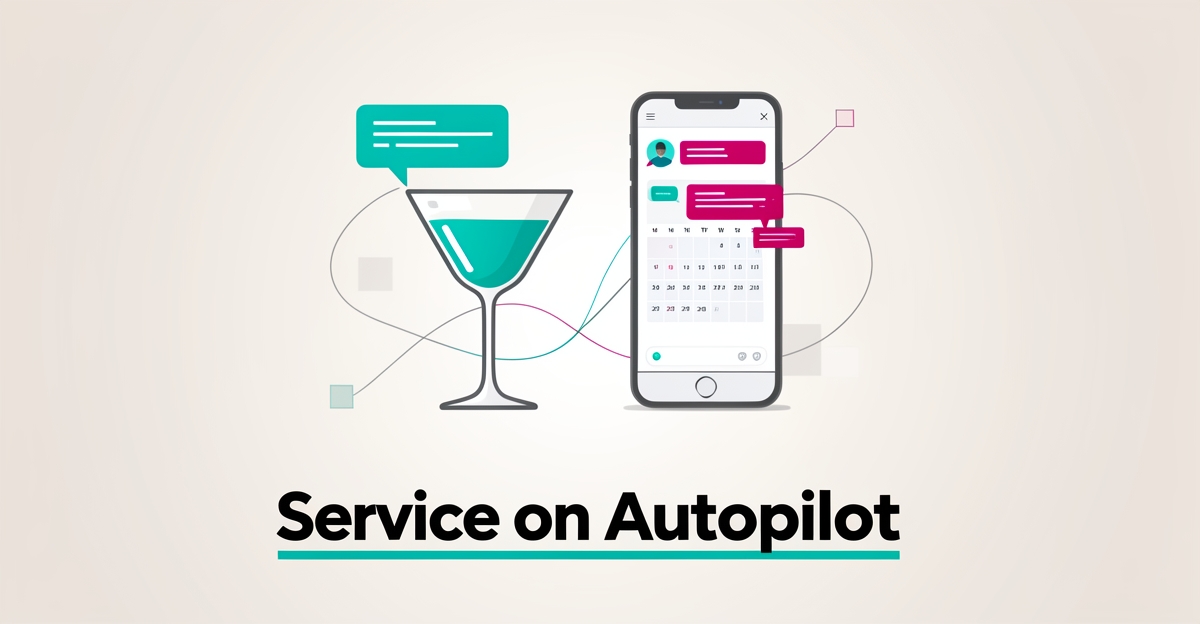
AI receptionists change the flow by handling intake in real time. An AI receptionist can answer calls 24/7, take drink orders, manage booking schedules, and route requests instantly, with integration into existing bar operations. The result is instant response capabilities instead of minutes-to-hours delays.
AIQ Labs designs these agents for hospitality workflows as managed AI employees, so walk-ins, bookings and orders are captured without pulling bartenders off the floor. Staff stay focused on crafting drinks and engaging patrons while routine intake runs continuously in the background.
AI Receptionists and Automated Scheduling for Bars
Walk into a busy bar on a Friday night and you'll see the same bottleneck: a host juggling walk-ins, a manager fielding reservation calls, and bartenders interrupted to take phone orders. AI receptionists flip that dynamic by handling every inbound interaction, walk-ins, drink orders, real-time bookings, without putting a single caller on hold. Most first-level queries get resolved without human intervention, freeing staff to focus on the guests in front of them.
The technology works because it plugs directly into the tools bars already use. Modern POS platforms like Toast and Square, inventory apps such as BevSpot and BinWise, and reservation systems including OpenTable and Resy all expose APIs that an AI agent can orchestrate in real time. These systems form the digital backbone of efficient service; an AI receptionist simply becomes the always-on interface that connects them. When a customer calls or messages, the agent checks live availability, confirms the booking, logs the order in the POS, and adjusts inventory counts, all in a single conversation.
- Natural-language voice and chat handling for walk-ins, reservations, and drink orders 24/7
- Real-time calendar synchronization across OpenTable, Resy, and internal scheduling tools
- Direct POS integration so orders fire to the bar ticket printer instantly
- Automated waitlist management with SMS confirmations and estimated seating times
- CRM enrichment capturing preferences, allergies, and visit history for personalized service
The payoff shows up in operations, not just numbers on a slide. When routine interactions no longer require a human to answer the phone, staff hours go back to service and admin errors drop. AI triage also surfaces bottlenecks early, like a single station backing up a busy service, so fixes happen before guests feel them. This level of orchestration is quickly becoming the standard for venues that compete on experience.
The right framing is to treat AI as a capacity strategy, not a replacement strategy. The goal is to keep bartenders behind the bar and hosts on the floor while the digital layer absorbs the administrative noise. AIQ Labs builds these AI receptionists as managed AI employees, trained on a venue's specific menu, policies, and tone, then integrates them with existing POS, CRM, and scheduling stacks so the transition feels like adding a tireless team member rather than installing new software. For venues ready to go further, an AI Operating System can connect intake, scheduling and reporting into one layer you own outright. The result is a front-of-house that never misses a call, never double-books a table, and never makes a guest wait for a simple answer.
From Pilot to Production: A Lean Implementation Playbook
Begin by auditing current workflows to pinpoint where customer service delays originate, whether it's manual order entry, scheduling conflicts, or after-hours call gaps. Most customer service leaders now see AI as a practical tool for automating routine tasks, which makes this diagnostic step critical for targeting high-impact automation opportunities. This strategic focus allows bartending services to redirect staff effort toward drink crafting and guest engagement rather than administrative bottlenecks.
Start small by deploying AI receptionists exclusively for after-hours calls and walk-in management, a controlled pilot that validates effectiveness without disrupting peak operations. This aligns with AIQ Labs' Build in Milestones model: you refine natural-language handling for drink orders and booking requests in phases while maintaining human oversight for complex scenarios. Modern bar operations increasingly depend on integrated tools like POS and inventory systems, making phased integration essential for seamless adoption. Reservation management and CRM platforms are the natural first connections for an AI receptionist to plug into.
Establish clear human-in-command protocols where staff review AI-generated schedules and handle exceptions, keeping accountability with your team. Monitor KPIs like average response time and booking accuracy weekly, using performance data to iterate on conversation flows and system integrations. AI-powered triage typically resolves most first-level queries without human intervention, freeing staff for high-value interactions while maintaining consistent service quality. This lean, milestone-driven approach ensures AI augments rather than replaces human expertise, preserving the hospitality touch that defines exceptional bar service.
Start the two-minute Fit Check to identify your highest-ROI automation opportunity, then schedule a free 30-minute strategy call with an AIQ Labs engineer to map your implementation roadmap. Whether you want to start monthly, build in milestones, or own the system outright, the payment model bends to fit your operation.
Still paying for 10+ subscriptions that don’t talk to each other?
We build custom AI systems you own outright. No vendor lock-in. Full control.
Not sure where to start? Ask our AI planner
Frequently Asked Questions
How much can AI receptionists actually reduce customer wait times in a bar setting?
Will using an AI receptionist mean I have to replace my current POS or scheduling systems?
What kinds of customer inquiries can an AI receptionist handle without needing a human staff member?
Is it true that AI in hospitality leads to job losses or reduced staff roles?
How do I know if AI receptionists are right for my bar, and where should I start?
How AI Receptionists Transform Bartending Operations
By automating walk-in management, drink orders, and real-time scheduling, AI receptionists free bartending staff from administrative bottlenecks so they can focus on crafting drinks and guest engagement. Most routine inquiries get resolved without human intervention, and the compounding savings, fewer missed calls, fewer double-bookings, fewer staff interruptions, are what drive the 50% reduction in customer service time. For bars struggling with missed calls, double-bookings, and staff pulled away from service, the solution is clear: let AI handle the intake while your team delivers the hospitality that keeps customers coming back. To see how this works in your specific operation, take the two-minute Fit Check to identify your highest-ROI automation opportunity, then schedule a free 30-minute strategy call with an AIQ Labs engineer to map your implementation roadmap.
Make AI your competitive advantage — not just another tool.
Strategy, implementation and ongoing optimization. One partner, end to end.
Not sure where to start? Ask our AI planner