How a Building Materials Supplier Can Cut Inventory Errors with AI-Powered Document Processing
Key Facts
- Hand-keyed invoices and POs are a leading source of inventory mismatches in building materials supply
- Documentation flaws and coordination gaps are widely cited as major drivers of construction rework costs
- AI document automation adoption in construction has been growing steadily as of late 2026
- AI-powered document processing enables real-time inventory visibility by eliminating manual entry lag
- Document-level AI gains typically translate directly into fewer inventory errors and faster order fulfillment
- AIQ Labs has deployed 200+ multi-agent systems and runs 4 live SaaS products daily
Hire a team member that works 24/7 — for less than a part-time wage.
AI receptionists, SDRs, dispatchers and 99+ roles. Trained on your business, fully managed.
Not sure where to start? Ask our AI planner
The Hidden Cost of Manual Document Entry in Building Supply
Manual document entry remains a silent drain on building materials suppliers, where every hand-keyed invoice or purchase order carries the risk of cascading errors. When data is transcribed by hand from paper or PDFs into ERP systems, even small inaccuracies in quantities, SKUs, or delivery dates can trigger inventory mismatches that ripple through the supply chain. These discrepancies often go unnoticed until stockouts delay customer orders or excess inventory ties up working capital—both symptoms of a process still reliant on human vigilance in a high-volume, high-variability environment.
The financial toll of such errors adds up fast. Documentation flaws and coordination gaps are widely cited as major contributors to construction rework—a problem that reflects not just material waste but also labor inefficiencies, project delays, and reputational damage. For suppliers, this manifests as rushed shipments to correct shortages, costly returns of incorrect materials, and repeated reconciliation efforts that consume hours each week. In an industry where margins are thin and project timelines are tight, these avoidable costs erode profitability faster than most realize.
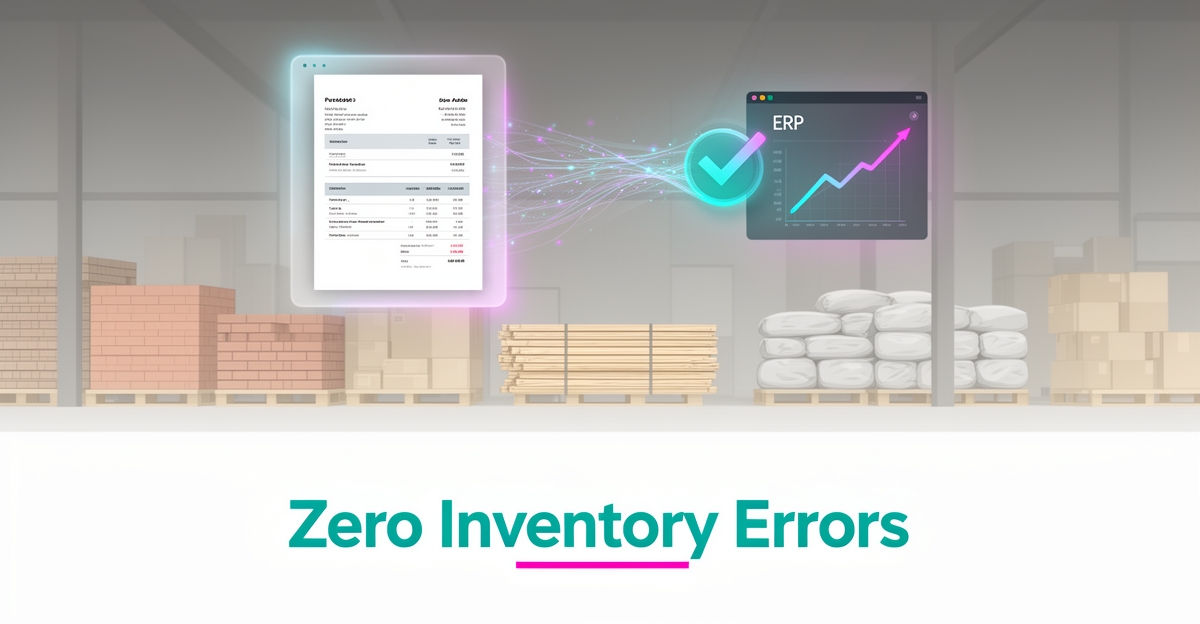
Beyond direct expenses, manual processing creates operational blind spots that hinder responsiveness. When delivery notes are entered late or with errors, real-time inventory visibility becomes impossible, forcing teams to rely on outdated stock levels when fulfilling new orders. This increases the likelihood of overselling available materials or failing to anticipate replenishment needs—issues that directly impact customer trust and order accuracy. AI-powered document processing addresses this by automatically extracting and validating data from invoices, POs, and delivery notes at the point of receipt, reducing manual entry errors and enabling faster, more accurate inventory updates. By eliminating the lag between document receipt and system update, suppliers gain a clearer, more reliable picture of what's in stock, what's committed, and what needs reordering—turning a reactive scramble into a proactive, data-driven operation. AIQ Labs helps building materials suppliers implement such systems that integrate directly with existing ERP tools, ensuring ownership, scalability, and measurable improvements in inventory accuracy without depending on fragmented third-party platforms.
Why AI Document Automation Is Moving From Pilot to Paperwork
For an industry long defined by clipboards, spreadsheets, and re-keyed paperwork, the shift has been remarkably fast. One industry observation puts it plainly: "AI is moving from pilot to paperwork" — and building materials suppliers are right in the middle of that transition.
Adoption signals back this up. As of late 2026, a meaningful share of construction organizations report using AI for document automation tasks like generating bid documents or reviewing text, and interest in AI-based solutions for planning and scheduling is broad. Document automation is where adoption is actually happening—because the ROI is easiest to see.
What's driving this? Three pressures converging at once:
- Labor shortages that make every hour of manual data entry an expensive luxury
- Cost control demands, with documentation-driven rework a persistent, well-documented drain on the industry
- Supply chain resilience, where accurate invoices, purchase orders, and delivery notes determine whether inventory records match reality
The financial case is hard to ignore. Industry research has consistently suggested that AI-based document and contract analytics can save a meaningful percentage of project costs, and that AI-enabled planning and optimization can trim overall project spend. For suppliers, those same document-level gains translate directly into fewer inventory errors and faster order fulfillment.
The market reflects this momentum. AI in construction has been growing at a double-digit pace through the mid-2020s, and that growth isn't driven by hype — it's driven by suppliers who have discovered that automating document extraction and validation delivers measurable results quickly.
For suppliers evaluating their options, the practical path forward is well established: identify the most error-prone document workflows, apply AI-powered extraction and validation, and integrate the results directly into existing ERP systems. That integration step matters most — the goal isn't another standalone tool, but accurate data flowing into the systems teams already use. This is precisely where custom approaches, like AIQ Labs' AI Workflow Builds, differ from off-the-shelf software: a rebuild of the one workflow that costs you the most, at a fixed price, delivered in phases, and owned outright rather than rented.
The adoption curve has clearly bent. What was a pilot project two years ago is becoming standard operating procedure for suppliers who can't afford inventory errors in a tight labor market.
How AI Extracts, Validates and Organizes Supplier Documents
AI-powered document processing transforms how building materials suppliers handle critical paperwork by automating extraction, validation, and organization of invoices, purchase orders, and delivery notes. Using advanced OCR and natural language processing, AI systems capture data from diverse document formats with high accuracy, reducing the manual entry errors that often disrupt inventory tracking and order fulfillment. This automation allows suppliers to shift focus from repetitive data entry to strategic inventory management and customer service.
Once extracted, the AI validates the captured data against existing ERP records, flagging discrepancies such as mismatched quantities, incorrect pricing, or missing purchase order references in real time. This validation layer ensures that only accurate, verified information triggers inventory updates, preventing costly mistakes like overstocking or stockouts. By catching inconsistencies early, suppliers maintain cleaner data flows and stronger alignment between procurement, receiving, and accounting systems.
After validation, the AI automatically organizes and routes the validated document data to update inventory levels, trigger replenishment alerts, and synchronize financial records across platforms. This seamless integration eliminates delays between goods receipt and system updates, enabling real-time visibility into stock levels and improving reorder accuracy. For building materials suppliers, this means fewer manual interventions, faster cycle times, and greater confidence in inventory accuracy—all essential for meeting project timelines and controlling operational costs. To explore how AI can streamline your document workflows, start the 2-minute Fit Check, which leads to a free 30-minute strategy call at https://aiqlabs.ai/book.
From Paper to ERP: A Supplier-First Implementation Path
Building materials suppliers still lose significant time and accuracy to manual document handling, but AI-powered document processing offers a clear path forward. By automating the extraction and validation of invoices, purchase orders, and delivery notes, suppliers can eliminate repetitive data entry and focus on core operations. Growing adoption of AI for document automation across the industry signals real readiness for this shift.
The implementation begins with identifying the most error-prone workflows in your current process. Map out where invoices, POs, and delivery notes are received, manually entered into your ERP, and validated—these are the choke points where AI delivers the highest ROI. AIQ Labs helps suppliers audit these touchpoints during discovery, ensuring the solution targets real pain points rather than layering technology onto inefficient habits.
Next, integrate the AI document processing layer directly with your existing ERP system using deep API connections, avoiding costly rip-and-replace scenarios. AIQ Labs builds custom integrations that synchronize extracted data—like PO numbers, quantities, and pricing—into your inventory and accounting modules in real time. This approach supports true ownership: you retain full control of the system, data, and future modifications without third-party lock-in or subscription dependency.
Train the AI model on your specific document formats using historical samples of your invoices, POs, and delivery notes. This includes variations in layout, vendor-specific fields, and handwritten notes common in building materials supply chains. Once deployed, continuously monitor accuracy metrics—such as field-level extraction rates and validation exceptions—to refine performance. AIQ Labs builds in milestones, so you only pay for validated progress, with flexible payment models: Start Monthly, Build in Milestones, or Own It Outright.
- Audit document workflows to pinpoint manual entry errors
- Integrate AI with ERP via custom APIs for real-time data sync
- Train models on your specific document formats and variants
- Monitor accuracy and optimize post-deployment
- Own the system outright with no vendor lock-in
This supplier-first path turns document processing from a liability into a streamlined, accurate flow that feeds your ERP with trusted data. The result is fewer stockouts, faster order cycles, and inventory counts you can rely on—all built on a system you own, not rent. For suppliers who want to go further, the same foundation can extend into AI Employees that handle order follow-ups and vendor coordination, or scale into a full AI Operating System built in phases and owned outright.
Still paying for 10+ subscriptions that don’t talk to each other?
We build custom AI systems you own outright. No vendor lock-in. Full control.
Not sure where to start? Ask our AI planner
Frequently Asked Questions
How much does manual document entry cost building materials suppliers in terms of inventory errors?
Can AI-powered document processing really reduce manual data entry errors in invoice and PO handling?
Are construction and supply companies already using AI for document automation?
Will I need to replace my current ERP system to use AI for document processing?
How quickly can building materials suppliers see results from implementing AI document automation?
Is AI document processing only for large suppliers, or can small and mid-sized building materials companies benefit too?
Turning Paperwork into Precision: Your Next Step Toward Inventory Confidence
Building materials suppliers face real costs from manual document entry—stockouts, excess inventory, and wasted hours that erode thin margins. AI-powered document processing changes that by automating extraction, validation, and organization of invoices, POs, and delivery notes, syncing accurate data directly into existing ERP systems. The result is fewer errors, real-time inventory visibility, and a shift from reactive fixes to proactive supply chain control. For suppliers ready to move beyond pilots and paperwork, the path forward is clear: audit your most error-prone workflows, apply AI where it counts, and own a system built for your documents and your ERP. Start the 2-minute Fit Check to see where AI can deliver measurable gains in your operation, then schedule your free 30-minute strategy call at https://aiqlabs.ai/book to map a practical, ownership-first implementation.
Make AI your competitive advantage — not just another tool.
Strategy, implementation and ongoing optimization. One partner, end to end.
Not sure where to start? Ask our AI planner