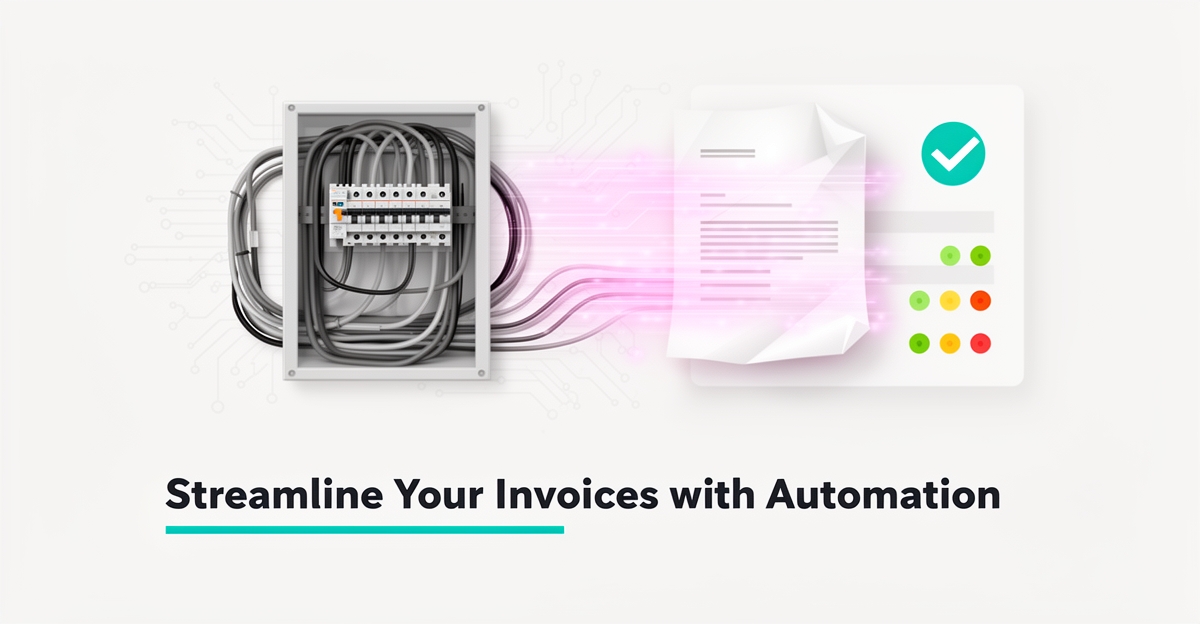
How a Commercial Electrician Can Automate Client Invoices and Payment Tracking with AI
Key Facts
- Late payments are a chronic problem for small trade businesses, many contractors report that a significant share of invoices get paid after their due date.
- Open-source AI agents like OpenClaw and Hermes Agent have seen strong adoption, making agent-based automation practical for small contractors.
- Most businesses now use some form of AI-powered tooling to automate repetitive tasks, and invoicing is one of the most common starting points.
- Automating invoicing saves time, reduces errors, and improves cash flow visibility by connecting time tracking, project management, and accounting into one workflow.
- Clear roles and phased rollout are essential, adoption friction is the most common reason automation projects stall.
Hire a team member that works 24/7 — for less than a part-time wage.
AI receptionists, SDRs, dispatchers and 99+ roles. Trained on your business, fully managed.
Not sure where to start? Ask our AI planner
The Hidden Cost of Manual Invoicing for Electrical Contractors
For most commercial electricians, the real bottleneck isn't the wiring, it's the paperwork that follows the job. Manual invoicing and payment tracking quietly drain hours, delay revenue, and strain client relationships in ways that rarely show up on a balance sheet until it's too late.
Late payments are a chronic problem across small trade businesses, and contractors operating on thin margins and tight project schedules feel it first, payroll stress, delayed equipment purchases, and awkward client conversations that could have been avoided.
The administrative burden extends far beyond late payments. Every hour spent manually creating invoices, chasing approvals, or reconciling spreadsheets is an hour not spent on billable work or business development.
Manual invoicing creates a cascade of operational inefficiencies:
- Invoices generated from memory or handwritten notes lead to billing errors and disputes
- Payment tracking across multiple spreadsheets or email threads creates visibility gaps
- Follow-up reminders fall through the cracks when office staff juggle competing priorities
- Cash flow forecasting becomes guesswork without real-time payment status updates
These inefficiencies compound quickly. Adoption friction is one of the most common reasons process improvements stall in small businesses, often stemming from unclear roles around who owns collections and client communication.
The solution isn't hiring more administrative staff. Automating invoicing saves time, reduces errors, and improves efficiency by connecting time tracking, project management, and accounting data into a single workflow.
AI-powered automation eliminates the manual handoffs that cause delays and errors. Instead of an office manager spending Friday afternoons reconciling accounts, integrated systems update records automatically when payments clear.
At AIQ Labs, we've deployed 200+ multi-agent systems, and invoicing is one of the workflows contractors ask about most. Replacing spreadsheet-based tracking with a custom AI system that handles invoice generation, payment reminders, and late-payment escalation means faster payments, cleaner books, and office staff focused on growth rather than data entry. If you want to see what that looks like for your operation, our AI Workflow Builds rebuild the one workflow that costs you the most, at a fixed price, in phases.
The hidden cost of manual invoicing isn't just administrative, it's the opportunity cost of what your team could accomplish if they weren't chasing paper.
How AI Agents Automate Invoice Generation and Payment Workflows
Commercial electricians often lose valuable time chasing payments and reconciling invoices, but AI agents can change that. Widely adopted open-source agents like OpenClaw and Hermes Agent can automate invoice generation by pulling data from time tracking, project management, and accounting software, then creating and sending invoices without manual input. These agents run in the background, hold memory of business workflows, and act on tasks without waiting for human intervention, reducing errors and saving time. For electricians juggling multiple job sites and crews, this means invoices go out faster and more accurately, directly supporting improved cash flow.
These AI agents integrate with tools like QuickBooks, Xero, or custom job management platforms to sync hours worked, materials used, and project milestones into professional invoices. Once generated, they can route invoices to clients via email or client portals and update accounting records automatically when payments are received. By eliminating manual data entry and follow-ups, electricians reclaim hours each week previously lost to administrative work, critical for businesses where late payments are a constant drag on cash flow.
AIQ Labs helps commercial electricians deploy these agents as part of a custom AI system that owns the workflow, integrates with existing accounting tools, and avoids vendor lock-in. The agents can be paired with supporting tools to create a small team-like experience, handling not just invoicing but also payment reminders and late-payment tracking. Most businesses now use some form of AI-powered tooling to automate tasks, though adoption friction is common, which is why clear timelines and communication matter. With the right setup, electricians turn invoicing from a bottleneck into a streamlined, reliable process that strengthens client relationships and financial stability.
Implementation Steps for Electricians: From Setup to Scalable Automation
Commercial electricians can transform their invoicing workflow with AI automation by following a clear, phased implementation path. Starting with foundational setup and progressing toward scalable automation ensures minimal disruption while building long-term efficiency. Given how common late payments are in the trades, timely invoice automation is one of the highest-leverage improvements a contractor can make for cash flow.
The first step involves selecting and configuring AI-powered invoicing tools that integrate with existing accounting software like QuickBooks or Xero. These systems can automatically generate invoices based on time tracking, project milestones, or job completion data pulled from field service platforms. Integrating with payment gateways and bank accounts allows records to update in real time, reducing manual reconciliation. Electricians should begin by mapping their current invoicing process to identify repetitive tasks ripe for automation, such as data entry or payment matching.
Next, deploy AI agents like OpenClaw or Hermes Agent to handle background tasks such as sending payment reminders, flagging overdue invoices, and predicting payment delays based on historical client behavior. These open-source tools can operate continuously without human intervention, creating a virtual team member for solo electricians or small crews. To maximize effectiveness, pair these agents with communication tools like email or SMS platforms for automated outreach. AI-powered task automation is now mainstream in small business operations, and invoicing is one of the most proven starting points.
Finally, establish clear project timelines and communication protocols to manage team adoption and avoid common pitfalls. Adoption friction is the most common failure mode for automation projects, defining roles, setting expectations, and holding regular check-ins are essential. Start with a pilot phase focusing on one client segment or job type, gather feedback, and refine the system before scaling across all operations. This iterative approach minimizes risk and builds team confidence in the new workflow. For contractors who want to go further, connecting invoicing with dispatch, quoting, and reporting under one roof, an AI Operating System built in phases, and owned outright, is the natural next step.
Still paying for 10+ subscriptions that don’t talk to each other?
We build custom AI systems you own outright. No vendor lock-in. Full control.
Not sure where to start? Ask our AI planner
Frequently Asked Questions
How much time can AI automation actually save on invoicing for an electrical contractor?
What's the biggest pain point with manual invoicing for commercial electricians?
Can open-source AI agents really handle invoices without me having to learn code?
Will automating invoicing reduce errors and improve cash flow?
What should I watch out for when my team adopts AI for invoicing?
How do I start automating invoices without disrupting current jobs?
Turning Paperwork into Profit: Your Next Move
Commercial electricians lose valuable hours each week to manual invoicing, time that could be spent on billable work, business growth, or simply reclaiming work-life balance. AI-powered automation eliminates errors, accelerates payments, and turns administrative bottlenecks into streamlined workflows by integrating with tools like QuickBooks and Xero while using open-source agents such as OpenClaw and Hermes Agent. The result isn't just cleaner books, it's faster cash flow, fewer disputes, and teams focused on what they do best. With late payments such a common drag on trade businesses, solving this gap isn't optional, it's competitive. The path forward starts with clarity: map your current workflow, identify repetitive tasks, and let AI own the invoicing process end-to-end. To see where your biggest opportunity lies, start with the free 2-minute Fit Check, then book a free 30-minute strategy call, we'll tell you straight whether there's a clear win for your business.
Make AI your competitive advantage — not just another tool.
Strategy, implementation and ongoing optimization. One partner, end to end.
Not sure where to start? Ask our AI planner