How a Custom Meat Processor Can Automate Slaughtering Schedule Planning with AI
Key Facts
- Adoption of AI in the food sector has grown rapidly through 2026, with processors using it for demand forecasting, scheduling, and quality control
- Real-time monitoring with AI can meaningfully improve line speed in meat processing facilities when teams follow AI recommendations
- AI-powered robotics and automation in meat processing can substantially reduce labor costs, particularly in repetitive cutting and handling tasks
- AI systems can analyze camera feeds to detect foreign materials in product flows, helping reduce recall risk
- AI-powered vision robots inspect carcass geometry and guide blades with high precision
- AI scheduling reduces overproduction by aligning slaughter volume with real-time inventory levels
Hire a team member that works 24/7 — for less than a part-time wage.
AI receptionists, SDRs, dispatchers and 99+ roles. Trained on your business, fully managed.
Not sure where to start? Ask our AI planner
The Hidden Cost of Manual Scheduling in Meat Processing
Custom meat processors often operate with scheduling systems built on spreadsheets, whiteboards, and last-minute adjustments. This reactive approach creates a cascade of inefficiencies that directly impact the bottom line. Without predictive demand forecasting, facilities frequently face overstaffing during slow periods and critical understaffing when orders surge, leading to unnecessary labor costs or missed production targets. Manual scheduling also struggles to align slaughter volume with real-time inventory levels, resulting in either excess product that risks spoilage or insufficient supply to meet customer commitments. These missteps are not just operational hiccups, they represent measurable financial losses in an industry where margins are tight and waste is costly.
The hidden costs extend beyond labor and inventory. Inaccurate scheduling disrupts downstream processes like cutting, packaging, and distribution, creating bottlenecks that idle expensive equipment and extend lead times. Processors lose the ability to capitalize on premium pricing for timely delivery or to avoid rush-order premiums from suppliers. Over time, this reactive mode erodes customer trust, as inconsistent availability pushes buyers toward more reliable competitors. For many custom meat processors, the real expense isn't the technology, it's the cost of not acting. AIQ Labs helps bridge this gap by building production-ready, owned AI systems that transform scheduling from a liability into a strategic advantage.
How AI Predicts Demand and Balances Slaughter Capacity
Custom meat processors can no longer afford to schedule slaughter on gut feel and last week's orders. Demand swings with holidays, weather, and wholesale contracts, while capacity is fixed by line hours, labor, and regulatory windows.
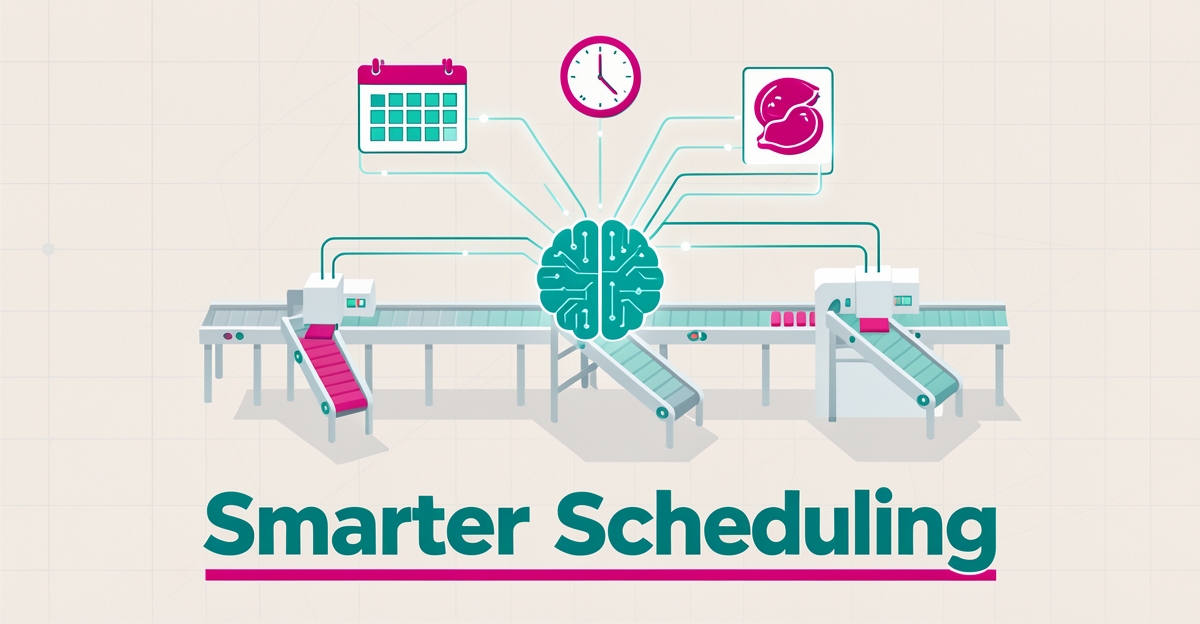
AI changes that by turning historical sales, seasonality, and live market signals into a forecast that updates daily. The system learns patterns across cuts, customers, and days of the week, then aligns kill numbers with expected pull-through so product lands when buyers need it.
That alignment reduces the classic squeeze between idle line time and missed orders. Real-time monitoring with AI can meaningfully boost line speed when teams follow AI recommendations, giving processors more throughput without adding shifts.
Demand forecasting feeds directly into slaughter planning. AI models ingest point-of-sale data, distributor orders, promotions, and even external trends to project cut-level need. Processors can pre-position inventory, smooth peaks, and avoid emergency runs that disrupt animal welfare and food safety.
The industry momentum is clear. AI adoption in the food sector has accelerated through 2026, with processors applying it to forecasting, scheduling, quality control, and yield optimization across operations of every size.
Automation reinforces the forecast with execution. Robotics and AI-guided vision in meat processing can substantially reduce labor costs in repetitive tasks, while vision systems adjust to variations in animal size and muscle structure to increase precision in cutting.
For a custom processor, this means slaughter schedules become a production-ready workflow rather than a spreadsheet exercise. AIQ Labs builds these systems as owned AI that integrates with existing tools, so forecasts trigger procurement, scheduling, and line instructions without manual re-entry.
Key inputs an AI scheduling layer typically monitors include:
- Historical sales by cut, customer, and day of week
- Seasonality and holiday demand spikes
- Live distributor orders and backlogs
- Line capacity, labor availability, and compliance windows
- Waste and yield data to refine future plans
The result is tighter coupling between demand and capacity. Processors reduce overproduction, protect margins, and deliver consistent quality. AI is reshaping the food industry by optimizing processes, improving food quality and safety, and supporting innovation across the plant.
With an AI operating system connecting tools and surfacing insights in real time, daily slaughter planning shifts from reactive to predictive, supporting both growth and resilience.
Building an Owned AI System: From Workflow Fix to Full Automation
A custom slaughter schedule lives or dies on timing, labor availability, and demand signals that change daily. AI turns that reactive scramble into a predictable, owned system that learns from your plant.
Building an owned AI system starts with a targeted workflow fix, not a wholesale overhaul. A focused scheduling agent can ingest live orders, inventory levels, and crew capacity to propose daily slaughter sequences that reduce bottlenecks. This phased approach mirrors how meat processors are already using AI for process optimization to improve efficiency and product quality.
Integration is the next lever. Connecting the scheduling agent to existing ERP, inventory, and labor tools creates a single source of truth and automates routine decisions. The result is fewer manual handoffs and faster surfacing of critical insights.
From a workflow fix, processors can scale to department automation and then a full business AI system. That growth reflects demand for owned systems that reduce subscription chaos.
A practical implementation path looks like this:
- AI Workflow Build: Rebuild slaughter scheduling as a custom, production-ready agent that predicts demand and balances inventory, at a fixed price and in phases.
- Tool Integration: Connect CRM, accounting, inventory and scheduling tools for automated data sync and decision support.
- Scale with AI Employees: Add managed AI staff for dispatch, inventory forecasting, and quality checks that work 24/7 alongside the team, at a fraction of the cost of a human hire.
- Full AI Operating System: Unify workflows across departments with one connected operating layer, built in phases and owned outright.
Low-risk entry points matter for SMB processors. With Build in Milestones, the build is split into phases with approval and payment per phase, so you can stop anytime and keep what ships. With Start Monthly, you get one AI employee with setup plus a flat monthly plan that typically costs far less than a part-time hire, including build, training, integrations, monitoring and improvements. No fake prices, real numbers come after we understand your workflow.
AIQ Labs architects these systems as production-ready, owned assets tailored to meat processing workflows, with 200+ multi-agent systems deployed behind the approach. Owned development replaces costly subscription stacks with a system you control, while multi-agent orchestration ensures scheduling, inventory and labor data stay synchronized.
Automation is already proving value in the sector. Robotics and AI in meat processing can substantially reduce labor costs in repetitive tasks. When paired with predictive scheduling, those savings compound through less overtime, reduced waste, and more consistent throughput.
Still paying for 10+ subscriptions that don’t talk to each other?
We build custom AI systems you own outright. No vendor lock-in. Full control.
Not sure where to start? Ask our AI planner
Frequently Asked Questions
How much does it really cost to automate slaughter scheduling with AI?
Can AI actually predict demand for meat processing better than our spreadsheets?
Will AI scheduling reduce labor costs or just add more tech overhead?
What data does an AI scheduling system need to work for a custom processor?
Is owned AI different from just subscribing to scheduling software?
What's a low-risk way to start with AI for slaughter planning?
From Reactive Scheduling to Predictable Profit
Manual scheduling is costing custom meat processors more than time, it drives overstaffing, spoilage, missed orders, and eroded customer trust. AI changes the equation by turning historical sales, seasonality, and live distributor signals into a daily forecast that aligns slaughter volume with real demand, inventory, and crew capacity. The result is tighter coupling between demand and line time, fewer emergency runs, and a production-ready workflow instead of a spreadsheet scramble. For processors ready to move from reactive to predictive, the practical path is a focused workflow build, integrated with your ERP and inventory tools, then scaled with AI employees that work 24/7 alongside your team. AIQ Labs builds these systems as owned AI tailored to meat processing, so forecasts trigger procurement, scheduling, and line instructions without manual re-entry. Start the 2-minute Fit Check at https://aiqlabs.ai/apply, then book a free 30-minute strategy call at https://aiqlabs.ai/book to map your biggest bottleneck and identify high-ROI automation opportunities. If there isn't a clear win, we'll tell you. You can also reach the team at [email protected].
Make AI your competitive advantage — not just another tool.
Strategy, implementation and ongoing optimization. One partner, end to end.
Not sure where to start? Ask our AI planner