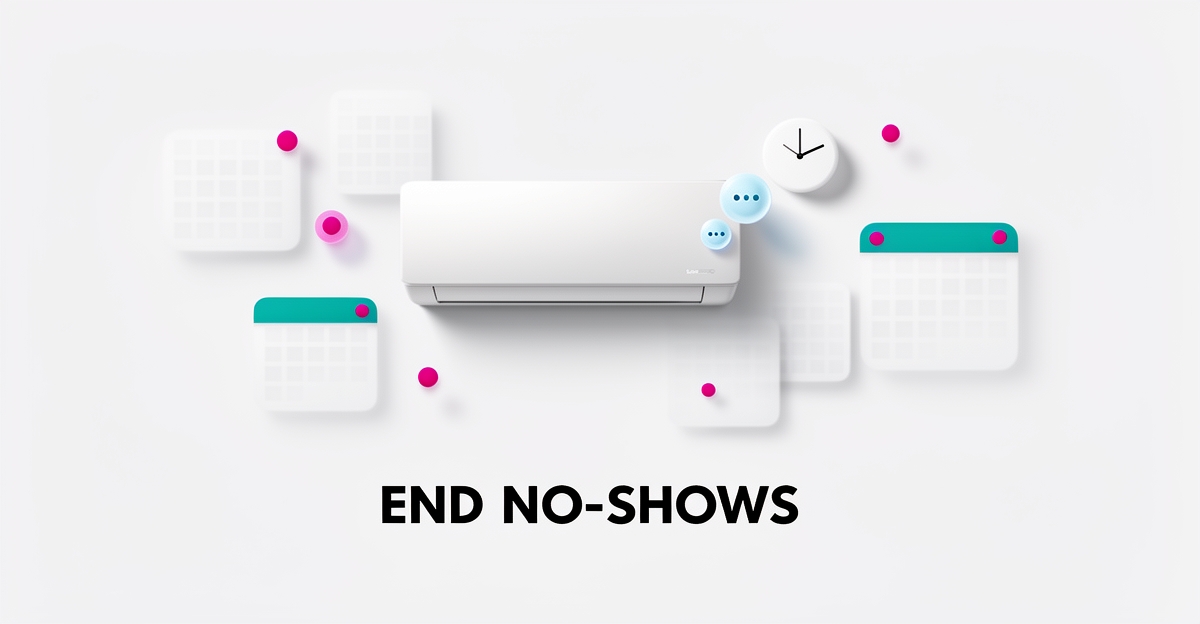
How a Ductless Mini-Split Installer Can Use AI to Automate Customer Scheduling and Reduce No-Shows
Key Facts
- No-shows and last-minute cancellations can eat a meaningful share of potential revenue for HVAC contractors, often estimated in the double digits, making scheduling one of the highest-leverage fixes available
- Ductless mini-split installations typically run from roughly $2,500 to $15,000 or more depending on zones and equipment, making every missed appointment a significant revenue loss
- A single-zone installation typically requires 4–6 hours of technician time, so each missed appointment blocks a significant portion of the workday
- Revenue loss per no-show can range from a few hundred dollars to several thousand depending on the job's value
- AI-powered scheduling tools automate reminders, call routing, and preference tracking without requiring technical expertise, AIQ Labs builds and manages these systems for contractors
- Ductless is one of the fastest-growing segments in residential HVAC, with major brands like Mitsubishi, Fujitsu, Daikin, LG, and Carrier all competing for installer attention, per Got Ductless
- Homeowners installing qualifying high-efficiency heat pumps may be eligible for federal tax incentives (as of late 2026, verify current amounts at ENERGY STAR), driving steady demand for installers
Hire a team member that works 24/7 — for less than a part-time wage.
AI receptionists, SDRs, dispatchers and 99+ roles. Trained on your business, fully managed.
Not sure where to start? Ask our AI planner
The Hidden Cost of Missed Appointments in HVAC Installation
The financial impact of missed appointments in ductless mini-split installation extends far beyond a single lost job. When a customer fails to show for a scheduled installation, the installer loses not only the revenue from that specific project but also incurs sunk costs for labor, travel, and equipment allocation that could have been deployed elsewhere. Given that ductless mini-split installations typically range from roughly $2,500 to $15,000 or more depending on the number of zones and equipment chosen, even a modest no-show rate can translate into substantial monthly revenue leakage for small to mid-sized contractors.
Operational inefficiencies compound this loss. A single-zone installation typically requires 4–6 hours of technician time, meaning each missed appointment blocks a significant portion of a workday that could have been filled with another job or preventive maintenance call. When scheduling gaps accumulate, teams experience underutilization, leading to overtime costs during peak seasons or rushed jobs that compromise quality. These disruptions also affect customer trust, as repeated rescheduling frustrates homeowners who expect reliable service timelines.
No-shows and last-minute cancellations are widely estimated to cost HVAC contractors a double-digit percentage of potential revenue, a figure that directly impacts profitability in a competitive market where margins are often tight. For ductless mini-split installers specifically, this loss is amplified by the high value of individual jobs and the specialized labor required. Without a system to predict and mitigate these gaps, businesses operate with constant uncertainty in their weekly forecasts.
- Each missed appointment wastes 4–6 hours of billable technician time
- Revenue loss per no-show can range from a few hundred dollars to several thousand depending on job value
- Manual scheduling coordination adds meaningful administrative overhead that grows with booking volume
AIQ Labs helps installers address these challenges through intelligent scheduling automation, built as a workflow rebuild or staffed by AI employees, that integrates with existing CRM tools to reduce no-shows via proactive reminders, intelligent call routing, and preference tracking, turning unpredictable schedules into reliable revenue streams.
How AI-Powered Scheduling Reduces No-Shows Without Technical Overhead
Every no-show on a ductless mini-split job represents wasted windshield time and a missed opportunity on a project that can range from roughly $2,500 to $15,000 or more. That's why automated scheduling isn't just a convenience, it's revenue protection.
AI-powered scheduling systems tackle no-shows through three connected functions. First, they automate reminders across phone, SMS, and email, so customers receive consistent confirmations and day-before notifications without anyone on your team manually dialing through a list. Second, they handle call routing intelligently, answering booking calls 24/7 and directing them to the right place, no lost leads when you're up on a roof mid-install. Third, they sync directly with your CRM, logging every appointment, preference, and follow-up in one place.
The result is measurably better booking accuracy and customer follow-up. Because a single-zone mini-split install typically takes just 4–6 hours, tight scheduling windows matter, one missed slot can ripple through an entire day's route. Automated reminders and confirmation tracking catch the customers who would otherwise forget or drift, and follow-up sequences keep post-install conversations (like maintenance check-ins or referral requests) from falling through the cracks.
What makes this practical for a small installation business is the removal of technical overhead. These tools can automate reminders, manage call routing, and track customer preferences without requiring technical expertise, the system integrates with the CRM and calendar tools you already use. AIQ Labs builds these systems as custom deployments trained on your actual scheduling data, since effectiveness depends on the quality of the data behind the automation. Ongoing monitoring and optimization are handled for you, so there's no need to hire an in-house developer or learn a new software stack.
A well-configured AI scheduling setup typically includes:
- Automated appointment confirmations and multi-channel reminders
- 24/7 call answering with intelligent routing to booking or dispatch
- Two-way CRM sync so every interaction is logged automatically
- Customer preference tracking for scheduling and follow-up timing
- Post-install follow-up sequences that keep customers engaged
There is a real consideration here: implementing AI scheduling does require an upfront investment, and the system is only as good as the data it's trained on. But for installers competing in a growing market for energy-efficient HVAC, ductless is widely described as one of the fastest-growing segments in residential cooling, and homeowners installing qualifying high-efficiency heat pumps may be eligible for federal tax incentives (verify current amounts as of late 2026), the demand is there. The question is whether your scheduling process can capture it without no-shows eating your margin.
Implementing AI Scheduling: A Step-by-Step Guide for Installers
Implementing AI scheduling starts with a clear assessment of current booking patterns and pain points. Ductless mini-split installers can begin by tracking no-show rates, average response times to inquiries, and peak scheduling bottlenecks, data that reveals where automation delivers the most immediate impact. AIQ Labs' two-minute Fit Check helps quantify these gaps, showing how many hours are lost weekly to manual coordination and missed follow-ups. This foundation ensures the AI solution targets real operational friction rather than adding complexity.
Next, integration with existing tools like Google Calendar or CRM platforms happens through secure API connections that sync appointments in real time. The AI system learns from historical booking data to suggest optimal time slots, automatically sends reminders via SMS or email, and routes incoming calls to the right technician based on availability and skill set. Training the AI on high-quality data, such as past successful installations and customer preferences, ensures it adapts to seasonal demand spikes and regional service patterns without requiring technical expertise from the installer team.
Finally, performance monitoring focuses on measurable improvements: reduced no-show rates, increased booked appointments per week, and higher customer satisfaction scores. Installers should track these metrics weekly during the first month, then monthly thereafter, using the system's analytics to refine reminder timing or adjust buffer periods between jobs. Continuous optimization ensures the system scales with business growth, turning scheduling from a reactive task into a proactive advantage that supports more installations per technician without increasing headcount. Ready to see how this works for your business? Start with the Fit Check to assess your scheduling bottlenecks in just two minutes, then book a free 30-minute strategy call to map a custom AI implementation plan with zero obligation.
Still paying for 10+ subscriptions that don’t talk to each other?
We build custom AI systems you own outright. No vendor lock-in. Full control.
Not sure where to start? Ask our AI planner
Frequently Asked Questions
How much money do HVAC contractors typically lose to no-shows?
What is the average revenue loss per missed ductless mini-split installation appointment?
How much technician time is wasted per missed appointment for a single-zone mini-split install?
Do I need technical expertise to use AI-powered scheduling tools for my installation business?
What are the key features of an AI scheduling system for ductless mini-split installers?
Is there an upfront cost to implement AI scheduling, and is it worth it for small installers?
Turn Missed Appointments into Predictable Revenue
Missed appointments don't just cost a single job, they drain technician time, inflate overhead, and erode customer trust in an industry where every installation represents thousands in potential revenue. As we've seen, AI-powered scheduling tackles this by automating reminders, intelligently routing calls, and syncing with your existing CRM, without requiring technical expertise or disrupting your current workflow. The result is fewer no-shows, better technician utilization, and a scheduling process that works for you, not against you. For ductless mini-split installers looking to capture more of the growing demand for energy-efficient HVAC, the path forward starts with understanding your current bottlenecks. Take the two-minute Fit Check to see where AI can make the biggest impact, then schedule your free, no-obligation strategy call to map out a custom solution built on your data and designed to scale with your business.
Make AI your competitive advantage — not just another tool.
Strategy, implementation and ongoing optimization. One partner, end to end.
Not sure where to start? Ask our AI planner