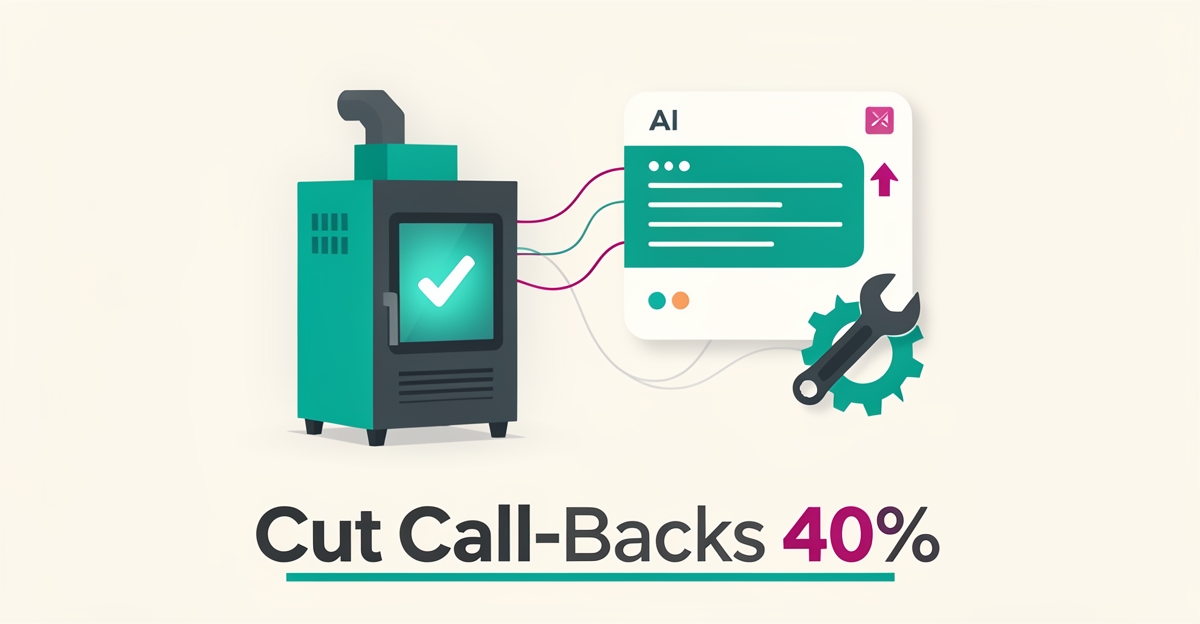
How a Furnace Repair Company Can Cut Call-Backs by 40% with an AI Receptionist
Key Facts
- Structured first-call triage and priority routing are the biggest levers for reducing furnace repair call-backs
- Furnace repair costs typically range from roughly $150 to $3,000 depending on the issue
- Replacement parts typically cost between $100 and $3,000
- 24/7 AI receptionist answering eliminates voicemail gaps and missed urgent calls
- AI-powered technician matching reduces unnecessary follow-ups by ensuring correct parts dispatch
- CRM and dispatch integration keeps service history attached to every work order
Hire a team member that works 24/7 — for less than a part-time wage.
AI receptionists, SDRs, dispatchers and 99+ roles. Trained on your business, fully managed.
Not sure where to start? Ask our AI planner
The Call-Back Cost Trap in Furnace Repair
Every furnace repair company knows the sinking feeling of a callback: the truck rolls a second time, the technician discovers a misdiagnosed issue, and the profit margin evaporates. These repeat visits aren't just frustrating, they're a silent profit killer hiding in plain sight across every dispatch board.
The financial mechanics are brutal. Furnace repairs typically run anywhere from $150 to $3,000 depending on the component, with replacement parts spanning a similar range. When a callback happens, you absorb the labor, fuel, and overhead twice for a single revenue event. Multiply that across a heating season, and the leak becomes impossible to ignore.
- A homeowner calls about "no heat" but the intake notes don't clarify if it's a gas valve, ignitor, or control board
- The dispatched technician arrives without the right part because the symptom description was vague
- Urgent no-heat calls get buried behind routine maintenance requests in the queue
- Appointments are missed because confirmation calls happen during business hours when customers can't answer
- Follow-up visits are scheduled manually, creating gaps where customers book with competitors
This is the call-back cost trap: inefficient intake creates expensive downstream waste. The principle is simple, when the first interaction captures the right details and routes them correctly, the entire downstream workflow tightens. Vague intake is where most repeat visits are born.
AIQ Labs builds AI Employees that solve exactly this class of problem. By handling every inbound call 24/7, asking structured diagnostic questions, and routing urgent no-heat emergencies to the right technician with the right parts information, the intake layer stops being a bottleneck and starts being a profit protector. The technology doesn't replace your dispatchers, it gives them complete, accurate work orders so trucks roll once, fully prepared.
First-Call Triage and Predictive Context Reduce Returns
The moment a furnace breaks down, every minute counts. An AI receptionist can turn that critical first call into a precise, informed action, reducing unnecessary follow-ups and repeat visits.
When a customer calls, the AI receptionist immediately gathers key details, symptoms, equipment model, and error codes, and triages the urgency. By asking targeted questions, it distinguishes a faulty thermostat from a cracked heat exchanger, ensuring the right technician with the right parts is dispatched. This first-call triage eliminates guesswork and prevents costly return trips.
Furnace repair costs typically range from $150 to $3,000, with replacement parts in a similar range. Sending a technician prepared for the specific issue avoids multiple service fees and reduces customer frustration.
Beyond initial triage, AI receptionists can work with the equipment context you already have. Service history, unit age, brand, and prior error codes all feed the intake conversation, so the receptionist asks smarter questions on call two than a paper ticket ever did. For companies running connected thermostats or sensor-equipped equipment, that data can surface patterns, repeat lockouts, short cycling, pressure anomalies, that point to likely failures before they become emergency calls.
By integrating these insights, the AI receptionist provides technicians with context before they arrive. Key benefits include:
- Accurate diagnosis from the first call
- Reduced unnecessary follow-ups
- Improved first-time fix rates
- Lower operational costs and downtime
AIQ Labs builds these AI receptionists as managed AI employees, trained on your specific workflows and integrated with your scheduling tools. They work 24/7, ensuring no call goes unanswered and every technician arrives prepared.
The result is a seamless experience: customers get faster resolutions, technicians work more efficiently, and call-backs drop significantly. With structured triage and complete intake context, furnace repair companies can meaningfully cut repeat visits, the kind of reduction that drives both satisfaction and profitability.
AI Receptionist Workflow for Furnace Dispatch
Missed calls and vague symptom notes are why furnace repair companies chase the same customer twice. An AI receptionist answers every call instantly, captures the failure details correctly the first time, and routes work so technicians arrive prepared.
The workflow starts with 24/7 answering that eliminates voicemail gaps. The AI voice agent greets callers, authenticates the address and unit, and collects symptoms in natural conversation. It logs furnace age, brand, error codes, and urgency cues, then scores priority based on safety risk and time of year.
Priority scoring prevents callbacks from misrouted jobs. High-risk issues such as no heat in freezing weather, or any mention of a gas smell, are escalated immediately, while routine maintenance requests are batched for efficient routing.
Technician matching follows the score. The system matches skills, parts inventory, and proximity to the job, then checks calendar availability in real time. Automated scheduling confirms the appointment with the customer and sends reminders, reducing no-shows and unnecessary follow-ups.
Integration is what makes the flow reliable. The AI employee connects to CRM, dispatch, and scheduling tools so notes, photos, and service history stay in one place. AIQ Labs deploys these managed AI employees with voice AI, call routing, and CRM integration, without adding headcount.
End-to-end benefits show up in fewer repeat visits and faster resolution:
- 24/7 first-call capture with structured symptom intake
- Automated priority scoring and technician matching
- Instant scheduling, confirmations, and reminders
- CRM logging for history-aware follow-ups
Cost context matters when triage improves. Furnace repairs typically run $150–$3,000, and replacement parts often fall in a similar range. Avoiding a second truck roll protects margin on every job.
Clean symptom data from the receptionist also feeds any equipment-monitoring systems you run downstream, improving the quality of maintenance decisions across the board.
With continuous learning the AI receptionist improves its questioning and routing over time. Performance data refines priority rules, scripts, and escalation thresholds without manual updates.
The result is a reception workflow that answers faster, captures better, and dispatches smarter. Call-backs drop because the right technician arrives with the right context the first time.
Implementation Roadmap from Sensors to Scheduling
Deploying an AI receptionist alongside your existing equipment data transforms how furnace repair companies respond to customer needs. By combining service history and equipment context with intelligent call handling, businesses can anticipate failures before they occur and route the right technician at the right time.
The foundation is your existing data: service records, unit registrations, and, where customers have them, connected thermostats or sensor-equipped equipment. This context feeds the AI receptionist's intake conversation, enabling proactive outreach rather than reactive emergency calls.
Integration means connecting that context with your maintenance scheduling systems. When patterns suggest an emerging failure, the AI receptionist can automatically trigger outbound calls to schedule preventive service, or prioritize inbound calls based on equipment health data. This creates a seamless workflow where urgent issues receive immediate attention while routine maintenance is batched efficiently. The system can reference common repair scenarios, such as thermostat replacements, ignitor failures, or blower motor issues, and prepare technicians with the right parts before arrival.
Implementation follows a structured rollout:
- Consolidate service history and equipment data to establish baseline context
- Train the AI receptionist on your call patterns, service area, and escalation rules
- Integrate the receptionist with scheduling and dispatch software to automate bookings
- Launch with live triage, routing, and customer communication, then expand coverage
AIQ Labs structures these deployments through three engagement models tailored to different operational scales. Start Monthly provides immediate access to an AI receptionist with setup and training included. Workflow Builds rebuild the one workflow that costs you the most, like intake-to-dispatch, at a fixed price, phased in stages. For companies that want one connected layer across intake, dispatch, scheduling, and follow-up, AI Operating Systems deliver a fully integrated system built in phases and owned outright.
Success depends on gradual adoption. Begin with the highest-volume call types, allowing the AI to learn your patterns before expanding coverage. Train your AI receptionist using historical call data to recognize urgent keywords, such as "no heat" or "gas smell", that require immediate dispatch versus routine maintenance requests. With repair costs typically ranging from $150 to $3,000 depending on the component, prioritizing correctly prevents minor issues from becoming major expenses.
The result is a synchronized operation where equipment context informs every customer interaction, reducing unnecessary site visits and ensuring technicians arrive prepared for the specific repair needed.
Still paying for 10+ subscriptions that don’t talk to each other?
We build custom AI systems you own outright. No vendor lock-in. Full control.
Not sure where to start? Ask our AI planner
Frequently Asked Questions
How can an AI receptionist actually reduce furnace repair call-backs?
What kind of cost am I risking with a callback?
Can AI really cut downtime like predictive maintenance claims?
Will an AI receptionist replace my dispatchers?
Do IoT sensors and connected equipment actually help with furnace service?
What's the first step to try this without a huge upfront commitment?
Turning First Calls into First-Time Fixes
Every callback in furnace repair isn't just a repeat visit, it's a preventable drain on time, parts, and profit. By capturing accurate symptom details at the first point of contact, an AI receptionist transforms guesswork into precision: technicians arrive with the right parts, urgent issues are prioritized, and scheduling gaps disappear. This isn't about replacing your team, it's about giving them the complete, real-time context they need to fix it right the first time. The result is fewer return trips, lower operational waste, and more jobs completed profitably on the initial dispatch. For furnace repair companies ready to stop chasing the same call twice, the next step is simple: take the 2-minute Fit Check, then book a free, no-obligation strategy session to map your intake bottlenecks and see where AI-driven triage can deliver measurable gains. Schedule your free 30-minute strategy call to explore how an AI receptionist can become your profit protector, without adding headcount or complexity.
Make AI your competitive advantage — not just another tool.
Strategy, implementation and ongoing optimization. One partner, end to end.
Not sure where to start? Ask our AI planner