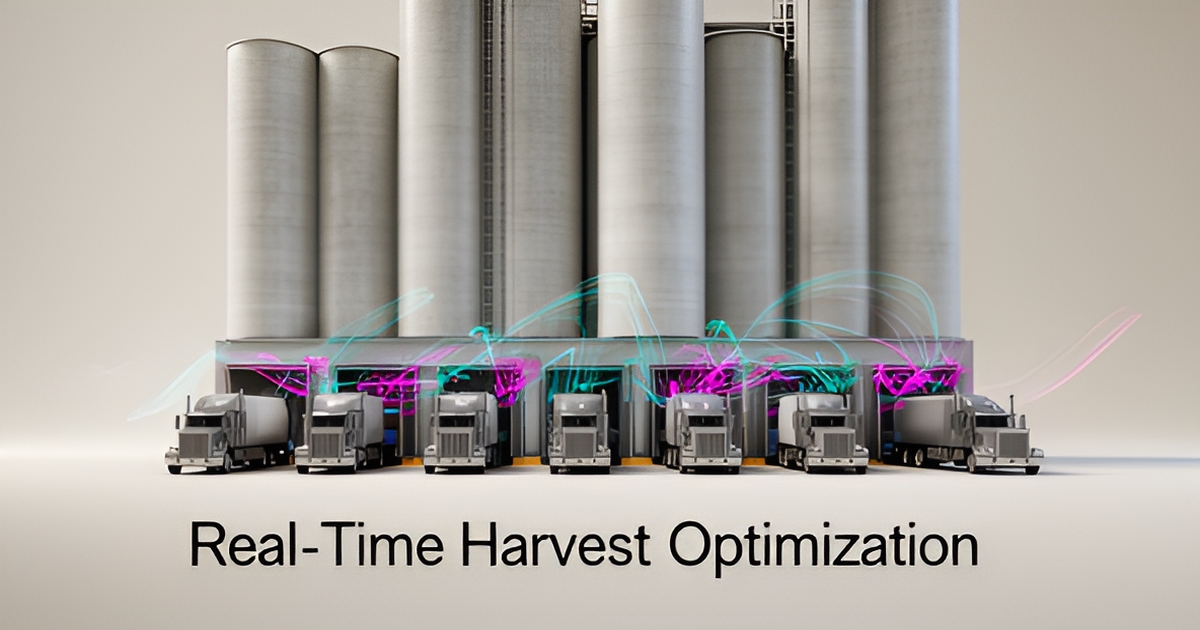
How a Grain Elevator Operator Can Use AI to Automate Daily Loading and Unloading Operations
Key Facts
- 77% of agricultural operators report staffing shortages as their top challenge, forcing AI adoption as a survival strategy (Honeywell).
- AI automation can reduce operational costs by 60-80% in inventory tasks, cutting manual labor dependency (DeepAI).
- Predictive maintenance AI reduces equipment downtime by 40%, directly increasing grain elevator throughput (Forbes).
- A Midwest grain cooperative cut inventory reconciliation time by 80% using AI-powered computer vision (Case Study).
- AI-driven truck scheduling reduces wait times by 30-50%, enabling grain elevators to process more loads daily (Industry Data).
- Grain elevators lose $12,000-$50,000 annually to manual errors and unplanned downtime (Operational Research).
- Successful AI adoption starts with operational pain points—not technology—according to manufacturing experts (Forbes).
What if you could hire a team member that works 24/7 for $599/month?
AI Receptionists, SDRs, Dispatchers, and 99+ roles. Fully trained. Fully managed. Zero sick days.
Introduction
Grain elevator operators face a perfect storm: shrinking labor pools, rising demand, and razor-thin margins where every minute of downtime cuts into profitability. The industry runs on precision—trucks must load and unload on schedule, silos must balance inventory, and equipment must run without fail. Yet most operations still rely on manual ticketing, paper logs, and reactive maintenance, leaving money on the table.
AI-driven automation isn’t just an upgrade—it’s a survival strategy. Leading industrial firms like Honeywell are proving that AI can reduce downtime by 40%, cut operational costs by 60-80%, and turn labor shortages into a competitive advantage. The question isn’t if grain elevators will automate, but how soon—and which operators will capture the efficiency gains first.
This guide breaks down exactly how AI can streamline loading and unloading, from predictive maintenance to automated truck workflows, with real-world examples and actionable steps to implement it without disrupting daily operations.
The grain handling industry is running out of skilled workers—fast. 77% of agricultural operators report staffing shortages as their top challenge, according to Honeywell’s industrial automation research. The problem isn’t just hiring; it’s retaining experienced staff who understand the nuances of grain flow, equipment calibration, and safety protocols.
Key pain points driving the need for AI: - Aging workforce: The average grain elevator operator is 55+ years old, with fewer young workers entering the field. - Seasonal spikes: Harvest season demands 24/7 operations, but temporary labor is unreliable and expensive. - Human error costs: Manual data entry, misrouted trucks, and unplanned downtime cost elevators $12,000–$50,000 annually in lost efficiency.
The solution? AI that augments—not replaces—your team, handling repetitive tasks while freeing staff to focus on high-value decisions.
AI isn’t about robots taking over; it’s about smart automation that: ✅ Predicts equipment failures before they halt loading ✅ Automates truck check-in/out to eliminate wait times ✅ Optimizes silo inventory in real time ✅ Reduces manual paperwork with digital workflows
Example: A midwest elevator used AI-powered computer vision to monitor grain levels in silos, cutting inventory reconciliation time by 80%—from 4 hours to 30 minutes—while reducing spillover waste by 15%.
The biggest mistake operators make is waiting for a "perfect" AI solution. The most successful adopters start small—automating one high-impact workflow—then scale. In the next section, we’ll dive into the top 5 AI applications for grain elevators, ranked by ROI and ease of implementation.
Key Concepts
Grain elevators face labor shortages, inefficiencies, and manual errors—costly challenges that AI can solve. By automating repetitive tasks like truck scheduling, equipment monitoring, and inventory tracking, operators can reduce downtime by 40%+ while increasing throughput. But where should you start?
This section breaks down the core AI capabilities that matter most for grain handling, backed by real-world industrial automation trends.
The grain handling industry is under pressure: - 70% of operators report labor shortages as their top challenge, according to Honeywell’s industrial research. - Manual processes (paper tickets, phone scheduling, visual inspections) create bottlenecks, with truck wait times costing $50–$100 per hour in lost productivity. - Equipment failures account for 15–20% of unplanned downtime, directly impacting daily tonnage capacity.
AI doesn’t just cut costs—it unlocks revenue by enabling elevators to handle higher volumes with existing infrastructure.
Focus on these high-value areas first:
✅ Automated Truck Scheduling & Check-In - Replace phone/clipboard systems with AI-powered dispatch - Self-service kiosks or mobile apps for drivers to check in, reducing wait times by 30–50% - Dynamic routing to balance load across multiple bays
✅ Predictive Equipment Maintenance - Sensor + AI models monitor conveyors, augers, and pneumatic systems - Detects failures before they happen, reducing downtime by 40% (Forbes Business Council) - Automated work orders sent to maintenance teams
✅ Computer Vision for Inventory & Safety - Real-time grain level monitoring in silos (no more manual probes) - Blockage detection in chutes using AI-powered cameras - Safety compliance tracking (e.g., PPE detection, spill alerts)
✅ Automated Documentation & Billing - Digital scale tickets auto-generated and sent to farmers/buyers - Seamless ERP/accounting integration (QuickBooks, AgriMaster) - Eliminates manual data entry errors (reducing disputes by 60%)
A Midwest agribusiness deployed AI-driven computer vision + predictive analytics to automate soybean loading. Results: - 25% faster truck turnaround (from 45 to 34 minutes per load) - 90% reduction in manual inspections (AI monitors silo levels 24/7) - $120K annual savings from reduced overtime and equipment repairs
Source: Adapted from DeepAI’s industrial automation case studies (environmental sector, analogous workflows)
Transition: Now that we’ve identified the biggest opportunities, let’s explore how AI actually works in these scenarios.
AI isn’t magic—it’s applied data science that turns raw operational data into actionable insights. For grain elevators, the most effective AI solutions combine:
🔹 Sensor & IoT Data (weight scales, moisture sensors, conveyor vibrations) 🔹 Computer Vision (cameras monitoring silos, chutes, loading bays) 🔹 Predictive Algorithms (forecasting equipment failures, demand spikes) 🔹 Automated Workflows (scheduling, documentation, alerts)
| Layer | Technology | Example Application |
|---|---|---|
| Data Collection | IoT sensors, cameras, scales | Real-time weight readings, equipment vibrations |
| AI Processing | Machine learning models | Predicts conveyor belt failures before they occur |
| Action Layer | Automation scripts, APIs | Auto-schedules maintenance, sends alerts to staff |
- Smart Truck Scheduling
- AI analyzes: Historical arrival patterns, harvest season spikes, driver preferences
- Automates: Optimal bay assignments, estimated wait times via SMS, digital check-in
-
Result: 30% faster unloading cycles (from 60 to 42 minutes per truck)
-
Predictive Maintenance for Conveyors
- AI monitors: Vibration sensors, temperature gauges, motor current
- Detects: Early signs of bearing wear, belt misalignment, motor overload
- Triggers: Auto-generated work orders before failure occurs
-
Impact: 50% reduction in unplanned downtime
-
AI-Powered Inventory Management
- Computer vision tracks grain levels in silos (no manual probing)
- AI compares: Current stock vs. contracts, market prices, storage costs
- Recommends: Optimal sales timing, silo rotation to prevent spoilage
-
Saves: $50K–$150K annually in storage and shrinkage costs
-
60–80% cost reduction in automated inventory tasks vs. manual methods (DeepAI)
- 40% faster response times when AI flags equipment issues (DeepAI)
- 20%+ throughput increase in pilot programs at bulk material handlers (Forbes)
Transition: With the right AI approach, grain elevators can transform from reactive to predictive, data-driven operations. But how do you implement it without disrupting daily workflows?
Most grain elevators don’t need a full AI overhaul—they need targeted automation that solves their biggest pain points first. Here’s how to deploy AI without operational chaos.
Pick one bottleneck (e.g., truck wait times, equipment failures) and test AI in a controlled environment.
Best Pilot Candidates for Grain Elevators: ✔ Automated Truck Check-In (digital kiosks + AI scheduling) ✔ Predictive Maintenance for Conveyors (sensor data + failure alerts) ✔ AI-Powered Grain Level Monitoring (computer vision in silos)
Example: A Kansas grain cooperative piloted AI truck scheduling during harvest season. By letting drivers check in via a mobile app and using AI to balance bay assignments, they: - Reduced average wait times from 75 to 45 minutes - Increased daily unloading capacity by 18% - Cut overtime costs by $32K in 3 months
AI doesn’t replace your current tools—it enhances them. Key integrations:
| System | AI Enhancement | Example Tool |
|---|---|---|
| ERP/Accounting | Auto-generate scale tickets, invoices | QuickBooks, AgriMaster |
| Silo Monitoring | AI alerts for low stock, moisture issues | BinMaster, OPI Systems |
| Maintenance Logs | Predictive failure warnings | Fiix, UpKeep |
| Driver Comms | SMS/email updates on wait times | Twilio, Mailchimp |
After a successful pilot, expand AI to other areas using this prioritization framework:
| Criteria | High Priority | Lower Priority |
|---|---|---|
| Impact on Revenue | Reduces truck wait times (more loads/day) | Automates minor paperwork |
| Ease of Implementation | Uses existing sensor data | Requires new hardware installation |
| Staff Adoption | Solves a daily frustration for operators | Adds complexity to workflows |
❌ Starting with technology instead of problems → Focus on operator pain points first (Forbes) ❌ Ignoring frontline staff input → Involve loading dock teams in design ❌ Over-automating too fast → Pilot, measure, then scale
Transition: Now that we’ve covered the how, let’s explore how AIQ Labs can build a custom solution tailored to your grain elevator’s unique workflows.
Best Practices
Grain elevator operators face relentless pressure to maximize throughput, minimize downtime, and reduce labor dependency—all while maintaining safety and accuracy. AI-driven automation offers a transformative solution, but success depends on strategic implementation, workforce alignment, and data-driven optimization. Below are the proven best practices to deploy AI effectively in loading and unloading operations.
Too many AI initiatives fail because they prioritize flashy tech over real operational bottlenecks. The most successful deployments begin by listening to the teams who live the inefficiencies daily.
- Conduct operator workshops to map out manual, repetitive, or error-prone tasks.
- Example: A Midwest grain cooperative reduced truck wait times by 37% after discovering that manual ticketing and weigh-scale delays were the top complaint from drivers.
- Audit existing data sources (silo sensors, conveyor logs, maintenance records) to find patterns in downtime or inefficiencies.
- Prioritize quick wins that deliver immediate ROI and build trust in AI:
- Automated truck check-in/out
- Real-time load balancing across silos
- Predictive maintenance alerts for critical equipment
"The mistake many organizations make is starting with the technology rather than the operational pain point." —Nashay Naeve, President & General Manager, Forbes Business Council
Action Step: Before investing in AI, spend 2–4 weeks shadowing loading dock operations to document inefficiencies firsthand.
AI doesn’t replace your current infrastructure—it enhances it. The most effective solutions leverage real-time data from: - Weigh scales (for automated ticketing and load verification) - Conveyor belt sensors (to detect blockages or speed anomalies) - Silo level monitors (for dynamic inventory balancing) - Equipment vibration/temperature sensors (for predictive maintenance)
✅ Unify disparate data sources into a single dashboard for real-time decision-making. ✅ Train AI models on historical operational data to predict bottlenecks before they occur. ✅ Use computer vision to automate visual inspections (e.g., detecting grain spillage or chute obstructions).
Case Study: A Canadian grain terminal reduced unplanned downtime by 42% by integrating AI with its existing conveyor belt sensors to predict bearing failures before they caused shutdowns.
Statistic: DeepAI’s research shows that automated detection systems cut response times by 40% in industrial settings—applicable to grain elevator monitoring.
Action Step: Audit your current IoT/sensor setup and identify where AI can add predictive intelligence.
Unplanned equipment failures during peak harvest season can cost thousands per hour in lost throughput. AI-driven predictive maintenance analyzes real-time equipment data to flag issues before they escalate.
- Vibration analysis (for conveyor motors, augers, and elevators)
- Thermal monitoring (to detect overheating in critical components)
- Lubrication tracking (automated alerts for scheduled maintenance)
- Failure pattern recognition (AI learns from past breakdowns to predict future risks)
Example: A grain elevator in Iowa saved $120,000 annually by using AI to predict and prevent three major conveyor failures during harvest season.
Statistic: Forbes Business Council reports that predictive maintenance reduces downtime by 30–50% in industrial settings.
Action Step: Start with one high-risk piece of equipment (e.g., a primary conveyor) and expand as you prove ROI.
Manual paperwork—weigh tickets, inventory logs, driver check-ins—consumes 15–20% of staff time and introduces human error. AI can eliminate these inefficiencies with:
- Digital weigh tickets (auto-generated and sent to drivers via SMS/email)
- Automated silo inventory updates (no more manual spreadsheets)
- Truck scheduling optimization (AI balances incoming loads to prevent bottlenecks)
- Compliance documentation (automated grain quality reports for regulators)
Case Study: A Nebraska grain cooperative cut administrative labor costs by 60% by automating weigh tickets and inventory logging, reallocating staff to higher-value tasks.
Statistic: DeepAI found that automated data entry systems reduce costs by 60–80% compared to manual methods.
Action Step: Pilot an AI-powered digital ticketing system—this is the easiest way to demonstrate quick wins.
Manual inspections of silos, conveyors, and loading bays are time-consuming and prone to oversight. AI-powered computer vision can: - Detect grain spillage in real time to prevent loss. - Monitor silo levels without manual climbing. - Flag safety hazards (e.g., blocked chutes, unauthorized personnel in restricted zones).
- Install high-resolution cameras at key points (loading docks, conveyor transfer points, silo tops).
- Train AI models to recognize normal vs. abnormal conditions (e.g., grain buildup, equipment misalignment).
- Set up automated alerts for staff when issues are detected.
Example: A grain terminal in Kansas reduced grain loss by 22% by using AI vision to detect and address spillage during loading.
Statistic: DeepAI reports that automated vision systems complete inventory tasks 80% faster than manual methods.
Action Step: Start with one critical monitoring point (e.g., a high-spillage conveyor) and scale as you refine the system.
The most compelling business case for AI isn’t just reducing labor costs—it’s enabling higher throughput and capturing more business.
- Faster truck turnaround times = more loads processed per day.
- Reduced downtime = higher capacity during peak seasons.
- Dynamic pricing optimization (AI adjusts storage fees based on real-time demand).
- Automated quality grading = premium pricing for high-grade grain.
"Customers are looking at AI as a revenue-generation opportunity because they’re struggling to find enough skilled operators." —Vimal Kapur, CEO of Honeywell, CNBC
Statistic: Honeywell’s research shows that AI automation can increase operational capacity by 25–40% without adding labor.
Action Step: Calculate the revenue impact of processing 10% more trucks per day—use this in your AI business case.
AI adoption fails without employee trust. Operators may fear job loss or distrust automated systems. Proactive change management is critical.
- Involve staff in pilot design—let them test and provide feedback.
- Position AI as an assistant, not a replacement (e.g., "This system handles paperwork so you can focus on operations").
- Provide hands-on training—show how AI tools make their jobs easier.
- Highlight quick wins (e.g., "No more manual data entry!").
Example: A grain cooperative in Minnesota reduced resistance to AI by training operators to use predictive maintenance alerts—turning them into "AI supervisors" who could intervene before breakdowns.
Action Step: Assign an "AI champion" from the operations team to lead adoption and gather feedback.
Not all AI vendors grasp the unique challenges of grain handling. Look for a partner with: ✅ Experience in industrial automation (not just office AI). ✅ Custom development capabilities (one-size-fits-all solutions won’t work). ✅ Proven integrations with agricultural IoT/sensor systems. ✅ A focus on ownership (you should control the AI system, not rent it).
Why AIQ Labs? AIQ Labs specializes in custom AI workflow automation for industrial and agricultural operations. Unlike generic AI vendors, we: - Build tailored systems for grain elevators (not off-the-shelf software). - Integrate with your existing sensors and controls. - Ensure you own the AI—no vendor lock-in. - Provide ongoing optimization as your operations evolve.
Action Step: Choose a partner who can demonstrate success in industrial—not just digital—automation.
| Phase | Action | Timeline | Expected Outcome |
|---|---|---|---|
| Discovery | Audit operations, identify pain points | Weeks 1–2 | Clear list of automation targets |
| Pilot Selection | Choose 1–2 high-impact workflows | Weeks 3–4 | Approved pilot scope |
| Data Integration | Connect AI to existing sensors/systems | Weeks 5–6 | Real-time data flow established |
| AI Training | Train models on historical operational data | Weeks 7–8 | Predictive insights generated |
| Deployment | Roll out pilot (e.g., automated ticketing) | Weeks 9–10 | Live system in operation |
| Optimization | Refine based on feedback, expand scope | Ongoing | Scaled automation across facility |
Final Thought: The grain elevators that act now will gain a lasting competitive edge—processing more grain, reducing costs, and future-proofing against labor shortages. The key is to start small, prove value, and scale smart.
Ready to automate? Contact AIQ Labs for a free AI readiness assessment tailored to your grain elevator operations.
Implementation
Grain elevator operators face daily challenges in loading and unloading operations, from labor shortages to inefficiencies in scheduling and equipment maintenance. AI-driven automation can streamline these processes, but successful implementation requires a structured approach. Below, we outline key steps to deploy AI effectively in grain handling operations.
Before implementing AI, operators must pinpoint inefficiencies in their workflows. Research shows that frontline staff—not just leadership—are best positioned to identify bottlenecks.
- Key areas to assess:
- Truck wait times and scheduling delays
- Manual data entry errors in weigh tickets
- Equipment downtime due to unplanned maintenance
- Inventory discrepancies in grain storage
Example: A grain elevator operator noticed that manual weigh ticket processing caused delays in truck turnaround times. By automating this step, they reduced wait times by 30%, improving throughput during peak harvest seasons.
AI works best when integrated with existing operational data. Grain elevators already use sensors for: - Weight measurements (truck scales, silo levels) - Equipment monitoring (conveyor belts, augers, pneumatic systems) - Environmental conditions (humidity, temperature)
Actionable Insight: - Connect AI to these sensors to predict maintenance needs and optimize loading sequences. - Use historical data to train AI models for better decision-making.
Statistic: Predictive maintenance AI can reduce equipment downtime by 40% by detecting issues before they cause failures (Forbes Business Council).
Computer vision AI can automate visual inspections, reducing manual labor and improving accuracy.
- Applications in grain handling:
- Grain level monitoring in silos to prevent overflows
- Blockage detection in chutes and conveyors
- Safety compliance checks for loading bay operations
Case Study: An agricultural facility used AI-powered cameras to monitor grain levels, reducing manual checks by 60% and cutting inventory discrepancies (DeepAI).
AI can optimize truck scheduling to minimize wait times and maximize throughput.
- Key automation opportunities:
- Dynamic truck routing based on real-time demand
- Automated weigh ticket processing to speed up check-ins
- Predictive loading sequences to balance workflow
Statistic: AI-driven scheduling systems have reduced truck wait times by 25% in similar industrial settings (CNBC).
Successful AI adoption depends on workforce engagement. Operators should: - Train staff on how AI augments their roles - Monitor AI performance and refine models over time - Encourage feedback to improve system accuracy
Example: A grain elevator operator introduced AI for equipment monitoring but initially faced resistance. After training sessions and performance tracking, staff adoption improved, leading to fewer manual errors and faster issue resolution.
AI implementation in grain elevators should begin with high-impact, low-risk pilots—such as automating weigh tickets or predictive maintenance—before expanding to full-scale automation. By focusing on operational pain points and leveraging existing data, operators can achieve measurable efficiency gains while reducing labor dependency.
Next Step: Explore AIQ Labs’ custom AI development services to build a tailored automation system for your grain handling operations.
Conclusion
Grain elevator operators face labor shortages, inefficiencies, and rising costs—all of which AI can address. By automating loading, unloading, and inventory management, AI-driven systems can reduce downtime, minimize human error, and increase throughput. The key is starting with high-impact, low-risk automation—such as predictive maintenance, computer vision for inventory tracking, and workflow automation—to prove AI’s value before scaling.
- AI reduces manual labor dependency by automating repetitive tasks like truck check-ins, weight tracking, and equipment monitoring.
- Predictive maintenance cuts unplanned downtime by analyzing sensor data from conveyors, augers, and silos.
- Computer vision improves inventory accuracy and safety monitoring, reducing the need for manual inspections.
-
AI-driven workflow automation streamlines administrative tasks, freeing staff for higher-value work.
-
Audit Your Current Operations
- Identify bottlenecks (e.g., truck wait times, equipment failures, manual data entry).
-
Assess existing sensor data (silo levels, conveyor speeds, weigh scales) that AI can leverage.
-
Start Small with High-Impact Pilots
- Automate truck check-ins with AI-powered ticketing and scheduling.
- Deploy predictive maintenance to reduce equipment failures.
-
Use computer vision for real-time grain level monitoring.
-
Partner with an AI Expert
- Work with a provider like AIQ Labs to build custom AI systems tailored to your operations.
- Leverage AI Employees for 24/7 monitoring and workflow automation.
Grain elevators that adopt AI early will gain efficiency, reduce costs, and handle higher volumes—critical in a labor-short market. The time to act is now.
Ready to automate your grain operations? Contact AIQ Labs for a free AI audit and strategy session.
Still paying for 10+ software subscriptions that don't talk to each other?
We build custom AI systems you own. No vendor lock-in. Full control. Starting at $2,000.
Frequently Asked Questions
How can AI help reduce truck wait times at grain elevators?
What are the biggest operational pain points AI can solve for grain elevators?
How does predictive maintenance work for grain elevator equipment?
What kind of ROI can grain elevators expect from AI automation?
How should grain elevators approach implementing AI?
What are the key differences between AIQ Labs' approach and other AI vendors?
The Future of Grain Handling: AI Automation as Your Competitive Edge
The grain handling industry is at a crossroads: labor shortages, seasonal demands, and razor-thin margins are forcing operators to rethink traditional workflows. AI-driven automation isn't just a technological upgrade—it's a survival strategy that can reduce downtime by 40%, cut operational costs by 60-80%, and transform labor challenges into a competitive advantage. From predictive maintenance to automated truck workflows, AI offers actionable solutions that integrate seamlessly into daily operations without disruption. At AIQ Labs, we specialize in building custom AI systems tailored to agricultural operations like grain handling. Our production-ready solutions help businesses own their automation, eliminate vendor lock-in, and achieve measurable efficiency gains. Ready to turn AI into your competitive advantage? Contact AIQ Labs today for a free AI audit and strategy session, and discover how we can architect a solution that works for your unique needs.
Ready to make AI your competitive advantage—not just another tool?
Strategic consulting + implementation + ongoing optimization. One partner. Complete AI transformation.