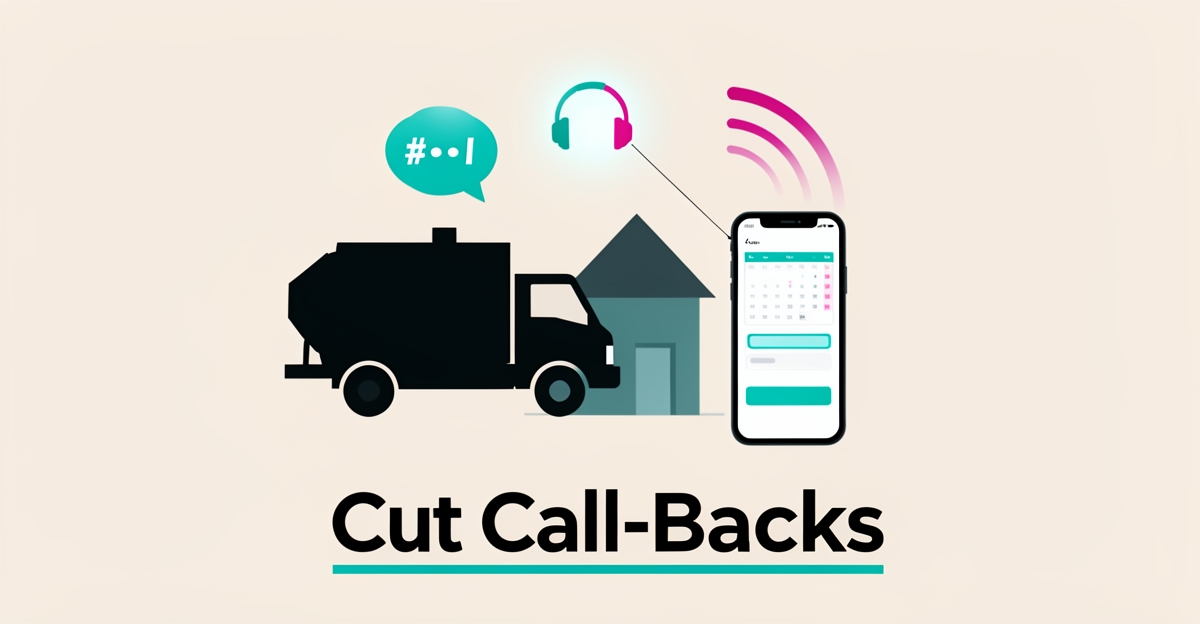
How a Septic Tank Service Company Can Cut Call-Backs by 60% with an AI Receptionist
Key Facts
- Over 21 million homes in the US rely on septic systems, creating steady demand for pumping, inspection, and emergency service according to industry guides
- Septic systems operate by gravity or lift pump, and maintenance schedules vary by system type and household size per technical references
- Customer service automation typically reduces routine office workload significantly in field-service businesses, freeing staff for higher-value work
- Predictive maintenance scheduling tends to reduce emergency call volume by prompting service before failures occur
- Route optimization commonly delivers meaningful fuel-cost reductions for septic service fleets
- Automated invoice generation can cut accounts receivable processing time substantially
Hire a team member that works 24/7 — for less than a part-time wage.
AI receptionists, SDRs, dispatchers and 99+ roles. Trained on your business, fully managed.
Not sure where to start? Ask our AI planner
The Hidden Cost of Missed Calls in Septic Services
A missed call in septic services isn't an inconvenience. It's a potential backup, an emergency, and a lost customer who calls the next company on the list.
Septic tank service companies live on responsiveness. With more than 21 million US homes depending on septic systems, demand for pumping, inspection, and emergency repair is constant. When phones go unanswered after hours or during peak service windows, inquiries pile up, technicians get dispatched late, and frustrated homeowners seek alternatives. That friction erodes trust in a business built on reliability.
A large share of office staff workload in field-service businesses is tied to routine customer service tasks that can be automated: answering "when can you pump?", confirming service windows, and leaving callbacks for technicians already in the field.
The cost compounds quickly. Missed calls lead to delayed inspections, repeated contacts, and higher call-back volume. Most septic companies still rely on manual phone coverage, which creates gaps during lunch, dispatch, and evenings.
After-hours inquiries are especially expensive. A homeowner with a suspected backup will not wait until morning. If the line rings out, the call is lost, and the reputation hit follows. First-contact resolution drops, and staff spend the next day chasing the same issue instead of scheduling new work.
An AI receptionist for inbound call management changes that pattern. It answers 24/7, captures intent, and routes urgent requests immediately while booking routine inspections into available slots. This frees human technicians for high-value work instead of phone tag.
The hidden costs of missed calls show up as:
- Lost revenue from customers who call competitors after no answer
- Increased call-backs and longer handle times the next business day
- Office staff pulled from scheduling and billing to chase missed messages
- Technician downtime caused by poor dispatch coordination
Companies that automate customer service typically see meaningful workload relief and faster response. That reclaimed capacity can be redirected to retention, upsells, and preventive maintenance outreach.
AIQ Labs helps septic businesses deploy fully managed, 24/7 AI Employees that handle repetitive inbound inquiries, schedule inspections, and provide instant responses, at a fraction of the cost of a human hire. The result is improved first-contact resolution and fewer frustrated repeat calls.
When every call is answered, booked, and tracked, the business stops leaking opportunities and starts building the reliability customers expect.
How AI Receptionists Solve the Call-Back Problem
When a customer calls with a backed-up septic system, they don't want to leave a voicemail and wait for a callback, they want an immediate answer and a scheduled fix. An AI receptionist ensures that every call, whether it's 2 PM or 2 AM, receives an instant, intelligent response that moves the customer toward resolution.
Field-service businesses that deploy AI-driven customer service automation typically report a significant reduction in office staff workload, freeing dispatchers from repetitive scheduling tasks to focus on complex logistics. This shift allows septic businesses to handle higher call volumes without adding headcount, while technicians stay focused on field work rather than phone duty.
The technology excels at first-contact resolution by handling routine inquiries immediately. Instead of playing phone tag, customers get real-time answers about service windows, pricing, and appointment availability. The AI receptionist manages the entire intake process through natural conversation, capturing essential details like tank location, system type, and issue severity before a human ever picks up the line.
Key capabilities that eliminate call-backs include:
- 24/7 emergency triage that instantly distinguishes routine maintenance from urgent backups, ensuring critical situations get immediate human escalation
- Direct calendar integration that books inspections and pump-outs on the spot, eliminating the "let me check and call you back" delay
- Intelligent routing that sends emergency calls to on-call technicians while queuing routine requests for business hours
- Automated appointment confirmations and reminders that reduce no-shows and last-minute rescheduling
Businesses that pair predictive maintenance scheduling with AI communication tools typically see fewer emergency calls, because the system proactively reaches out to customers based on service history rather than waiting for disasters to strike. Since maintenance schedules vary by system type and household size, automated reminders based on each customer's actual service history are far more reliable than generic annual postcards. This proactive approach transforms the customer relationship from reactive crisis management to scheduled, predictable service.
AIQ Labs builds these systems as managed AI Employees that integrate directly with existing dispatch and CRM tools, providing enterprise-grade call handling without enterprise complexity. The result is a septic operation where customers get immediate answers, office staff reclaim hours previously lost to phone tag, and technicians spend their days solving problems rather than scheduling them.
Implementation Steps for Septic Service Companies
Cutting call-backs starts with a clear implementation plan, not a rushed tech purchase. Septic service companies that map needs first see faster adoption and fewer frustrated customer calls.
Assess current call drivers and capacity constraints before selecting technology. Document peak call times, repeat inquiry types, and where missed appointments create technician downtime. This baseline shows where first-contact resolution will have the biggest impact and aligns with the step to assess specific needs and goals for AI adoption.
Select a provider that integrates with existing calendars, dispatch, and CRM tools. Integration determines whether an AI receptionist can book inspections, confirm service windows, and log notes without manual re-entry. AIQ Labs' Workflow Builds are a good fit here: the team rebuilds the one workflow that costs you the most, typically inbound call handling and dispatch, at a fixed price, in phases.
Implementation follows a practical sequence that mirrors proven deployment processes:
- Map workflows and data sources for calls, scheduling, and follow-ups
- Connect the AI receptionist to calendars, dispatch, and customer records
- Train the model on service scripts, pricing, and escalation rules
- Pilot with live calls and monitor resolution and booking rates
- Refine prompts and handoffs based on real interactions
Train staff on the new system and its applications. Technicians and office staff need clear protocols for AI-handled bookings, message prioritization, and human escalation. Training reduces errors and builds trust in the system.
Monitor performance and adjust continuously. Track missed calls, booking completion, and repeat inquiries to measure improvement. Predictive maintenance scheduling tends to reduce emergency call volume, while route optimization supports meaningful fuel-cost savings. AIQ Labs supports this phase with managed AI Employees that work 24/7/365, handle repetitive inbound tasks, and integrate with your existing tools, starting under the Start Monthly payment model, which typically costs far less than a part-time hire. For companies that want to go further, an AI Operating System connects call handling, dispatch, scheduling, and billing into one layer you own outright.
From Missed Calls to Measurable Momentum
Septic service companies lose more than just calls when phones go unanswered, they lose trust, revenue, and operational focus. An AI receptionist tackles this by providing 24/7 intelligent call handling, automating routine inquiries, and ensuring urgent issues reach technicians instantly. The result is fewer call-backs, a lighter office workload, and higher first-contact resolution, turning reactive chaos into predictable service. For businesses ready to stop leaking opportunities and start building reliability, the next step is clear: take the 2-minute Fit Check, then book a free 30-minute strategy call to map your specific bottlenecks and see how an AI Employee can work for you, fully managed, integrated with your existing tools, and starting at a fraction of the cost of a human hire.
Make AI your competitive advantage — not just another tool.
Strategy, implementation and ongoing optimization. One partner, end to end.
Not sure where to start? Ask our AI planner