How a Smart Home Installation Company Can Automate Client Scheduling and Reduce No-Shows
Key Facts
- AI-powered scheduling systems can reduce no-shows by flagging high-risk appointments based on historical client behavior patterns
- AI-driven reminders adapt timing and channel (SMS, email, voice) based on individual client response history for better engagement
- Automated waitlist backfilling can book eligible clients into canceled slots, maximizing schedule utilization without manual intervention
- Custom AI scheduling systems integrate directly with existing tools like Google Calendar, Calendly, or your CRM through secure APIs for real-time updates
- No-show risk scoring can update in real time as new client interaction data flows in, refining outreach strategies continuously
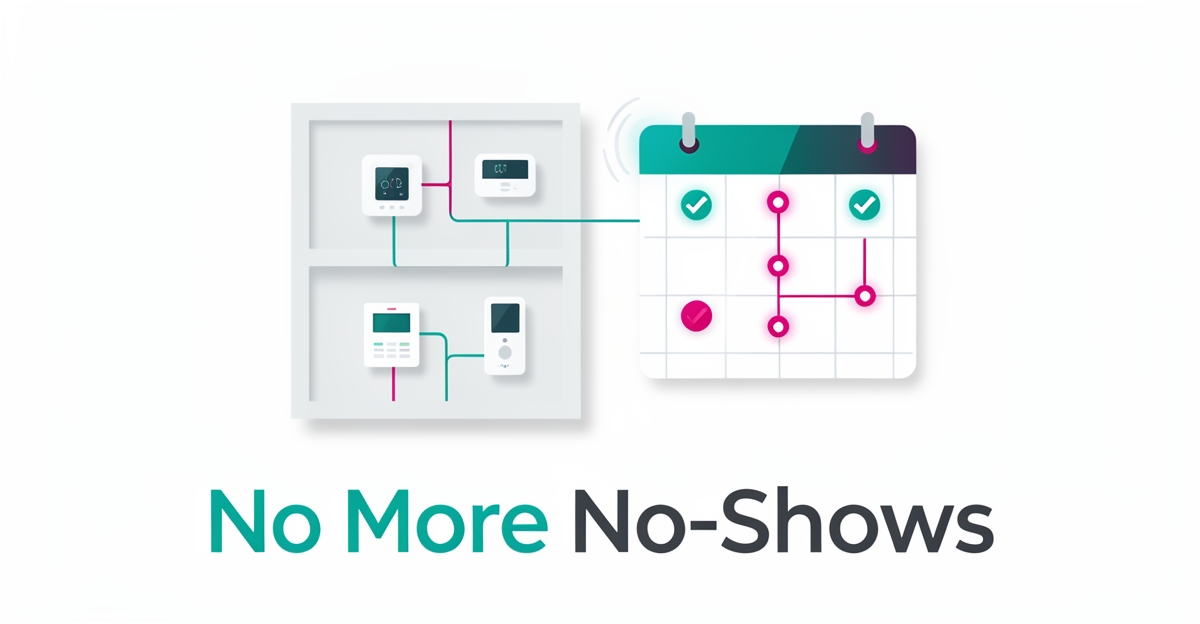
- AI scheduling automation transforms reactive scrambling into proactive prevention by acting as an intelligent 'brain' connected to a calendar 'nervous system'
- With AIQ Labs, you own what we build, no vendor lock-in, no subscription dependency on the system that runs your schedule
Hire a team member that works 24/7 — for less than a part-time wage.
AI receptionists, SDRs, dispatchers and 99+ roles. Trained on your business, fully managed.
Not sure where to start? Ask our AI planner
The True Cost of Manual Scheduling and Missed Appointments
Your top technician arrives at a $4,000 smart lighting install, ready to work, only to find an empty driveway and a client who forgot they booked. Meanwhile, back at the office, your coordinator spends her third straight hour playing phone tag to reschedule tomorrow's appointments, leaving three other clients waiting on hold.
This scene plays out daily in smart home installation companies still relying on manual scheduling. The reactive approach, sticky notes, overloaded calendars, and confirmation calls that never happen, creates a cascade of operational waste. When a client no-shows, you lose more than the immediate revenue; you strand a crew already en route, burn fuel, and create a scheduling vacuum that's nearly impossible to fill last-minute.
The true cost extends beyond the obvious missed appointment. Consider the hidden drain on your operations:
- Technician downtime: Highly skilled installers sit idle in parking lots or drive back to the shop instead of generating revenue
- Double-booking conflicts: Manual calendar management leads to overlapping appointments, forcing embarrassing cancellation calls and rushed rescheduling
- Communication bottlenecks: Office staff spend hours on hold with clients trying to confirm, reschedule, or cancel appointments, time that could be spent on business development
- Customer frustration: Clients who take time off work for an installation that never happens due to a scheduling error rarely give you a second chance
Businesses stuck in reactive modes waste significant resources addressing problems after they occur rather than preventing them. In the context of smart home installation, this means discovering a schedule conflict only when the technician arrives at an empty house, or realizing too late that a complex whole-home automation install requires a two-person crew instead of one.
The manual approach forces your team to function as human middleware, constantly synchronizing disconnected systems through sheer effort. Your dispatcher checks three different calendars, your sales team scribbles availability on notepads, and your installers text the office asking, "Did anyone confirm with the Johnsons for 2 PM?" This fragmentation creates a fragile system where one missed phone call or forgotten sticky note can derail an entire day's revenue.
Smart home installation companies face unique scheduling complexities that amplify these manual failures. Unlike simple service calls, your projects often require pre-installation consultations, equipment staging, and multi-day coordination. When a client forgets about a structured wiring rough-in appointment, you don't just lose an hour, you potentially delay the entire construction timeline for a new build.
The shift from reactive scrambling to proactive scheduling management represents more than convenience; it's a fundamental operational transformation. Moving from reactive to proactive approaches allows businesses to process real-time data at a scale far beyond human capability, enabling smarter and faster decision-making.
For installation companies ready to break this cycle, the solution lies in systems that prevent scheduling failures before they strand your crews. AIQ Labs helps businesses build custom AI systems that integrate directly with existing calendars and client databases, ensuring every appointment confirmation, reminder, and follow-up happens automatically, without adding to your team's workload. The result is a scheduling operation that runs with the same automated precision as the smart homes you install.
From Reactive to Proactive: What AI-Driven Scheduling Looks Like
Forget chasing missed appointments, what if your scheduling system could see them coming? AI transforms appointment management from a reactive scramble into a proactive, self-correcting process by acting as the intelligent "brain" that predicts outcomes while connected calendars and communication tools serve as the responsive "nervous system" sensing real-time changes. This synergy enables smarter, faster decision-making by processing data at scales impossible for manual teams, turning scheduling from a point of friction into a streamlined operational advantage.
The core of this shift lies in predictive no-show risk scoring. By analyzing historical client behavior, such as past cancellation patterns, response times to reminders, and service type preferences, AI algorithms assign dynamic risk scores to each upcoming appointment. These scores aren't static; they update in real time as new data flows in, allowing the system to flag high-risk slots before they become no-shows. This predictive capability moves beyond guesswork, enabling teams to intervene strategically rather than blanket-remind everyone.
Connected systems then act on these insights through automated two-way calendar sync and adaptive reminder sequences. When the AI detects a rising no-show risk, it triggers personalized outreach, adjusting timing, channel (SMS, email, or voice), and message tone based on what has worked for that specific client in the past. For example, a client who consistently ignores morning texts but responds to evening calls receives a voice reminder at 6 p.m., while another who confirms instantly via email gets a simple digital nudge 24 hours prior. This behavioral adaptation replaces ineffective one-size-fits-all texts with precision engagement that respects individual habits.
Furthermore, the system continuously learns from outcomes. Every confirmed, missed, or rescheduled appointment feeds back into the AI model, refining its predictions over time. All scheduling data can be processed within the business's controlled environment, minimizing latency and preserving client privacy, keeping sensitive information where it belongs: within your operational workflow, not scattered across external tools.
The result is a scheduling ecosystem that doesn't just record appointments but actively protects them. By combining predictive intelligence with adaptive action, smart home installation companies can shift from constantly putting out fires to preventing them before they ignite, turning scheduling reliability into a quiet, consistent strength that supports both team efficiency and client trust. For businesses ready to build such a system, AIQ Labs' workflow builds offer a fixed-price, phased path to architect custom AI solutions that integrate seamlessly with existing tools while delivering full ownership and long-term scalability.
The Smart Reminder System: Confirming, Rescheduling, and Filling Gaps Automatically
No-shows don't just disrupt schedules, they erode revenue and strain resources. AI-powered reminder systems act as the nervous system that predicts and prevents these disruptions before they happen, using intelligent confirmation, flexible rescheduling, and automated waitlist backfilling to keep operations flowing smoothly. By combining predictive intelligence with responsive action, these systems process real-time data at a scale far beyond what manual teams can manage.
The system begins with AI voice and SMS agents that reach out 24–48 hours before appointments, using natural language to confirm attendance while detecting hesitation or scheduling conflicts. If a client indicates they cannot attend, the agent immediately offers one-tap rescheduling through integrated calendar links, reducing friction and increasing the likelihood of retention. Here, the "sensors" are behavioral cues from client interactions, and the "maintenance" is preventing downtime in service delivery.
When a cancellation occurs, the AI doesn't leave the slot idle, it instantly checks the waitlist, contacts the next eligible client, and books them into the opening, all without human intervention. This closed-loop automation ensures maximum schedule utilization, turning potential losses into confirmed jobs. AIQ Labs builds these systems to integrate directly with existing scheduling tools and client databases, creating a self-healing appointment flow that learns from patterns over time, such as which clients frequently reschedule or which time slots have higher no-show rates, to refine future outreach and prediction accuracy. The result is a scheduling ecosystem that doesn't just react to absences but anticipates and neutralizes them, keeping technicians on-site and revenue pipelines full.
Implementation Roadmap: Integrating AI With Your Existing Calendars and Client Database
Smart home installation companies often struggle with scheduling inefficiencies that lead to missed appointments and wasted technician time. By integrating AI with existing calendars and client databases, businesses can create a seamless system that operates quietly in the background, ensuring appointments are booked, confirmed, and followed up without constant staff oversight. The goal is simple: your scheduling runs by itself, so workflows flow smoothly without interruption.
The first step is auditing the current scheduling workflow to identify pain points such as double bookings, last-minute cancellations, or manual data entry delays. Once gaps are mapped, the AI layer can be connected to tools like Google Calendar, Calendly, Acuity, or the company's CRM through secure API integrations, allowing the system to read, update, and optimize schedules in real time.
Next, define clear escalation rules for when human intervention is needed, for example, if a client reschedules multiple times or fails to confirm after automated reminders. The AI handles routine confirmations and follow-ups, while flagging complex cases for staff review. This ensures the system augments rather than replaces human judgment, maintaining service quality while reducing no-shows. Over time, measure key metrics like no-show rate and AI utilization to refine timing, messaging, and escalation thresholds, creating a self-improving loop that keeps scheduling efficient and reliable.
Why Build vs. Buy: Owning Your Scheduling Automation
Off-the-shelf scheduling tools promise speed but trade long-term control for convenience. For smart home installation companies where dispatch, site surveys, and client availability are tightly linked, that trade-off shows up as subscription lock-in and limited integration.
Off-the-shelf platforms are built for the average installer, not your workflow. They live in the cloud, sync on their schedule, and route your client data through external storage. A local-first philosophy, where data stays inside the business's own environment, highlights privacy, reduced internet dependency, and lower latency for real-time responses. A custom build can bring that same discipline to your scheduling stack.
Custom automation can mirror the brain-and-nervous-system model inside your scheduling stack. Instead of manual reminders and spreadsheet dispatch, a built system can:
- Connect directly to your calendar, CRM, and client database for two-way sync
- Use behavioral patterns to predict high-risk no-show appointments and trigger adaptive reminders
- Automate confirmations, rescheduling, and technician notifications without human handoffs
- Keep sensitive client data inside your infrastructure
Subscription tools create dependency. Each new feature request becomes a waiting list, each integration a paid add-on, and each data export a format problem. True ownership means clients own what we build, with no vendor lock-in or platform dependencies. That ownership is especially critical when scheduling touches revenue, reputation, and field crew utilization.
AIQ Labs builds custom AI systems that integrate deeply with existing calendars and client databases to ensure every follow-up is timely and effective. The company offers three payment models that match how installation businesses like to buy: Start Monthly for a managed AI employee, like a scheduling receptionist or dispatcher, with setup plus a flat monthly plan, Build in Milestones for rebuilding the one workflow that costs you the most, split into approved phases at a fixed price, and Own It Outright for a full AI operating system with complete code, agents, and data ownership at completion.
If you want to test fit before committing, start the Fit Check at https://aiqlabs.ai/apply for a free 30-minute strategy call at https://aiqlabs.ai/book. It is a working session to map your biggest scheduling bottleneck and identify high-ROI automation opportunities, with clear guidance if there is no clear win.
Still paying for 10+ subscriptions that don’t talk to each other?
We build custom AI systems you own outright. No vendor lock-in. Full control.
Not sure where to start? Ask our AI planner
Frequently Asked Questions
How much does manual scheduling actually cost a smart home installation company?
Can AI really predict which appointments are likely to no-show?
What does AI-driven scheduling look like day-to-day?
Will automated reminders feel impersonal to my clients?
Is building custom scheduling automation better than buying off-the-shelf software?
What engagement models does AIQ Labs offer?
Turn Scheduling Reliability Into Your Competitive Edge
Manual scheduling quietly erodes margins in smart home installation, idle technicians, double-booked crews, and confirmation calls that never happen add up to lost revenue and frustrated clients. Shifting from reactive scrambling to proactive, AI-driven management changes that equation by predicting no-show risk, adapting reminders to individual client behavior, and automatically rescheduling or backfilling gaps without staff intervention. The result is a self-correcting appointment flow that protects technician time, improves utilization, and reinforces client trust. Integration with your existing calendars and CRM makes this possible without ripping out what already works, and building rather than subscribing gives you ownership, privacy, and long-term scalability. If you're ready to test where automation can deliver the fastest impact, start the Fit Check at https://aiqlabs.ai/apply for a free 30-minute strategy call at https://aiqlabs.ai/book. It's a working session to map your biggest scheduling bottleneck and identify high-ROI opportunities, no pitch, just clarity. You can also explore managed AI staff like scheduling receptionists and dispatchers at https://aiqlabs.ai/ai-employees.
Make AI your competitive advantage — not just another tool.
Strategy, implementation and ongoing optimization. One partner, end to end.
Not sure where to start? Ask our AI planner