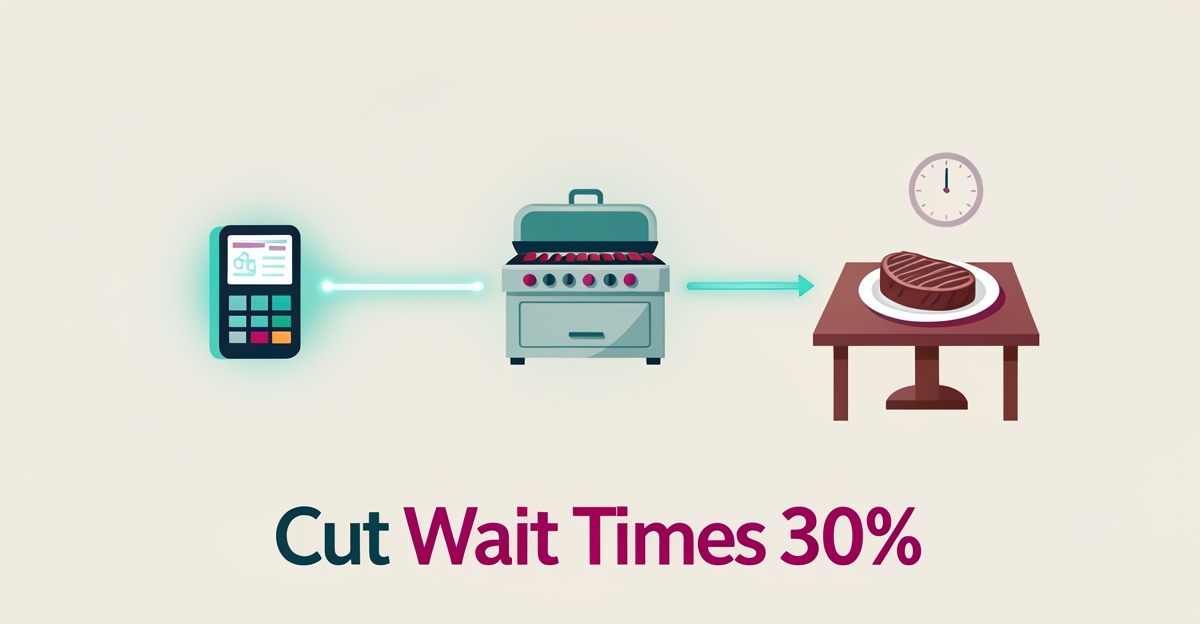
How a Steakhouse Can Cut Wait Times by 30% with AI-Driven Order Management
Key Facts
- Consolidating fragmented SaaS tools typically saves restaurants tens of thousands of dollars annually in subscriptions and duplicate data entry
- Restaurants that unify their tech stacks commonly recover double-digit staff hours per week previously lost to system toggling and re-keying
- General managers often spend close to an hour daily just logging into multiple disconnected systems before consolidation
- Most companies report no revenue improvement from AI when foundational steps like data cleaning are skipped, per widely cited MIT research from 2025
- A large share of U.S. consumers now use generative AI for product research, a trend spilling into dining and hospitality
- AI agents can pursue goals and use tools with varying autonomy per Wikipedia's definition
Hire a team member that works 24/7 — for less than a part-time wage.
AI receptionists, SDRs, dispatchers and 99+ roles. Trained on your business, fully managed.
Not sure where to start? Ask our AI planner
The Wait-Time Bottleneck in Steakhouse Operations
Wait times in a steakhouse rarely start with the kitchen. They start with friction at the front of house, where orders stall before they ever reach the grill.
Manual order entry forces servers to toggle between devices, retype modifications, and chase down confirmations while guests wait. Fragmented POS and kitchen display systems keep data in silos, so a table order, a takeout ticket, and a bar modification travel on different paths. The result is reactive firefighting instead of smooth flow.
Staff time evaporates to system logins. Restaurant general managers commonly report spending close to an hour a day just logging into systems, morning, afternoon, and evening routines of multiple passwords, timeouts, and crashes. Operators who consolidate from a dozen disconnected SaaS products down to a handful typically recover double-digit staff hours per week and cut thousands from monthly subscription costs.
Without real-time visibility, bottlenecks hide until they impact the dining room. Real-time monitoring systems help restaurants track guest flow, inventory, and staff activity to identify bottlenecks early and maintain operational efficiency throughout busy shifts. Existing cameras can become a real-time view of guest flow, waiting times, pressure building in areas, stations slowing down, or departments falling behind.
AI agents can change this pattern by pursuing goals, using tools, and taking actions with varying degrees of autonomy within human-defined objectives. In restaurant contexts, agents can be applied to order management, inventory control, and customer service automation. The technology stack includes foundation models, data operations, agent frameworks, deployment infrastructure, evaluation and observability, security and compliance, and agent ecosystems interfacing with real-world applications.
The wait-time bottleneck typically shows up as:
- Manual order entry and re-keying between POS, kitchen display, and takeout systems
- Fragmented platforms requiring multiple logins, passwords, and timeouts per shift
- Reactive bottleneck detection after guests are already delayed
- Duplicate data entry with no single source of truth for orders and inventory
Consolidating to integrated platforms reduces confusion and creates one source of truth. This is where AI-driven workflow automation fits naturally for steakhouses moving from takeout to table service. AIQ Labs builds custom systems, through AI Workflow Builds, that integrate with POS and kitchen display systems to ensure faster, accurate order fulfillment without disrupting the dining experience, streamlining kitchen operations and reducing order processing delays.
Clean data, standardized processes, and trained teams form the foundation before AI deployment. When those layers are solid, agents can authenticate transactions, verify authorized orders, and modernize fraud models for machine-led behavior while keeping service personal and precise.
How AI Agents Streamline Order Flow from Front to Back
Imagine your Friday night rush: servers juggling six tables, the POS system lagging, and the kitchen printer churning out tickets that arrive in the wrong sequence. Now picture the same dining room where orders flow automatically from table to grill station, prioritized by cook time and table number, with zero manual intervention. This is the operational reality that AI agents, autonomous systems capable of pursuing goals and using tools, create when they integrate with your existing restaurant infrastructure.
Unlike rigid automation scripts, these intelligent agents interpret context, make decisions, and execute workflows across your entire operation. When a server enters an order for a medium-rare ribeye with a loaded baked potato, the agent doesn't just pass text to a printer. It routes the steak to the grill station display, triggers the potato prep at the sauté station, calculates timing so both finish simultaneously, and alerts the expediter when plates are ready. This happens through deep API integration with your POS and kitchen display systems, eliminating the manual translation that creates errors and delays.
The impact of this integration extends beyond speed. Restaurants that consolidate fragmented tech stacks typically recover significant staff hours per week while eliminating duplicate data entry. For a steakhouse, this means your general manager stops toggling between a dozen different apps and starts focusing on guest experience. Operators moving to unified platforms that handle order management, inventory, and staff coordination in one ecosystem commonly report meaningful monthly savings in subscription costs.
Real-time monitoring capabilities transform how you manage the floor. AI agents track guest flow, kitchen throughput, and staff activity simultaneously, identifying bottlenecks before they cascade into service failures. When the system detects that table 12's appetizers are taking longer than the grill station's current ticket average, it automatically alerts the floor manager to adjust seating pace or deploy additional support to the line. This proactive approach replaces the traditional firefighting mode where managers discover delays only after guests complain.
The technology also prepares your steakhouse for the emerging reality of agentic commerce. With a growing share of U.S. consumers already using generative AI for product research, restaurants increasingly need infrastructure that can authenticate AI platforms and verify authorized transactions. AIQ Labs builds custom systems that integrate these capabilities directly into your existing workflow, ensuring you can handle machine-led orders while maintaining the security standards high-value steakhouse transactions demand.
Implementation requires a systematic approach. Successful deployments follow a specific sequence:
- Audit your current tech stack to identify integration points and data silos
- Consolidate to unified platforms that connect POS, kitchen displays, and inventory systems
- Clean your data to eliminate typos, duplicates, and untracked spend that undermine AI accuracy
- Standardize workflows so every order follows the same routing logic regardless of which server enters it
- Train your team to work alongside AI agents, understanding that these tools augment rather than replace human judgment
When these elements align, the result is a reduction in wait times of up to 30% driven not by rushing your kitchen staff, but by eliminating the friction between order placement and plate delivery. Your servers spend less time running to the kitchen to check on tickets, your grill cooks receive perfectly sequenced orders that maximize equipment utilization, and your guests enjoy their ribeyes exactly when promised. The technology works quietly in the background, turning your existing infrastructure into a coordinated system that scales with your busiest Saturday night without adding headcount or chaos.
From Audit to Deployment: A Systematic AI Rollout
Before deploying AI, steakhouses need to lay a strong operational foundation. Widely cited MIT research from 2025 found that the vast majority of companies see no revenue improvement from AI when foundational steps are skipped, making a systematic rollout essential for success. Industry experts recommend building a five-step pyramid: clean data, smooth processes, trained team, basic analytics, then AI, ensuring each layer is solid before adding complexity.
The first step is auditing and consolidating the tech stack. Many steakhouses operate with disconnected systems for reservations, POS, inventory, and kitchen displays, creating inefficiencies. Operators who reduce from a dozen SaaS products to a handful typically recover substantial staff hours per week previously spent just logging into multiple platforms. This consolidation eliminates duplicate data entry and creates a single source of truth, critical for AI accuracy.
Next, data must be cleaned and processes standardized. Typos in orders, duplicate entries, and inconsistent workflows undermine AI performance. Teams need training on data literacy and new tools to build confidence and reduce resistance. AI isn't a quick fix, it's the climax of a journey that starts with fixing bottlenecks and training staff. Studies show generative AI can meaningfully boost productivity in specific tasks, but only when humans are prepared to work alongside it.
With foundations in place, AI agents can be deployed with proper governance. AIQ Labs follows this systematic approach across its service lines, from AI Employees that handle front-of-house and phone traffic, to AI Operating Systems that connect the whole operation in phases, covering assessment, development, integration, governance, adoption, and scaling to ensure AI delivers sustainable impact. The final step is building agent-ready commerce infrastructure that can authenticate AI platforms, verify authorized transactions, and modernize fraud models for machine-led behavior, enabling steakhouses to handle increased order volumes without compromising security or service quality.
Why Steakhouses Need Owned AI, Not Subscription Chaos
The promise of AI in steakhouse operations often runs into the reality of fragmented technology stacks. Many restaurants subscribe to multiple SaaS tools for reservations, inventory, POS, and kitchen displays, creating integration nightmares and hidden costs. General managers commonly report spending more time logging into systems than running the restaurant, close to an hour daily just to access basic tools. This fragmentation leads to duplicate data entry, inconsistent reporting, and staff frustration, ultimately undermining the very efficiency AI is meant to deliver.
Traditional multi-SaaS approaches introduce significant risks that undermine long-term value. Vendors frequently engage in "AI-washing," overpromising capabilities that don't align with real-world performance, especially when evaluated only on technical specs rather than model behavior. For steakhouses handling high-value transactions, this creates dual risks: fraudulent AI-driven orders slipping through outdated detection systems, and legitimate premium orders being falsely declined. Additionally, reliance on proprietary platforms without contractual safeguards for model updates or revalidation rights can trap businesses in costly vendor lock-in, limiting flexibility as needs evolve.
The sustainable path forward lies in owned, integrated AI workflow automation built specifically for the steakhouse's operational reality. By consolidating disjointed systems into a unified platform, owners gain true control over their technology. Custom-built AI systems eliminate subscription chaos, prevent AI-washing through transparent model behavior evaluation, and embed fraud detection designed for machine-led behavior in high-value contexts. With AIQ Labs you can Start Monthly, Build in Milestones, or Own It Outright, transforming AI from a fragmented expense into a strategic asset the business owns, optimizes, and scales on its own terms.
Still paying for 10+ subscriptions that don’t talk to each other?
We build custom AI systems you own outright. No vendor lock-in. Full control.
Not sure where to start? Ask our AI planner
Frequently Asked Questions
How does AI actually reduce wait times in a steakhouse?
What's the real cost of keeping multiple disconnected restaurant systems?
Why do most AI implementations in restaurants fail to deliver ROI?
Will AI replace my servers and kitchen staff?
How do I prepare my steakhouse for AI order management?
Can AI handle high-value steakhouse transactions securely?
From Wait Times to Real Results: Turning Steakhouse Chaos into Calm
When steakhouses tackle the real source of delays, fragmented systems and manual order entry, they unlock more than faster service. By auditing their tech stack, consolidating to integrated platforms, cleaning data, standardizing workflows, and training teams, owners create the foundation for AI agents to streamline order flow from table to grill. The result isn't rushed kitchens or stressed staff, it's shorter wait times, recovered staff hours, and guests who get their ribeyes exactly when promised. For steakhouse owners ready to move beyond subscription chaos and reactive firefighting, the path forward starts with a clear view of where time and money are leaking. Take the first step with a free, no-obligation strategy call to map your biggest bottleneck and see where AI-driven automation can deliver real, owned value, without the hype. Start with the 2-minute Fit Check at aiqlabs.ai/apply or email [email protected].
Make AI your competitive advantage — not just another tool.
Strategy, implementation and ongoing optimization. One partner, end to end.
Not sure where to start? Ask our AI planner