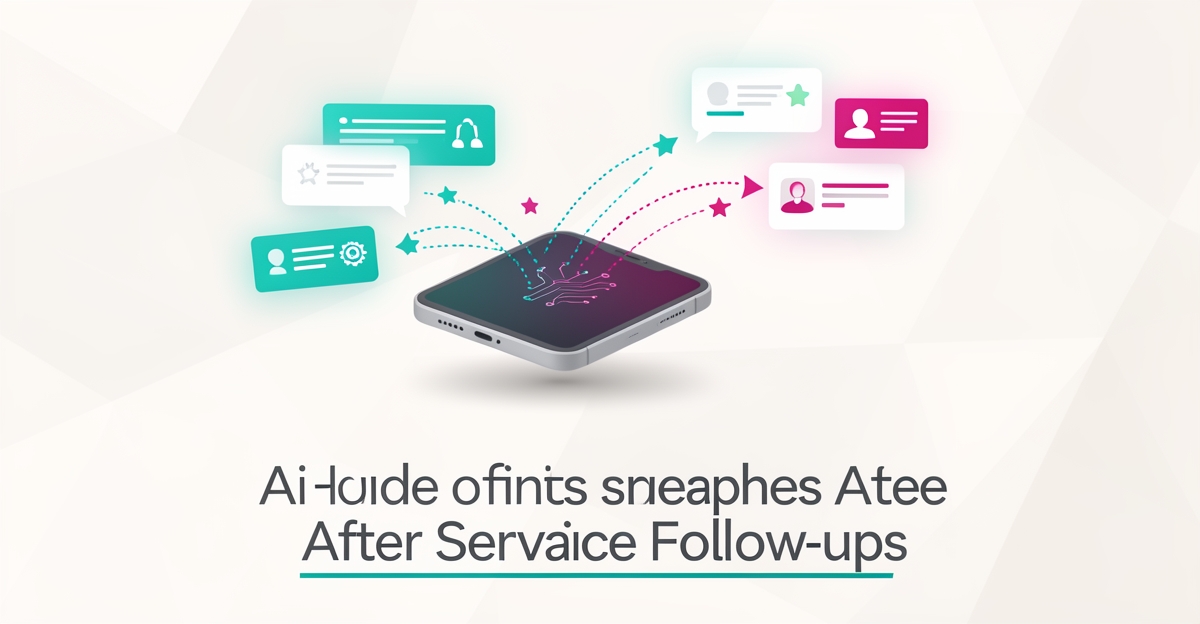
How AI Can Automate After-Service Follow-Ups and Improve Client Satisfaction
Key Facts
- 78% of businesses already use AI in at least one business function
- 95% of Agentic AI agents work in parallel to handle multi-step processes efficiently
- Klarna's AI agent now handles two-thirds of all customer service chats
- AI is expected to handle a significant portion of customer interactions
- Agentic AI systems can decompose complex follow-up tasks into subtasks like satisfaction surveys and upgrade recommendations
- AI Employees cost ~80% less than human employees in equivalent roles while working 24/7/365
- AI-powered after-service systems can turn one-time jobs into repeat business by identifying upsell and referral moments in real time
Hire a team member that works 24/7 — for less than a part-time wage.
AI receptionists, SDRs, dispatchers and 99+ roles. Trained on your business, fully managed.
Not sure where to start? Ask our AI planner
The After-Service Gap That Kills Repeat Business
The job ends, the invoice goes out, and then... silence. For most service businesses, the follow-up after service completion is the first thing to fall through the cracks, and it's quietly costing them their most valuable revenue stream: repeat business.
Manual follow-ups fail for a predictable reason. They depend on someone remembering to act at exactly the right moment, days or weeks after a job wraps up. When teams are juggling scheduling, dispatch, and delivery, the check-in email, the feedback request, and the "here's what else we can do for you" conversation simply never happen.
The cost of that silence compounds in three ways:
- Missed feedback opportunities, unhappy clients never get a chance to voice concerns before they quietly take their business elsewhere.
- Lost upsell windows, the moment right after a successful service is when clients are most receptive to upgrades and add-ons, yet that window closes fast.
- Vanishing referrals, satisfied clients are willing to recommend businesses that stay in touch, but only if someone actually does.
The market has already started moving. According to industry data, 78% of businesses now use AI in at least one business function, and much of that adoption is aimed at shifting from reactive support to proactive engagement. Rather than waiting for a client to call with a problem, AI systems monitor the relationship and reach out first, a capability that analysis of agentic AI describes as the key differentiator from traditional automation: taking initiative to achieve goals instead of waiting for prompts.
This shift matters because traditional automation was never built for follow-up. Pre-programmed, linear workflows can send a templated email, but they can't adapt to a client's response, maintain context across channels, or decide when a relationship is ready for an upgrade conversation. Agentic systems can, they decompose the follow-up process into check-ins, feedback collection, and opportunity identification, then execute each step with judgment.
This is precisely the gap AI-focused companies like AIQ Labs address: building systems that track post-service engagement automatically, flagging when a one-time client is ready to become a repeat one. The result is a retention engine that works whether or not anyone on the team remembers to hit send, turning the after-service gap from a revenue leak into a growth channel.
Agentic AI for Post-Service Engagement
Agentic AI transforms post-service engagement by enabling autonomous, multi-agent systems that handle check-ins, feedback collection, and service upgrades without constant human prompting. These AI agents decompose complex follow-up tasks into manageable subtasks, collaborate across specialized roles, and integrate with external tools like CRM platforms and scheduling software to execute workflows seamlessly. This proactive approach turns one-time service jobs into opportunities for repeat business by identifying upsell or referral moments in real time. Research shows that Agentic AI agents work in parallel to handle multi-step processes efficiently, with 95% of such systems leveraging parallel processing for scalability.
- Autonomous task decomposition breaks down post-service goals into subtasks like satisfaction surveys, issue escalation, and upgrade recommendations
- Collaborative workflows allow specialized agents to share context, such as one agent analyzing feedback while another schedules a follow-up service
- External tool integration enables real-time actions, like triggering a discount offer in a CRM when a customer expresses interest in additional services
By operating 24/7 and learning from each interaction, these systems continuously refine their engagement strategies, reducing reliance on manual oversight. AIQ Labs builds such agentic frameworks into custom AI employees that manage post-service journeys end-to-end, ensuring no opportunity for retention or referral is missed. Industry data indicates that AI is expected to handle a significant portion of customer interactions, with 78% of businesses already using AI in at least one function, proving the readiness for autonomous post-service automation. This shift not only improves client satisfaction through timely, personalized follow-ups but also unlocks recurring revenue streams from previously transactional relationships.
From Check-In to Loyalty: Automation in Action
From the moment service ends, the opportunity to deepen client relationships begins. AI-driven follow-ups transform routine check-ins into strategic touchpoints that build loyalty and uncover growth potential.
Automated post-service check-ins can proactively identify issues before they escalate, turning potential complaints into demonstrations of care. AI agents maintain context across channels, email, SMS, chat, ensuring every interaction feels connected and informed, which is critical for delivering seamless omnichannel experiences. These systems can also analyze conversation patterns to spot upsell or referral opportunities, turning satisfied clients into advocates and repeat business.
With AI expected to handle a significant portion of customer interactions, businesses are already seeing the impact of autonomous systems in action. Klarna's AI agent now handles two-thirds of all customer service chats, proving that intelligent automation can scale support without sacrificing quality. Agentic AI agents work in parallel, handling multi-step processes efficiently, which means follow-ups aren’t just sent, they’re intelligent, adaptive, and continuously improving.
By integrating AI into after-service workflows, companies shift from reactive service to proactive relationship management. Every follow-up becomes a chance to listen, learn, and lead the client toward their next need, whether that’s resolving a concern, exploring an upgrade, or referring a peer. This is how one-time jobs evolve into lasting partnerships.
Building Your Owned After-Service System
After-service follow-ups are where repeat business is won or lost, and autonomous systems now make it possible to stay in touch without adding headcount.
Agentic AI moves beyond scripted surveys to proactive check-ins that adapt to each customer. Industry data shows 78% of businesses are already using AI in at least one business function.
That shift matters for retention. Instead of a single thank-you email, an owned after-service system can monitor delivery, collect feedback, and surface upgrade opportunities in real time. Analysis of agentic automation notes 95% of agentic AI agents work in parallel, handling multi-step processes efficiently, which is ideal for the check-in → feedback → offer loop.
Building an owned system starts with mapping the post-service journey and deciding what the business wants to own long-term. AIQ Labs architects custom after-service workflows through its AI Development Services, with integration to CRM, scheduling, and billing so engagement data stays inside the business.
A practical build typically includes:
- Automated check-ins timed to service milestones with natural language collection of satisfaction signals
- Feedback triage that routes issues to humans and logs insights for product and service improvement
- Opportunity detection for service upgrades, referrals, and repeat bookings based on usage and sentiment
- Retention specialist AI Employees that manage the conversation end-to-end, 24/7
Ownership changes the economics. With Start Monthly, SMBs can launch one AI employee for retention specialist roles with setup plus a flat monthly plan that costs less than a part-time hire, including build, training, integrations, monitoring, and improvements. Build in Milestones lets a business split a department system into phases, approving and paying per phase while keeping everything built so far. Own It Outright delivers a full AI operating system with full ownership of code, agents, and data when complete.
AI Transformation Consulting supports the rollout with readiness assessment, roadmap design, and adoption planning so the system fits existing operations. The result is a post-service engine that turns one-time jobs into repeat business, with engagement tracked and optimized continuously rather than rented from a subscription vendor.
Start the Fit Check at /apply for a free 30-minute strategy call to map your after-service bottleneck and identify high-ROI automation opportunities.
Still paying for 10+ subscriptions that don’t talk to each other?
We build custom AI systems you own outright. No vendor lock-in. Full control.
Not sure where to start? Ask our AI planner
Frequently Asked Questions
How does AI actually prevent clients from leaving after a service is completed?
What's the difference between a follow-up email template and agentic AI?
Can AI really identify upsell opportunities without feeling pushy?
How much does it cost to set up an AI system for post-service follow-ups?
Will AI follow-ups feel robotic or impersonal to my clients?
What happens if a client has a complaint during an AI follow-up?
Turn the After-Service Silence Into Your Growth Engine
The after-service gap isn’t a people problem, it’s a timing problem. When follow-ups depend on memory, feedback goes unheard, upsell windows close, and referrals never materialize. Agentic AI closes that gap by taking initiative after the job ends, decomposing check-ins, feedback collection and opportunity detection into autonomous, context-aware workflows that run 24/7 across email, SMS and chat. The result is proactive relationship management instead of reactive support, turning one-time jobs into repeat business and advocacy.
If you want to stop leaking revenue in the silence after service, start by mapping your post-service journey and deciding which moments you want to own long-term. AIQ Labs builds owned after-service systems that track engagement automatically and surface upsell or referral opportunities in real time, so retention works even when no one remembers to hit send. Start the Fit Check at /apply for a free 30-minute strategy call to map your bottleneck and identify high-ROI automation opportunities. With 78% of businesses already using AI in at least one function, the shift from reactive to proactive engagement is already underway.
Make AI your competitive advantage — not just another tool.
Strategy, implementation and ongoing optimization. One partner, end to end.
Not sure where to start? Ask our AI planner