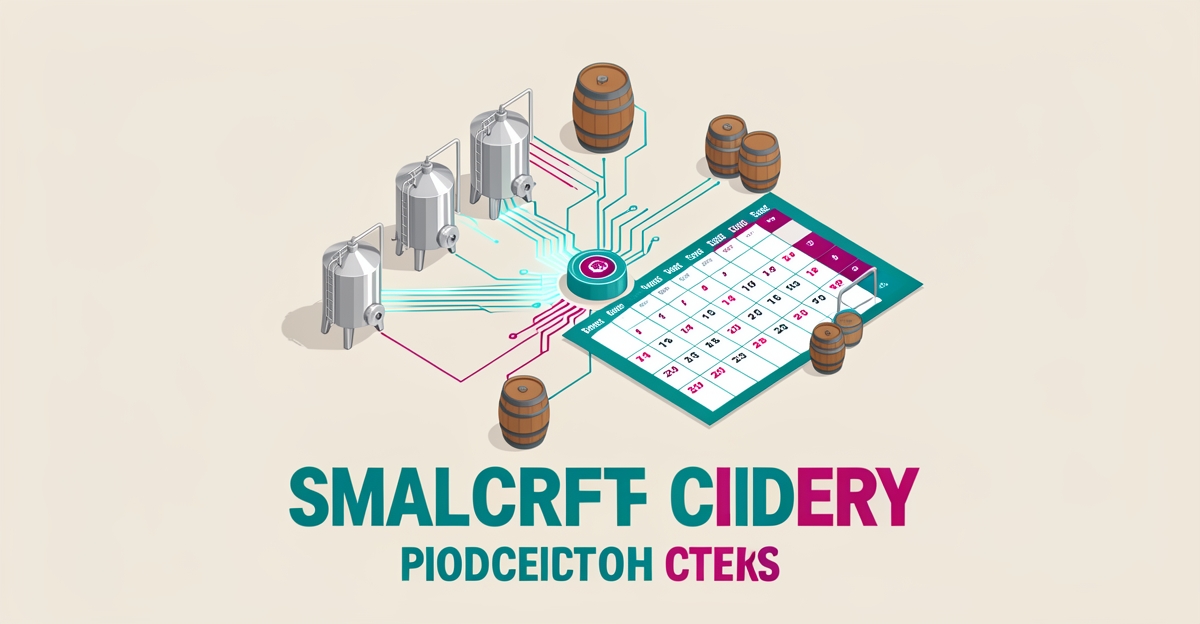
# How AI Can Automate Cider & Mead Production Scheduling for Small Breweries
**Quick Answer:** AI automates cider & mead production scheduling, cutting manual errors and improving tank utilization. As of late 2026, AI-driven scheduling has moved from a large-producer advantage to something small cideries and meaderies can realistically adopt.
## Key Facts
- The fully-automatic cider brewing equipment market has been projected to roughly double over the coming decade, per market research, a signal of how quickly automation is spreading.
- Craft cideries grew meaningfully in the U.S. between 2020 and 2023, intensifying competition for shelf space and tap handles.
- The global hard cider market has been projected to grow steadily through the early 2030s, per industry reporting.
- AI scheduling fails without live data: "the algorithm optimized the schedule, but it didn't know the machine was broken," as industry analysis notes.
- AI scheduling systems typically connect with ERP, MES, and IoT platforms to continuously re-optimize schedules.
## Table of Contents
1. [The Scheduling Bottleneck Small Cideries and Meaderies Face](#the-scheduling-bottleneck-small-cideries-and-meaderies-face)
2. [How AI-Driven Scheduling Optimizes Batch Planning and Resource Use](#how-ai-driven-scheduling-optimizes-batch-planning-and-resource-use)
3. [A Trust-First Implementation Roadmap for Small Breweries](#a-trust-first-implementation-roadmap-for-small-breweries)
4. [Why Custom AI Beats Off-the-Shelf Scheduling for Cider & Mead](#why-custom-ai-beats-off-the-shelf-scheduling-for-cider-mead)
## The Scheduling Bottleneck Small Cideries and Meaderies Face
Walk into most small cideries or meaderies during production week, and you will find someone hunched over a whiteboard or spreadsheet, manually mapping out fermentation tank schedules, ingredient orders, and bottling runs. This hands-on approach feels manageable at first, until a delayed honey shipment collides with a tank cleaning window, or a miscalculation leaves a batch sitting too long and losing its intended flavor profile.
The stakes are rising. Larger producers are automating production scheduling and equipment control, and craft cideries have expanded steadily in the U.S. since 2020, intensifying competition for shelf space and tap handles. Falling behind on scheduling discipline is now a competitive liability, not just an operational annoyance.
For small operations, manual scheduling creates a cascade of hidden costs that compound over time:
- **Batch inconsistency** when fermentation timing relies on memory or paper logs rather than precise, data-driven schedules
- **Ingredient waste** from over-ordering perishables like fresh-pressed juice or specialty yeast strains that expire before use
- Missed delivery windows when production bottlenecks push bottling runs past distributor pickup deadlines
- Underutilized capacity when tank availability is not tracked in real time, leaving expensive equipment idle
Traditional scheduling methods assume a static world: fixed lead times, predictable demand, and machines that never break. Reality delivers none of these. A spreadsheet cannot account for a fermentation tank running two degrees warm, nor can it instantly recalculate an entire production calendar when a key ingredient shipment arrives three days late.
The gap widens further when competitors invest in systems that optimize every hour of tank time. The question is no longer whether to automate scheduling, but how quickly you can implement systems that prevent the **scheduling conflicts and manual errors** that erode margins.
AIQ Labs works with beverage producers to build custom AI systems that handle exactly these variables, tracking fermentation timelines, ingredient inventories, and equipment availability in real time, without requiring a complete operational overhaul. For producers who want to start smaller, a single [AI workflow build](/workflow-builds) can target the one scheduling process that costs the most.
## How AI-Driven Scheduling Optimizes Batch Planning and Resource Use
Small cidery and meadery teams are moving from spreadsheets and whiteboards to systems that re-optimize production while the tanks are still fermenting.
AI-driven scheduling replaces static plans with continuous re-optimization. Traditional static scheduling creates a plan once and breaks when reality changes, while AI-driven systems continuously re-optimize based on live conditions. For small producers, that means batch plans that adapt to fermentation hold times, CIP cycles, and packaging line availability instead of forcing manual corrections.
Real-time data integration is the foundation. Modern AI scheduling systems typically connect with ERP, MES, and IoT platforms to gather comprehensive data for dynamic scheduling. The conversation in 2026 has shifted from focusing solely on algorithms to emphasizing the real-time data foundation required
AI Employees
Hire a team member that works 24/7 — for less than a part-time wage.
AI receptionists, SDRs, dispatchers and 99+ roles. Trained on your business, fully managed.
See If You’re a Fit — AI Employees from $700/mo
Not sure where to start? Ask our AI planner
to feed them. Without accurate, real-time data from shop floor operations, AI schedulers optimize against assumptions rather than actual production reality.
Core capabilities relevant to beverage production include:
- Real-time data integration with ERP/MES/IoT for dynamic scheduling
- Dynamic schedule adjustment based on demand, equipment status, and supply disruptions
- Resource allocation optimization to assign machines and labor and reduce idle time
- Conflict detection and resolution to ensure smooth production flow
These functions are delivered by tools such as PlanetTogether APS, Siemens Opcenter APS, and the Plex Smart Manufacturing Platform, among others, though as we'll cover below, off-the-shelf platforms often fit craft beverage workflows poorly.
The beverage industry is undergoing this change as craft demand rises. With the global hard cider market projected to grow steadily through the early 2030s, consistency and throughput become competitive advantages.
AIQ Labs helps small beverage producers build custom AI systems tailored to these workflows, ensuring seamless operations without costly overhauls. The next evolution of operations isn't more dashboards. It's teaching systems how to think and act, within guardrails. That means **continuous re-optimization** instead of one-off planning, and **constraint-aware flow** that protects fermentation integrity while improving utilization. For producers who want scheduling connected to sales, inventory, and customer communication under one roof, an [AI operating system](/ai-operating-systems) approach ties those pieces together in phases.
## A Trust-First Implementation Roadmap for Small Breweries
Small cideries can't afford a scheduling mistake that leaves a fermenter idle or a batch late for packaging. Trust is built before automation is allowed to act.
Start by making the shop floor visible. Real-time OEE and maintenance data collection must precede any AI scheduler, because, as industry analysis puts it, the algorithm optimized the schedule, but it didn't know the machine was broken. Without accurate, live inputs, AI optimizes against assumptions rather than actual production reality.
Connect systems next. Modern AI scheduling typically integrates with ERP, MES, and IoT platforms to gather comprehensive data for dynamic scheduling. Integration enables real-time data flow, dynamic schedule adjustment, and resource allocation optimization that reduces idle time and detects conflicts automatically.
Trust-first rollout follows a proven manufacturing pattern. Capture expert operator knowledge to train the agent, then run in decision support mode where the agent recommends rather than controls. This lets operators review suggestions and provide feedback before any change is made.
Gradual automation protects both product and people. Only after months of successful support mode should closed-loop control be enabled, with strict safety measures, limited control authority, and automatic handover to humans if conditions exceed training. **Explainability and guardrails** keep teams comfortable acting on AI-driven decisions.
A practical roadmap for small breweries looks like this:
- Establish a real-time data foundation with OEE and maintenance work orders linked to planning
- Connect shop floor systems, ERP, MES and IoT for comprehensive, live scheduling inputs
- Run AI in decision support mode with recommendations, human review, and feedback loops
- Move to closed-loop control with explainable outputs, defined safety limits, and clear override procedures
Data quality risks and change management remain the biggest failure points. Teams need clear explanations and oversight so adoption sticks.
AIQ Labs works with beverage producers to build custom AI systems tailored to cider and mead workflows, ensuring seamless operations without costly overhauls. The goal is sustainable scheduling that improves consistency while keeping human expertise in the loop.
## Why Custom AI Beats Off-the-Shelf Scheduling for Cider & Mead
Off-the-shelf scheduling tools often force small cideries and meaderies into rigid workflows that don't reflect their unique fermentation cycles, ingredient sourcing, or batch variability. These generic systems typically lack the flexibility to handle the nuanced scheduling demands of craft beverage production, where timing depends on yeast activity, seasonal fruit availability, and small-batch experimentation. As a result, producers end up spending more time managing workarounds than gaining efficiency, defeating the purpose of automation.
AIQ Labs' custom approach avoids these pitfalls by building scheduling systems that mirror actual production rhythms, not theoretical models. Instead of adapting your processes to fit a vendor's software, we design AI agents that learn from your team's expertise, tracking honey or apple varietals, adjusting for tank availability, and aligning labor with peak f
AI Development
Still paying for 10+ subscriptions that don’t talk to each other?
We build custom AI systems you own outright. No vendor lock-in. Full control.
See If You’re a Fit — AI Employees from $700/mo
Not sure where to start? Ask our AI planner
ermentation windows. This ensures the technology serves your workflow, not the other way around.
Unlike subscription-based platforms that lock you into evolving pricing tiers and feature limitations, our custom builds give you full ownership of the scheduling logic, data models, and integrations. You're not paying for unused capabilities or facing costly migrations when your needs change. With true ownership, you control updates, scale functionality as your operation grows, and avoid the hidden costs of vendor dependency, critical for small producers managing tight margins. You can [start monthly](/pricing) with no long-term lock-in, build in milestones, or own the system outright.
This model also eliminates the "subscription chaos" common in fragmented tool stacks, where separate systems for inventory, scheduling, and compliance create data silos and manual reconciliation. By unifying ingredient tracking, batch planning, and production scheduling into a single owned AI system, small cideries and meaderies gain real-time visibility without juggling multiple logins or syncing exports. The result is fewer scheduling conflicts, reduced spoilage risk, and more consistent output, exactly the precision and consistency driving automation adoption across the industry.
## Frequently Asked Questions
### Why can't I just use a spreadsheet or off-the-shelf scheduling tool for my cidery?
Spreadsheets and generic tools assume fixed lead times and predictable conditions, but they can't adapt when a honey shipment arrives late or a fermentation tank runs warm, leading to batch inconsistency and ingredient waste. AI-driven scheduling continuously re-optimizes based on live data from ERP, MES, and IoT systems instead of relying on static plans.
### What's the actual implementation process for AI scheduling, do I have to turn over control immediately?
No, implementation follows a trust-first roadmap: first establish real-time data collection (OEE and maintenance), then connect shop floor systems, then run AI in decision-support mode where it only recommends changes for human review. Full closed-loop automation only activates after months of successful support-mode operation with strict safety guardrails and override procedures.
### How does custom AI scheduling differ from buying a subscription platform like PlanetTogether or Siemens Opcenter?
Off-the-shelf tools force your unique fermentation cycles and seasonal ingredient workflows into rigid templates, while custom AI learns from your team's actual expertise, tracking specific honey or apple varietals, adjusting for your tank availability, and aligning labor with your peak fermentation windows. You also own the scheduling logic, data models, and integrations outright, avoiding subscription tiers, vendor lock-in, and costly migrations as you scale.
### What's the biggest reason AI scheduling fails in small production environments?
The primary failure point is poor data quality, as one industry analysis noted, "the algorithm optimized the schedule, but it didn't know the machine was broken." Without real-time OEE and maintenance data from the shop floor, AI optimizes against assumptions rather than reality, which is why establishing a live data foundation is step one before any scheduling automation.
### Can AI scheduling handle the variability in mead production like different honey varietals and yeast strains?
Yes, custom AI agents are trained on your specific production rhythms, they track ingredient-level variables like honey varietal fermentation profiles, yeast strain timing, and seasonal fruit availability, then dynamically adjust tank schedules and labor allocation when those variables shift. This constraint-aware flow protects fermentation integrity while improving tank utilization.
## From Whiteboard to Workflow: Scheduling That Protects Your Batch Integrity
Manual whiteboards and spreadsheets were fine when batches were few, but delayed honey shipments, warm fermenters, and missed distributor pickups now compound into waste, idle tanks, and inconsistent flavor. AI-driven scheduling changes that by replacing static plans with continuous re-optimization tied to real-time fermentation timelines, ingredient inventory, and equipment availability, while a trust-first rollout, data foundation first, decision support mode, then guarded closed-loop control, keeps operators in the loop and product integrity intact.
For small cideries and meaderies competing against increasingly automated producers, custom systems that mirror your actual rhythms beat rigid off-the-shelf tools. AIQ Labs builds those custom AI systems for beverage producers so you can own the logic and scale without costly overhauls. Start the 2-minute Fit Check at [aiqlabs.ai/apply](/apply) for a free 30-minute strategy call to map your biggest scheduling bottleneck and see if there's a clear, high-ROI automation win. Questions first? Email [email protected].
AI Transformation Partner
Make AI your competitive advantage — not just another tool.
Strategy, implementation and ongoing optimization. One partner, end to end.
See If You’re a Fit — AI Employees from $700/mo
Not sure where to start? Ask our AI planner