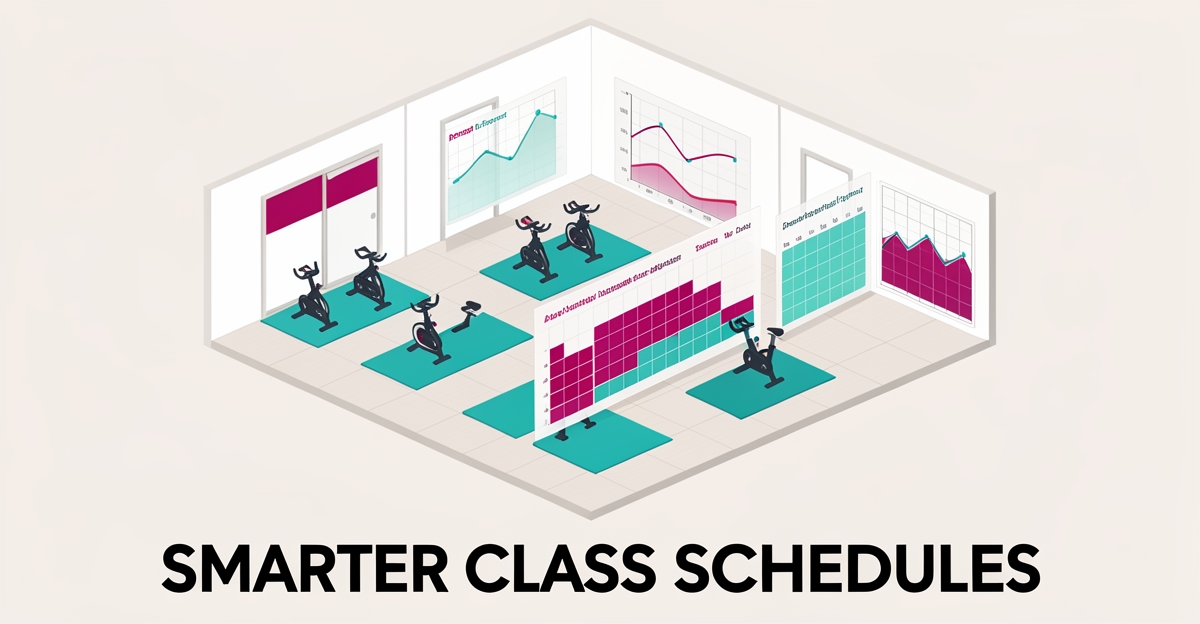
# How AI Can Automate Class Inventory & Capacity Planning for Small Fitness Studios
**Quick Answer:** Stop losing revenue to empty studio spots. AI-driven demand forecasting predicts class attendance from your own booking history, eliminating overbooked classes and underutilized rooms. See how boutique studios optimize schedules and inventory, no more spreadsheets. Start with a free two-minute Fit Check.
## Key Facts
- AI is now standard operational technology, defined as systems that simulate learning, comprehension, problem-solving, and decision-making (IBM).
- Businesses across industries are moving AI from experiments into daily operations, much like the earlier shift to cloud computing.
- Predictive inventory and capacity planning work best when built on clean data, integrated systems, and automated workflows, not on standalone models.
- AIQ Labs has deployed 200+ multi-agent systems and runs four live SaaS products daily, so these are production patterns, not theory.
## Table of Contents
1. [The Hidden Cost of Guesswork: Why Manual Class Planning Fails Studios](#the-hidden-cost-of-guesswork-why-manual-class-planning-fails-studios)
2. [AI-Powered Demand Forecasting: Turning Historical Data into Predictive Scheduling](#ai-powered-demand-forecasting-turning-historical-data-into-predictive-scheduling)
3. [From Spreadsheets to Smart Systems: Implementing AI for Real-Time Capacity Optimization](#from-spreadsheets-to-smart-systems-implementing-ai-for-real-time-capacity-optimization)
## The Hidden Cost of Guesswork: Why Manual Class Planning Fails Studios
Every empty spot in your 7 AM spin class represents lost revenue you can never recover. Multiply that across a week of underbooked sessions, last-minute cancellations, and overbooked time slots that frustrate loyal members, and the true cost of manual scheduling becomes impossible to ignore. For boutique fitness studios operating on thin margins, these small inefficiencies compound into significant revenue leaks that threaten long-term sustainability.
The core problem lies in reactive decision-making. Most studio owners still rely on static spreadsheets and gut instinct to plan their weekly schedules, responding to problems only after they have already impacted the bottom line. AI is now a mature, everyday operational technology, IBM defines it as systems that simulate learning, comprehension, problem-solving, and decision-making, yet many studios still plan capacity the way businesses planned inventory decades ago. Without systems to track enrollment patterns and predict demand, owners find themselves constantly fighting fires instead of preventing them.
The operational toll manifests in several predictable ways. When you lack real-time visibility into booking trends, you cannot anticipate which classes will overflow and which will sit empty. Manual tracking methods fail to capture the nuances of member behavior, such as seasonal fluctuations or the impact of local events on attendance. This creates a cycle of **wasted capacity and missed revenue opportunities** that plagues even well-established studios.
Consider the specific pain points that manual planning creates:
- **Overbooked classes** that force you to turn away paying members, damaging loyalty and retention
- **Chronic under-enrollment** in time slots that could thrive with better scheduling or marketing
- Instructor hours wasted on sessions with three attendees when demand data suggested thirty
- No-show rates that remain invisible until the class starts, preventing proactive waitlist management
- Inventory shortages for equipment and retail items because reordering relies on memory rather than data
The financial implications extend beyond immediate class revenue. When studios cannot accurately forecast demand, they struggle with resource allocation across the board, instructor hours, room usage, equipment turnover, and retail stock all get planned on the same guesswork.
Manual processes also break down under pressure. The equivalent failure in a studio occurs when your booking software crashes during peak reg
AI Employees
Hire a team member that works 24/7 — for less than a part-time wage.
AI receptionists, SDRs, dispatchers and 99+ roles. Trained on your business, fully managed.
See If You’re a Fit — AI Employees from $700/mo
Not sure where to start? Ask our AI planner
istration periods, or when you realize too late that you scheduled two high-intensity classes back-to-back without adequate equipment turnover time. Systems without proper capacity planning fail exactly when demand peaks, when it matters most.
At AIQ Labs, we see studios transform when they shift from reactive spreadsheets to proactive automation. By implementing systems that analyze historical attendance data and predict future enrollment, owners can finally escape the cycle of overbooking and underutilization. The technology exists to eliminate these inefficiencies, but it requires moving beyond manual guesswork to embrace **data-driven capacity planning** that anticipates problems before they cost you money.
## AI-Powered Demand Forecasting: Turning Historical Data into Predictive Scheduling
Most studio owners still rely on gut feel and color-coded spreadsheets to decide how many reformer Pilates or HIIT classes to schedule next month. That approach leaves money on the table when demand spikes and burns cash when rooms sit empty.
AI changes the equation by ingesting years of attendance records, booking lead times, cancellation curves, and external signals such as weather alerts or local event calendars to build probabilistic demand models. The same pattern recognition that keeps retail supply chains stocked can predict whether a 6 a.m. cycling class will fill near capacity next Tuesday. The signals that matter most:
- Historical attendance and waitlist trends across instructors, formats, and time slots
- Booking velocity and cancellation windows by member segment
- Weather forecasts, school calendars, and community event schedules
- Instructor availability and equipment constraints
The operational payoff is immediate: studios shift from reactive firefighting to proactive capacity allocation. But models only help when they're wrapped in reliable engineering, not just notebook experiments. AIQ Labs applies production-grade discipline to fitness operations, we've deployed 200+ multi-agent systems and run four live SaaS products daily, building custom forecasting pipelines that feed directly into scheduling tools so owners never guess at capacity again.
When the model flags a coming demand surge, the system can auto-suggest adding a section, opening waitlists, or adjusting instructor assignments, all before the first member books.
## From Spreadsheets to Smart Systems: Implementing AI for Real-Time Capacity Optimization
For most boutique studios, "capacity planning" means a spreadsheet that's outdated the moment a member books. Moving from manual tracking to AI-driven optimization isn't about buying a smarter spreadsheet, it's about building the operational infrastructure that lets AI actually work.
The industry's own evolution proves the point. AI adoption is following the same arc as early cloud computing, where the initial race to build powerful models gave way to the real challenge: **operationalizing AI reliably**. Infrastructure and process discipline matter as much as the models themselves.
For studios, implementation follows a practical sequence:
- Set up accurate records for every piece of inventory, retail merchandise, consumables, and equipment supplies, so AI has clean data to work with.
- Structure your class, resource, and member data before automation begins; clean inputs are the single biggest success factor.
- Implement automated agents that monitor and update minimum and maximum inventory levels as usage patterns change.
- Connect reordering and restocking to real usage data, eliminating manual reorder decisions.
- Use AI insights to identify and limit obsolete or slow-moving inventory before it ties up cash.
The same discipline applies to class scheduling. AI systems analyze historical attendance, booking patterns, and external factors like local events to forecast demand, shifting studios from reactive scheduling to **proactive, data-driven planning**. That means adjusting class times, instructor assignments, and room allocations before empty spots become a pattern, not after.
Integration is the linchpin. AI forecasting only functions when booking software, payment processing, and inventory tools share data seamlessly. This is where custom automation matters: AIQ Labs builds production-grade systems with deep two-way API integrations, connecting scheduling platforms, Stripe or Square payments, and communication tools, so enrollment data flows automatically into capacity and inventory decisions without manual entry.
How you
AI Development
Still paying for 10+ subscriptions that don’t talk to each other?
We build custom AI systems you own outright. No vendor lock-in. Full control.
See If You’re a Fit — AI Employees from $700/mo
Not sure where to start? Ask our AI planner
engage depends on where you're starting from. If you want a single workflow fixed, say, demand forecasting feeding your schedule, [AI Workflow Builds](/workflow-builds) rebuild that one workflow at a fixed price, in phases. If you want the whole studio running on one connected layer, scheduling, inventory, waitlists, payments, [AI Operating Systems](/ai-operating-systems) build it in phases you own outright. And if you just need operational capacity without hiring, [AI Employees](/ai-employees) can handle dispatching, scheduling follow-ups, and member communications at roughly 80% less cost than a human hire. Payment is straightforward: start monthly, build in milestones, or own it outright, no invented prices, no surprises.
The payoff is operational discipline at scale. Studios that automate monitoring and reordering stop firefighting stockouts and overbooked classes and start making decisions from real-time visibility.
The studios that win won't be the ones with the fanciest AI model. They'll be the ones with **clean data, integrated systems, and automated workflows** that turn forecasts into filled classes, week after week, without a spreadsheet in sight.
## Frequently Asked Questions
**Why do so many fitness studios still struggle with empty classes and overbooking?**
Most studios rely on static spreadsheets and gut instinct, so they react to problems only after empty spots or overbooked sessions have already cost them money. Manual tracking can't capture booking trends, seasonal fluctuations, or no-show patterns, creating a cycle of wasted capacity and missed revenue.
**How does AI actually predict class demand for a small studio?**
AI analyzes historical attendance, booking lead times, cancellation windows, and external signals like weather and local events to forecast enrollment for specific classes and time slots. The same pattern recognition that keeps retail supply chains stocked can predict whether your 6 a.m. cycling class will fill next Tuesday.
**Do I need a lot of technical expertise to use AI for scheduling and inventory?**
Not if the system is built properly for you. The bigger success factor is operational discipline, clean records, integrated booking and payment systems, and automated workflows, rather than technical skill, which is why working with a partner like AIQ Labs who builds production-grade systems matters.
**What's the first step to move from spreadsheets to AI-driven capacity planning?**
Start by setting up accurate data records for every class, item, and resource so the AI has clean data to work with, then implement automated tasks that monitor and update minimum and maximum levels as usage changes. A two-minute [Fit Check](/apply) maps your highest-ROI starting point.
**Can AI systems fail, and how do I avoid that?**
Yes, any system can fail under load, which is why AI forecasting needs production-grade engineering and reliable infrastructure wrapped around it, not just a notebook experiment. AIQ Labs builds for reliability from day one, with phased delivery so you can verify results at each milestone.
**How fast can a studio see results from AI capacity planning?**
The operational payoff is immediate once systems are integrated, AI can auto-suggest adding a class section, opening a waitlist, or adjusting instructor assignments before the first member books. Studios shift from reactive firefighting to proactive, data-driven scheduling, and AIQ Labs offers a free 30-minute strategy call to map out your highest-ROI starting point.
## From Guesswork to Growth: Your Studio's Next Step
Manual scheduling and inventory tracking cost small fitness studios real revenue through empty spots, overbooked classes, and wasted resources, inefficiencies that compound quickly on thin margins. AI-powered demand forecasting and operational automation transform reactive guesswork into proactive, data-driven decisions that fill classes, optimize instructor time, and prevent stockouts before they happen. The shift isn't about adopting flashy technology; it's about building the operational discipline, clean data, integrated systems, and automated workflows, that turns predictions into consistent results. Studios that make this move stop fighting fires and start building sustainable, predictable growth. If you're ready to see where your biggest opportunities lie, start with a free two-minute [Fit Check](/apply) to assess your current systems and identify high-ROI automation areas, no obligation, just clarity on your AI opportunity.
AI Transformation Partner
Make AI your competitive advantage — not just another tool.
Strategy, implementation and ongoing optimization. One partner, end to end.
See If You’re a Fit — AI Employees from $700/mo
Not sure where to start? Ask our AI planner