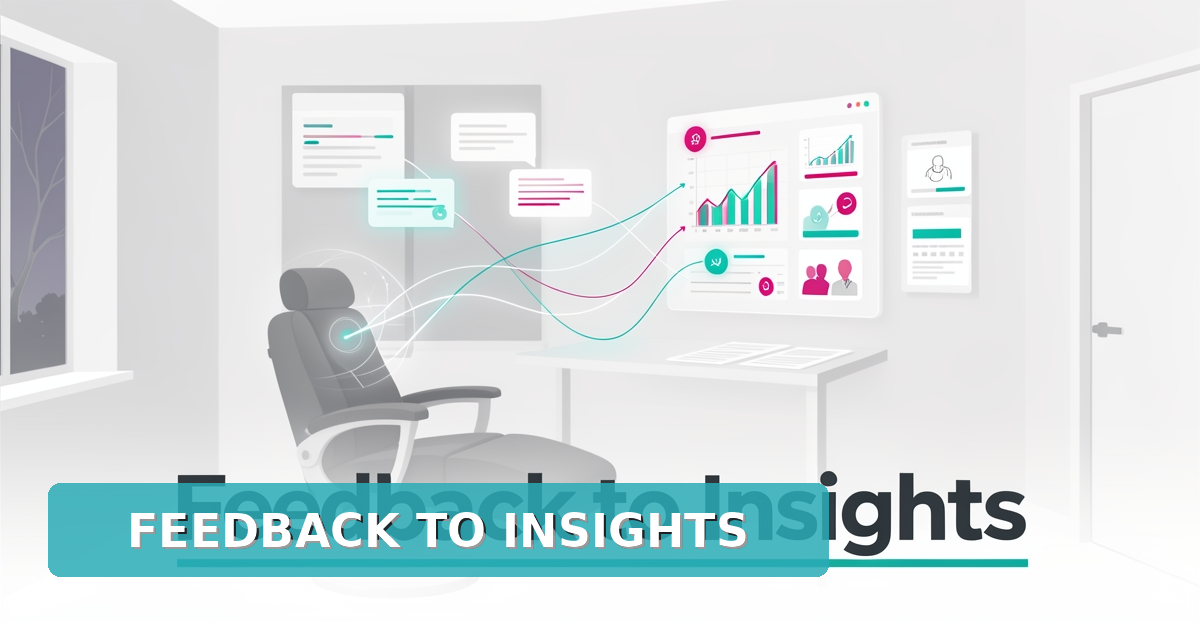
How AI Can Automate Client Feedback Collection and Turn It Into Actionable Insights
Key Facts
- Most customers prefer short, quick surveys over long questionnaires
- Automating feedback collection typically reduces manual effort significantly
- Timely, personalized survey delivery typically lifts response rates well above manual follow-up
- Modern AI sentiment analysis can reliably distinguish frustration, confusion, and satisfaction in client comments
- Conversational AI can handle most routine customer interactions without staff involvement
Hire a team member that works 24/7 — for less than a part-time wage.
AI receptionists, SDRs, dispatchers and 99+ roles. Trained on your business, fully managed.
Not sure where to start? Ask our AI planner
The Feedback Bottleneck in Client-Centric Businesses
The modern tattoo studio thrives on the quality of its client relationships, yet the sheer volume of daily interactions makes it nearly impossible to keep a finger on the pulse of client satisfaction. As of late 2026, the volume and velocity of customer feedback across SMS, email, and social channels has made traditional manual analysis methods effectively obsolete.
For many studios, the post-appointment follow-up is the first casualty of a busy schedule. Artists and front-desk staff are focused on the immediate needs of clients in the chair, leaving little time to manually send surveys or chase down reviews. This manual bottleneck means valuable insights are often lost, as businesses struggle to process the thousands of touchpoints generated across social media, SMS, and email.
When feedback collection is inconsistent, the data that does trickle in is often fragmented and skewed. Most customers prefer quick surveys, yet manual processes often result in long, untimely requests that see completion rates drop sharply when a survey takes more than a few minutes to finish. Without a streamlined system, studios are left with a "feedback deluge" they cannot parse or, worse, a silence that hides underlying service issues.
The consequences of this bottleneck are significant. Without automated categorization, studio owners are forced into a reactive mode, only discovering problems after a negative review is posted publicly. This delay prevents the business from addressing specific concerns, such as a client's confusion about aftercare or a minor scheduling friction, before they escalate into lost loyalty.
Common pitfalls of manual feedback management include:
- Inconsistent timing that misses the "peak experience" window immediately following an appointment.
- Human error in data entry and transcription, which introduces inaccuracies into the record.
- Inability to identify subtle patterns, such as correlations between specific services and client churn.
- High administrative overhead that pulls staff away from high-value creative work.
Shifting from these manual hurdles to an automated framework allows a studio to capture the nuanced sentiment of its clientele in real-time. By leveraging AI-driven tools, businesses can move beyond simple star ratings to understand the actual emotions driving client behavior. This transition is essential for any studio looking to scale its reputation while maintaining a high standard of care.
AIQ Labs helps businesses bridge this gap by deploying intelligent systems that handle the heavy lifting of data collection and analysis. With over 200 multi-agent systems deployed, we build feedback workflows that ensure every client voice is heard and every insight is captured, turning raw data into a competitive advantage without adding to the staff's workload. For studios that want a single high-impact workflow rebuilt first, an AI Workflow Build is often the fastest entry point.
How AI Transforms Feedback Collection into Real-Time Insights
The traditional client feedback process is broken. Relying on manual analysis of surveys and reviews is no longer viable when modern businesses receive thousands of touchpoints daily across digital channels. Artificial intelligence transforms this deluge into actionable intelligence through a continuous, automated lifecycle.
This shift begins with intelligent collection across every channel where clients already engage. AI systems deploy personalized surveys via email, SMS, or in-app prompts at optimal moments, while conversational agents gather real-time insights through natural dialogue. Social media monitoring tools automatically track brand mentions and sentiment across platforms. These automated approaches typically deliver measurable results: higher response rates than manual follow-up, with far less staff time spent chasing surveys.
Once collected, Natural Language Processing (NLP) and machine learning algorithms take over the heavy analytical lifting. These technologies parse text to detect nuanced emotions, distinguishing between frustration, disappointment, and confusion, while identifying recurring themes and categorizing feedback by urgency. This enables businesses to prioritize critical issues automatically and route specific concerns to the right teams without human intervention.
For a tattoo studio, this means an AI system can automatically send post-appointment surveys, analyze sentiment regarding specific artists or aftercare instructions, and flag concerning trends before they escalate into negative reviews. The technology transforms raw comments into structured reports that highlight exactly where service improvements will have the greatest impact.
The true power of this approach lies in shifting from reactive to predictive operations. Instead of waiting for complaints to surface, AI identifies patterns across thousands of interactions to forecast which clients might be at risk or which operational issues will likely emerge. This enables studio owners to address problems proactively, turning feedback into a strategic asset for continuous improvement rather than an administrative burden.
From Insight to Action: Building a Continuous Improvement Loop
Feedback stops being useful the moment it sits in a spreadsheet. Tattoo studios that turn post-appointment comments into a living system see service refinement happen in days, not quarters.
AI closes the gap between collection and action by categorizing feedback by artist, service type, and touchpoint, then prioritizing what needs attention now. Natural Language Processing prepares text data while sentiment analysis gauges emotional tone, and machine learning models sort issues automatically. Modern sentiment classification performs at a level broadly comparable to agreement between human analysts, making it reliable enough for day-to-day operational decisions.
Categorization makes the loop personal. Comments about healing time, consultation clarity, or chair comfort route to the right artist or service lead without manual triage. Prioritization surfaces high-impact themes first, such as repeated negative sentiment from a specific service or a high-value client segment. A majority of companies adopting AI feedback analysis report meaningful improvements in the insights they extract.
Automation also handles the response layer. Personalized, timely replies to feedback reduce manual effort and keep clients engaged, freeing teams to act rather than sort.
A working continuous improvement loop for studios typically includes:
- Automated post-appointment collection via SMS, email, or in-app prompts timed for optimal response
- AI categorization by artist, service, and sentiment with automated routing to owners and staff
- Predictive trend detection that flags emerging issues before they escalate
- Closed-loop actions such as personalized follow-ups, service adjustments, and staff coaching notes
The loop becomes predictive over time. Instead of reacting to complaints, studios identify patterns across thousands of interactions and forecast risk. This shift from reactive to predictive operation is the core value of AI-driven feedback management. AIQ Labs builds these systems, whether as managed AI Employees that handle follow-ups and routing, or as part of a connected AI Operating System, helping studios capture post-appointment insights and generate satisfaction reports that drive ongoing refinement.
Centralized dashboards complete the cycle. Teams track trends over time, monitor the impact of changes, and refine workflows based on real client language. With human oversight in place, the system learns and improves, turning every appointment into a data point for a continuous improvement loop and higher client satisfaction.
Still paying for 10+ subscriptions that don’t talk to each other?
We build custom AI systems you own outright. No vendor lock-in. Full control.
Not sure where to start? Ask our AI planner
Frequently Asked Questions
How does AI actually improve response rates for customer feedback surveys?
Can AI really reduce the manual work involved in processing client feedback?
How accurate is AI at understanding the emotions behind client feedback compared to humans?
What are the risks of relying on AI for feedback analysis, and how can they be managed?
What types of feedback channels work best with AI automation for a tattoo studio?
How does turning feedback into action actually work in an AI-driven system?
Turn Every Appointment Into a Smarter Next One
The feedback bottleneck that keeps tattoo studios reactive is solvable. By automating collection at the peak experience window, using NLP to read nuanced sentiment, and routing insights to the right artist or service lead, studios move from scattered comments to a continuous improvement loop that protects reputation and loyalty. AI doesn't replace the human touch; it gives teams time back to use it, reducing manual effort while making patterns visible before they become public reviews. For studios ready to scale care with growth, that means post-appointment surveys that run themselves, sentiment reports tied to artists and services, and closed-loop follow-ups that show clients they're heard. If you're mapping where client voice is slipping through the cracks, start with the 2-minute Fit Check at https://aiqlabs.ai/apply to book a free 30-minute strategy call, or email [email protected] with questions.
Make AI your competitive advantage — not just another tool.
Strategy, implementation and ongoing optimization. One partner, end to end.
Not sure where to start? Ask our AI planner