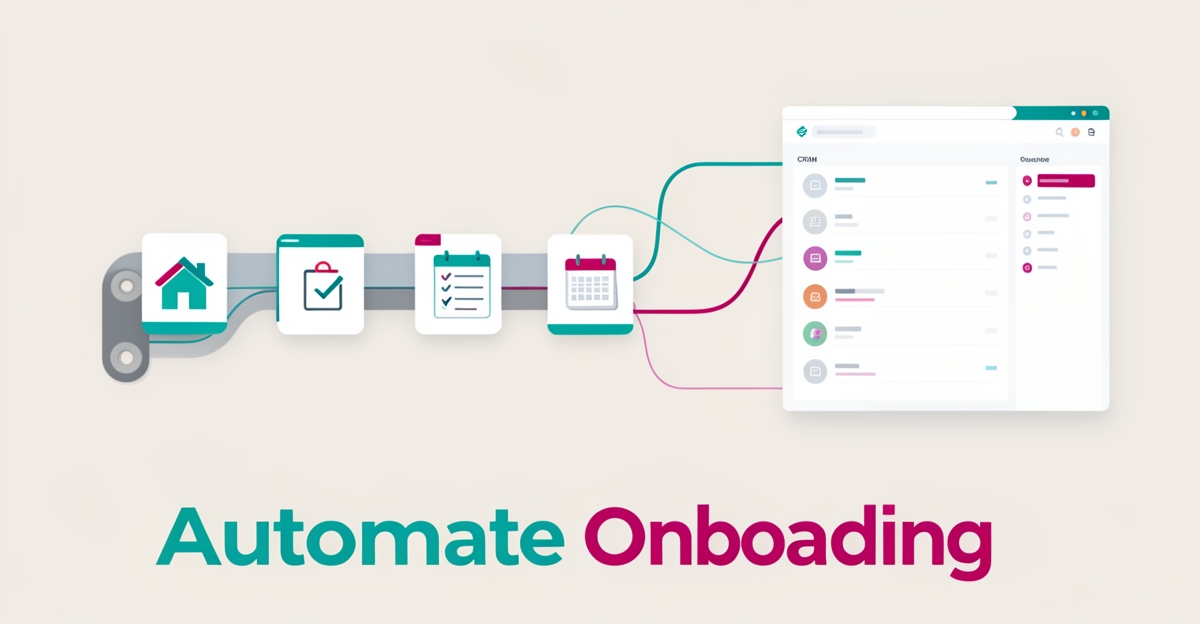
How AI Can Automate Client Onboarding and Service Intake for Cleaning Services
Key Facts
- A meaningful share of new clients, often estimated at a fifth or more, disengage during slow, confusing manual onboarding, based on industry analyses of intake performance
- Manual onboarding typically consumes several staff hours per new client in phone calls, form chasing, and manual CRM entry
- Automated AI intake removes delays and follow-up gaps, which industry comparisons consistently show reduces drop-off sharply
- AI operating systems can automate client onboarding, scheduling, and reporting as connected workflows rather than isolated tools
- Phased implementation, workflow mapping, integration, pilot, and training, keeps risk low and adoption on track
- AI-driven intake captures preferences and special requests consistently in your CRM, powering better personalization from the first visit
Hire a team member that works 24/7 — for less than a part-time wage.
AI receptionists, SDRs, dispatchers and 99+ roles. Trained on your business, fully managed.
Not sure where to start? Ask our AI planner
The Cost of Manual Client Onboarding in Cleaning Services
Manual client intake quietly drains revenue from cleaning businesses every week. Delays, miscommunication, and repetitive data entry create friction for new customers and overload front-office staff. The cost shows up as lost bookings, inconsistent service records, and slower growth.
Industry analyses of onboarding performance consistently find that a significant share of new clients, often cited at a fifth or more, disengage during manual onboarding because of delays, confusion, and lack of follow-up. That drop-off happens before the first clean is scheduled, meaning marketing spend is wasted and capacity sits empty.
Staff time compounds the problem. Manual onboarding typically consumes several hours of staff time per new client. Those hours cover phone calls, form chasing, preference clarification, and manual CRM entry, pulling teams away from sales and operations.
Inconsistent data collection creates downstream errors. Preferences for cleaning frequency, special requests, access instructions, and product sensitivities are captured in notes, emails, or spreadsheets. The result is missed details, rework on site, and client dissatisfaction that damages retention.
The financial impact shows up in three areas:
- Lost revenue from client drop-off before service starts
- Labor cost from hours of staff time per client spent on repetitive intake tasks
- Service risk from inconsistent data entry and missing preferences
Cleaning businesses also lose personalization leverage. Without structured intake, service teams lack a reliable profile to tailor frequency, products, and special instructions. Comparative analyses of AI versus manual onboarding consistently show that removing delays and automating follow-up sharply reduces drop-off.
Manual processes scale poorly. As client volume grows, the same multi-hour intake loop repeats, creating bottlenecks at peak booking periods. Teams either delay onboarding or sacrifice quality, both of which increase churn.
AI-driven intake changes the economics. Automated digital forms and voice calls collect preferences, cleaning frequency, and special requests consistently, then push structured data directly into your CRM. AIQ Labs builds exactly this kind of workflow, see AI Workflow Builds for how a fixed-price rebuild of your intake workflow works, or AI Employees for managed intake staff like receptionists and dispatchers at a fraction of a human hire.
The shift moves intake from a cost center to a conversion asset. Faster, consistent onboarding protects revenue, frees staff time, and creates clean data that powers better scheduling and retention.
How AI Transforms Client Intake for Cleaning Businesses
Manual intake is where cleaning businesses lose clients before the first visit even happens. Delays, back-and-forth messages, and manual data entry create friction that turns interest into abandonment.
AI-driven onboarding replaces that friction with automated preference collection, cleaning frequency capture, and special requests gathering through digital forms or voice calls. The system asks the right questions in the right order and writes the answers directly into the CRM, eliminating re-keying and inconsistency.
The contrast is stark. Industry research on onboarding performance finds that a substantial share of new clients disengage during manual processes due to delays, confusion, and lack of follow-up, and that manual onboarding consumes multiple staff hours per client. With automated intake, drop-off falls sharply because nothing waits on a human to follow up.
Consistency improves because every client follows the same intake flow. AI operating systems automate core workflows, including client onboarding, scheduling, and reporting, as one connected layer rather than isolated tools. That automation reduces management overhead and supports scalability as volume grows. For a fuller picture of that approach, see AI Operating Systems.
For cleaning businesses, this translates into faster starts and better personalization. Preferences for products, pet considerations, entry instructions, and priority rooms are captured accurately at first contact. Frequency and scheduling options are presented clearly, and special requests are flagged for the crew before day one.
Voice calls add another layer of accessibility. Clients who prefer to talk can complete intake by phone with a conversational AI agent that qualifies needs, confirms details, and books the first clean. Data flows straight into your CRM without manual entry.
AIQ Labs builds AI-driven onboarding systems that integrate with your CRM and ensure consistent data collection across all clients, 200+ multi-agent systems deployed to date. The result is a repeatable intake experience that scales without adding headcount.
Key shifts cleaning teams see with AI intake:
- Drop-off falls sharply versus manual processes because follow-up never waits
- Staff time per new client drops from hours to minutes of automated review
- Preferences, frequency, and special requests captured consistently in CRM for personalization
- Follow-up is automatic, so no leads slip through due to delays
Automated preference collection means crews arrive prepared and clients feel understood from the first interaction. End-to-end automation also frees owners and dispatchers to focus on service quality rather than chasing missing information.
Implementing AI Onboarding That Integrates With Your Cleaning Business
Manual onboarding is quietly costing cleaning businesses clients before service even begins. Delays, repeated phone calls, and inconsistent data entry create friction that turns new inquiries into lost revenue.
A practical AI onboarding rollout starts with mapping the existing intake journey. Teams document every step from first contact to first clean, identifying where preferences, cleaning frequency, and special requests are collected. This workflow mapping ensures the AI captures the right data points and mirrors how your crew actually works. Implementation frameworks for AI systems typically emphasize data migration, workflow mapping, integration setup, and team training, done in phases rather than a big-bang cutover.
CRM integration is the backbone of consistent data collection. AI intake forms or voice calls feed directly into HubSpot, Salesforce, or similar tools so client profiles are complete on arrival. The resulting data improves service personalization and reduces manual entry across scheduling, dispatch, and billing. Owned, scalable systems without vendor lock-in keep you in control of customizations and future development, AIQ Labs builds systems you own outright.
Data migration and hygiene come next. Historical client records, service notes, and preferences are cleaned, standardized, and moved into the new system. Clean data ensures the AI can personalize from day one and avoids duplicating manual work. The process also defines validation rules so incomplete submissions trigger automated follow-up instead of staff chasing.
Team training and change management determine adoption. Cleaners, dispatchers, and office staff learn how AI intake appears in their daily tools, how to review exceptions, and when to escalate. Training is role-specific and focused on practical use, not theory. This reduces resistance and protects service quality during transition.
A phased rollout limits risk while proving value. Typical implementation steps include:
- Discovery and workflow mapping to document current intake and pain points
- CRM integration and data migration to create a single source of truth
- Pilot with a subset of new clients using digital forms or voice intake
- Team training and feedback loops before full deployment
The impact is measurable. Manual onboarding consumes hours of staff time per new client, and industry research on onboarding performance shows that delays, confusion, and lack of follow-up drive significant client disengagement, while automated intake removes those failure points.
AIQ Labs builds AI-driven onboarding systems that integrate with your CRM and ensure consistent data collection across all clients. Delivery is milestone-based, each phase is fixed-price and proven before the next begins, so you see value early and own the system at the end. See pricing models for how Start Monthly, Build in Milestones, and Own It Outright work.
Still paying for 10+ subscriptions that don’t talk to each other?
We build custom AI systems you own outright. No vendor lock-in. Full control.
Not sure where to start? Ask our AI planner
Frequently Asked Questions
How much time does manual client onboarding typically take for cleaning services?
Why do new clients drop off during manual onboarding for cleaning services?
How does AI onboarding reduce client drop-off rates compared to manual processes?
What are the key steps in implementing AI onboarding for a cleaning business?
Can AI onboarding systems work with the CRM tools cleaning businesses already use?
Is AI onboarding only for large cleaning companies, or can small businesses benefit too?
Turn Your Intake Process Into a Growth Engine
The gap between a signed contract and a satisfied long-term client often comes down to those first critical interactions. By replacing manual intake with AI-driven automation, cleaning businesses can eliminate the delays and follow-up gaps that plague traditional onboarding, reclaim hours of staff time per client, and ensure every preference and special request is captured accurately from day one. The result is a scalable system that grows with your business rather than holding it back. AIQ Labs builds these owned, integrated onboarding systems, delivered in milestones and owned outright, that connect directly with your CRM, turning chaotic intake into a competitive advantage. If you're ready to stop losing clients to disorganization and start delivering personalized service at scale, start with a two-minute Fit Check to identify your highest-impact automation opportunity, or book a free 30-minute strategy call to map your specific workflow. No pressure, just a clear roadmap for turning your intake process into a revenue driver.
Make AI your competitive advantage — not just another tool.
Strategy, implementation and ongoing optimization. One partner, end to end.
Not sure where to start? Ask our AI planner