How AI Can Automate Coffee Batch Scheduling to Reduce Waste and Improve Consistency
Key Facts
- Automation adoption in coffee has ramped up over the past five years according to industry analysis
- Cloud automation platforms offer free-tier entry points for roasters exploring AI without major hardware investment
- The coffee industry is experiencing a global skilled-labor shortage making manual scheduling risky
- Most plants still operate on Humans think → systems report → people react late
- AI-powered optical sorters improve sorting speed and accuracy in coffee production per automation trends
- Event-driven automation platforms enable equipment integration for roasting without major hardware investment
Hire a team member that works 24/7 — for less than a part-time wage.
AI receptionists, SDRs, dispatchers and 99+ roles. Trained on your business, fully managed.
Not sure where to start? Ask our AI planner
The Hidden Cost of Manual Coffee Batch Scheduling
Coffee roasting relies heavily on human judgment, but this approach creates costly inefficiencies. Most plants still operate with a reactive workflow: humans think, systems report, and people react late, leading to delays and inconsistent outcomes. This lag between observation and action means roasters often miss optimal timing windows, resulting in under- or over-roasted batches that must be discarded or sold at a loss. The dependence on manual intervention turns scheduling into a guessing game rather than a precision process.
Labor shortages are worsening this problem across the industry. The coffee sector is experiencing a global skilled-labor shortage, making it harder to find and retain experienced roasters who can consistently interpret complex variables like bean moisture, ambient temperature, and equipment wear. As veteran staff retire or leave, knowledge gaps emerge, increasing reliance on less experienced workers who are more prone to error. This turnover disrupts workflow continuity and forces roasters into constant retraining cycles, diverting focus from process improvement.
Inconsistent batch quality directly fuels waste and operational bottlenecks. Without real-time, data-driven adjustments, roasters cannot compensate for subtle shifts in green bean characteristics or equipment performance, leading to flavor inconsistencies that fail quality standards. These variations often require entire batches to be reprocessed or discarded, increasing energy use and reducing yield. Common pain points include fluctuating roast times, uneven bean development, and difficulty replicating successful profiles across shifts, each contributing to avoidable waste and missed production targets. Addressing these limitations requires shifting from reactive, human-dependent scheduling to proactive, AI-augmented systems that learn from historical data and adapt in real time. For roasters seeking to eliminate these inefficiencies, AIQ Labs' Workflow Builds rebuild the one workflow that costs the most, batch scheduling included, integrating with your existing roasting equipment at a fixed price.
How AI Transforms Batch Scheduling with Data-Driven Automation
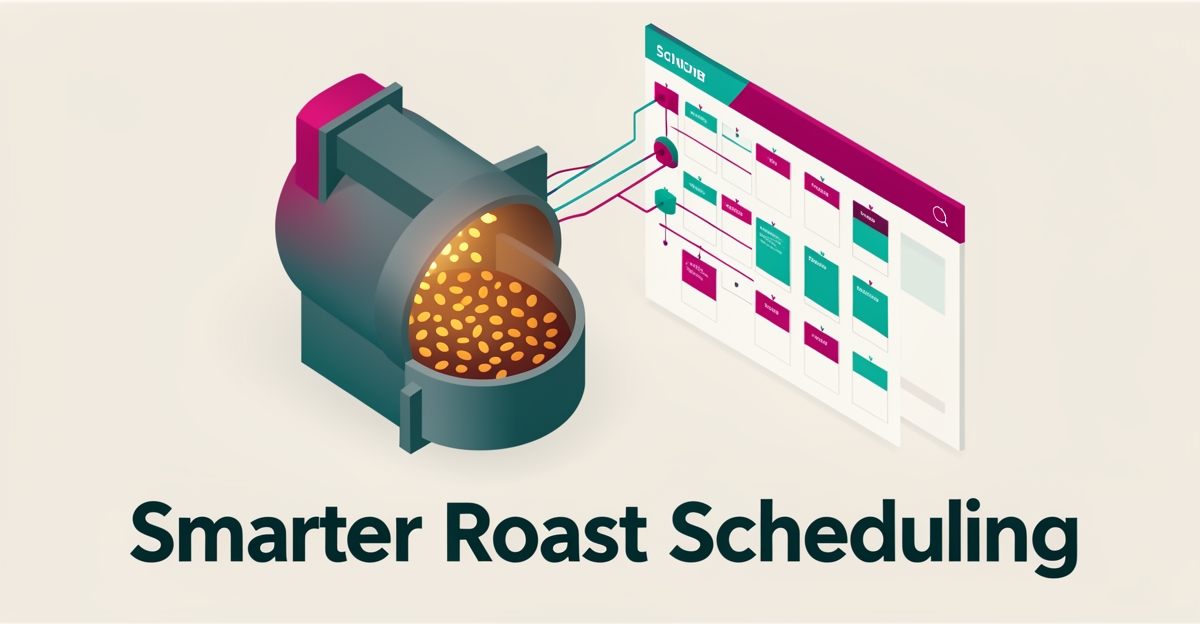
AI is reshaping how coffee roasters manage batch scheduling by turning reactive routines into data-driven automation. Instead of relying on intuition or static schedules, AI systems analyze real-time sensor data from roasters, historical roast profiles, and demand forecasts to dynamically adjust batch timing and size. This approach ensures each roast aligns with current conditions and customer needs, minimizing overproduction and underutilization. Industry reporting highlights that AI-powered optical sorters and predictive maintenance tools are already improving sorting accuracy and reducing equipment downtime in coffee production. By extending this intelligence to scheduling, roasters can anticipate fluctuations in green bean supply or order volume and respond proactively. The result is fewer wasted batches, tighter quality control, and more consistent flavor profiles across production runs.
Cloud-based automation platforms provide the scalable infrastructure needed to run these intelligent scheduling systems efficiently. These platforms support event-driven automation and integration with existing roasting equipment and enterprise systems, typically with free-tier entry points that lower the barrier for small and mid-sized roasters exploring AI adoption. This enables continuous monitoring and adjustment of batch parameters without requiring significant upfront investment in dedicated hardware. AIQ Labs helps coffee businesses leverage such platforms by building custom AI workflows that integrate sensor data, demand signals, and roasting logic into unified automation systems. These solutions are designed to operate reliably in production environments while giving clients full ownership of the technology.
The impact of AI-driven batch scheduling extends beyond operational efficiency to directly address industry challenges like labor shortages and quality inconsistency. By automating complex decision-making, such as determining optimal batch size based on humidity, bean density, or upcoming order spikes, AI reduces the cognitive load on roasting teams. This allows skilled workers to focus on sensory evaluation and process refinement rather than manual scheduling calculations. Facilities using AI for decision-making typically see meaningful reductions in the time needed to detect and isolate process deviations, improving responsiveness to potential quality issues. When combined with predictive maintenance and optimized roasting profiles, AI creates a closed-loop system where each batch informs the next, driving continuous improvement. Over time, this leads to less waste, higher yield, and a more resilient roasting operation capable of adapting to both market shifts and bean variability.
Implementing AI Batch Scheduling: From Assessment to Owned Systems
Most coffee plants still operate on a reactive loop: humans think, systems report, and people react late. Breaking that cycle requires more than buying software, it demands a structured approach that moves from assessment to owned, production-ready systems.
The first step is a thorough workflow audit. Identify where batch scheduling breaks down: Are you over-roasting to meet uncertain demand? Losing consistency when key staff are unavailable? Industry analysis shows that the global skilled-labor shortage makes these manual dependencies increasingly risky. Document every decision point in your roasting schedule before automating anything.
Next, assess your data readiness. AI algorithms depend on high-quality information to function effectively, yet many operations struggle with fragmented or inaccessible records. Audit your current data sources, green coffee inventory, roast profiles, order histories, and equipment sensors, to ensure they can feed an intelligent system.
With clarity on workflows and data, structure your implementation in phases:
- Pilot a single workflow, Start with batch scheduling for one product line or roast profile to prove value quickly
- Integrate incrementally, Connect AI decision-making to existing equipment and inventory systems without disrupting current operations
- Scale with confidence, Expand to predictive maintenance and supply chain optimization as the system learns your patterns
- Own the infrastructure, Build on platforms that give you control, not vendor lock-in
Cloud platforms offer accessible entry points, Microsoft's Azure Automation, for instance, includes a free monthly allowance of automation tasks, yet custom solutions deliver deeper integration. The key is matching technical architecture to your operational complexity.
At AIQ Labs, we structure roasting automation through our Build in Milestones approach: we split the build into phases, you approve and pay for each as it ships, and you keep everything built so far. This mirrors how successful manufacturers adopt AI, phased implementation reduces risk while building internal capability, and each milestone is a working system you own from day one.
The goal is not merely automation but owned intelligence, systems that learn your operation, adapt to your constraints, and remain your property. Whether you start with a single workflow fix through Workflow Builds or a complete connected operating layer via AI Operating Systems, the path from manual scheduling to AI-driven precision begins with honest assessment and ends with infrastructure you control.
Still paying for 10+ subscriptions that don’t talk to each other?
We build custom AI systems you own outright. No vendor lock-in. Full control.
Not sure where to start? Ask our AI planner
Frequently Asked Questions
How does AI actually reduce waste in coffee batch scheduling?
Is AI batch scheduling only for large coffee roasters with big budgets?
What specific data does AI need to optimize coffee roasting batches?
Can AI help with labor shortages in coffee roasting, or does it just replace workers?
How long does it typically take to see results from implementing AI batch scheduling?
What’s the first step if I want to implement AI for my coffee roasting batch scheduling?
From Guesswork to Growth: How AI Secures Your Roast’s Future
Manual coffee batch scheduling isn’t just inefficient, it’s a silent drain on quality, yield, and team focus. Reactive workflows lead to wasted batches, inconsistent roasts, and overburdened staff trying to compensate for knowledge gaps and labor shortages. AI transforms this by turning sensor data, historical patterns, and demand signals into real-time, intelligent scheduling decisions, reducing waste, stabilizing quality, and freeing your team to focus on craft, not calculations. The path forward starts with assessing your workflow and data readiness, then building AI capabilities you own, not rent. If you’re ready to move from guessing to growing, take AIQ Labs’ free Fit Check, a 2-minute assessment that maps your biggest bottleneck and identifies where AI can deliver real, measurable impact, with no hype and no hidden costs.
Make AI your competitive advantage — not just another tool.
Strategy, implementation and ongoing optimization. One partner, end to end.
Not sure where to start? Ask our AI planner