How AI Can Automate Customer Feedback Collection and Turn It Into Menu Improvements
Key Facts
- Most dissatisfied customers don't complain directly, they simply stop returning, making feedback gaps one of the costliest blind spots in hospitality
- A meaningful share of customer feedback contains mixed sentiment, with several distinct topics mentioned per response, which manual review struggles to capture
- A substantial portion of customer comments reference specific entities like a dish name, ingredient, or staff member, exactly the detail AI can extract automatically
- AI-powered feedback analysis is widely reported to improve satisfaction scores and reduce the cost of processing feedback compared to manual review
- AI systems can surface emerging trends, like repeated "too salty" mentions, before they become widespread complaints or damaging reviews
Hire a team member that works 24/7 — for less than a part-time wage.
AI receptionists, SDRs, dispatchers and 99+ roles. Trained on your business, fully managed.
Not sure where to start? Ask our AI planner
Why Restaurants Lose Customers: The Feedback Gap Problem
Most unhappy restaurant customers never complain, they simply stop coming back. This silent exodus represents one of the costliest blind spots in the hospitality industry, where feedback gaps translate directly into lost revenue and diminished market share.
The stakes are high. Industry research on customer service consistently finds that a large majority of customers will switch to a competitor after multiple bad interactions with a business. For restaurants operating on thin margins, losing most of their dissatisfied customers to competitors can mean the difference between thriving and closing doors.
The problem intensifies when you consider what modern customers expect. Customer service research shows that most customers now expect faster response times and quicker resolution of their concerns. Traditional feedback methods, comment cards, occasional surveys, or hoping customers speak up during service, simply cannot meet these expectations.
The feedback gap widens when restaurants rely on manual processes that create multiple failure points:
- Servers forget to ask about the dining experience during busy shifts
- Comment cards sit unread for days or weeks
- Negative experiences go unreported until they surface as damaging online reviews
- Patterns in customer complaints remain invisible without systematic analysis
- Management learns about problems only after customers have already decided to leave
This disconnect between customer expectations and operational reality creates a dangerous cycle. Customers experience issues, voice them through channels nobody monitors, receive no response, and quietly defect to competitors who seem more attentive. The restaurant never gets the chance to course-correct because the feedback never reaches decision-makers in time to matter.
Feedback analytics studies have found that a meaningful share of customer comments contain mixed sentiment, with several distinct topics mentioned per response. Manual review processes struggle to capture this complexity, often reducing rich feedback to simple "satisfied" or "unsatisfied" categories that obscure actionable insights.
The cost extends beyond individual lost customers. Negative experiences compound through word-of-mouth, particularly in the age of online reviews and social media. A single unresolved complaint can influence dozens of potential customers who read about the experience before deciding where to dine.
AIQ Labs has observed this pattern across the food service industry: restaurants possess valuable customer intelligence but lack the infrastructure to collect, analyze, and act on it systematically. The gap between what customers share and what restaurants actually hear represents significant preventable revenue loss across the sector every year.
How AI Collects Real-Time Feedback Across Every Touchpoint
Every customer interaction is a chance to learn, if you can capture the feedback in the moment. AI chatbots now operate across three primary touchpoints to gather sentiment where it happens most naturally. During service, table-side or in-app bots prompt diners with quick, conversational questions about their meal, timing, or ambiance, turning routine interactions into insight opportunities. Post-visit, automated follow-up surveys and continuous review monitoring ensure no comment goes unnoticed, whether it arrives via email, SMS, or public platforms. On social media, AI scans comments, mentions, and tags in real time, picking up both direct feedback and organic conversations about the restaurant.
These systems rely on Natural Language Processing to move beyond simple keyword spotting and truly understand what customers are saying. NLP enables the AI to handle multiple topics within a single response, feedback analytics research shows customer comments often touch on several distinct topics, ranging from food quality to service speed to atmosphere. More importantly, the technology can pinpoint specific menu items or service elements mentioned in feedback, with a substantial share of comments referencing a concrete entity like a dish name, ingredient, or staff member. This level of detail transforms vague sentiment into actionable intelligence, such as identifying that a new appetizer is consistently praised for its flavor but criticized for portion size.
AIQ Labs builds these capabilities directly into a restaurant's existing workflows, whether that starts with an AI Employee handling guest conversations or a targeted Workflow Build that rebuilds your feedback collection process end to end. By capturing real-time input across every channel and decoding its meaning with precision, AI turns scattered opinions into a clear roadmap for menu refinement, helping kitchens adapt quickly to what diners actually want, not just what they say they want in broad strokes.
From Raw Comments to Actionable Insights: AI Sentiment Analysis
Customer feedback often arrives as a flood of unstructured comments, ranging from praise for a new dish to complaints about wait times, sometimes all in the same sentence. Turning this raw input into clear, actionable intelligence requires more than keyword spotting; it demands AI capable of understanding nuance, context, and conflicting emotions within a single piece of feedback. Modern sentiment analysis tools use natural language processing to detect not just whether feedback is positive or negative, but also the intensity of emotion and the presence of mixed sentiments, which appear in a meaningful share of all customer comments according to industry findings. Feedback analytics research shows that a substantial portion of customer feedback carries mixed sentiment, with multiple distinct topics mentioned per response, making manual interpretation slow and error-prone.
AI systems overcome this complexity by breaking down each comment into thematic components, such as food quality, service speed, or ambiance, and assigning sentiment scores to each element individually. This granular approach allows restaurants to see, for example, that while customers loved the flavor of a seasonal entrée, they consistently found the portion size inadequate, enabling precise menu adjustments rather than broad, guesswork-driven changes. Beyond sentiment, these tools identify recurring themes and emerging trends across thousands of feedback items, flagging issues like a sudden increase in mentions of "too salty" or a growing preference for plant-based options before they become widespread complaints or missed opportunities. Businesses using AI-powered feedback analysis commonly report meaningful improvements in customer satisfaction scores and a reduction in the cost of processing feedback compared to manual review methods.
The real power lies in transforming insight into action: when AI detects a pattern, such as multiple guests noting that a dessert is too sweet, it can trigger alerts for chefs to test adjusted recipes or prompt managers to update menu descriptions to set clearer expectations. This closed-loop system ensures feedback isn't just collected and analyzed, but actively used to refine offerings in near real-time. For restaurants aiming to stay responsive to local tastes, integrating AI-driven sentiment analysis with feedback collection channels, whether through post-visit surveys, social media monitoring, or AI chatbots that engage diners during their meal, creates a continuous improvement cycle grounded in actual customer voice. Schedule a free 30-minute strategy call to explore how AIQ Labs can build a custom feedback intelligence system tailored to your menu refinement goals.
Turning Insights Into Menu Changes: The Implementation Framework
Collecting feedback is only half the battle, the real value comes from turning those insights into actionable menu changes. Here's a practical five-step framework to help restaurant operators implement AI feedback systems that actually improve dishes and customer satisfaction.
Step 1: Choose AI tools that integrate with your existing tech stack. Your feedback system must connect seamlessly with your POS and reservation platforms to capture contextual data like order history, visit frequency, and spending patterns. Restaurants using integrated AI feedback systems commonly report meaningful improvements in satisfaction scores. The tool should automatically link a customer's comment about "overcooked salmon" to their actual order, server, and timestamp, eliminating guesswork.
Step 2: Prioritize data quality from day one. AI analysis is only as good as the data it processes. Ensure your feedback channels capture enough detail for meaningful insights, vague comments like "food was bad" won't help your chef. Feedback analytics research shows a meaningful share of customer comments mention a specific entity (like a dish name), with multiple topics appearing per response on average. Configure your AI to prompt for specifics: "Which dish are you referring to?" or "What aspect would you improve?"
Step 3: Configure sentiment tracking for menu-specific insights. Generic sentiment scores won't cut it. Your AI should categorize feedback by dish, ingredient, preparation method, and service touchpoint. The same research found that a substantial share of customer comments carry mixed sentiment, someone might love the appetizer but hate the dessert. Your system needs to parse these nuances and route them appropriately.
Step 4: Establish workflows that route insights to the right people. Set up automated alerts and dashboards that deliver relevant feedback to decision-makers:
- Negative dish reviews go directly to the head chef with full context
- Service complaints route to front-of-house managers in real-time
- Emerging trend reports reach ownership weekly for strategic planning
- Positive feedback gets shared with the full team to boost morale
Step 5: Let AI handle classification while humans make culinary decisions. The goal of AI in this context isn't to replace human judgment, it's to handle the repetitive classification work so your team can focus on decisions that actually require culinary expertise. Your AI should tag, categorize, and surface patterns, your chef decides whether to adjust the recipe, change suppliers, or pull the dish entirely.
At AIQ Labs, we build custom AI feedback systems that learn your menu, integrate with your existing tools, and deliver insights your team can actually use, no data science degree required. The system handles the tedious work of sorting through hundreds of comments so your team can focus on what they do best: creating exceptional dining experiences.
Building a Custom AI Feedback System That Learns Your Local Tastes
Most restaurants collect feedback but fail to turn it into actionable menu changes. A custom AI system built specifically for your local market learns regional taste patterns and seasonal preferences to drive real improvements. Unlike off-the-shelf tools, AIQ Labs develops restaurant-specific feedback platforms that your business owns outright, trained on your customers' actual comments, integrated with your operations, and designed to evolve with your community.
These systems analyze feedback using natural language processing to detect sentiment, categorize suggestions, and identify emerging trends. Businesses that process feedback with AI effectively commonly report improvements in satisfaction scores and reductions in operational costs. Because a substantial share of customer comments carry mixed sentiment and multiple topics per response, generic tools often miss nuanced local insights that custom AI captures.
AIQ Labs builds these systems through three entry points: an AI Employee engages customers post-visit or via social media to collect richer, more contextual input at a fraction of the cost of additional staff; a Workflow Build rebuilds your single highest-cost feedback workflow at a fixed price, in phases; and a full AI Operating System connects feedback collection with your POS, inventory, and kitchen workflows so insights translate directly into dish refinements, built in phases and owned outright. The result is a feedback loop that doesn't just report what customers say, it learns what they'll want next.
- Continuously trains on regional taste profiles and seasonal ingredient availability
- Identifies specific dish improvements mentioned in feedback (e.g., "too salty," "needs more spice")
- Flags emerging trends before they appear in broad market data
- Cuts manual feedback sorting dramatically through automated categorization
- Connects insights to menu engineering decisions with confidence scoring
Ownership means your system adapts as your neighborhood evolves, no vendor lock-in, no recurring subscription fees for basic functionality, and full control over how feedback shapes your culinary direction. This competitive advantage lets independent restaurants respond faster than chains relying on delayed, aggregated corporate data.
To build a feedback system that truly learns your local tastes and turns insights into menu improvements, start the two-minute Fit Check, from there you can book a free 30-minute strategy call where we map your feedback gaps and identify high-ROI automation opportunities.
Still paying for 10+ subscriptions that don’t talk to each other?
We build custom AI systems you own outright. No vendor lock-in. Full control.
Not sure where to start? Ask our AI planner
Frequently Asked Questions
How does AI actually collect customer feedback in a restaurant setting without annoying diners?
What specific improvements can restaurants expect from using AI to analyze customer feedback?
Why do traditional feedback methods like comment cards fail to capture useful insights for menu improvements?
How does AI handle mixed feedback where a customer likes one part of their meal but dislikes another?
Does customer feedback actually mention specific menu items or service details that AI can use?
What steps should a restaurant take to ensure AI feedback leads to real menu changes, not just data collection?
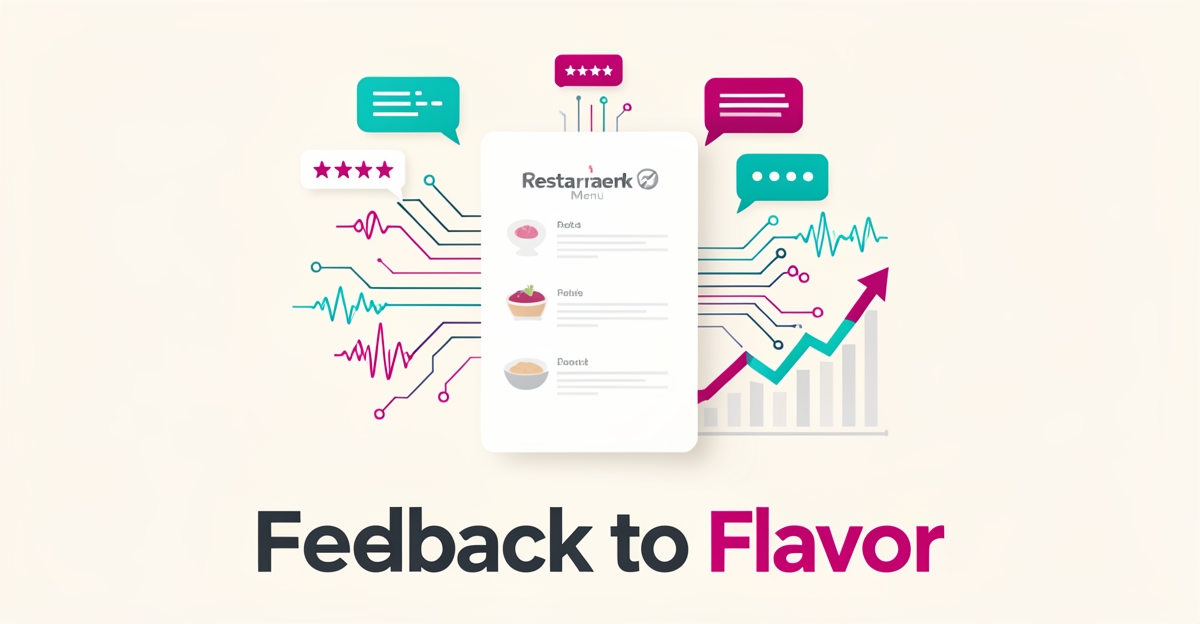
From Feedback to Flavor: How AI Powers Smarter Menu Decisions
AI transforms the silent feedback gap into a strategic advantage by capturing real-time insights across every customer touchpoint, from table-side prompts to social media, and turning unstructured comments into precise, actionable menu improvements. By identifying specific dish issues, tracking mixed sentiments, and routing insights directly to chefs and managers, restaurants can move from guesswork to data-driven refinements that boost satisfaction and retention. The result is a continuous improvement loop where customer voice directly shapes culinary innovation, helping independent eateries respond faster than chains and turn feedback into measurable gains. To see how a custom AI feedback system can uncover your highest-impact menu opportunities, start the two-minute Fit Check at https://aiqlabs.ai/apply and book your free 30-minute strategy call.
Make AI your competitive advantage — not just another tool.
Strategy, implementation and ongoing optimization. One partner, end to end.
Not sure where to start? Ask our AI planner