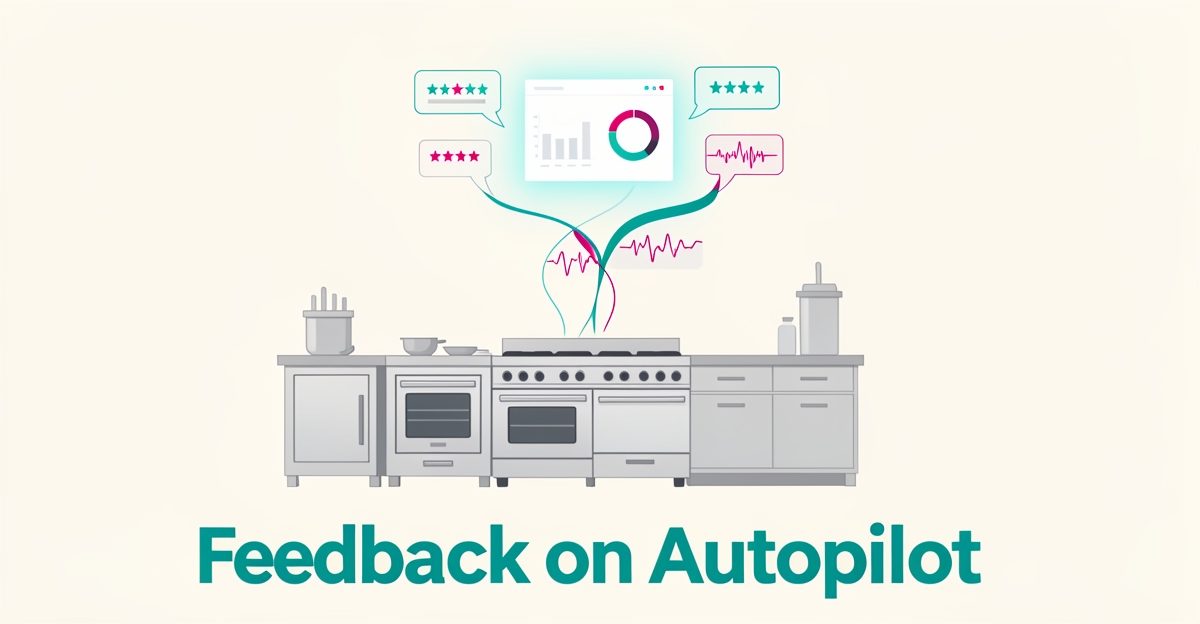
How AI Can Automate Customer Feedback Collection for Kitchen Equipment Dealers
Key Facts
- 81% of CX leaders rank AI-powered feedback analytics as a top priority, yet only 7% have mature implementations according to feedback analytics research.
- 80-90% of new enterprise data is unstructured, locked in emails, transcripts and open-text responses per feedback analytics research.
- 29% of customer comments carry mixed sentiment with 4.2 topics per response on average according to AI feedback analytics data.
- Most organizations gather feedback across 4-7 tools but nobody sees the full picture per customer experience research.
- Only 17% of organizations use LLMs or custom AI for feedback analytics today per feedback analytics research.
- Manual tagging doesn't scale to thousands of monthly interactions according to AI customer feedback analysis.
Hire a team member that works 24/7 — for less than a part-time wage.
AI receptionists, SDRs, dispatchers and 99+ roles. Trained on your business, fully managed.
Not sure where to start? Ask our AI planner
The Feedback Gap Kitchen Dealers Can't See
Most kitchen equipment dealers miss critical post-purchase insights because feedback is scattered across calls, emails, surveys, and reviews, making it impossible to see the full picture of customer sentiment. This fragmentation means recurring issues and emotional signals go unnoticed until they escalate into churn or negative reviews. Most organizations gather feedback across 4-7 tools, yet 80-90% of new enterprise data is unstructured, trapped in transcripts, open-text responses, and support tickets that no one has time to manually review.
- Feedback lives in disconnected systems, CRM, email platforms, survey tools, and review sites, creating blind spots in the customer journey.
- Teams spend hours tagging open-ended comments, but manual tagging doesn't scale to thousands of monthly interactions.
- Without AI, 29% of customer comments carry mixed sentiment and 4.2 topics appear per response on average, making root causes impossible to detect.
- Critical product issues, installation pain points, or service gaps remain buried in unstructured data, invisible to leadership.
- Sentiment trends emerge too late, after negative reviews accumulate or customers silently defect to competitors.
For kitchen equipment dealers, this gap isn't just about missing data, it's about losing the chance to fix problems before they damage reputation or increase service costs. AIQ Labs helps bridge this divide by centralizing feedback from every channel into a single AI-powered system where patterns surface automatically, turning hidden insights into actionable improvements.
How AI Centralizes and Analyzes Feedback at Scale
Your customers are telling you exactly what they think, across phone calls, emails, support tickets, and survey responses, but most kitchen equipment dealers can't see the full picture because feedback lives in disconnected silos. AI changes this by centralizing every feedback source into a single system where patterns emerge that would otherwise stay hidden.
Most organizations gather customer feedback across 4-7 different tools, according to customer experience research, which means critical insights get lost in the gaps. A complaint about delivery timing mentioned in an email might connect to a service issue noted in a survey, but if those live in separate systems, nobody connects the dots. Centralizing feedback means connecting all sources into one system where responses from every channel sit side by side.
Once unified, AI tackles the challenge of unstructured data, the free-form text that makes up 80-90% of new enterprise information according to feedback analytics research. This includes open-ended survey responses, call transcripts, and email threads that traditional tools can't process at scale. AI reads this unstructured feedback and automatically detects sentiment, identifies recurring themes, and flags emerging issues without manual tagging.
The technology goes deeper than simple positive-or-negative classification. Research shows that 29% of customer comments carry mixed sentiment, with an average of 4.2 distinct topics appearing per response. AI identifies when a customer praises your product quality while simultaneously expressing frustration about installation delays, nuances that keyword-based systems miss entirely.
Here's what AI extracts from unstructured feedback:
- Sentiment detection that recognizes emotional tone and satisfaction levels across all feedback channels
- Automatic theme grouping that clusters similar complaints or praise without manual categorization
- Entity recognition that identifies specific products, services, or team members mentioned in feedback
- Trend identification that spots emerging issues before they become widespread problems
The distinction matters: traditional tools tell you what customers said, but AI feedback analytics explains what it means. Instead of reading through hundreds of survey responses to understand why satisfaction scores dropped, AI surfaces the specific issues driving the change, whether that's delivery scheduling, product performance, or communication gaps.
AIQ Labs builds custom feedback systems that gather insights from calls, emails, and surveys, then apply natural language processing to identify what customers actually mean. The system learns your business context, recognizes industry-specific terminology, and connects feedback themes to operational areas that need attention. This transforms feedback from a reporting exercise into a strategic asset that drives service improvements and helps kitchen equipment dealers address issues before they impact retention.
From Insights to Action: Personalization and Issue Resolution
Turning feedback into meaningful action requires more than just analysis, it demands a strategic response that builds stronger customer relationships. AI excels here by transforming raw insights into personalized follow-ups and proactive service improvements. For kitchen equipment dealers, this means connecting post-purchase sentiment to specific behaviors and purchase history to deliver relevant, timely communication that feels attentive rather than automated.
For example, AI can analyze feedback alongside CRM data to identify customers who purchased high-end appliances but reported minor setup frustrations, triggering a tailored outreach offering a complimentary service check or usage tips. This level of personalization is proven effective, AI can personalize customer interactions based on their preferences, behavior, and history, and directly increases satisfaction by showing customers their input drives real change. Dealers using this approach see fewer repeat inquiries and stronger brand affinity, especially when follow-ups reference specific product models or past service interactions.
Beyond personalization, AI enhances service quality by identifying patterns in feedback that signal systemic issues, such as recurring confusion about installation steps for a popular oven model. By detecting these themes across calls, emails, and surveys, dealers can proactively update support materials or adjust training, AI can enhance customer feedback by analyzing interactions to elevate service quality and reduce support requests. This preventive approach reduces the volume of repetitive support tickets, freeing teams to focus on complex cases that truly require human expertise.
Finally, AI automates the resolution loop itself. Once feedback is categorized and prioritized, intelligent systems can trigger actions like sending FAQ links, scheduling technician visits via calendar integration, or updating customer records in the CRM, AI can resolve customer issues by automating repetitive tasks, such as answering FAQs, booking appointments, verifying information, and updating records. These automations ensure consistent, instant responses while cutting agent workload, creating a feedback cycle that not only listens but acts, fast. For dealers, this means happier customers, fewer escalations, and more opportunities to turn feedback into loyalty. Start the Fit Check to see how AIQ Labs can build this closed-loop system for your business.
A Practical AI Feedback System for Dealers
A practical AI feedback system begins with centralizing all customer input into a single, accessible platform. Kitchen equipment dealers often gather post-purchase feedback across emails, phone calls, service tickets, and survey tools, but without integration, critical insights remain siloed. AIQ Labs helps connect these disparate sources into a unified operational hub where every customer interaction, whether a support call about a commercial oven or an email regarding delivery timing, is captured and prepared for analysis. This consolidation ensures no feedback is lost and creates the foundation for meaningful pattern recognition. Centralizing feedback collection means connecting all sources into one system where responses from every channel sit side by side, eliminating the blind spots that occur when teams rely on fragmented tools.
Once centralized, AI-powered analysis transforms raw feedback into actionable intelligence. Unstructured data, such as open-ended survey responses, call transcripts, and email threads, makes up 80-90% of new enterprise data, yet most organizations lack the capacity to interpret it at scale. AI can analyze unstructured data, such as open-ended survey responses, to identify recurring themes and sentiment, automatically detecting emotional tone, grouping similar comments, and surfacing issues that span multiple channels. For example, if several customers mention difficulty installing a specific range hood model across both service calls and survey comments, the system flags this as a recurring theme requiring attention, turning anecdotal feedback into prioritized improvement opportunities.
The system further enhances value by personalizing follow-ups and resolving issues proactively. AI can tailor interactions based on customer history, behavior, and product ownership, ensuring that a restaurant owner who purchased a high-capacity fryer receives relevant maintenance tips or upgrade suggestions at the optimal time. AI can analyze customer data and segment them into different groups, offer relevant product recommendations or discounts, tailor messages and tone, and follow up with them at the right time. Simultaneously, AI agents automate repetitive tasks like sending post-installation surveys, logging service notes into the CRM, or triggering alerts when negative sentiment is detected, reducing agent workload while increasing response consistency. AI can resolve customer issues by automating repetitive tasks, such as answering FAQs, booking appointments, verifying information, and updating records, providing instant and consistent responses that save time and money.
- Centralize feedback from calls, emails, surveys, and service tools into one owned system
- Deploy AI agents to analyze unstructured data for sentiment, themes, and entity mentions
- Personalize follow-ups and automate issue resolution based on AI-driven insights
- Integrate with your existing CRM and service platforms so feedback flows both ways
- Build incrementally with Start Monthly, Build in Milestones, or Own It Outright, whichever fits how you want to pay
AIQ Labs has deployed 200+ multi-agent systems and runs four live SaaS products of its own daily, so these feedback systems are built on infrastructure that's proven in real operating conditions, not slideware. Depending on where you want to start, this can begin as an AI Employee that handles feedback outreach and triage, a focused Workflow Build that rebuilds your feedback loop at a fixed price, or a full AI Operating System that connects feedback to the rest of your operation. By owning the system outright, dealers gain full control over their feedback loop, enabling continuous service improvement without dependency on third-party platforms or unpredictable subscription costs. This approach transforms feedback collection from a reactive chore into a strategic asset for refining product offerings, enhancing support quality, and strengthening customer loyalty.
Still paying for 10+ subscriptions that don’t talk to each other?
We build custom AI systems you own outright. No vendor lock-in. Full control.
Not sure where to start? Ask our AI planner
Frequently Asked Questions
How does AI actually collect feedback from different channels like phone calls and emails?
Can AI really understand mixed sentiment in customer feedback, like when someone likes a product but hates the delivery?
What kind of issues can AI uncover in feedback that humans might miss?
How does AI turn feedback into real actions like follow-ups or service improvements?
Is implementing an AI feedback system too complex or expensive for a small kitchen equipment dealer?
What's the first step to see if an AI feedback system would work for my dealership?
Turn Hidden Feedback into Your Competitive Edge
Kitchen equipment dealers sit on a goldmine of customer insights, scattered across calls, emails, surveys, and reviews, that most never tap into because the data is fragmented and unstructured. AI changes that by centralizing feedback, automatically detecting sentiment and recurring themes, and turning vague comments into clear actions like personalized follow-ups or proactive service updates. The result isn't just better analysis, it's fewer escalations, stronger loyalty, and a feedback loop that actually drives improvement. If you're ready to stop guessing what customers really think and start acting on what they're telling you, AIQ Labs can help you build a system that owns your feedback loop end-to-end. Start the Fit Check to see how a custom AI feedback system could work for your business.
Make AI your competitive advantage — not just another tool.
Strategy, implementation and ongoing optimization. One partner, end to end.
Not sure where to start? Ask our AI planner